Laboratory Balances for Analytical and Precision Weighing
Laboratory balances are high-accuracy weighing instruments used to measure the mass of reagents, samples, and materials in research, quality control, and pharmaceutical applications. Analytical balances offer readability to 0.1 mg (0.0001 g) for small-mass, high-precision work; precision (top-loading) balances cover higher capacities with readability of 1 mg to 0.1 g for routine weighing, formulation, and sample preparation.
MBP is a registered vendor for Howard Hughes Medical Institute, Vanderbilt University, and MD Anderson Cancer Center, and provides purchase order procurement for laboratory balances for research institutions across the USA and Canada. Request a quote for laboratory balances for analytical weighing, precision measurements, and sample preparation by contacting customerservice@mbpinc.net.
Laboratory Balances


Showing 25 to 29 of 29 results
What Are Laboratory Balances?
Laboratory balances are precision instruments that determine the mass of a substance by comparing it against a known reference or by measuring the force required to restore an electromagnetic or strain gauge sensor to equilibrium. The two principal types in research laboratories are analytical balances and precision (top-loading) balances. Analytical balances, with readability of 0.1 mg (one-tenth of a milligram, expressed as 0.0001 g), are enclosed in a draft shield to eliminate the effect of air currents on sensitive measurements and are used for quantitative chemical analysis, pharmaceutical formulation, reagent preparation requiring accurate stoichiometry, and trace sample weighing. Precision balances have lower readability (1 mg to 0.1 g) but higher capacity (up to several kilograms), handle larger samples without a draft shield, and are used for routine weighing in general chemistry, media preparation, and quality control workflows. A third category, microbalances (readability 0.001 mg or finer), serves specialized applications including filter gravimetry, pharmaceutical microsampling, and material science. Choose an analytical balance (0.1 mg readability) when mass accuracy matters to the fourth decimal place; choose a precision balance for routine weighing where 1 mg resolution is sufficient and capacity above 300 g is needed.
What you will find:
-
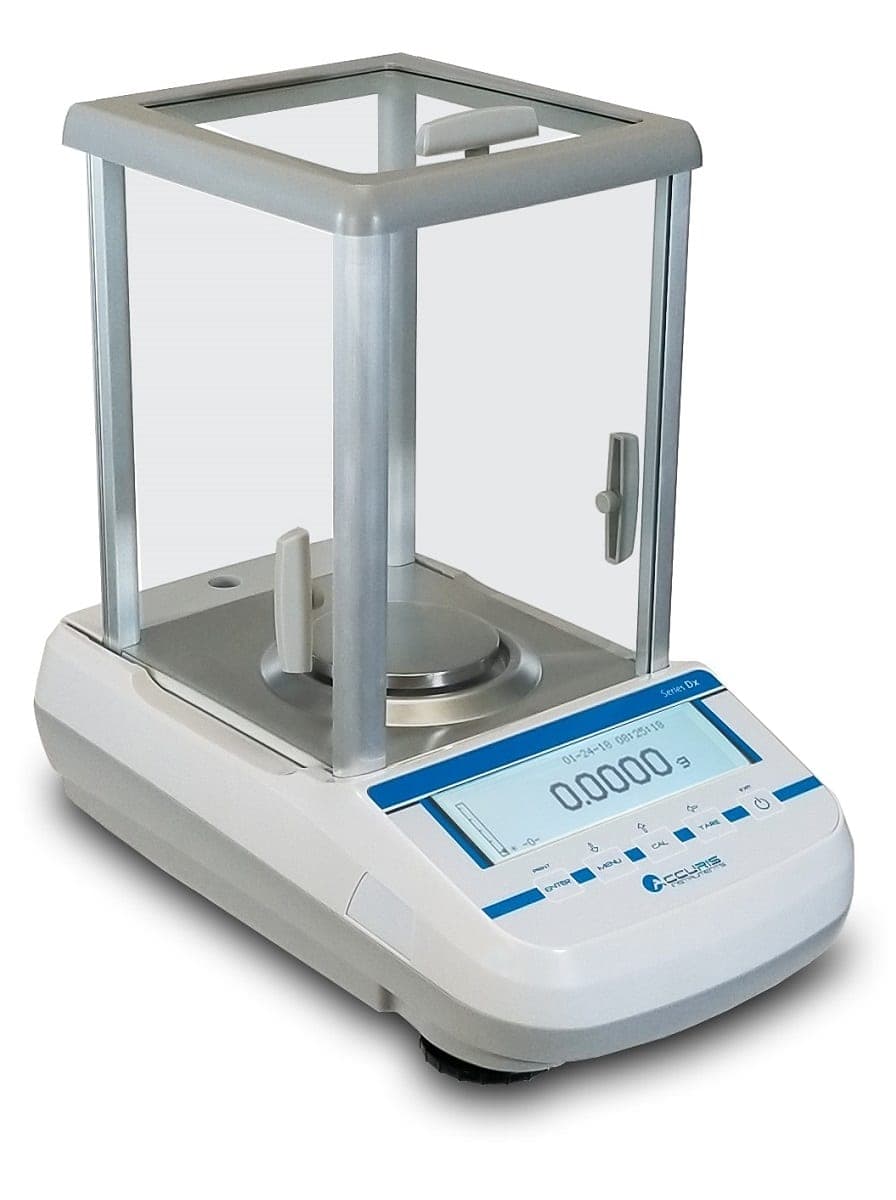
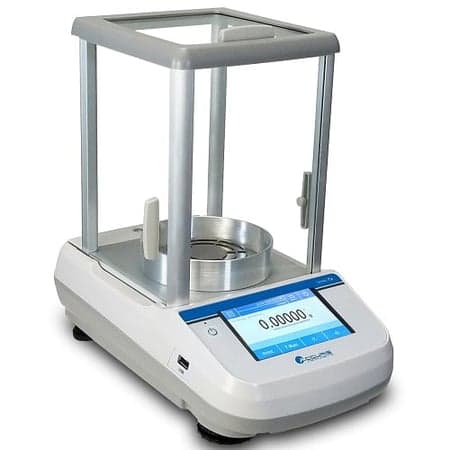
Analytical Balances: Precision devices created for measuring small weights below a milligram, equipped with enclosed compartments to minimize external disturbances.
-
Precision Balances: Multifunctional weighing systems that provide high-capacity performance while ensuring the accuracy required for everyday laboratory and industrial weighing.
-
Compact Balances: Portable weighing devices with a small footprint designed for environments with limited space and less demanding measurement requirements.
-
Mini Balancess: Compact, battery-powered scales created for rapid, portable weighing during fieldwork or educational environments.
-
High Capacity Balances: Strong systems designed for assessing substantial bulk samples or industrial substances while maintaining precision.
-
Moisture Analyzers: Specific devices that employ heating components and accurate weighing to assess the moisture level in different samples.
-
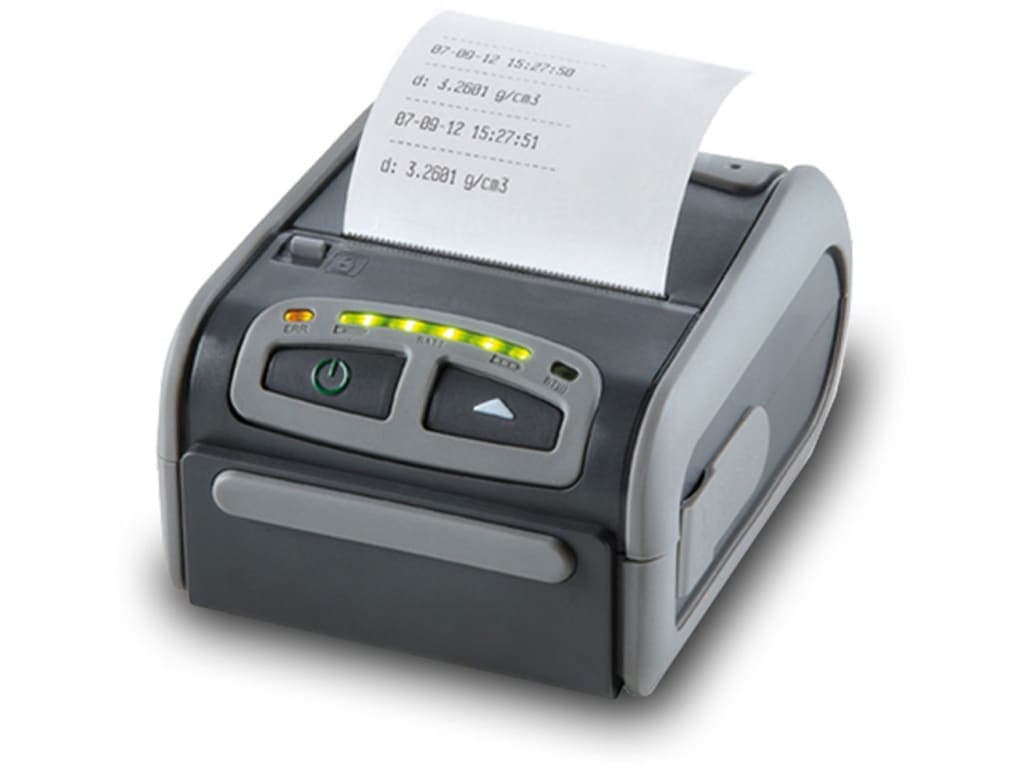
Laboratory Balance Accessories: Crucial support equipment that features anti-static ionizers, serial printers, and pipette calibration systems for improved balance efficiency.
How to Choose a Laboratory Balance
Readability and accuracy
Readability is the smallest mass increment the balance can display. An analytical balance with 0.1 mg (0.0001 g) readability is the standard for quantitative chemistry, whereas a precision balance with 1 mg (0.001 g) readability suffices for routine sample preparation and formulation. Accuracy is distinct from readability; it describes how close the displayed value is to the true mass. Calibrated balances traceable to national standards (NIST in the USA) provide accuracy verification. Do not conflate the two: a balance with fine readability can still have poor accuracy if uncalibrated.
Capacity
Analytical balances typically offer a maximum capacity from 100 g to 520 g. Precision balances cover 120 g to several kilograms. Choose capacity based on the maximum sample plus container mass to be weighed: weighing a 250 g vessel on a 200 g capacity balance is not possible and overloads the weighing cell. Most analytical balances include overload protection, but repeated overloading shortens the weighing cell service life.
Internal vs. external calibration
Balances with internal calibration have a built-in calibration weight that the instrument deploys automatically (triggered by a temperature change, time interval, or user command) to verify and correct its calibration without operator involvement. External calibration requires the operator to place a certified calibration weight on the pan and follow a manual procedure. For regulated environments (GLP, GMP, ISO 17025), internal calibration reduces human error in the calibration process and provides automatic documentation.
Draft shield design
Analytical balances require a draft shield (enclosure around the weighing pan) to prevent air currents from introducing measurement noise. Motorized sliding-door draft shields (available on advanced models) open and close automatically during sample placement, reducing operator contact time and improving repeatability. Manual draft shields with sliding or hinged doors are standard on most models. Confirm door opening dimensions fit the sample containers used in your workflow.
Connectivity and GLP compliance
Digital balances with RS-232, USB, or Ethernet connectivity output weight data directly to LIMS, laboratory notebooks, or printers, eliminating manual transcription errors. Good Laboratory Practice (GLP) compliance features include automatic date and time stamping of weighing records, unique instrument ID in the printout, and traceability documentation for calibration. These features are required in pharmaceutical QC and accredited analytical laboratories.
Specifications Context
Proper calibration and verification are essential for maintaining weighing accuracy and repeatability. MBP offers analytical, precision, semi-micro, compact, portable, and high-capacity balances with internal or external calibration options to support a wide range of laboratory applications. For routine balance verification and calibration procedures, Class E2, F1, and F2 calibration weights are available. Always follow the balance manufacturer's calibration and operating recommendations to ensure reliable measurement performance.
Require support in selecting the appropriate readability for your analytical tasks or assistance in locating the right high-capacity model? The MBP team is available to help—contact us now for a personalized estimate.
FAQ