High-Capacity Balances for Bulk and Large-Sample Weighing
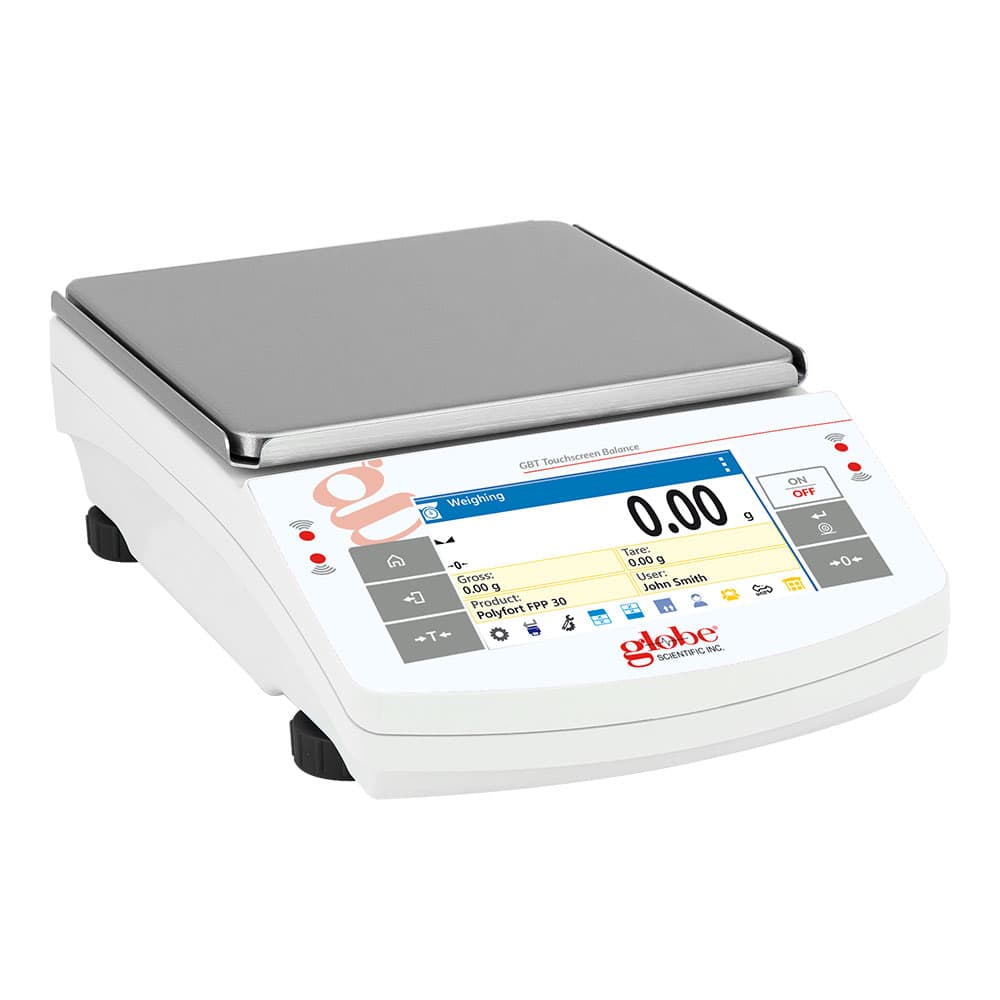
High-capacity laboratory balances are precision weighing instruments designed for accurate measurement of larger samples, bulk reagents, culture media, and other laboratory materials. Available models feature a color touchscreen display, touch-free operation with infrared sensors, internal or external calibration options, multiple weighing applications, and RS232, USB, and Ethernet connectivity for data export. Designed for reliable performance in laboratory environments, they also provide user and data management capabilities for efficient weighing workflows.
MBP provides purchase order procurement for high-capacity balances for research institutions across the USA and Canada. Request a quote by contacting customerservice@mbpinc.net.
High Capacity Balance
Showing 1 to 1 of 1 results
What Are High-Capacity Laboratory Balances?
High-capacity laboratory balances (also called top-loading precision balances or bench scales) are electronic weighing instruments designed for accurate measurement of larger samples, reagents, and laboratory materials. They are commonly used for bulk weighing applications such as preparing cell culture media and buffer batches, formulating chemical reagents, inventory management, receiving inspection of materials, quality control weighing, and analytical sample preparation involving large containers. High-capacity balances are well-suited for weighing loads that exceed the capacity of standard analytical balances.
What you will find:
- High-capacity laboratory balances for accurate weighing of large samples, reagents, and laboratory materials.
- Models with internal or external calibration options for reliable measurement accuracy.
- Color touchscreen balances with touch-free infrared sensor operation and multiple weighing applications.
- Balances with RS232, USB, and Ethernet connectivity for data transfer and record management.
- User-friendly systems with data storage capabilities for users, products, and weighing results.
How to Choose a High-Capacity Balance
Capacity and readability
Select a balance with a maximum weighing capacity appropriate for your laboratory workflow while ensuring the readability meets your required level of measurement precision. Consider both the largest sample or container you expect to weigh and the smallest weight change that must be detected for accurate, repeatable results.
Calibration options
Choose between internal and external calibration based on your laboratory's quality management procedures. Internal calibration provides convenient automated adjustment, while external calibration uses certified calibration weights and may be preferred where specific calibration protocols are required.
Connectivity and data management
Evaluate available communication interfaces such as RS232, USB, and Ethernet if weighing data needs to be transferred to computers, printers, or laboratory information management systems (LIMS). Built-in user profiles and data storage capabilities can improve traceability and simplify record keeping.
User interface and weighing applications
A touchscreen display, programmable weighing modes, and touch-free operation can improve efficiency, particularly in busy laboratory environments. Select a balance that offers the application modes and workflow features required for your routine laboratory tasks.
Specifications Context
When evaluating a high-capacity laboratory balance, compare specifications that directly affect performance and usability, including maximum capacity, readability, repeatability, calibration method, available weighing applications, and data connectivity. Internal or external calibration options help maintain measurement accuracy over time, while interfaces such as RS232, USB, and Ethernet simplify data transfer and documentation. Features including touchscreen operation, user and product storage, and multiple weighing modes can improve workflow efficiency and traceability in research, quality control, and analytical laboratories. Selecting a balance with the appropriate combination of weighing performance, calibration capability, connectivity, and software features helps ensure reliable results for demanding laboratory applications.
To discuss product availability or get selection guidance, contact the MBP team.
FAQ