Autoclaves & Biosafety Cabinets for Laboratory Containment
Autoclaves and biosafety cabinets are the core physical containment instruments in microbiology, cell biology, and clinical research labs—autoclaves sterilize media and waste at 121°C via steam, while Class II biosafety cabinets contain biological aerosols during active work to NSF/ANSI 49. This category also includes ultraviolet (UV-C) chambers for surface decontamination. MBP is a registered vendor to Howard Hughes Medical Institute, MD Anderson Cancer Center, and Vanderbilt University.
Contact customerservice@mbpinc.net to compare containment and sterilization systems and request pricing or a quote.
Autoclave & Biosafety Cabinets
Showing 25 to 27 of 27 results
What Are Autoclaves and Biosafety Cabinets?
Autoclaves and biosafety cabinets are the two primary physical containment and decontamination instruments in microbiology, cell biology, and clinical research laboratories. An autoclave (steam sterilizer) destroys all microorganisms—including heat-resistant bacterial spores—using saturated steam at 121°C and 15 psi, validated to achieve a sterility assurance level (SAL) of 10−6. A biosafety cabinet (BSC) is a ventilated enclosure that contains biological aerosols generated during active laboratory work, protecting the operator, the product, and the surrounding environment through HEPA-filtered airflow. Most BSL-2 and all BSL-3 laboratories require both instrument types as complementary containment layers.
What you will find:
-
Autoclaves: for reliable media, lab instruments, and lab waste sterilisation
-
Biosafety cabinets: for secure working with sensitive or hazardous materials
-
Infrared microsterilizers: for faster, flame-free sterilization of tools
-
Microbead sterilizers: for effective sterilization at higher temperature
-
PCR workstations: for preparation of sample without contamination
-
Ultraviolet chambers: for effective decontamination
How to Choose Between Autoclave and Biosafety Cabinet Equipment
Define the Use Case: Sterilization vs. Containment
Select an autoclave for sterilizing media, glassware, biohazardous waste, and heat-stable instruments. Select a biosafety cabinet for any procedure that generates biological aerosols—cell culture, pathogen dilution, sample processing, or PCR setup. The two are not interchangeable.
Biosafety Level (BSL) Requirements
BSL-1 work may use a clean bench; BSL-2 work with human pathogens requires a Class II, Type A2 BSC certified to NSF/ANSI 49; BSL-3 work typically mandates a Class II Type B2 (total exhaust) or Class III cabinet. Autoclave cycles must be validated for the specific organism and load type being processed.
Autoclave Chamber Volume
A 20–50 L benchtop autoclave handles routine media and small instrument loads for single-PI research labs. Core facilities and waste-processing operations typically require 80–150 L floor-standing units. Allow 25–30% headspace in the chamber for effective steam penetration.
UV Chamber for Surface Decontamination
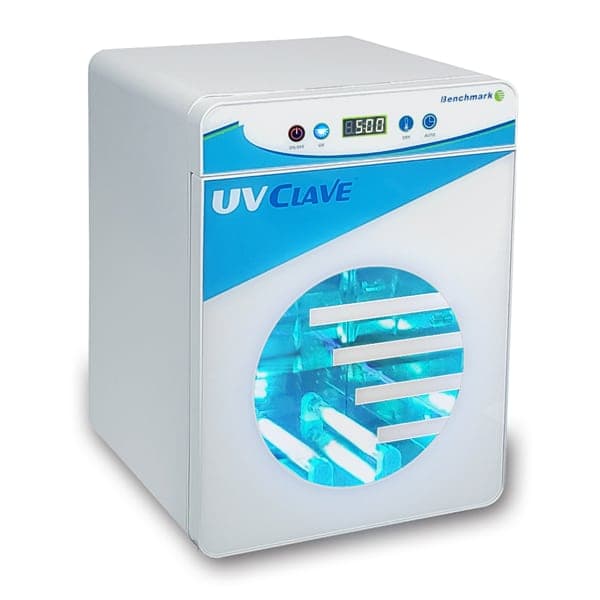
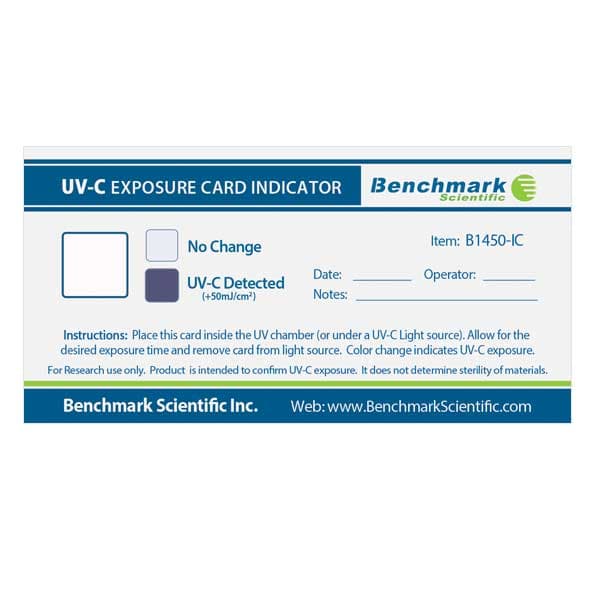
Ultraviolet chambers at 254 nm UV-C complement autoclave and BSC workflows by surface-decontaminating instruments, molds, pipettes, and small equipment that cannot be autoclaved. They are standard in forensics, molecular diagnostics, and PCR labs to prevent DNA carry-over contamination.
Certification and Compliance
Class II BSCs require annual field certification per NSF/ANSI 49 and the CDC/NIH BMBL 6th Edition. Autoclaves in regulated environments require cycle validation and load-type documentation. UV chambers do not require third-party certification but should be verified for lamp output (254 nm) per manufacturer schedule.
Specifications Context
NSF/ANSI 49-2024 is the current governing standard for Class II BSC design and field certification in the United States, covering Types A1, A2, B1, B2, and C1. Type A2 cabinets—the most widely installed—recirculate 70% of air and exhaust 30% through a HEPA filter; Type B2 cabinets exhaust 100% to the building and are required when chemical hazards are present alongside biological agents. HEPA filters in properly maintained Class II cabinets capture 99.97% of particles ≥0.3 µm. As of 2026, new DC ECM motor technology in BSCs reduces energy consumption by up to 68% versus conventional AC motors, lowering long-term operating costs.
Your search for a premium quality autoclave and biosafety cabinet is over. Contact now with the expert team at Molecular Biology Products Inc. (MBP) to find the right match for your lab.
FAQ