Temperature Control Equipment for Research and Industrial Labs
Temperature control equipment encompasses the instruments that heat, cool, or hold samples at defined temperatures across molecular biology, chemistry, and materials science workflows - from dry baths and water baths operating from ambient to 100 degrees C for enzyme incubations and nucleic acid denaturation, through high-temperature muffle furnaces reaching 1,000-1,200 degrees C for ashing and ceramic sintering, to tube furnaces extending to 1,700 degrees C for chemical vapor deposition (CVD) and atmosphere-controlled processing of advanced materials.
MBP supplies temperature control equipment for research labs across the United States, Canada, and internationally. Request a quote for temperature control equipment for research and industrial laboratory applications by contacting customerservice@mbpinc.net.
Temperature Control Equipment
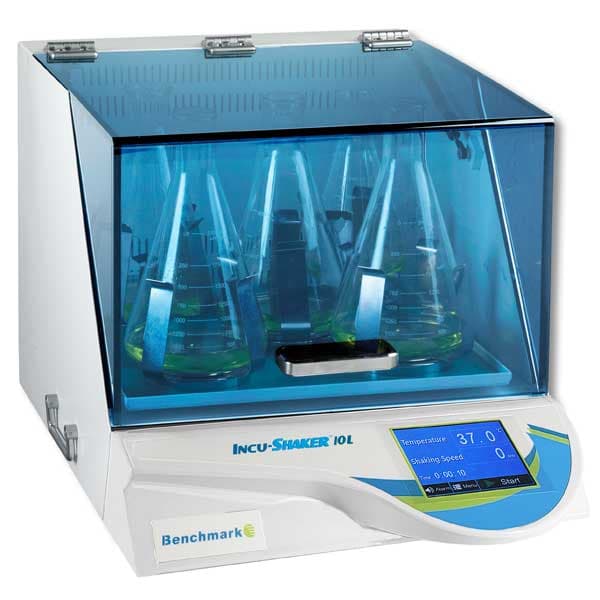
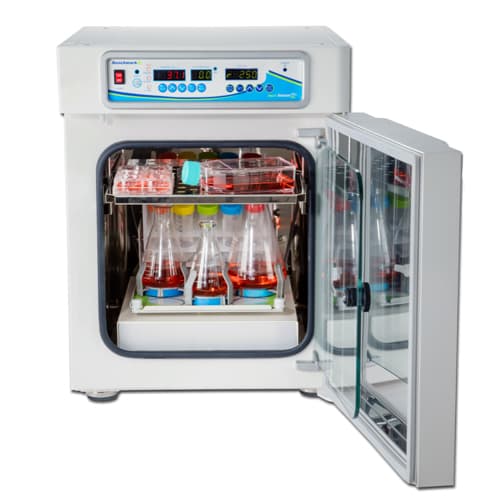
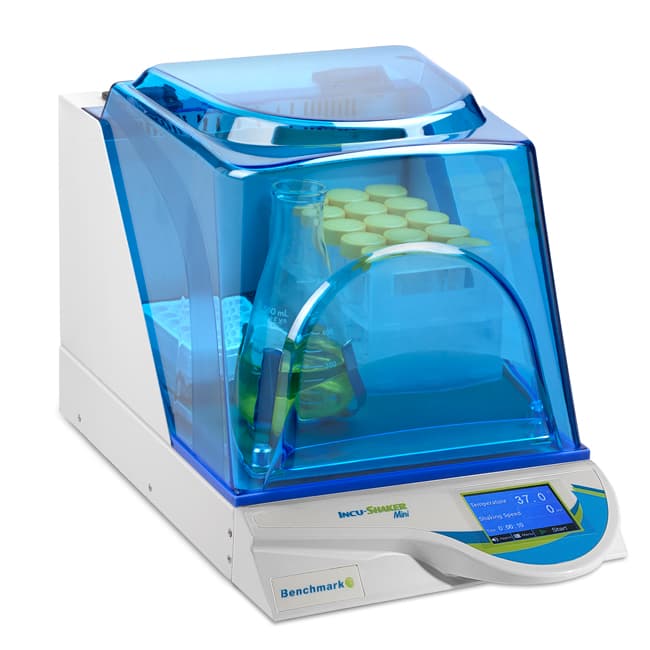


Showing 121 to 132 of 208 results
What Is Temperature Control Equipment?
Temperature control equipment covers instruments that raise, lower, or maintain the temperature of samples within a defined range for a specified time, enabling reactions, treatments, and processes that require controlled thermal conditions. In molecular biology and biochemistry, the relevant range is typically ambient to 100 degrees C, covered by dry baths and heat blocks (incubation, denaturation, lysis), water baths (hybridization, thawing, enzyme reactions requiring high uniformity), and cold traps (solvent capture, lyophilization support). In materials science, chemistry, and engineering, high-temperature furnaces operate from 200 degrees C to over 1,700 degrees C for ashing, calcination, sintering, annealing, and CVD. Select temperature control equipment based on required temperature range, temperature uniformity specification, sample format, and whether atmosphere control is needed.
What You Will Find:
-
Hotplate & Stirrers utilize powerful ceramic or aluminum heating elements to provide simultaneous liquid agitation and high-accuracy surface heating.
-
Temperature-Controlled Baths offer a stable aqueous environment for uniform sample incubation, ensuring consistent heat distribution for delicate reagents.
-
Refrigerators & Freezers provide high-security cold storage for biological samples, featuring digital monitoring and precise internal climate management.
-
Laboratory Ovens deliver high-capacity convective heating for sterilization, drying, and material testing applications under controlled atmospheric conditions.
-
Incubators create the ideal growth environment for cell cultures and microorganisms by maintaining strict CO2, humidity, and temperature levels.
-
Chillers & Heaters serve as high-efficiency heat exchangers designed to regulate the temperature of external equipment and circulating liquid systems.
-
Cold Traps act as essential vacuum protection systems, condensing vapors into a solid state to prevent solvent contamination in sensitive pumps.
-
Furnaces achieve extreme high-temperature thresholds for specialized ashing, annealing, and material science research in heavy-duty chambers.
How to Choose Temperature Control Equipment
Temperature range and application
Dry baths and heat blocks span ambient to 100-150 degrees C and are used for enzyme digestion at 37 degrees C, Proteinase K treatment at 55 degrees C, and DNA denaturation at 95 degrees C. Water baths provide superior uniformity (plus or minus 0.1-0.5 degrees C) for temperature-sensitive enzymatic assays and hybridization reactions. Muffle furnaces reach 1,000-1,200 degrees C for ashing, sintering, and glass melting in ambient air. Tube furnaces extend to 1,200-1,700 degrees C with sealed-atmosphere capability for CVD and processing of oxidation-sensitive materials.
Temperature uniformity and stability
Uniformity (variation across the chamber or block at setpoint, expressed as plus or minus degrees C) affects experimental reproducibility. Dry bath block uniformity is typically plus or minus 0.3-1 degree C; water bath uniformity is plus or minus 0.1-0.5 degrees C. Muffle furnace chamber uniformity is typically plus or minus 5-15 degrees C at maximum temperature. Tube furnaces specify a narrow uniform heating zone (plus or minus 1-5 degrees C in the hot zone); samples must be placed within this zone for consistent results.
Sample format
Dry bath interchangeable block inserts fit microcentrifuge tubes (0.5 mL, 1.5 mL, 2 mL), PCR strips, glass slides, and custom formats. Water bath chambers accommodate flasks, bottles, and multi-sample racks by submerging them directly in heated liquid. Muffle furnace chambers accept crucibles, boats, and ceramic tiles for batch processing. Tube furnaces take cylindrical sample holders, quartz boats, or substrates inserted axially through the bore.
Controller type
Single-setpoint digital PID controllers are standard for routine thermal processes at a fixed temperature. Programmable multi-segment controllers (20-30 segments) are required for sintering and annealing protocols with specific ramp rates and hold times -- for example, controlled ceramic sintering profiles that specify degrees C per minute heating rates to avoid thermal shock. Confirm controller type and RS-232/USB data logging capability for protocols requiring full process documentation.
Dry bath vs. water bath
Dry baths are preferred for hazardous or radioactive samples (no risk of cross-contamination), for samples in sealed vessels, and for convenience (no water maintenance). Water baths provide better heat transfer and uniformity for uncapped flasks, large volumes, or assays sensitive to temperature variation beyond plus or minus 0.5 degrees C. Both formats suit the 37-95 degrees C range typical in molecular biology.
Specifications Context
Dry bath temperature stability is specified as plus or minus degrees C at setpoint over 30 minutes; a stability of plus or minus 0.2 degrees C is required for enzyme kinetics studies where temperature deviations shift reaction rates measurably. Water bath temperature range extends to 99.9 degrees C for liquid water; higher temperature incubation requires oil baths or dry baths rated above 100 degrees C. Muffle furnace power consumption at maximum temperature ranges from 1-3 kW for standard benchtop research models; high-temperature models above 1,400 degrees C require 3-6 kW and may need 240 V three-phase supply. Programmable multi-segment digital controllers with USB data logging are standard on research-grade furnaces, enabling automated overnight thermal treatment runs with alarm-triggered shutdown on over-temperature events.
Secure your thermal environment today. Explore our temperature control inventory and reach out to the MBP team for a custom quote.
FAQ