Cold Traps for Vacuum Pump Protection and Solvent Trapping
Cold traps are in-line devices placed between a vacuum flask and a vacuum pump to condense vapors and moisture before they reach the pump, protecting pump oil from contamination and extending pump service life. They operate by cooling a surface to a temperature at which solvent vapors, water vapor, and other condensables convert to a liquid or solid state.
Cooling methods include dry ice-acetone slurry (-78 degrees C), liquid nitrogen (-196 degrees C), or mechanical refrigeration chillers (-40 degrees C to -80 degrees C). MBP supports procurement of cold traps and vacuum accessories for US and Canadian research labs with direct quote and purchase order service. Request a quote by contacting customerservice@mbpinc.net.
Cold Traps
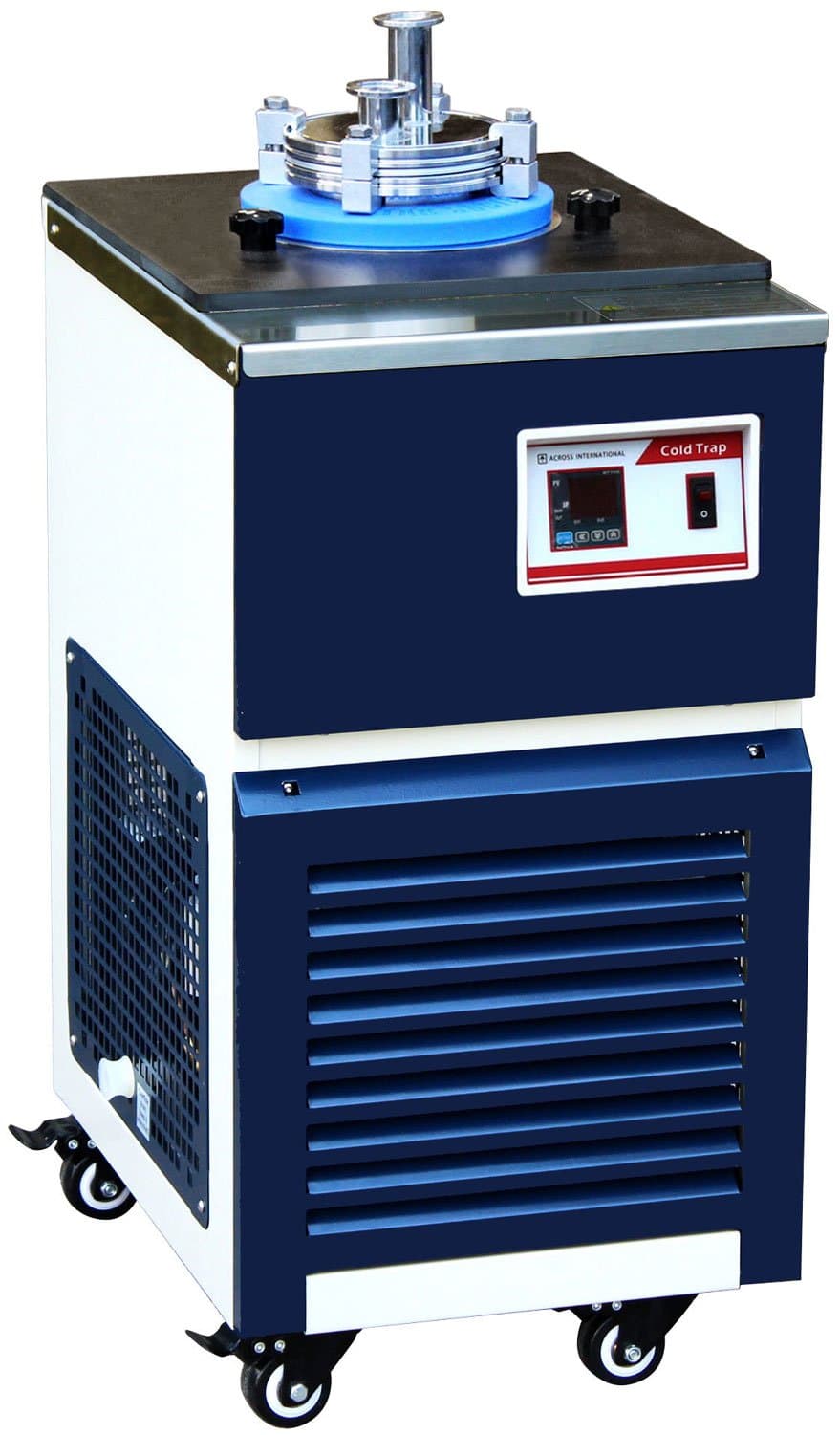
Showing 1 to 1 of 1 results
What Are Cold Traps?
A cold trap is a device that condenses all vapors except permanent gases (hydrogen, oxygen, nitrogen) into liquid or solid form before they enter a vacuum pump or downstream vacuum system. The operating principle depends on lowering the surface temperature of the trap below the dew point of the target vapor. In vacuum applications, solvents, water vapor, and corrosive gases are captured in the trap rather than contaminating vacuum pump oil or downstream instruments. Cold traps are used in freeze-drying (lyophilization), rotary evaporation, short-path distillation, vacuum filtration, gas chromatography sample preparation, and cryogenic research setups. Mechanically refrigerated cold traps reaching -40 degrees C to -80 degrees C are widely available as standalone units with integrated compressors. Install a cold trap between your vacuum flask and vacuum pump whenever your protocol involves condensable vapors, solvents, or moisture: the cost of a cold trap is always less than the cost of pump oil contamination or pump failure.
What You Will Find:
-
Ai T-Series Cold Traps feature top-tier 316L stainless steel and ETL certification, giving you serious cooling power without needing a drop of chilling fluid.
-
Corrosion-resistant trapping units offer a much tougher defense against harsh chemicals and humidity compared to standard steel, so your gear actually lasts.
-
Plug-and-play cooling systems are designed to be compact and mobile, letting you roll them into place and get straight to work without a complex setup.
-
Large capacity 316L SST traps come with smart features like easy-open drain valves and secure vacuum connections to keep your liquid removal mess-free.
How to Choose a Cold Trap
Cooling method
Dry ice-based traps (glass or stainless vessels surrounded by dry ice in acetone or isopropanol) reach approximately -78 degrees C and are inexpensive but require regular dry ice replenishment. Liquid nitrogen traps reach -196 degrees C and are standard for high-vacuum lines in organic synthesis and cryogenic research, but require liquid nitrogen handling infrastructure. Mechanical refrigeration cold traps are self-contained, automated, and reach -40 degrees C to -80 degrees C without expendable cryogens, preferred for routine continuous use.
Temperature vs. solvent vapor pressure
The trap temperature must be cold enough to reduce the vapor pressure of the target solvent below the operating pressure of the vacuum system. Water vapor is effectively trapped at -20 degrees C under rough vacuum; common organic solvents (ethanol, acetone, dichloromethane) require -40 degrees C to -60 degrees C for efficient condensation. Low-boiling solvents (diethyl ether, pentane) may require -80 degrees C or colder for complete trapping.
Trap volume and throughput
Trap volume must accommodate the total volume of condensable material removed during the experiment. Freeze-drying operations removing large amounts of moisture require large cold traps (1 L to 5 L capacity); small-scale vacuum line work for synthetic chemistry may need only 100 mL to 500 mL. Traps used in high-throughput rotary evaporation benefit from mechanically cooled models that can run continuously without refilling.
Material compatibility
Glass cold traps allow visual monitoring of condensate and are compatible with most solvents. Stainless steel and PTFE-lined traps are preferred for corrosive or halogenated solvents. Confirm wetted material compatibility with the solvent or gas stream before installation.
Specifications Context
Key specifications: achievable temperature at rated conditions; trap volume; inlet/outlet fitting size and type (typically KF/NW flange or hose barb); and compatibility with the vacuum pump type (oil-sealed rotary vane, diaphragm, scroll, or turbomolecular). Cold traps placed at the inlet of an oil-sealed rotary vane pump prevent solvent backstreaming into the pump oil, which is the most common cause of shortened pump life in solvent-handling labs. For high-vacuum applications (below 10^-3 mbar), baffle-style cold traps with cooled vanes prevent oil backstreaming from the pump into the vacuum chamber.
Ready to give your pumps the protection they need? Browse our cold trap collection and reach out to the MBP team for a friendly quote today.
FAQ