Media Storage Bottles — PC, PET, and PETG for Cell Culture and Bioprocess
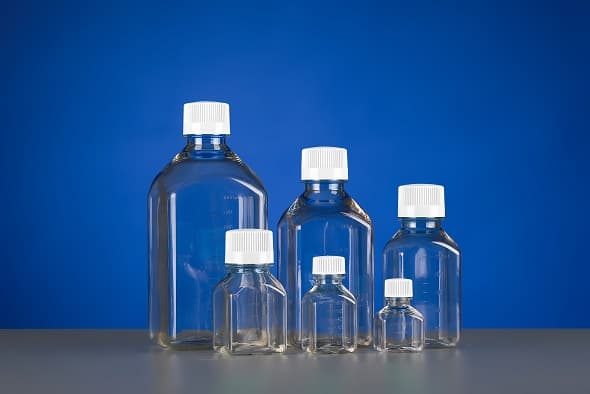
Media storage bottles for cell culture are sterile plastic containers for storing and dispensing tissue culture media, sera, buffers, and aqueous solutions. Three materials cover the main use cases: PC (polycarbonate) for autoclavable, reusable high-clarity storage; PET for single-use, glass-clear media storage at −60 °C to +60 °C; and PETG (glycol-modified PET) for low-temperature stability to −80 °C, superior impact resistance, and closed-system accessory cap assemblies. NEST Scientific PET and PETG bottles (USP Class VI, ISO 10993, gamma/E-beam sterile) are available from 60 mL to 1 L.
MBP carries all three formats with direct PO ordering for labs across the USA, Canada, and worldwide. Request a quote by contacting customerservice@mbpinc.net today!
Media Storage Bottles


Showing 1 to 12 of 15 results
What are Media Storage Bottles?
Media storage bottles for cell culture are sterile, single-use or multi-use plastic containers used to store and dispense tissue culture media, sera, buffers, and other aqueous solutions in research and biopharmaceutical laboratory settings. Choose PC bottles for autoclavable reuse; PET for single-use media storage and transport; PETG for low-temperature archival, closed-system transfer, and pH-sensitive long-term storage.
What you will find:
-
PETG Square Bottles for space-saving laboratory storage
-
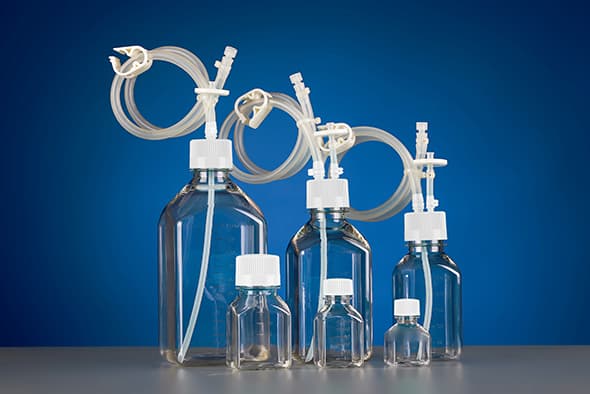
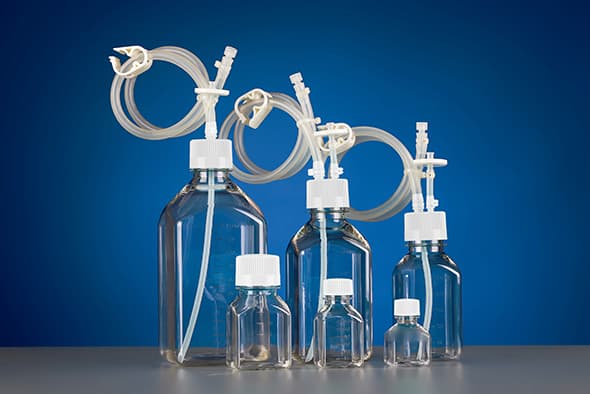
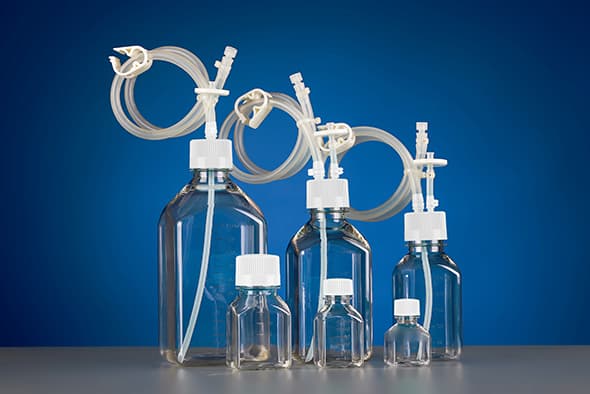
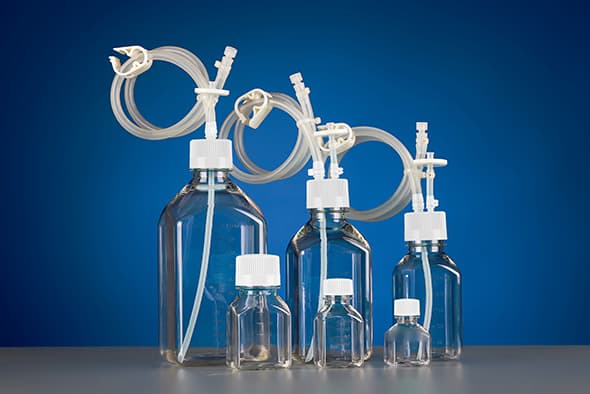
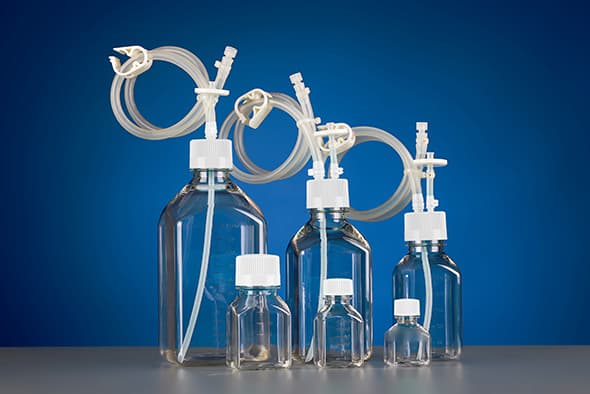
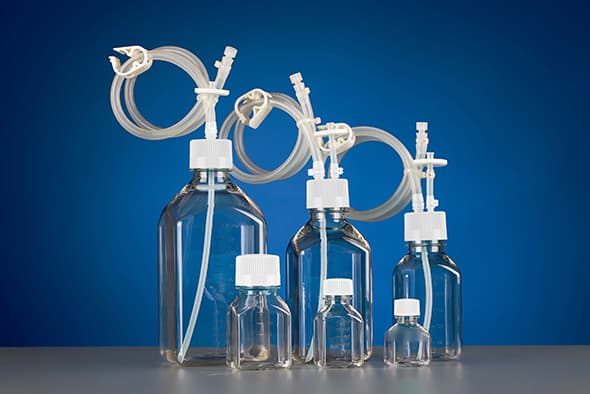
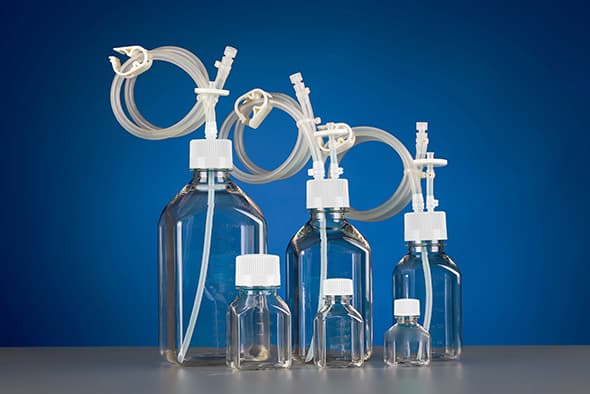
PETG Bottle With Accessories for specialized fluid handling
-
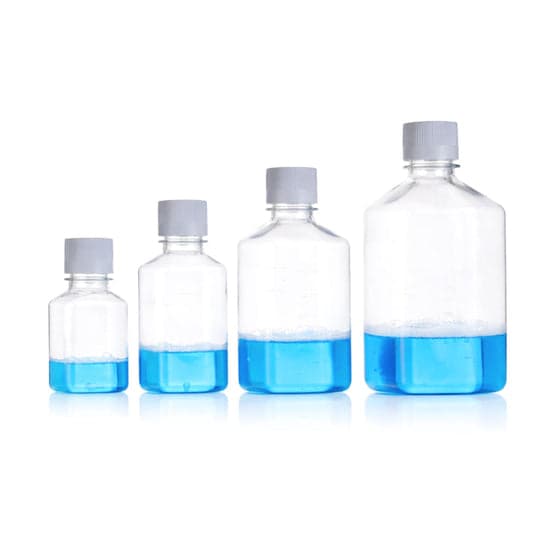
PET Media Bottles for high-clarity reagent containment
-
PC Media Bottles for superior mechanical durability
How to Choose Media Storage Bottles
Material: PC vs. PET vs. PETG
PC (polycarbonate) bottles are window-clear, shatter-proof, and rated for repeated autoclaving (up to 5–10 cycles) — the standard for labs that prepare and sterilize media in-house. PC is resistant to alcohols, weak acids, and aliphatic hydrocarbons; it is not compatible with strong bases or organic solvents. PC contains BPA (bisphenol A) by its monomer chemistry and is not recommended for long-term hormone-sensitive cell culture applications. PET bottles are optically clear, lighter than glass, non-cytotoxic, and non-autoclavable, rated from −60 °C to +60 °C. They are the cost-effective standard for single-use media and sera storage in non-autoclave workflows. PETG (glycol-modified PET) adds a glycol co-monomer that reduces crystallinity, improving impact resistance, low-temperature stability to −80 °C, and flexibility. PETG is the preferred material for long-term storage of pH-sensitive liquids, protein/vaccine intermediates, and applications requiring closed-system accessory assemblies.
Round vs. Square Bottles
Round bottles (Boston round, GL45 thread) are compatible with standard bottle-top vacuum filtration systems (Millipore Stericup, Corning Costar) and are the format of choice for media vacuum-filtered in-house. Square bottles conserve refrigerator and cold room shelf space due to their flat sides and stackable design, reducing storage footprint by approximately 25% versus equivalent-volume round bottles. NEST Scientific PET and PETG square media bottles feature molded graduations and a white labeling area on two sides.
Volume Range
Standard media bottle volumes are 60 mL, 125 mL, 250 mL, 500 mL, and 1,000 mL, corresponding to common media and sera kit sizes. A 250 mL bottle accommodates a standard 250 mL media aliquot; a 500 mL bottle holds standard FBS lots or 500 mL media packs. Confirm that the bottle's nominal volume includes 15% additional headspace for mixing, thawing expansion, and transfer operations.
Accessory Assembly vs. Standard Cap
Standard PETG square media bottles ship with an HDPE screw cap — suitable for storage and manual transfer. PETG bottles with accessory caps (bi-directional transfer cap + TPE tubing + Luer lock or CPC connector, NEST catalog 3525xx series) create a fully closed aseptic liquid transfer system — used in cGMP environments, bioprocess research, and any workflow where open-pour media transfer creates contamination or regulatory risk.
Sterility and Certifications
For cell culture use, all media storage bottles must be certified DNase/RNase-free, non-pyrogenic (endotoxin-free), and non-cytotoxic. NEST Scientific PET and PETG media bottles meet USP Class VI and ISO 10993 biocompatibility requirements, are manufactured in ISO 8 cleanrooms, and are gamma or E-beam-sterilized. PC bottles from autoclave-capable suppliers use virgin Lexan® PC resin compliant with USP Class VI.
Specifications Context
NEST Scientific square PET media bottles (catalog 334xxx) and PETG media bottles (catalog 352xxx) are manufactured from 100% virgin material in ISO 8 cleanrooms. Both materials meet USP Class VI and ISO 10993 biocompatibility requirements. Bottles are gamma irradiated in the USA or E-beam sterilized to SAL 10⁻⁶; each lot is certified DNase/RNase-free, pyrogen-free, and endotoxin-free. PETG bottles feature molded graduations (not printed), smooth inner surface to minimize residue on the wall, a one-shot-molded cap seat (no inner gasket required), and a double-bagged sterile packaging format meeting GMP purification workshop material-entry requirements. NEST Scientific PET and PETG media bottles are stocked by MBP in sizes from 60 mL to 1,000 mL.
Don't wait for a contamination crisis to upgrade your storage. Reach out to the Molecular Biology Products Inc. experts for a quote and keep your reagents locked down.
FAQ