Product Filters

High-Fidelity PCR Reagents for Accurate Amplification


MBP Inc. supplies high-fidelity PCR reagents from Azura, Accuris, and MegaFi — proofreading DNA polymerases and 2x high-fidelity master mixes featuring enhanced fidelity relative to standard Taq polymerase — for accurate DNA amplification. These reagents are widely used for cloning, mutagenesis, sequencing, and other applications where preservation of target sequence integrity is critical across research laboratories in the USA and Canada.

Validated for demanding molecular biology workflows, these reagents support reliable, high-accuracy amplification. Request a quote today by contacting customerservice@mbpinc.net to identify the most suitable high-fidelity PCR solution for your application.

High-Fidelity PCR
Per Page:
Sort By:
Accuris High Fidelity DNA Polymerase
List Price:
USD10.17 - USD866.50
Online Price:
USD7.26 - USD618.93
Your Price:
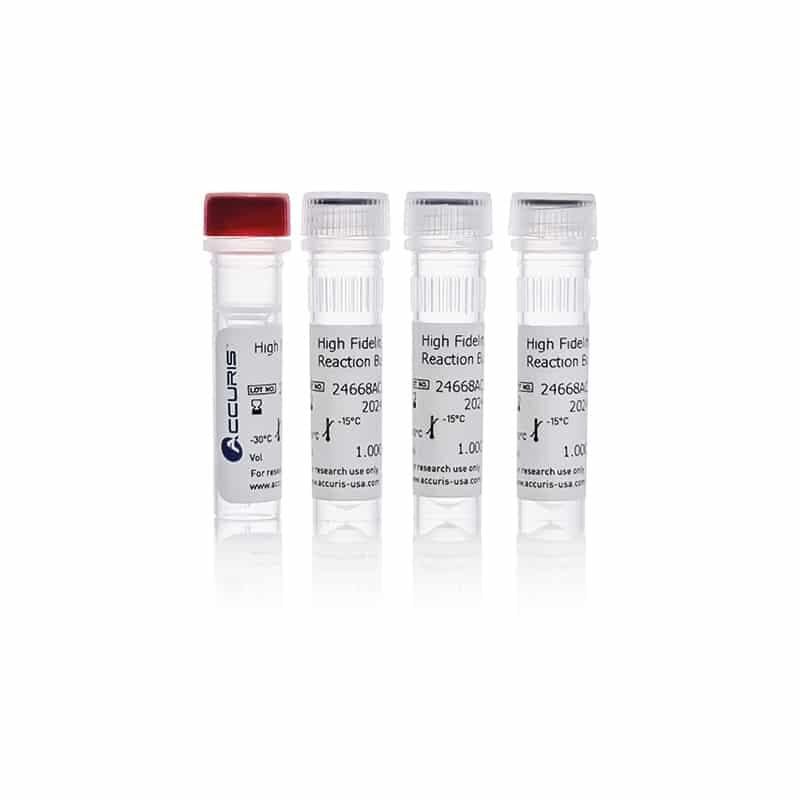
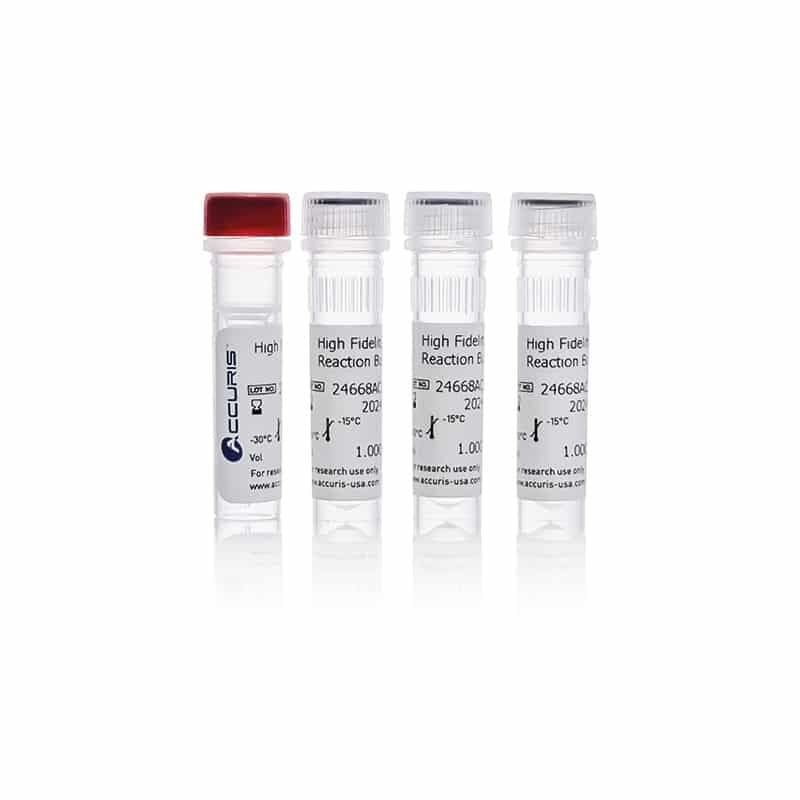
Accuris High Fidelity Hot Start Master Mix
List Price:
USD10.17 - USD558.00
Online Price:
USD7.26 - USD398.57
Your Price:
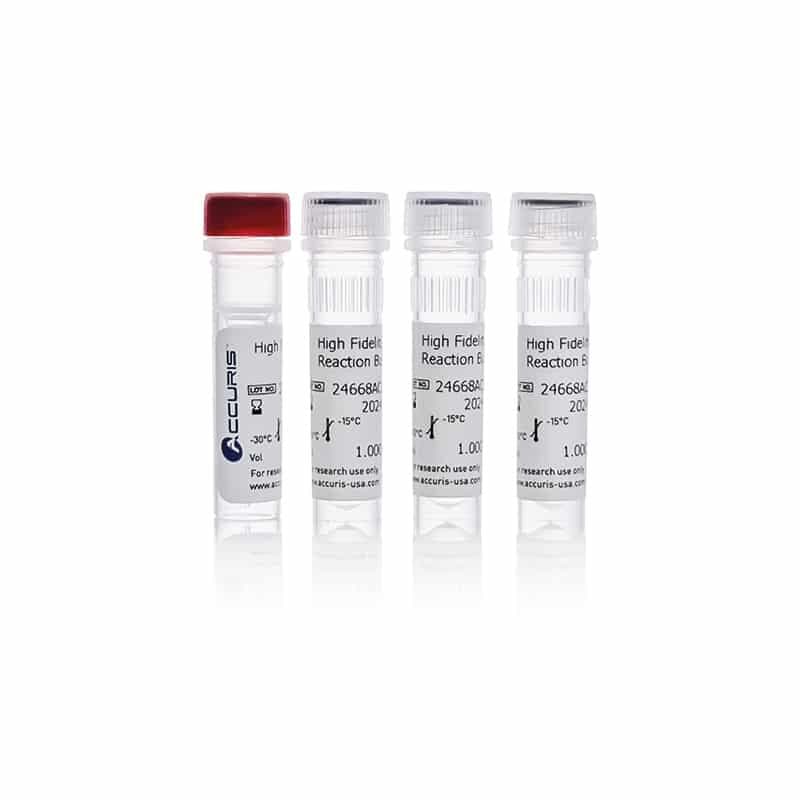
Accuris High Fidelity PCR Master Mix
List Price:
USD10.17 - USD558.00
Online Price:
USD7.26 - USD398.57
Your Price:
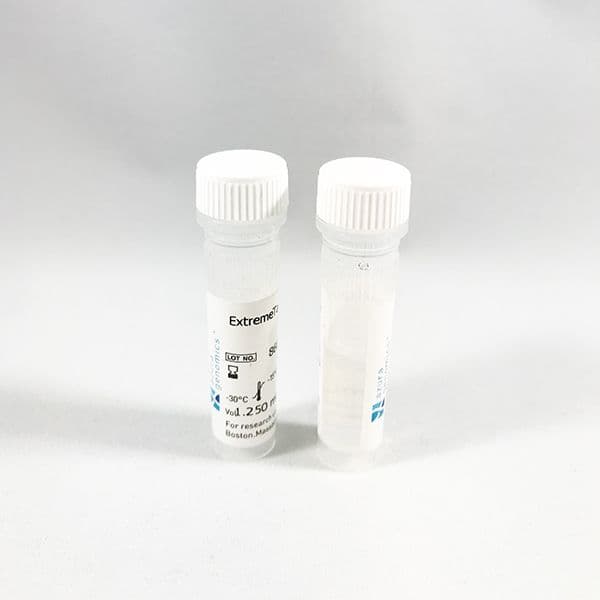
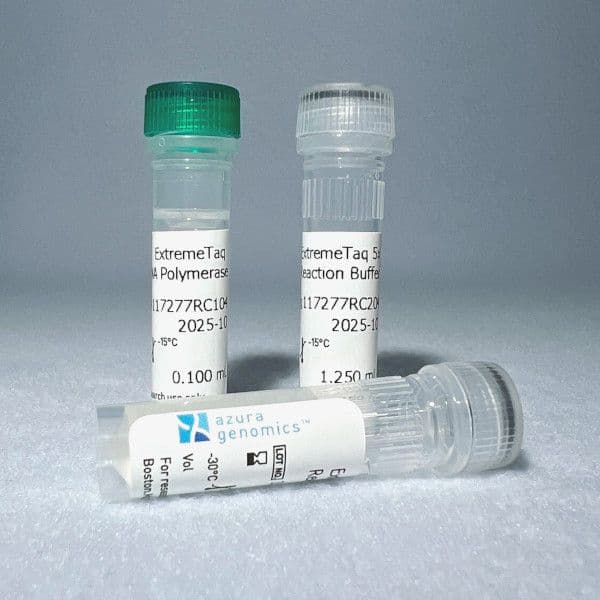
Azura ExtremeTaq HiFi Mix
List Price:
USD118.37 - USD831.25
Online Price:
USD84.55 - USD593.75
Your Price:
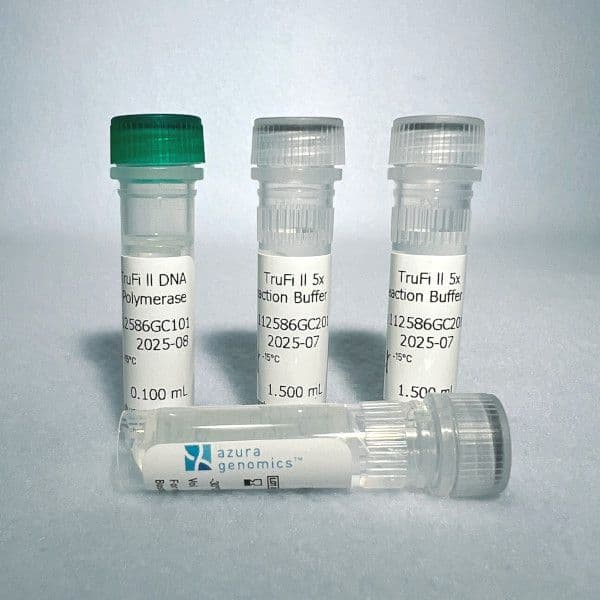
Azura TruFi™ II DNA Polymerase
List Price:
USD198.17 - USD751.45
Online Price:
USD141.55 - USD536.75
Your Price:
ExtremeTaq™ DNA Polymerase (With 5x Reaction Buffer)
List Price:
USD305.90 - USD2,114.70
Online Price:
USD218.50 - USD1,510.50
Your Price:
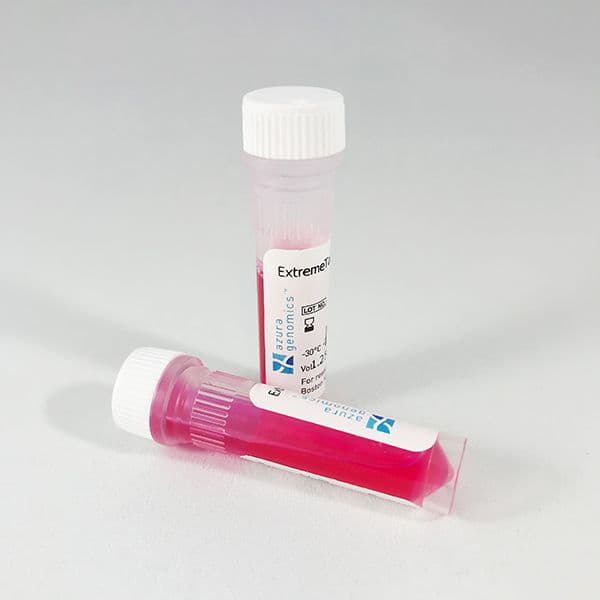
ExtremeTaq™ HiFi Red Mix
List Price:
USD118.37 - USD831.25
Online Price:
USD84.55 - USD593.75
Your Price:
MegaFi Pro Fidelity 2X PCR MasterMix
List Price:
USD319.86
Online Price:
USD228.47
Your Price:
MegaFi Pro Fidelity DNA Polymerase
List Price:
USD157.54
Online Price:
USD112.53
Your Price:
TruFi™ II Ultra 2x PCR Mix
List Price:
USD232.75 - USD1,429.75
Online Price:
USD166.25 - USD1,021.25
Your Price:
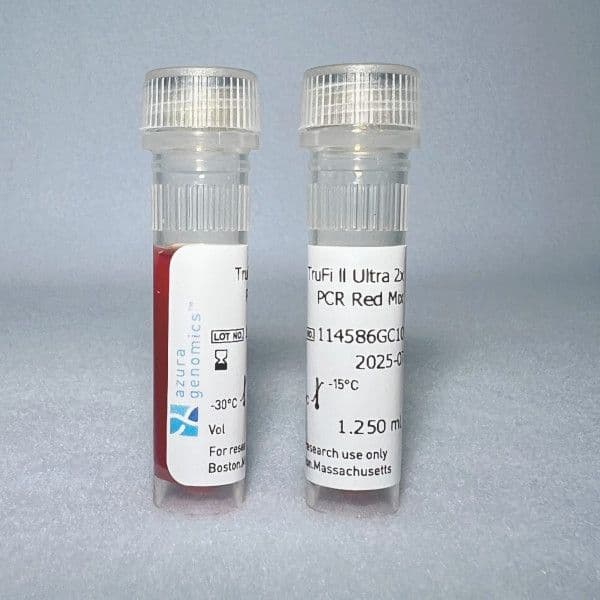
TruFi™ II Ultra 2x PCR Red Mix
List Price:
USD232.75 - USD1,429.75
Online Price:
USD166.25 - USD1,021.25
Your Price:

Showing 1 to 11 of 11 results

What Is High-Fidelity PCR?


High-fidelity DNA polymerases possess 3' to 5' exonuclease (proofreading) activity that corrects misincorporated nucleotides during DNA synthesis. This correction mechanism reduces the per-cycle error rate by approximately 100-fold compared to standard Taq, which lacks proofreading activity entirely. High-fidelity amplification is critical when sequence accuracy matters. Select a system designed for precise DNA replication.


What you will find:


  • High-Fidelity Master Mix: All-in-one 2X formulations like ExtremeTaq™ and MegaFi Pro that streamline your workflow, featuring "Red Mix" variants for direct-to-gel loading.
  • High-Fidelity DNA Polymerase: Ultra-pure standalone enzymes such as TruFi™ II and Accuris HF, offering the enhanced processivity required for long-range PCR and site-directed mutagenesis.


How to Choose High-Fidelity PCR Reagents


Polymerase Family
Phusion, Q5, KOD, and Pfu-equivalent polymerases each offer 3' to 5' proofreading exonuclease activity, with differences in processivity, extension speed, and compatibility with GC-rich or difficult templates — selection often depends on the specific template characteristics.

Format
Individual high-fidelity enzymes with optimised HF buffers offer flexibility for custom protocols; 2x high-fidelity master mixes pre-combine components for streamlined high-throughput precision amplification.

Application Requirement
Cloning into expression vectors, site-directed mutagenesis, and any amplicon intended for sequencing benefit substantially from the reduced error rate of high-fidelity enzymes compared to standard Taq.

Template Difficulty
GC-rich templates, long amplicons, or templates with secondary structure may require specific high-fidelity polymerase formulations optimised for these challenges — check product-specific template compatibility notes.

Extension Time Considerations
High-fidelity polymerases often have different optimal extension times and temperatures compared to standard Taq — following the manufacturer's recommended cycling conditions is important for both yield and fidelity.


Specifications Context


High-fidelity DNA polymerases possess 3' to 5' exonuclease (proofreading) activity that detects and removes misincorporated bases immediately after insertion — this correction mechanism reduces the per-cycle error rate to approximately 10⁻⁶ per nucleotide, roughly 50-100 times more accurate than standard Taq. This level of accuracy is required wherever the resulting amplicon will be cloned into an expression vector, used for site-directed mutagenesis, or sequenced, since errors introduced during amplification would be propagated into the final construct or read. High-fidelity enzymes are typically stored at −20 °C with matched HF buffer systems.

Labs adopting high-fidelity PCR for a cloning workflow for the first time should confirm the chosen polymerase's compatibility with their planned downstream assembly method -- blunt-end cloning, TA cloning, or Gibson Assembly -- since some high-fidelity enzymes produce blunt-ended products by default, while others may require an additional A-tailing or end-repair step depending on the specific cloning strategy in use. Running a small-scale test amplification and verifying the product by gel electrophoresis before committing the template to a larger reaction is a useful checkpoint, particularly for difficult or previously unamplified targets. Product availability reflects MBP's catalogue as of mid-2026.

Secure your sequence accuracy—contact the MBP team today for a quote on our professional High-Fidelity PCR solutions.

FAQ

High-fidelity PCR uses DNA polymerases with 3' to 5' proofreading exonuclease activity, reducing the error rate to approximately 10^-6 per nucleotide -- about 50-100 times more accurate than standard Taq. It is required for cloning PCR products into expression vectors, preparing amplicons for Sanger or NGS sequencing, site-directed mutagenesis, and any application where PCR-introduced mutations would compromise downstream results.
Standard Taq lacks 3' to 5' proofreading activity and has an error rate of approximately 2.2 x 10^-5 per nucleotide per cycle. High-fidelity polymerases (Phusion, Q5, KOD, Pfu) possess 3' to 5' exonuclease activity that removes misincorporated bases immediately after insertion, reducing errors to approximately 10^-6 per nucleotide. High-fidelity polymerases also produce blunt-end products rather than the 3'-dA overhangs generated by Taq.
High-fidelity PCR products have blunt ends and are directly compatible with: blunt-end ligation (into restriction-cut, blunt-end vectors), Gibson Assembly (uses 5' to 3' exonuclease to generate overhangs from blunt PCR products), Golden Gate cloning (uses Type IIS restriction enzymes), and TOPO blunt cloning vectors. For TA cloning, a separate A-tailing step with Taq polymerase must be performed on purified, proofreading-enzyme-free PCR product.
Q5 High-Fidelity DNA Polymerase (NEB) has a reported error rate more than 100-fold lower than Taq, making it one of the most accurate thermostable polymerases available. Phusion High-Fidelity Polymerase is reported to be 52-fold more accurate than Taq. Both Q5 and Phusion support amplification up to 20 kb. Research at Vanderbilt University and other institutions has noted that Q5 provides cleaner bands and higher yield than Phusion under some challenging conditions.
The 3' to 5' proofreading exonuclease activity of high-fidelity polymerases can degrade both the primer 3' ends and template DNA, particularly at low template or primer concentrations. This degradation reduces the effective amount of substrate available for amplification, lowering yield. Phosphorothioate-modified primers (with phosphorothioate linkages at the 3' terminus) are resistant to proofreading degradation and improve high-fidelity PCR yield with difficult templates.
High-fidelity polymerases generally have faster extension rates than standard Taq. Phusion and Q5 can extend at 15-30 seconds per kb (compared to 1 minute per kb for standard Taq), and KOD Hot Start at 10-15 seconds per kb. This speed advantage means high-fidelity PCR cycles can be shorter than standard Taq cycles despite the additional proofreading step.
Yes. High-fidelity polymerases are available in both individual enzyme format (supplied with HF buffer) and 2x master mix format that includes pre-optimised enzyme, buffer, and dNTPs. Phusion High-Fidelity PCR Master Mix, Q5 Hot-Start 2x Master Mix, and KOD Hot Start Master Mix are all available through MBP in ready-to-use 2x format. Green-dye variants allowing direct gel loading are also available for some products.
High-fidelity polymerases can be used for genotyping, but they are significantly more expensive than standard Taq and offer no advantage in accuracy for genotyping applications where the goal is simply band presence or absence. Standard Taq or hot-start Taq master mixes are the cost-effective standard for genotyping. Reserve high-fidelity polymerases for applications where sequence accuracy matters -- cloning, sequencing, and mutagenesis.
We provide the highest quality of products and anytime customer service.
Featured Categories
    online payment
    online payment
    fast delivery
    fast delivery
    technical support
    technical support
    24/7 support
    24/7 support
    copy right
    2026 All Right Reserved