High Molecular Weight (HMW) DNA Extraction Kits for Long-Read Sequencing
High molecular weight (HMW) DNA extraction kits use gentle lysis and magnetic bead-based purification methods to recover intact genomic DNA while minimizing fragmentation. These kits are designed for applications requiring long DNA molecules, including long-read sequencing on PacBio and Oxford Nanopore platforms, genome assembly, structural variant analysis, and other genomics workflows.
Researchers can select an HMW DNA extraction kit based on sample type, downstream application, and sequencing requirements. Molecular Biology Products Inc. (MBP) offers high-performance HMW DNA isolation solutions, and our specialist team can help identify the most suitable extraction chemistry for your workflow. Request a quote today by contacting customerservice@mbpinc.net.
High Molecular Weight DNA
Showing 1 to 2 of 2 results
What are High Molecular Weight DNA Extraction Kits?
A high molecular weight (HMW) DNA extraction kit uses gentle cell lysis combined with magnetic bead-based or glass bead precipitation chemistry, circumventing the high-speed centrifugation and silica column shearing that fragments DNA in standard kits, to recover intact DNA molecules spanning hundreds of kilobases for long-read sequencing applications. Related entities include PacBio Nanobind chemistry, Oxford Nanopore ligation sequencing kit input requirements, N50 and GQN (genomic quality number) metrics for assessing fragment size distribution, and de novo genome assembly and structural variant detection workflows. Choose an HMW-specific kit over a standard genomic DNA kit whenever long-read sequencing (PacBio or Nanopore) is the downstream application, since standard spin-column kits typically fragment DNA below the size needed for optimal long-read performance.
What you will find:
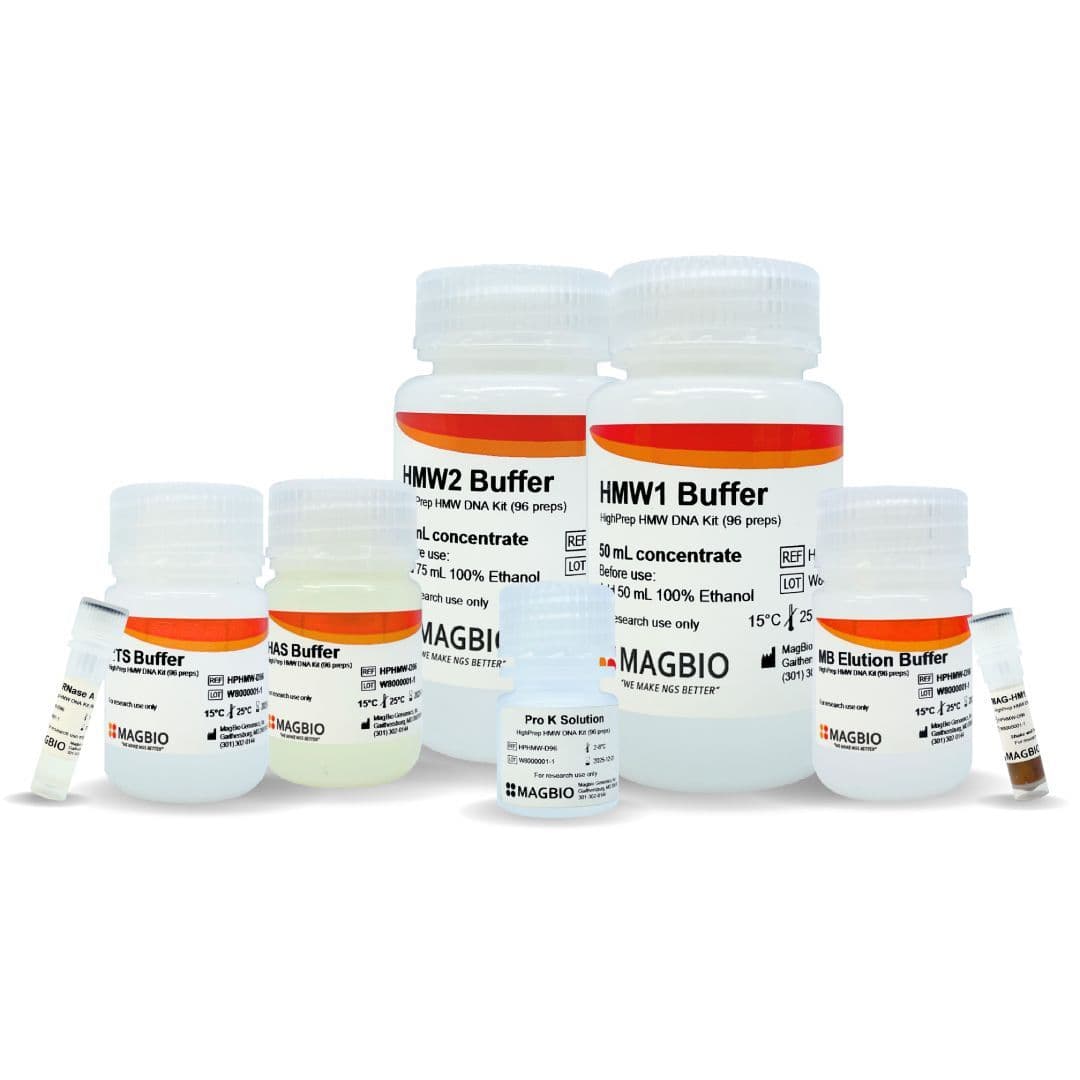
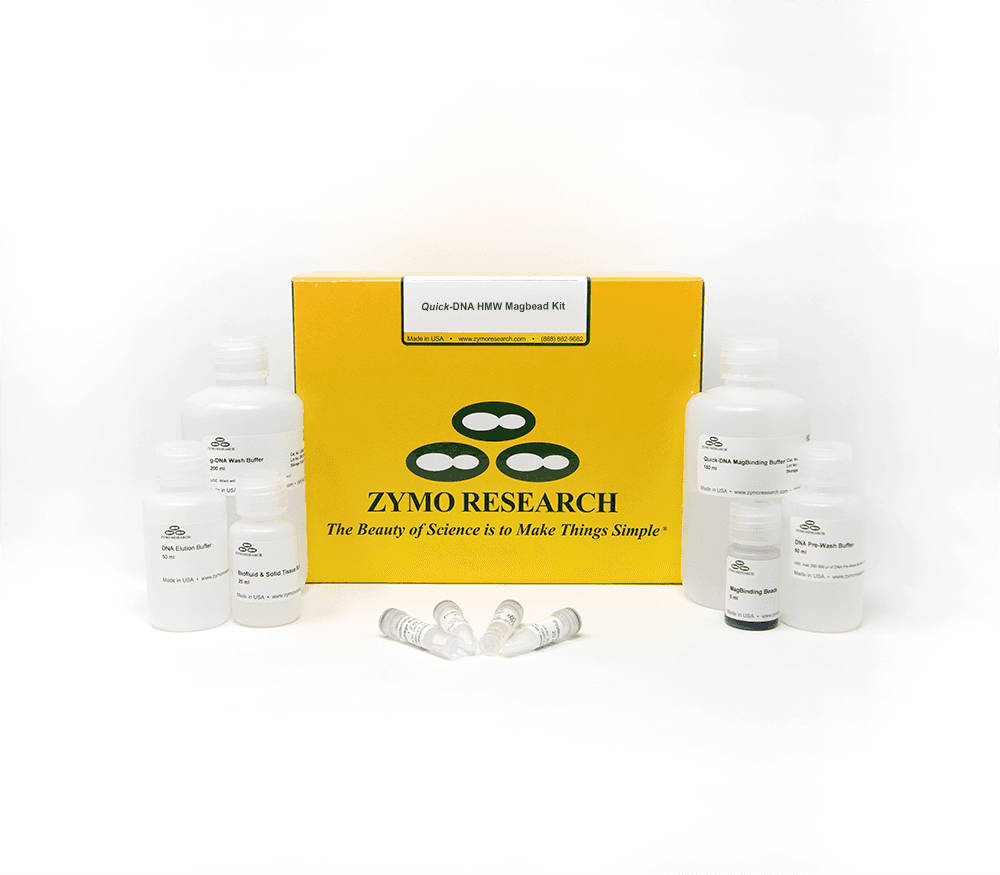
- High molecular weight DNA isolation kits, including the Quick-DNA™ HMW Kits and Magbio HighPrep HMW DNA Kit, for recovery of intact long genomic DNA.
- Magnetic bead-based extraction systems that minimize DNA fragmentation during isolation and cleanup.
- Solutions compatible with manual and automated workflows for efficient HMW DNA recovery.
- Sample preparation kits optimized for long-read sequencing, genome assembly, and structural variant analysis.
- HMW DNA isolation products suitable for blood, cultured cells, tissue, and other biological sample types.
How to Choose a High Molecular Weight DNA Extraction Kit
Expected fragment size range
HMW DNA extraction kits report fragment sizes ranging from 50-250 kb for standard protocols up to the megabase range for certain sample types when using the gentlest agitation speeds, compared to roughly 20-30 kb from standard silica spin-column kits. If your long-read sequencing application targets very large structural variants or genome assembly gaps, prioritize kits with documented sub-protocols for megabase-range output over standard HMW protocols.
Sample type and input requirements
HMW kits are typically validated for specific sample types - for example, a kit may specify a minimum of 3 ug yield from 200 ul of fresh/frozen whole blood, 1 million cells, or up to 8 mg of tissue, with different sample types (blood, cultured cells, plant tissue, bacteria) often requiring different sub-protocols within the same kit family. Match your sample type to a kit's documented protocol rather than assuming a "universal" HMW protocol works equally well across all inputs.
Purity ratios and downstream library prep
A260/280 and A260/230 ratios greater than 1.8 are generally preferred for HMW DNA to ensure minimal protein and salt/chemical contamination before long-read library preparation; ratios below this threshold can indicate issues requiring troubleshooting before proceeding to sequencing. PacBio library prep typically requires around 1 ug of HMW gDNA above 30 kb, while Oxford Nanopore ligation kits work with 100 ng to 1.5 ug, depending on target read length, so confirm your kit's typical yield meets your library prep platform's input range.
Avoiding fragmentation during handling
Even with an HMW-validated extraction kit, downstream handling - including pipetting, vortexing, and freeze-thaw cycles - can fragment HMW DNA; protocols emphasize gentle resuspension methods (e.g., tube tapping rather than vortexing) to preserve fragment size. If your lab's standard handling practices involve vigorous mixing, factor in protocol adjustments to avoid degrading HMW output after extraction.
Specifications context
The defining specs for HMW DNA extraction are the fragment size range achievable for your sample type, sample-specific input requirements, expected yield, and purity ratios (A260/280 and A260/230 above 1.8) relative to your long-read library prep platform's input requirements. A kit yielding several micrograms of DNA above 50 kb from standard blood, cell, or tissue inputs, with purity ratios above 1.8, covers most PacBio and Nanopore library prep workflows. Genome assembly projects working across multiple sample types often need both a blood/tissue mag bead kit validated for HMW output from animal samples and a plant mag bead kit for HMW output from polysaccharide-rich plant tissue, since lysis chemistry differs by organism. The parent genomic DNA extraction kits hub links to related sample-type categories, and for metagenomic long-read sequencing, microbial and environmental DNA isolation kits address fragment-length considerations specific to environmental matrices. For the opposite end of the size spectrum, cell-free DNA extraction kits target short circulating fragments rather than HMW DNA.
MBP's specialist team can help match kit chemistry, format, and throughput to your sample type and downstream application. Contact the MBP team for personalized guidance.
FAQ