Magnetic Bead Genomic DNA Kits for Blood and Tissue
Magnetic bead genomic DNA kits for blood and tissue bind DNA to the surface of paramagnetic beads using specialized lysis and binding buffers, followed by washing and elution with a magnetic separator instead of centrifugation. By eliminating centrifugation, tube transfers, and balancing steps, magnetic bead technology streamlines DNA purification and supports both manual and automated extraction workflows.
Laboratories building automated genotyping, sequencing, or molecular screening pipelines can readily scale magnetic bead workflows to high-throughput formats without requiring a 96-well centrifuge rotor. Request a quote today by contacting customerservice@mbpinc.net
Mag Beads
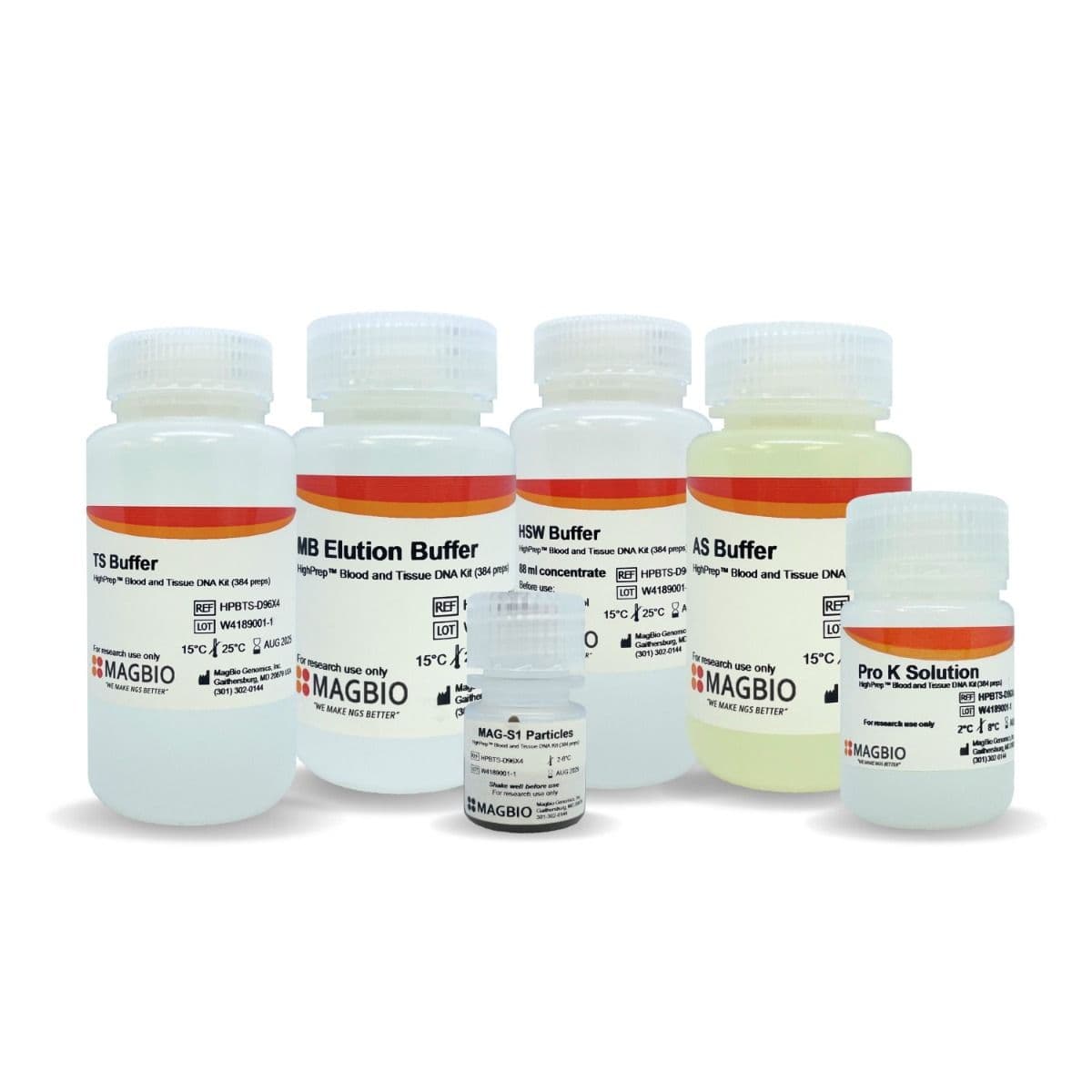
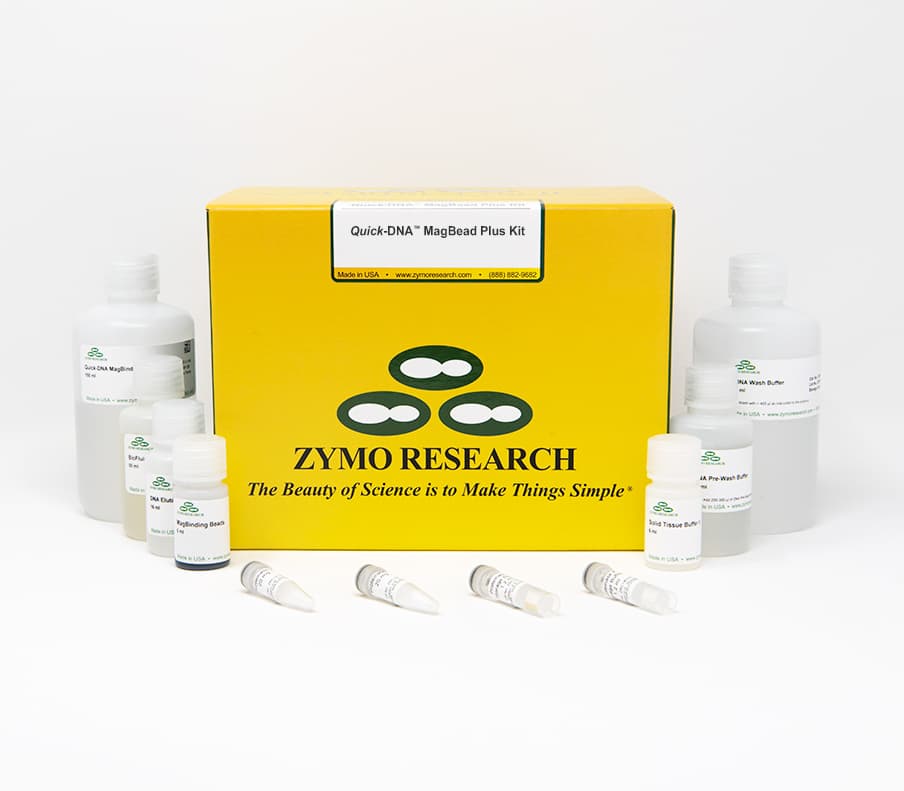
Showing 1 to 2 of 2 results
What Are Magnetic Bead Genomic DNA Kits for Blood and Tissue?
Magnetic bead genomic DNA kits for blood and tissue use paramagnetic beads to capture genomic DNA released during sample lysis. Following DNA binding, a magnetic separator immobilizes the beads, and contaminants are removed by wash steps before purified DNA is eluted. Unlike spin-column workflows, magnetic bead protocols eliminate centrifugation and simplify automation, making them well-suited to high-throughput laboratories and automated liquid-handling systems.
Magnetic bead extraction is often selected when automation, reduced hands-on processing, or compatibility with high-throughput workflows is a priority. Specialized high-molecular-weight (HMW) magnetic bead chemistries are also available for applications requiring longer DNA fragments for advanced sequencing workflows.
What you will find:
- Quick-DNA™ Magbead Plus Kit: Magnetic bead-based genomic DNA purification for blood, tissue, cultured cells, and other biological samples.
- Automation-Compatible Workflows: Designed for seamless integration with manual and automated magnetic separation platforms.
- High-Yield DNA Recovery: Optimized to produce purified genomic DNA suitable for PCR, qPCR, genotyping, sequencing, and other downstream molecular biology applications.
- Streamlined Sample Processing: Eliminates centrifugation steps through magnetic bead technology, simplifying genomic DNA extraction workflows.
How to Choose a Magnetic Bead Genomic DNA Kit for Blood and Tissue
Sample Input and Processing Time
Most magnetic bead kits are designed to process approximately 100-400 µL of whole blood or buffy coat per preparation. Tissue and cultured cell inputs vary by kit but generally support small tissue samples and several million cells per extraction. Manual workflows can often be completed in about 20 minutes because centrifugation steps are eliminated.
Yield and Purity Requirements
Magnetic bead extraction kits are capable of producing high-quality genomic DNA suitable for PCR, qPCR, genotyping, sequencing, Southern blotting, and related molecular biology applications. DNA purity is commonly comparable to silica-based purification methods, making these kits suitable for most downstream workflows.
Automation Compatibility
One of the primary advantages of magnetic bead chemistry is its compatibility with automated liquid handling platforms. Because DNA capture and washing occur through magnetic separation rather than centrifugation, these workflows can be readily adapted to 96-well and higher-throughput automated formats.
High-Molecular-Weight DNA Applications
Some magnetic bead systems are specifically optimized for high-molecular-weight genomic DNA recovery. These workflows can preserve larger DNA fragments required for long-read sequencing, linked-read assembly, structural variation analysis, and other applications where DNA integrity is critical.
Specifications Context
Magnetic bead genomic DNA extraction kits are differentiated by their centrifuge-free workflow, automation compatibility, and flexibility across blood, buffy coat, tissue, and cultured cell samples. The magnetic separation process reduces manual handling steps while supporting consistent DNA recovery and scalable throughput. Many laboratories adopt magnetic bead workflows when transitioning from manual extraction methods to automated sample preparation systems. Compared with traditional spin-column methods, magnetic bead purification simplifies integration with robotic liquid handlers and high-throughput extraction platforms while maintaining DNA quality suitable for PCR, qPCR, sequencing, and genotyping applications. When selecting a kit, evaluate sample input requirements, automation compatibility, DNA purity specifications, and whether high-molecular-weight DNA recovery is required for downstream applications. Most kit reagents are stored according to manufacturer recommendations, and lot-specific Certificates of Analysis (CoAs) are available upon request.
Contact the expert team at MBP to get high-quality mag beads for blood/tissue genomic DNA extraction workflows to scale up your laboratory throughput.
FAQ