Cell-Free DNA Extraction Kits for Liquid Biopsy
Cell-free DNA extraction kits purify circulating cfDNA fragments, typically 100-500 bp in size, from plasma, serum, or urine using silica spin columns or silica-coated magnetic particles, with input volumes ranging from under 1 ml to over 10 ml depending on the kit. Buffer chemistry is optimized to maximize recovery of short cfDNA fragments for downstream qPCR, NGS, and bisulfite sequencing in liquid biopsy and biomarker discovery research.
Researchers working on non-invasive biomarker projects can choose between column-based and magnetic bead-based chemistry depending on automation needs, and MBP's specialist team can help match input volume and elution requirements to your assay. Request a quote today by contacting customerservice@mbpinc.net
Cell-Free DNA
Showing 1 to 2 of 2 results
What Are Cell-Free DNA Extraction Kits?
A cell-free DNA (cfDNA) extraction kit purifies circulating cfDNA fragments from plasma, serum, or urine using silica spin-column or magnetic bead-based technologies. These kits are optimized to recover the short DNA fragments commonly found in liquid biopsy samples for downstream applications such as PCR, qPCR, next-generation sequencing (NGS), and methylation analysis. Choose a cfDNA-specific kit over a general genomic DNA kit whenever short circulating DNA fragments are the primary target.
What you will find:
- MagBio cfKapture ccfDNA Extraction Kit: for cell-free DNA isolation using advanced magnetic bead-based technology.
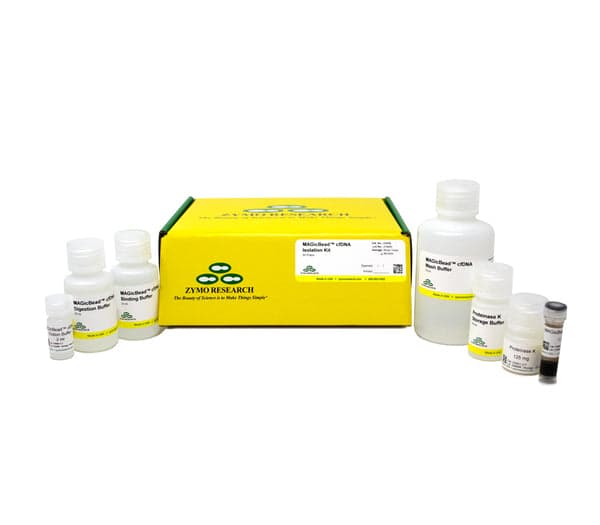
- MAGicBead™ cfDNA Isolation Kit: for automated, high-throughput liquid biopsy workflows using high-binding paramagnetic particles.
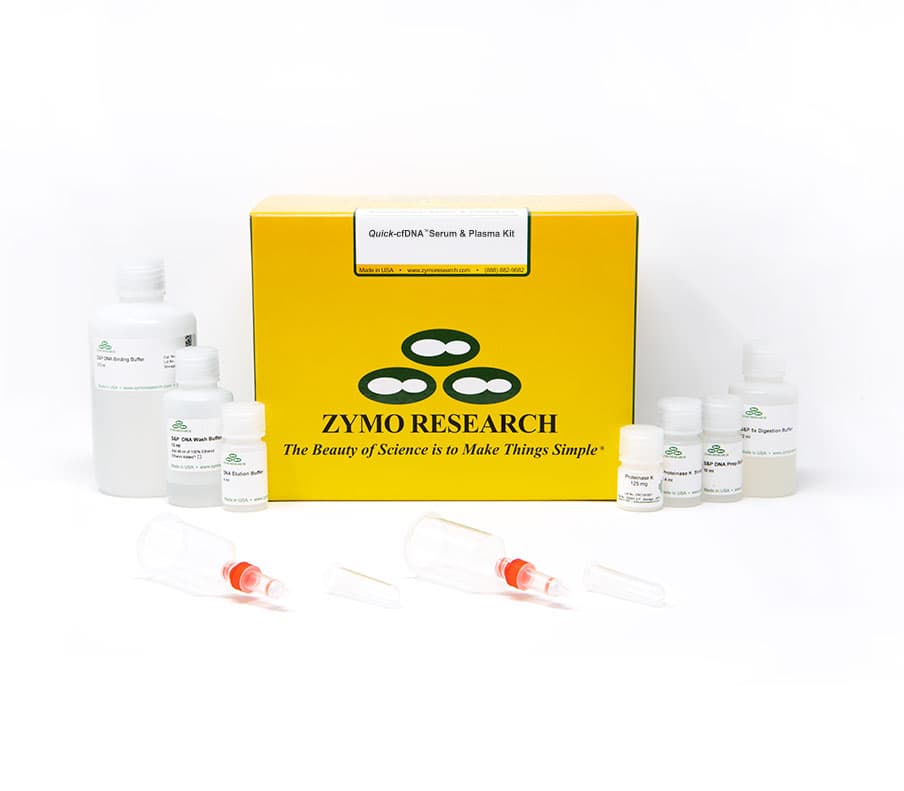
- Quick-cfDNA™ Serum & Plasma Kit: for streamlined manual benchtop purification using rapid spin-column technology.
How to Choose a Cell-Free DNA Extraction Kit
Input Volume Range
Choose a kit compatible with your typical plasma, serum, or urine input volume. Larger sample volumes generally increase total cfDNA recovery but may require additional reagents and longer processing times.
Column-Based vs. Magnetic Bead-Based Chemistry
Silica spin-column kits are widely used for manual purification workflows, while magnetic bead-based kits simplify automation and high-throughput processing on compatible liquid handling platforms.
Elution Volume for Downstream Assays
Select an elution volume that matches the input requirements of your downstream applications, such as PCR, qPCR, or NGS library preparation, to minimize additional concentration or dilution steps.
Combined DNA/RNA Recovery
If your workflow requires analysis of both circulating DNA and RNA from the same specimen, consider kits designed to recover multiple nucleic acid types from a single sample.
Specifications Context
Key considerations when selecting a cell-free DNA extraction kit include sample input volume, purification chemistry, compatibility with manual or automated workflows, and elution volume for downstream molecular assays. Magnetic bead-based systems are commonly selected for scalable, automated liquid biopsy workflows, while spin-column kits provide reliable manual purification for routine laboratory use. The optimal kit depends on your sample type, throughput requirements, and downstream analytical methods.
MBP's specialist team can help match kit chemistry, format, and throughput to your sample type and downstream application. Contact the MBP team for personalized guidance.
FAQ