Laboratory Distillation Systems for Compound Purification
Laboratory distillation systems are instruments that separate and purify liquid compounds by vaporizing mixture components and condensing them at different temperatures or pressures, collecting each fraction individually. Types available at lab scale include conventional vacuum distillation glassware assemblies, short path distillation systems, and thin film or wiped film distillation units (for continuous, higher-throughput processing of viscous or thermally labile materials).
MBP provides purchase order procurement and direct specialist support for distillation systems for research institutions across the USA and Canada. Request a quote for laboratory distillation systems for compound purification, fractionation, and solvent processing by contacting customerservice@mbpinc.net.
Distillation Systems

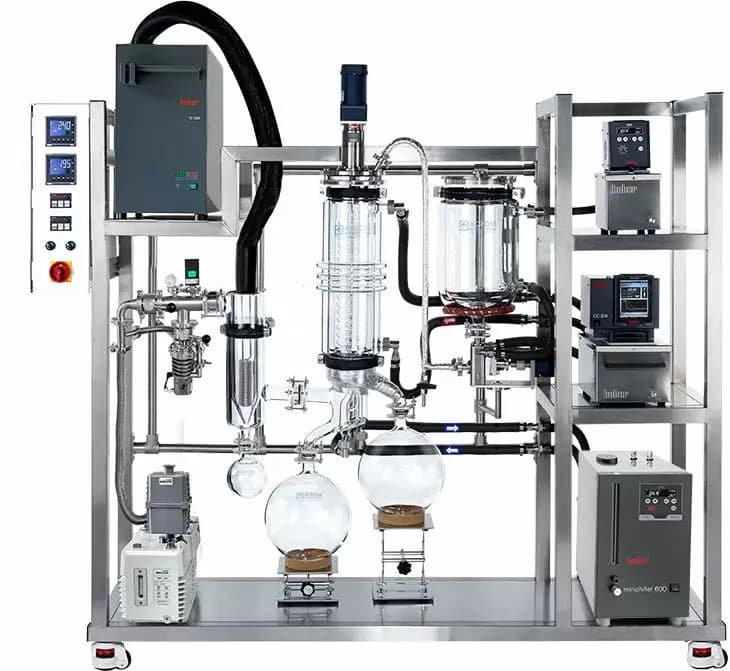
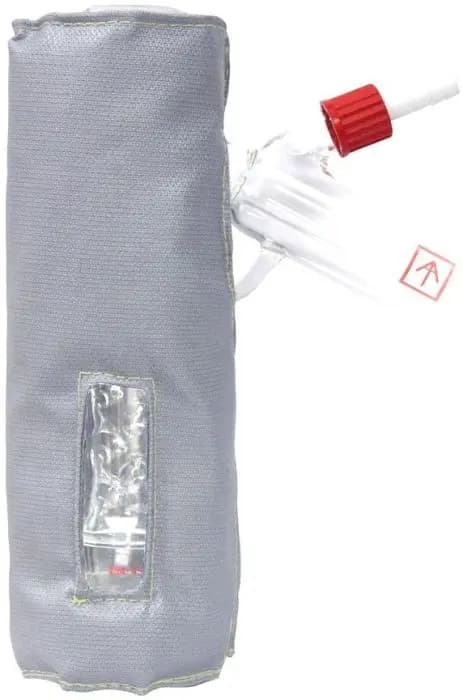


Showing 1 to 6 of 6 results
What Are Laboratory Distillation Systems?
Laboratory distillation systems separate and purify compounds from liquid mixtures by vaporizing components sequentially based on differences in boiling point or molecular free path length, then condensing and collecting each component fraction in a receiver. Applications span pharmaceutical API purification, cannabinoid and terpene fractionation, essential oil and fatty acid distillation, fine chemical isolation, and removal of residual solvents from high-value extracts. For heat-stable compounds differing by more than 25 degrees C in boiling point, use conventional vacuum distillation; for heat-sensitive, high-boiling compounds, use short path (small batch) or thin film (continuous) systems.
What You Will Find:
- Minimizes thermal stress by reducing the distance vapor travels, making it ideal for fragile, heat-sensitive molecules.
- Eliminates the need for bulky columns, which significantly reduces product loss during the distillation process.
- Widely used in research labs for isolating high-purity volatile substances with a compact footprint.
- Spreads liquid into a thin layer over a heated surface to allow for extremely rapid and efficient evaporation.
- Perfectly suited for processing high-viscosity materials and compounds that require short residence times.
- Optimizes process yield in industrial-scale purification while maintaining consistent product quality.
How to Choose a Distillation System
Target compound thermal stability
This is the primary selection criterion. Compounds stable at temperatures above 200 degrees C under mild vacuum can be distilled using conventional vacuum distillation glassware. Compounds that degrade, polymerize, or decompose below 200 degrees C require short path or thin film distillation operating at 0.001 to 1 mbar, where effective boiling temperatures drop to 100 to 150 degrees C or lower. Cannabinoids, vitamin E acetate, fatty acid esters, and high-molecular-weight essential oil fractions are common examples of thermally sensitive targets requiring high-vacuum systems.
Batch vs. continuous operation
Short path distillation is fundamentally a batch process: a defined charge of material is loaded, distilled, and collected before the next batch is prepared. Thin film and wiped film distillation systems are continuous: feed is introduced at the top of a heated vertical cylinder and flows down under gravity while wiper blades maintain a thin film, with distillate and residue continuously collected at separate outlets. Choose continuous systems when a throughput above 1 to 2 L/h is required or when operator attention during each batch is a constraint.
Vacuum depth
Short path and molecular distillation require the highest vacuum: 0.001 to 0.01 mbar, achieved with a two-stage rotary vane pump plus a cold trap, or a diffusion pump. Conventional vacuum distillation uses a diaphragm pump at 5 to 20 mbar. Thin film evaporators used as pre-concentration steps before short path distillation operate at 1 to 50 mbar. Match the pump to the distillation system specification; using an insufficient vacuum source is the most common cause of poor short-path distillation performance.
Glassware vs. stainless systems
Lab-scale distillation systems are most commonly borosilicate glass (chemically resistant, visible operation, easy to clean, fragile) or stainless steel 316L with glass view ports (more durable, higher pressure rating, required for some regulated or GMP-adjacent workflows). PTFE gaskets and seals are standard for chemical resistance; avoid rubber or silicone seals in contact with halogenated solvents or concentrated acids.
Cold trap and condenser cooling
All vacuum distillation systems require a condenser cooled below the boiling point of the target distillate. Short path systems use an internal water-cooled or chilled-water condenser; the condenser temperature determines which fractions condense and which pass through to the vacuum trap. A separate cold trap between the distillation head and the vacuum pump is essential to protect the pump from solvent vapor contamination at any vacuum depth.
Specifications Context
System capacity for batch short path units is stated as flask or feed volume (0.5 L to 20 L). For continuous systems, capacity is throughput in L/h of feed processed. Heating jacket temperature and condenser temperature (both in degrees C) are the primary operating parameters; the difference between them drives the separation. Borosilicate glass components should meet ISO 3585 (borosilicate 3.3) or equivalent standard for chemical resistance and pressure rating. For all vacuum distillation systems, confirm the system's minimum achievable vacuum with the included pump, as vendor claims may be stated at ideal rather than operating conditions with real solvents and seals.
Boost your laboratory’s efficiency today—explore our distillation range and reach out to the MBP team for a quote.
FAQ