Cryogenic Vials for Ultra-Low Temperature Sample Storage
Cryogenic vials are screw-cap containers manufactured from cryogenic-grade virgin polypropylene, rated from −196°C in liquid nitrogen to +121°C in an autoclave, used to freeze and store cell lines, serum, DNA, RNA, bacteria, and other biological specimens. Available in 1.2 mL, 1.5 mL, 2 mL, 3 mL, and 5 mL volumes with internal or external thread configurations. All are gamma-sterilized and certified RNase-free, DNase-free, and non-pyrogenic. MBP stocks Globe Scientific CryoClear vials and ships to labs across the US, Canada, and internationally, with registered vendor status at leading research institutions including Howard Hughes Medical Institute and Vanderbilt University.
Need help selecting the right cryogenic vials for your laboratory? — Contact our team at customerservice@mbpinc.net for product recommendations, bulk pricing, and purchasing assistance.
Cryogenic Vials




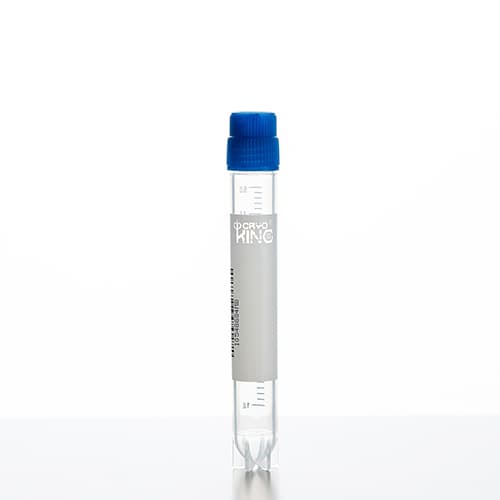
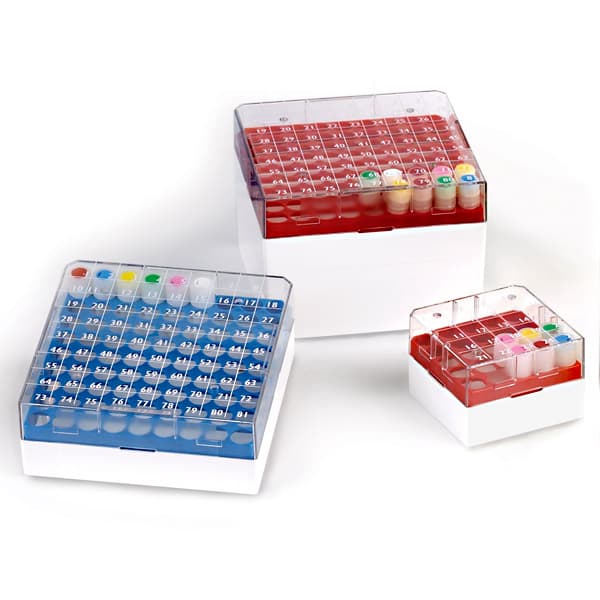
Showing 1 to 12 of 63 results
What Are Cryogenic Vials?
Cryogenic vials are specialized screw-cap laboratory containers manufactured from cryogenic-grade virgin polypropylene (PP) and designed to withstand extreme temperatures ranging from −196°C in liquid nitrogen storage to +121°C during steam autoclaving. They serve as the primary storage vessel for biological materials requiring long-term preservation, including cell lines, serum, plasma, blood samples, DNA, RNA, microbial cultures, and other biospecimens. Common vial capacities include 1.2 mL, 1.5 mL, 1.8 mL, 2 mL, 3 mL, and 5 mL, with the 2 mL format being the most widely used standard for cell culture and biobanking applications. Most cryogenic vials feature leak-resistant screw caps with silicone sealing gaskets and dedicated writing areas for sample identification. For storage in liquid nitrogen, it is important to use vials specifically certified for cryogenic applications, as standard laboratory tubes are not designed to tolerate temperatures as low as −196°C.
What You Will Find:
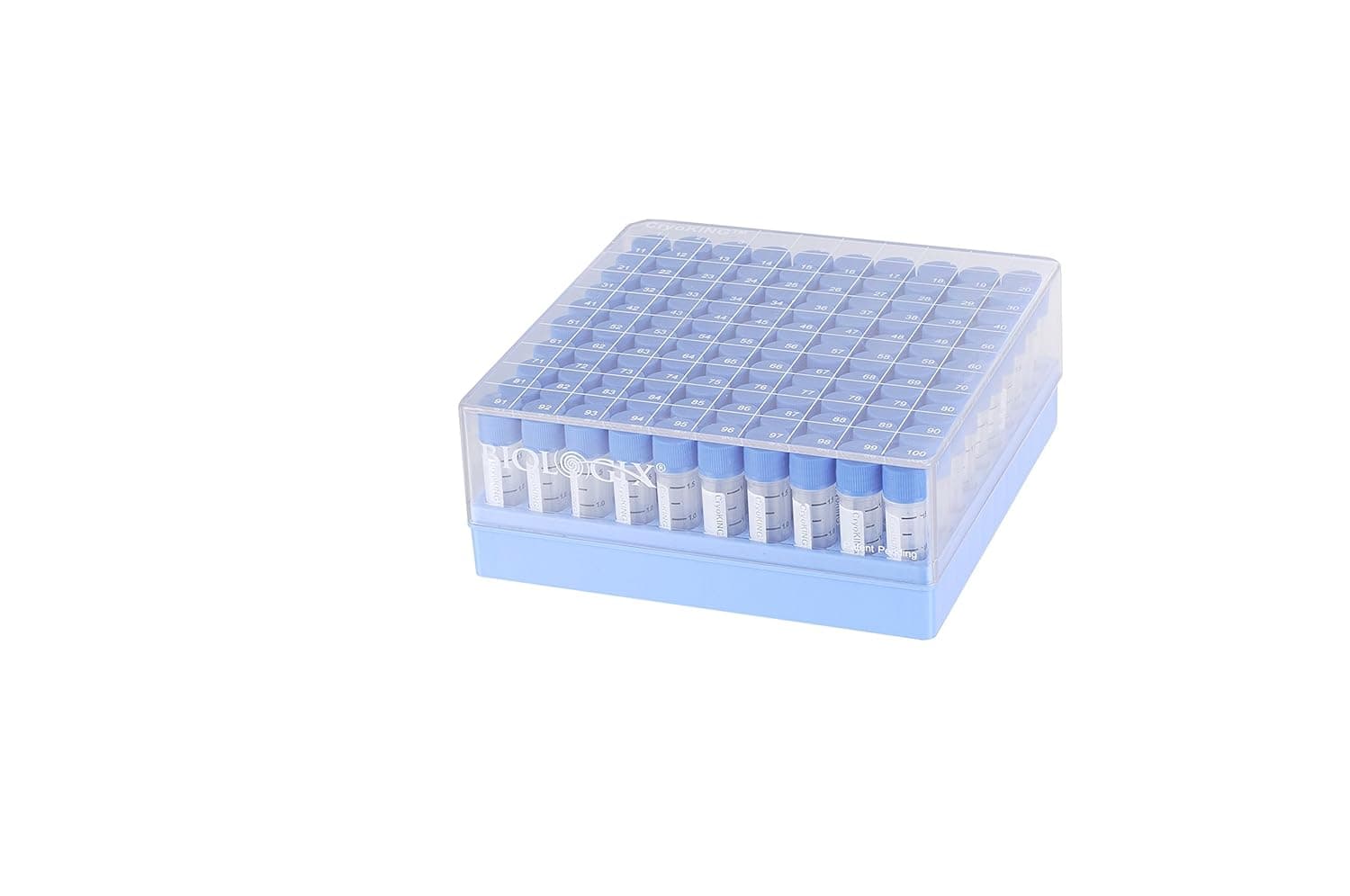
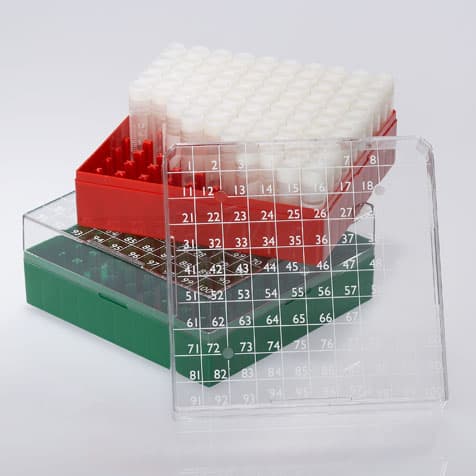
- Cryo Boxes: High-durability polycarbonate storage systems with integrated grids for rapid, indexed sample retrieval in ultra-low environments.
- Freezer Boxes: Moisture-resistant and stackable organizers designed to maximize space and maintain thermal consistency within -20 degree celsius and -80 degree celsius freezers.
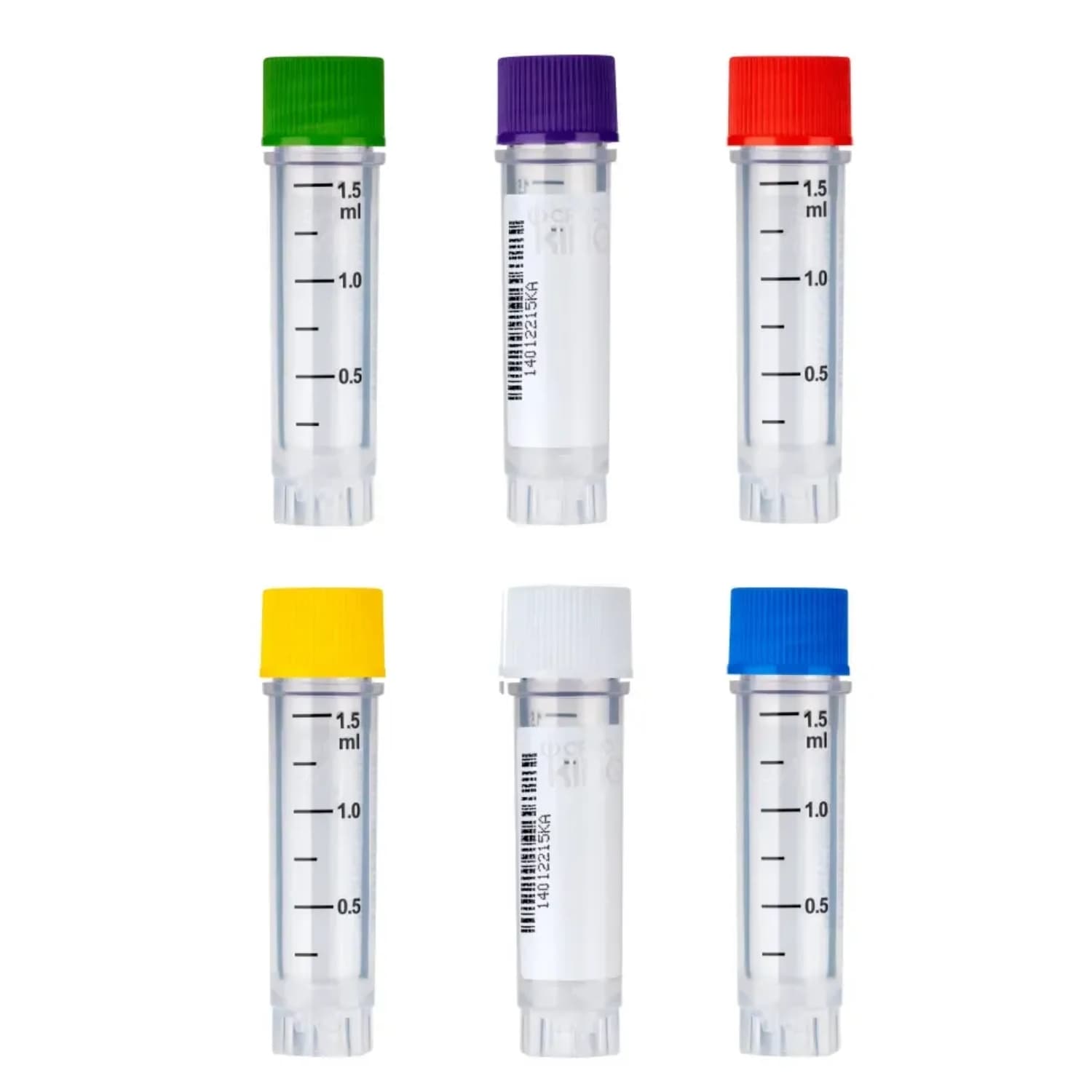
- Externally Threaded Cryogenic Vials: Designed with threads on the outside of the vial to minimize contamination risk and maximize the internal volume for sample storage.
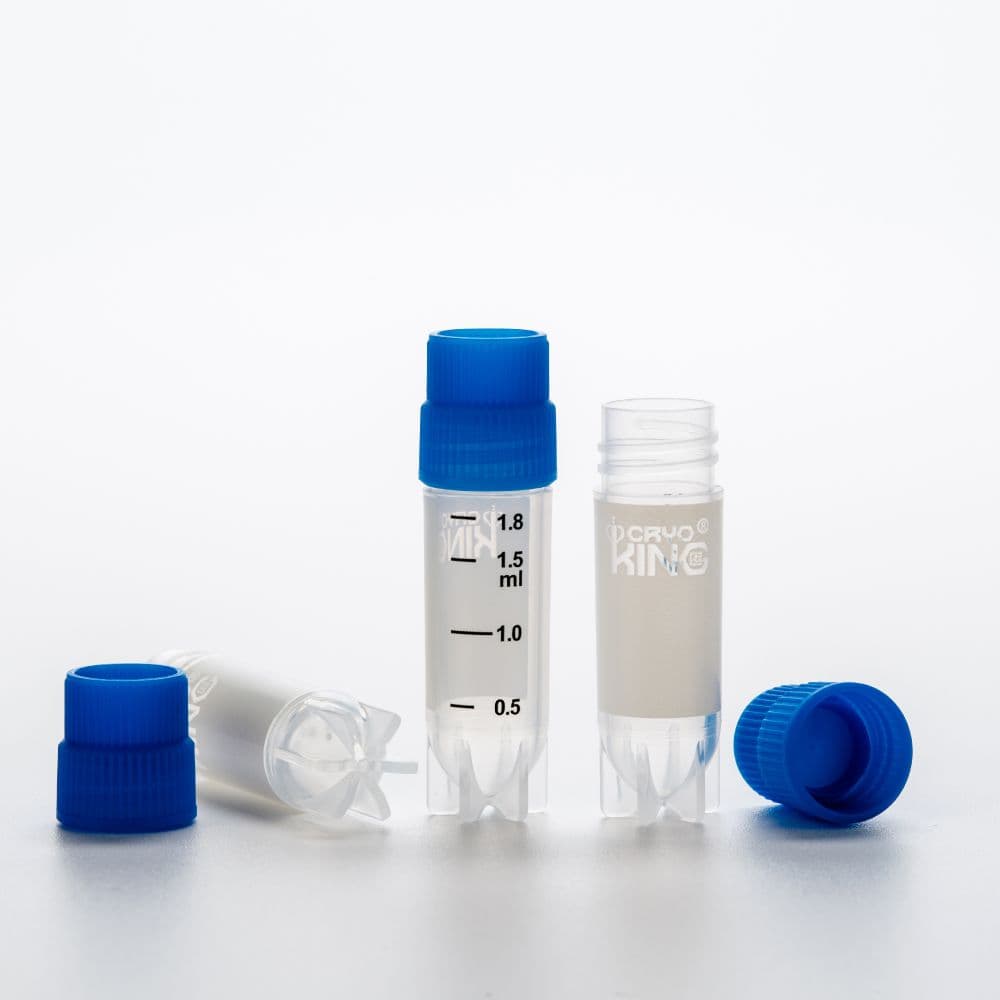
- Internally Threaded Cryogenic Vials: Featuring a silicone O-ring seal and internal threads to provide the most secure, leak-proof closure for vapor-phase LN2 storage.
How to Choose Cryogenic Vials
Thread Type: Internal vs. External
Thread design influences both contamination control and workflow compatibility. Internal-thread vials position the sealing mechanism inside the neck of the vial, reducing the external surface area exposed to contaminants and making them a common choice for cell culture and biosafety-sensitive applications. External-thread vials place the threads on the outside of the vial neck, maximizing internal storage volume and improving compatibility with automated capping, decapping, and robotic handling systems. Laboratories using automated biobanking workflows often prefer external-thread formats.
Volume Selection
Vial capacity should match the intended sample type and storage requirements. The 1.8–2.0 mL size is commonly used for cell lines, serum aliquots, and general biospecimen storage because it fits standard cryogenic storage boxes. Smaller 1.2 mL formats support high-density storage of limited-volume samples, while larger 3–5 mL vials are suitable for tissue specimens, bacterial glycerol stocks, and applications requiring larger sample volumes.
Sterility and Purity Certification
For cell culture, molecular biology, and clinical research applications, cryogenic vials should be supplied with certifications confirming they are RNase-free, DNase-free, non-pyrogenic, and endotoxin-free. Many laboratories also prefer gamma-sterilized vials, which reduce contamination risk and eliminate the need for additional sterilization before use. Traceable lot documentation and certificates of conformity are often required in regulated environments.
Self-Standing vs. Round Bottom Designs
Self-standing cryogenic vials feature a molded base that allows them to remain upright on laboratory benches without additional support, reducing the risk of spills during sample handling. Round-bottom designs are compatible with a broader range of storage racks and cryogenic systems but generally require a rack or holder during bench-top use. The choice largely depends on laboratory workflow and storage equipment.
Specifications Context
Cryogenic vials are typically manufactured from high-purity polypropylene because of its excellent durability and resistance to ultra-low temperatures. Products intended for liquid nitrogen immersion should carry explicit certification for liquid-phase storage, as some vials are approved only for vapor-phase applications. Vial dimensions, particularly outer diameter, determine compatibility with freezer boxes, racks, and automated storage systems, so measurements should be confirmed before mixing products from different manufacturers. Modern biobanking facilities increasingly use externally threaded, 2D-barcoded cryogenic vials integrated with laboratory information management systems (LIMS) to improve inventory tracking, sample traceability, and large-scale repository management.
Protect your research legacy. Connect with the Molecular Biology Products Inc. team for a custom quote on our complete cryogenic storage range.
FAQ