Cryo Boxes for Cryogenic Sample Storage and Organization
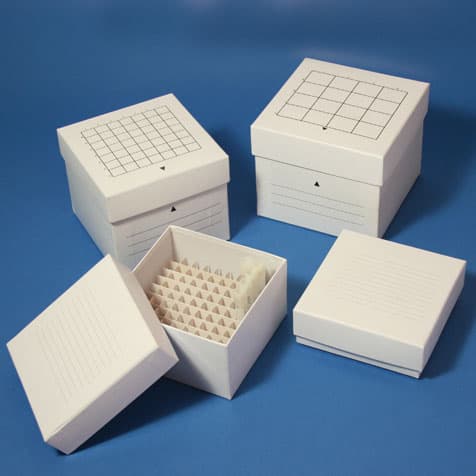
Cryo boxes are lidded, gridded containers used to organize cryogenic vials and microcentrifuge tubes inside −80°C ultra-low temperature freezers, vapor-phase liquid nitrogen systems, and cryogenic dewars. Available in water-resistant cardboard (disposable) and polycarbonate hard-wall (autoclavable, transparent) formats, with well configurations of 25, 81, and 100 positions in 2-inch and 3-inch heights. MBP stocks Globe Scientific cardboard and is a registered vendor for Howard Hughes Medical Institute, Vanderbilt University, and MD Anderson Cancer Center.
Need help selecting the right cryo boxes for your cryogenic storage workflow? — Contact our team at customerservice@mbpinc.net for product recommendations, bulk pricing, and purchasing assistance.
Cryo Boxes
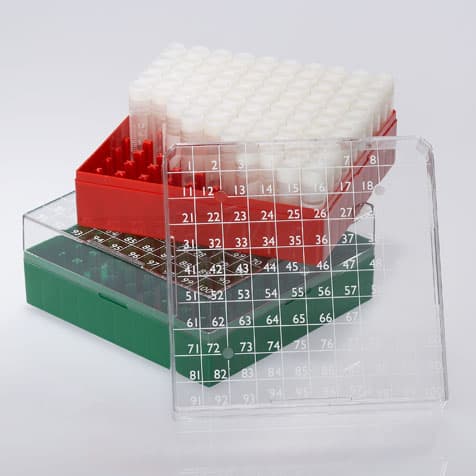
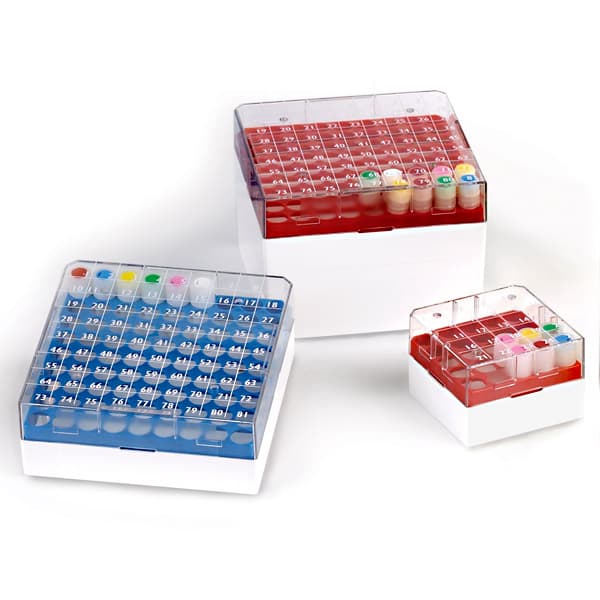
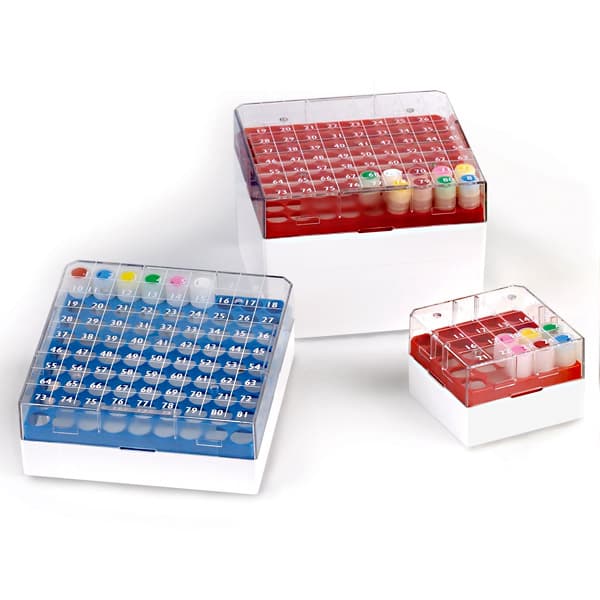
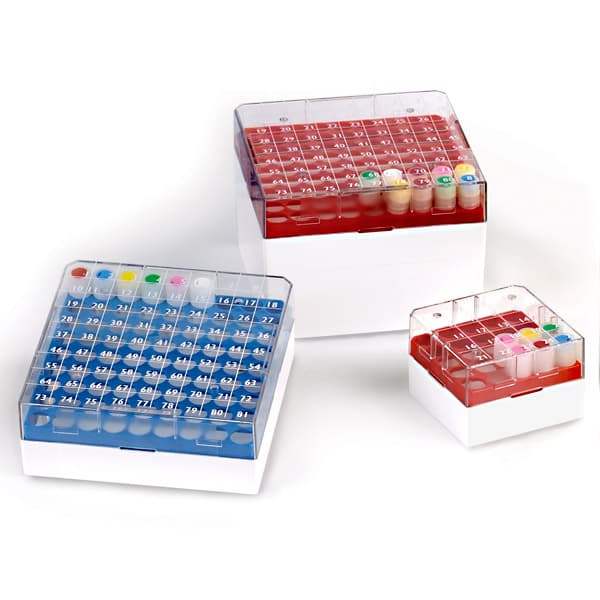


Showing 1 to 8 of 8 results
What Are Cryo Boxes?
Cryo boxes are lidded, gridded storage containers designed to organize cryogenic vials, microcentrifuge tubes, and centrifuge tubes inside ultra-low temperature (ULT) freezers at −80°C, vapor-phase liquid nitrogen refrigerators (−150 to −190°C), and cryogenic dewars. The two primary materials are water-resistant coated cardboard (economical, single-use) and rigid polycarbonate or polypropylene (reusable, autoclavable, transparent). Standard well configurations—25 (5×5), 81 (9×9), and 100 (10×10)—in 2-inch and 3-inch box heights match common cryogenic vial sizes. The alphanumeric grid on the lid helps with sample tracking in LIMS systems. Cardboard cryo boxes are vapor-phase LN2 rated only; polycarbonate is required for autoclave use or liquid-phase LN2 immersion.
What you will find:
• Standard cryo boxes for cryogenic vial storage
• Freezer storage boxes for ultra low temperature use
• Cardboard cryo boxes for cost effective storage
• Polypropylene cryo boxes for durability and reuse
• Grid format boxes for easy sample organization
• Hinged lid cryo boxes for quick access
• Color coded storage boxes for sample identification
• Cryo storage boxes for 1.5 mL and 2.0 mL vials
How to Choose Cryo Boxes
Material: Cardboard vs. Polycarbonate vs. Polypropylene
Cardboard cryo boxes are economical and used for long-term storage at −80°C or vapor-phase LN2. They are single-use and not autoclavable. Polycarbonate (PC) boxes are durable, transparent, and autoclavable at 121°C, making them suitable for frequent handling. Polypropylene (PP) boxes also tolerate autoclaving and offer higher chemical resistance than PC. Choice depends on reuse frequency and sterilization needs.
Well Count and Vial Size
81-well (9×9) boxes fit standard 1.8–2.0 mL cryogenic vials up to ~13 mm outer diameter. 100-well (10×10) boxes are used for smaller 1.2–1.5 mL vials and microcentrifuge tubes up to ~12 mm OD. Always match vial diameter with box well size before ordering.
Box Height: 2-Inch vs. 3-Inch
2-inch boxes are standard for 1–2 mL cryovials and are most commonly used in biobanking. 3-inch boxes are for larger 3–5 mL vials and certain centrifuge tubes where extra depth is required.
LN2 Phase Compatibility
Both cardboard and hard-wall boxes can be used in vapor-phase LN2. Only polycarbonate or polypropylene boxes should be used for liquid-phase LN2 because cardboard can break down when submerged.
Specifications Context
Cryo boxes are typically rated from −196°C to +121°C depending on material. Cardboard is suitable for vapor-phase LN2 only, while hard-wall plastic boxes can handle more demanding workflows. Proper selection depends on vial size, storage temperature, and how frequently samples are accessed.
Eliminate the risk of thermal damage. Connect with the experts at Molecular Biology Products Inc. to find the perfect storage solution for your high-value specimens.
FAQ