Cell Culture Filtration — Vacuum and Syringe Filters for Media and Buffer Sterilization
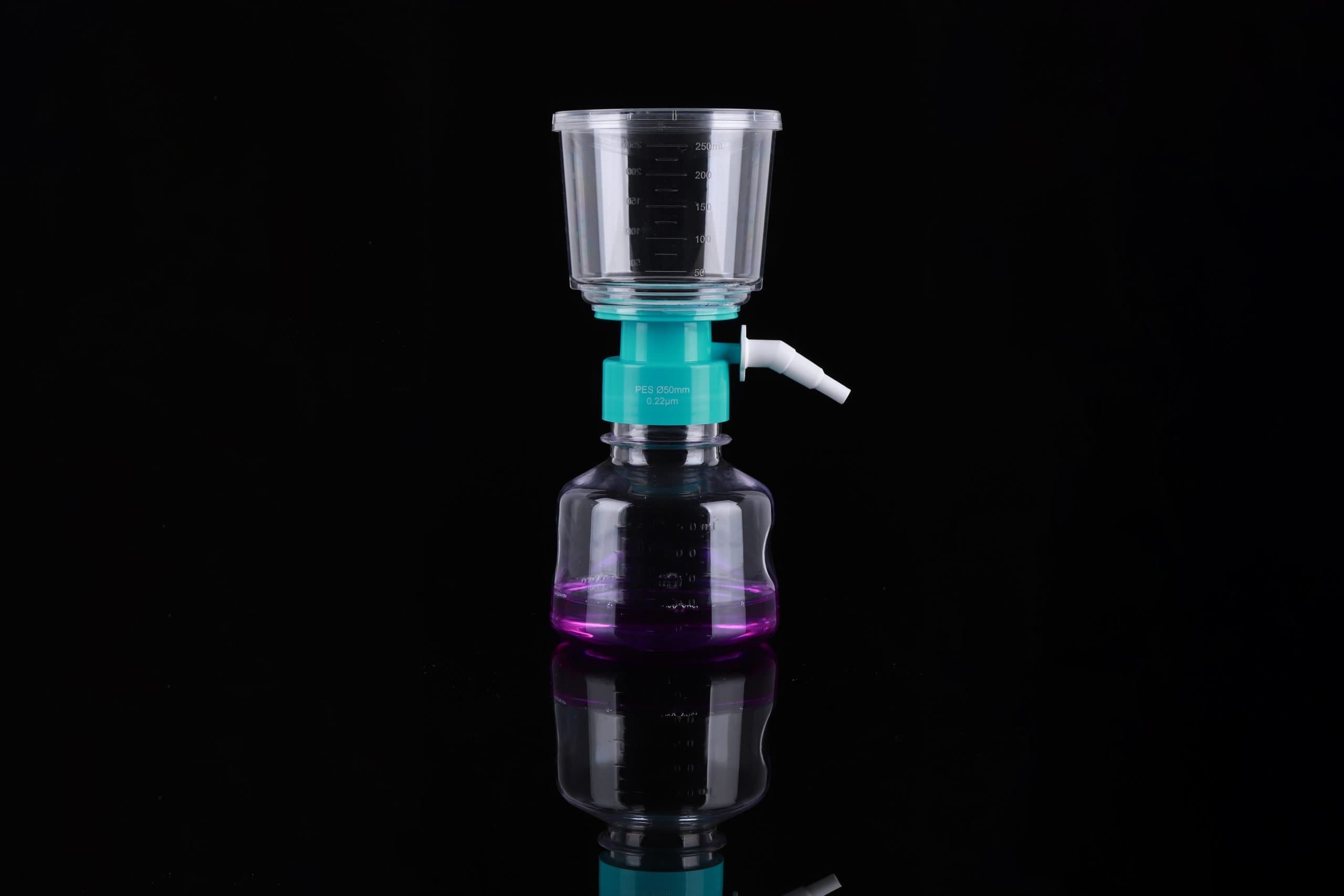
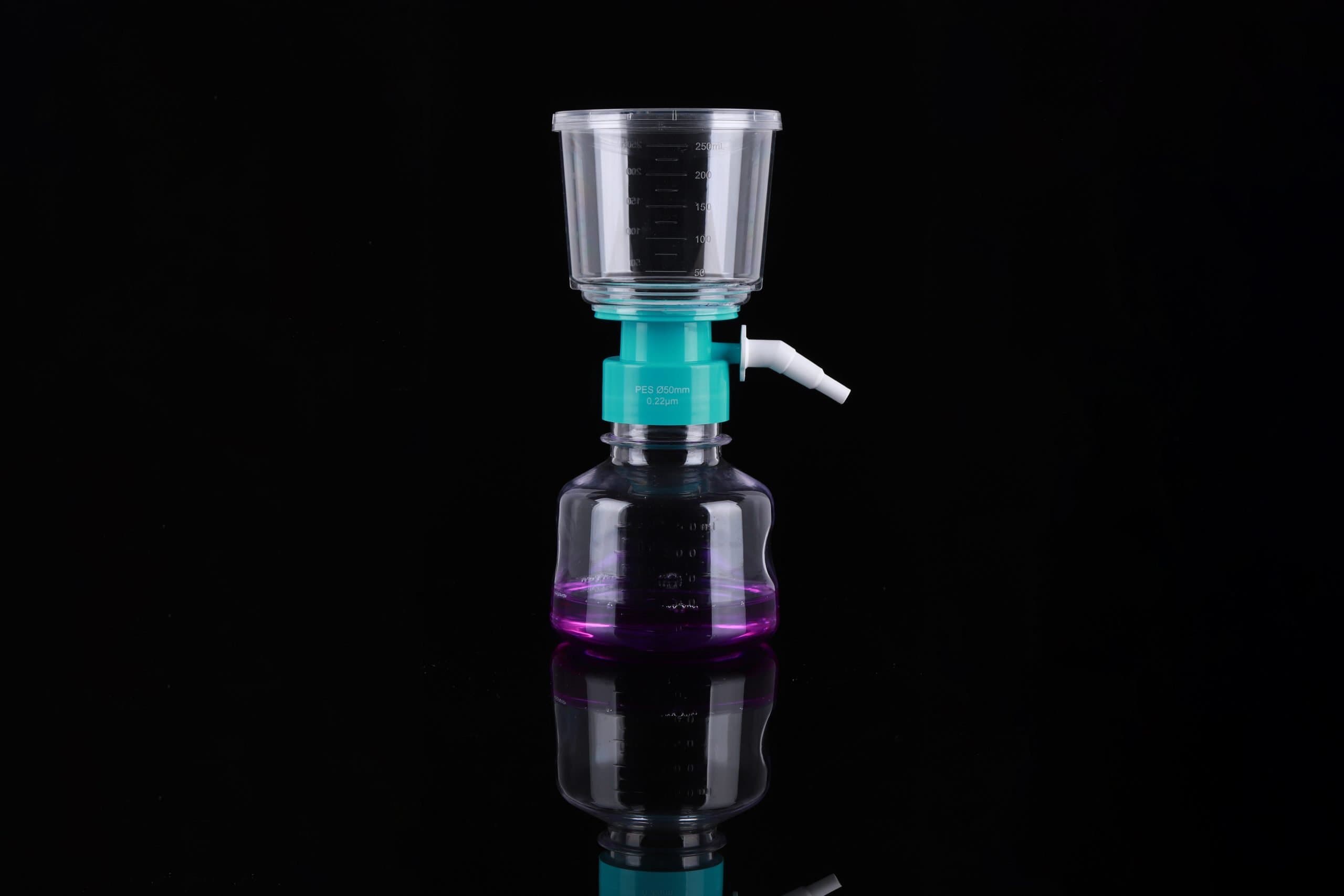
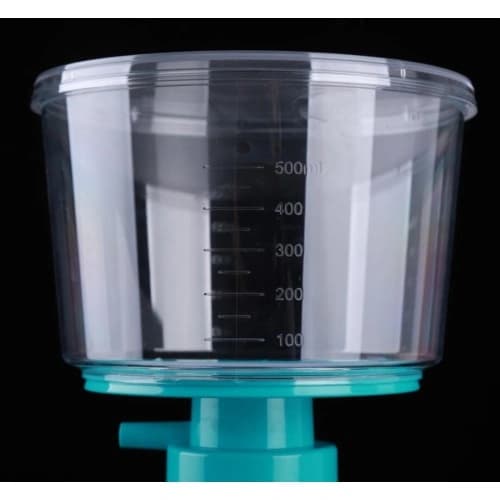
Cell culture filtration removes bacteria, fungi, and particulates from media, buffers, and reagents that cannot be autoclaved. NEST Scientific vacuum bottle-top filter systems (PES and PVDF, 250 mL–1,000 mL, 0.10–0.45 µm) sterilize bulk volumes directly into a receiver bottle. Globe Scientific syringe filters (PES, PVDF, nylon, MCE, CA; 13 mm and 30 mm; 0.22 µm and 0.45 µm) handle 1–150 mL small-volume applications. Choose 0.22 µm for sterilization, 0.45 µm for pre-filtration clarification, and 0.10 µm for mycoplasma removal.
MBP carries both lines with direct PO ordering for labs across the USA, Canada, and worldwide. Contact customerservice@mbpinc.net for further details.
Filtration


Showing 1 to 12 of 41 results
What is Laboratory Filtration for Cell Culture?
Laboratory filtration for cell culture is the process of passing media, buffers, sera, and reagents through a membrane filter with a defined pore size to remove bacteria, fungi, yeast, and particulates — sterilizing solutions that cannot be autoclaved because they contain heat-sensitive proteins, growth factors, or volatile components. The two principal formats are vacuum filtration and syringe filtration. Both formats use interchangeable membrane chemistries: PES (polyethersulfone), PVDF (polyvinylidene fluoride), nylon, MCE (mixed cellulose ester), and PTFE (polytetrafluoroethylene). Choose 0.22 µm pore size for sterilization of cell culture media and buffers; choose 0.45 µm for pre-filtration clarification to extend the life of a 0.22 µm filter downstream; choose 0.10 µm when mycoplasma removal is required.
What you will find:
-
Syringe Filters: Ideal for rapid sterilization of buffers, media additives, and aqueous solutions with low protein binding.
-
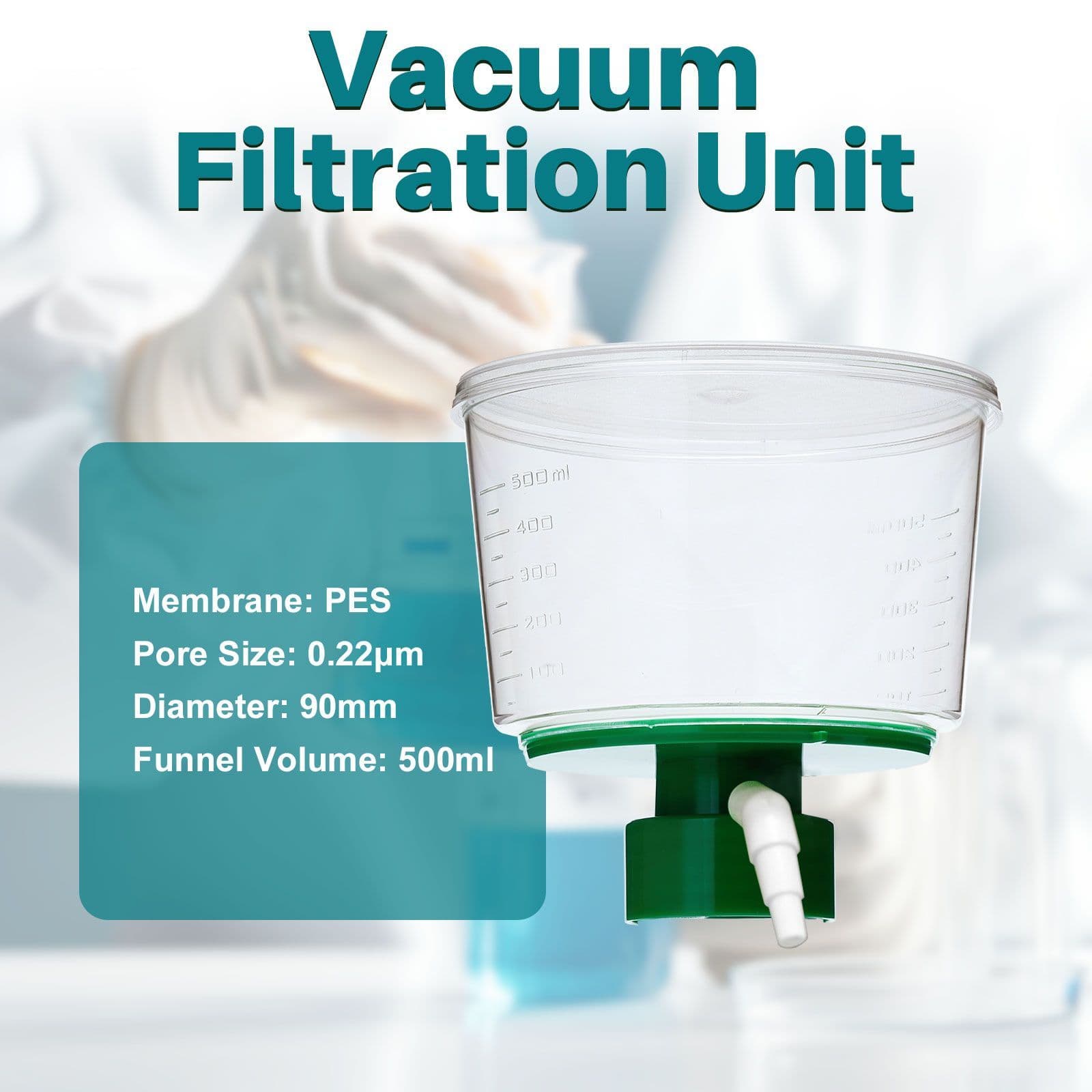
Vacuum Filtration Systems: Optimized for high-throughput media preparation, featuring large-surface membranes for fast flow rates.
-
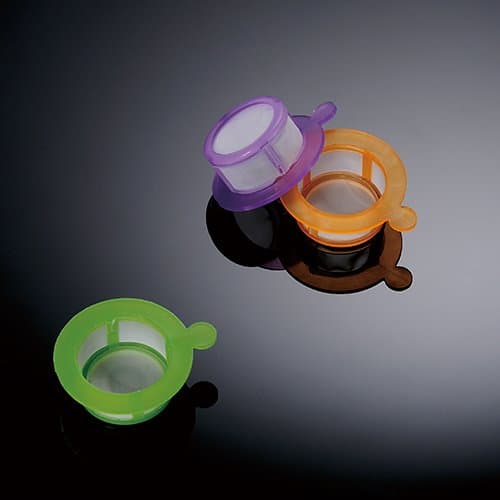
Cell Strainers for obtaining uniform single-cell suspensions from tissues or organoids while removing cellular debris.
-
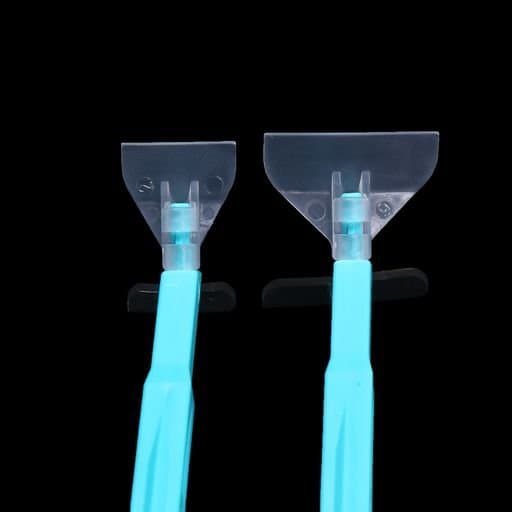
Cell Scrapers: Precision-beveled blades designed to maximize cell harvest from flasks and dishes while maintaining high viability.
How to Choose Laboratory Filtration Products
Filter Format: Vacuum vs. Syringe
Vacuum filtration (bottle-top filter systems) is the standard for processing volumes of 150 mL–1,000 mL or more: media bottle preparation, serum filtration, buffer sterilization, and viral supernatant clarification. A vacuum source (house vacuum line at −50 to −100 kPa, or a benchtop vacuum pump) pulls liquid through the membrane into a receiver bottle that can be sealed and stored after filtration. Syringe filters (4–33 mm diameter, Luer-lock) are the standard for small volumes (1–100 mL): antibiotic solutions, enzyme preparations, DNA/protein samples, HPLC mobile phase clarification, and conditioned medium samples where the full vacuum system is impractical.
Membrane Chemistry by Application
PES (polyethersulfone) provides high flow rates, low protein binding, and good compatibility with aqueous solutions — the first choice for cell culture media sterilization (0.22 µm) and solution clarification (0.45 µm). PVDF (polyvinylidene fluoride) offers lower protein binding than PES for protein-rich solutions such as antibody preparations, enzyme stocks, and FBS, and provides better chemical resistance to mild organic solvents and low-concentration acids. Nylon provides excellent compatibility with mixed aqueous-organic solvents (HPLC mobile phase, methanol-containing solutions, DMSO-water mixtures) but has higher protein binding than PES or PVDF. MCE (mixed cellulose ester) is low-cost, aqueous-only, with moderate protein binding — suitable for routine buffer preparation and water sterilization. PTFE is the only membrane compatible with aggressive organic solvents, concentrated acids, and pure DMSO; available as hydrophilic PTFE for aqueous solutions and hydrophobic PTFE for gas venting.
Pore Size Selection
0.22 µm is the standard sterilizing grade: retains all bacteria, fungi, and particles ≥0.2 µm, producing a sterile filtrate per USP <1229.2> and Pharmacopoeial sterilizing filtration criteria. 0.45 µm is a clarification grade used for pre-filtration to remove large particles and cell debris before the 0.22 µm step — reduces filter clogging with viscous or particulate-heavy samples such as FBS, conditioned media, and tissue culture supernatants. 0.10 µm is used for mycoplasma removal from media and serum; mycoplasma organisms (0.1–0.8 µm) pass through 0.22 µm filters.
Sterile vs. Non-Sterile
Sterile filters (individually gamma-irradiated or E-beam sterilized, individually packaged) are required for cell culture media, buffer, and supplement filtration where microbial contamination of the filtrate would invalidate results. Non-sterile filters are acceptable for HPLC mobile phase clarification, non-biological sample preparation, and any application where the filtrate is not used in biological culture.
Specifications Context
NEST Scientific vacuum bottle-top filters (catalog 342001–347103) are manufactured from PES and PVDF membranes in polystyrene funnel and receiver bottle assemblies. PES membranes provide low protein binding; PVDF membranes provide low protein binding plus additional chemical resistance. NEST filters are sterile and certified non-pyrogenic per the lot certificate. Globe Scientific syringe filters (PP housing, PES, PVDF, CA, MCE, and nylon membranes, 13 mm and 30 mm diameters, 0.22 µm and 0.45 µm) are individually wrapped, sterile, and available in bulk non-sterile packs. Both NEST Scientific and Globe Scientific are ISO 9001:2015 certified. MBP stocks both NEST vacuum filtration systems and Globe Scientific syringe filters.
Improve consistency in your lab with precision-engineered consumables. Contact MBP for dependable research supplies.
FAQ