Cell Strainers — 40 µm, 70 µm, and 100 µm Nylon Mesh for Single-Cell Suspension Preparation
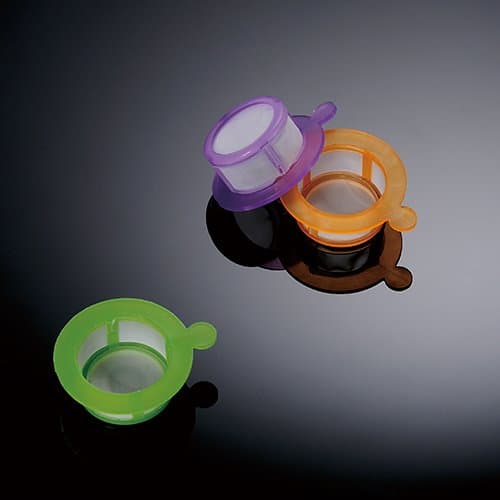
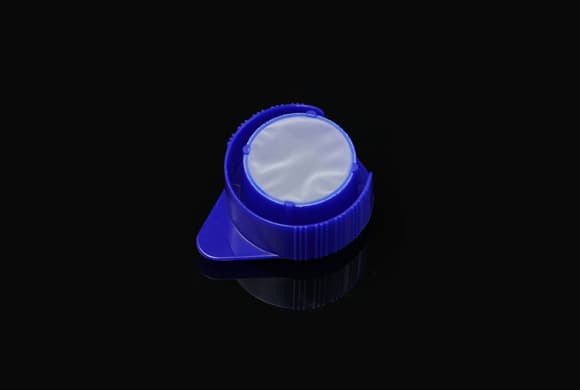
Cell strainers are sterile nylon mesh caps for 50 mL conical tubes that disaggregate tissue homogenates into single-cell suspensions for flow cytometry, FACS sorting, primary cell culture, and immunophenotyping. NEST Scientific supplies three pore sizes in a universal color code: 40 µm (blue, catalog 258369) for fine single-cell suspension; 70 µm (white, 258368) for standard tissue disaggregation; 100 µm (yellow, 258367) for pre-filtration and large tissue pieces. All are sterile, DNase/RNase-free, 50 mL tube–compatible.
MBP stocks all three sizes in cases of 50 with direct PO ordering for labs across the USA, Canada, and worldwide. Contact customerservice@mbpinc.net to request a quote today!
Cell Strainers

Showing 1 to 3 of 3 results
What are Cell Strainers?
Cell strainers are sterile, single-use nylon mesh filter caps that sit in the opening of a 50 mL conical centrifuge tube, used to disaggregate tissue homogenates, tumor biopsies, lymph nodes, spleens, and bone marrow aspirates into uniform single-cell suspensions for downstream applications including flow cytometry, primary cell culture, FACS sorting, and immunophenotyping. The strainer is placed filter-side down in the collection tube, the tissue suspension is added to the strainer basket and pushed through the nylon mesh using the plunger of a syringe, the wet end of a syringe barrel, or the back of a sterile 1 mL syringe. Choose 40 µm for fine single-cell suspension preparation from soft tissues; 70 µm for standard tissue disaggregation (the most commonly used pore size); 100 µm for pre-filtration of coarse tissue homogenates and large spheroids.
What you will find:
-
40μm Cell Strainers for fine-scale molecular filtration
-
70μm Cell Strainers for routine primary cell isolation
-
100μm Cell Strainers for large cluster separation
-
Sterile Nylon Mesh Strainers for precise pore consistency
-
Color-Coded Strainers for easy micron-size identification
-
Universal Fit Strainers for standard 50mL centrifuge tubes
How to Choose Cell Strainers
Pore Size by Application
40 µm strainers (blue) produce the finest filtrate, retaining cell aggregates and larger tissue debris while passing single cells and small cell clusters. They are the standard for preparing highly uniform single-cell suspensions from soft tissues (spleen, thymus, lymph nodes) for flow cytometry, where doublets must be minimized. 40 µm strainers have lower flow rates and clog more readily with dense or fibrous tissues. 70 µm strainers (white) are the most commonly used pore size in cell biology — they balance efficient single-cell passage with adequate retention of fibrous connective tissue and undigested tissue chunks. Standard for tumor dissociation, liver perfusion single-cell prep, and any tissue where a moderate doublet rate is acceptable. 100 µm strainers (yellow) pass cell clusters and small organoids while retaining large undissociated tissue pieces; used as a first-pass pre-filtration step before 70 µm or 40 µm filtration of tough fibrous tissues, and for filtering 3D tumor spheroids grown in 96-well U-bottom plates before reseeding.
Color-Coding for Laboratory Workflow
NEST Scientific cell strainers follow a universal color-coding convention: 40 µm = blue, 70 µm = white, 100 µm = yellow. This matches the color convention used by BD Biosciences Falcon cell strainers, allowing unambiguous pore-size identification during multi-step tissue disaggregation protocols without reading the label at every step.
50 mL Tube Compatibility
NEST Scientific cell strainers are designed with a flange diameter that fits securely into the opening of 50 mL conical centrifuge tubes from most major brands, including BD Falcon, TPP, and MidSci, per NEST Scientific product documentation. A molded tab on the upper ring facilitates sterile handling during tube loading without touching the mesh surface.
Tissue Types and Recommended Pore Size
For spleen, thymus, and lymph nodes: 40 µm or 70 µm. For bone marrow: 70 µm. For tumor biopsy (mechanically or enzymatically dissociated): 40 µm (after enzyme digestion) or 70 µm (mechanical disaggregation only). For liver (perfusion-dissociated hepatocytes): 70 µm or 100 µm. For 3D spheroid disaggregation: 40 µm or 70 µm, depending on the desired cluster size in the filtrate. For flow cytometry sorting (minimize doublets): 40 µm immediately before loading the sorter.
Compare NEST Scientific Cell Strainer SKUs
- 40 µm (Blue): NEST Catalog 258369; 50/case; suitable for fine single-cell suspension and flow cytometry pre-filtration.
- 70 µm (White): NEST Catalog 258368; 50/case; suitable for standard tissue disaggregation and universal applications.
- 100 µm (Yellow): NEST Catalog 258367; 50/case; suitable for pre-filtration, coarse tissue processing, and spheroid size selection.
Specifications Context
NEST Scientific cell strainers are manufactured from nylon mesh bonded to a polypropylene (PP) frame with a tab-molded upper ring for sterile handling. Pore sizes are 40 µm, 70 µm, and 100 µm; mesh pore spacing is uniform per manufacturing lot. Compatible with 50 mL conical centrifuge tubes from BD Falcon, TPP, and MidSci per NEST Scientific USA documentation. Each strainer is sterile (gamma-irradiated), individually wrapped, non-pyrogenic, and DNase/RNase-free per lot certificate. Non-cytotoxic nylon mesh. All three pore sizes (40, 70, and 100 µm) are stocked by MBP in cases of 50.
Science is hard, but getting a quote shouldn't be. Connect with our experts at Molecular Biology Products Inc. and let’s get your lab sorted before the next audit.
FAQ