Cell Culture Erlenmeyer Flasks — PC and PETG Shake Flasks for Suspension Culture
Cell culture Erlenmeyer flasks are sterile, single-use conical plastic vessels for suspension cell culture on orbital shakers, microbial fermentation, and media preparation. NEST Scientific supplies PC (autoclavable, −135 °C to +135 °C) and PETG (single-use, BPA-free, −80 °C to +60 °C) formats in 125 mL–3,000 mL volumes with flat-base or baffled-base geometry and 0.22 µm vented or plug seal caps.
MBP carries PC Erlenmeyer flasks, PETG Erlenmeyer flasks, and accessories with direct PO ordering for labs across the USA, Canada, and worldwide. Contact customerservice@mbpinc.net for further details.
Erlenmeyer Flasks
Showing 1 to 12 of 25 results
What are Cell Culture Erlenmeyer Flasks?
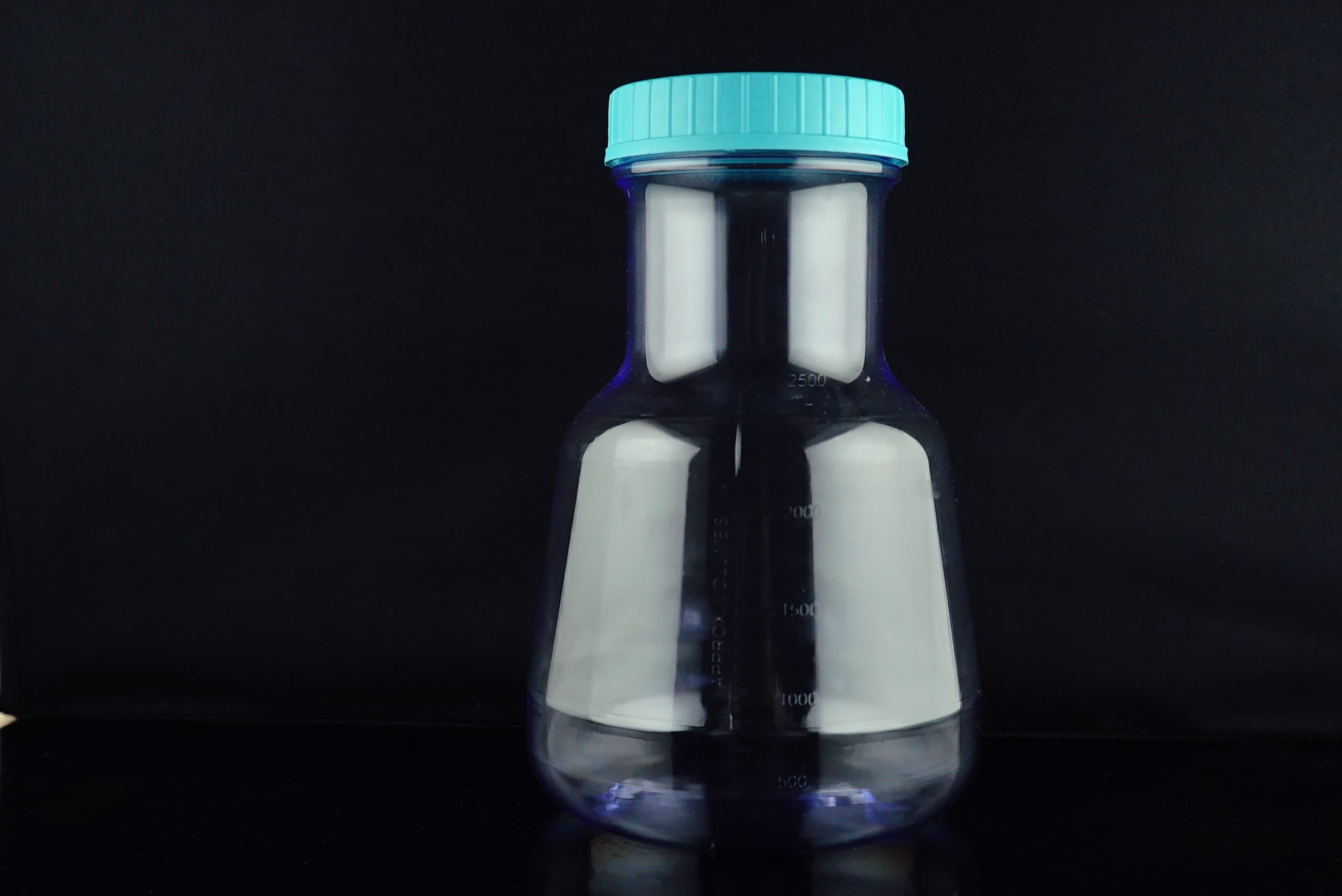
Cell culture Erlenmeyer flasks (also called shake flasks or conical flasks) are single-use, sterile plastic vessels with a conical body, flat base, and narrow neck used for suspension cell culture on orbital shakers and incubator shakers, microbial culture, and media preparation. Unlike rectangular T-flasks designed for static monolayer culture, Erlenmeyer flasks are engineered for shaking: their wide conical base maximizes liquid surface area for oxygen transfer, while the narrow neck minimizes evaporation and contamination risk. Choose PC Erlenmeyer flasks for autoclavable reuse and high-temperature media preparation; choose PETG for single-use suspension culture and processes requiring BPA-free materials.
What you will find:
-
PETG Erlenmeyer flasks: strong choice for cell culture applications that need excellent clarity, reliable handling, and convenient single-use performance. They are lightweight, durable, and ideal for shaker culture, media preparation, and general suspension cell workflows.
-
PC Erlenmeyer flasks: built for applications that require greater strength and higher impact resistance. They are well-suited for demanding lab environments, including vigorous shaking, transport, and workflows where added durability is important.
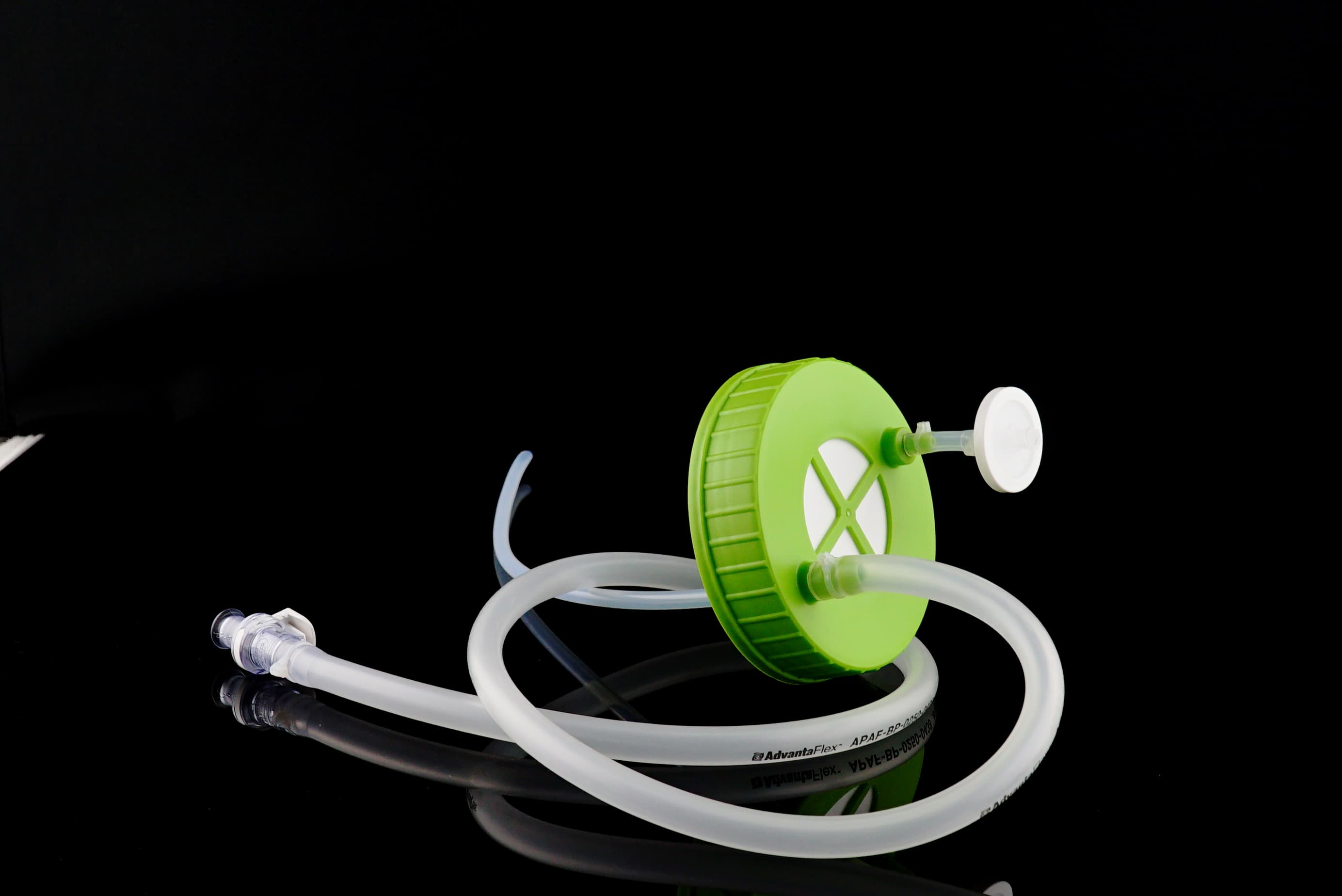
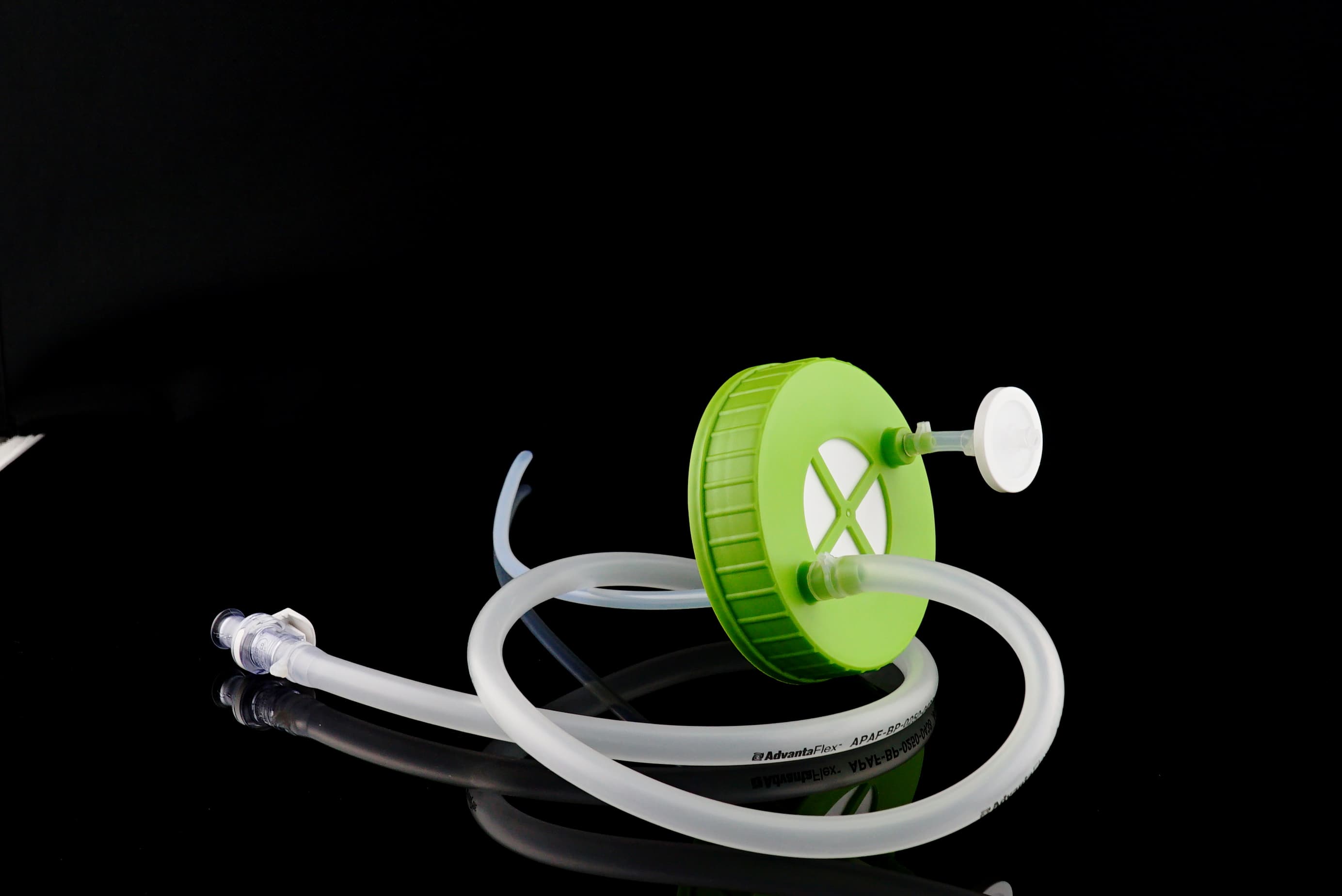
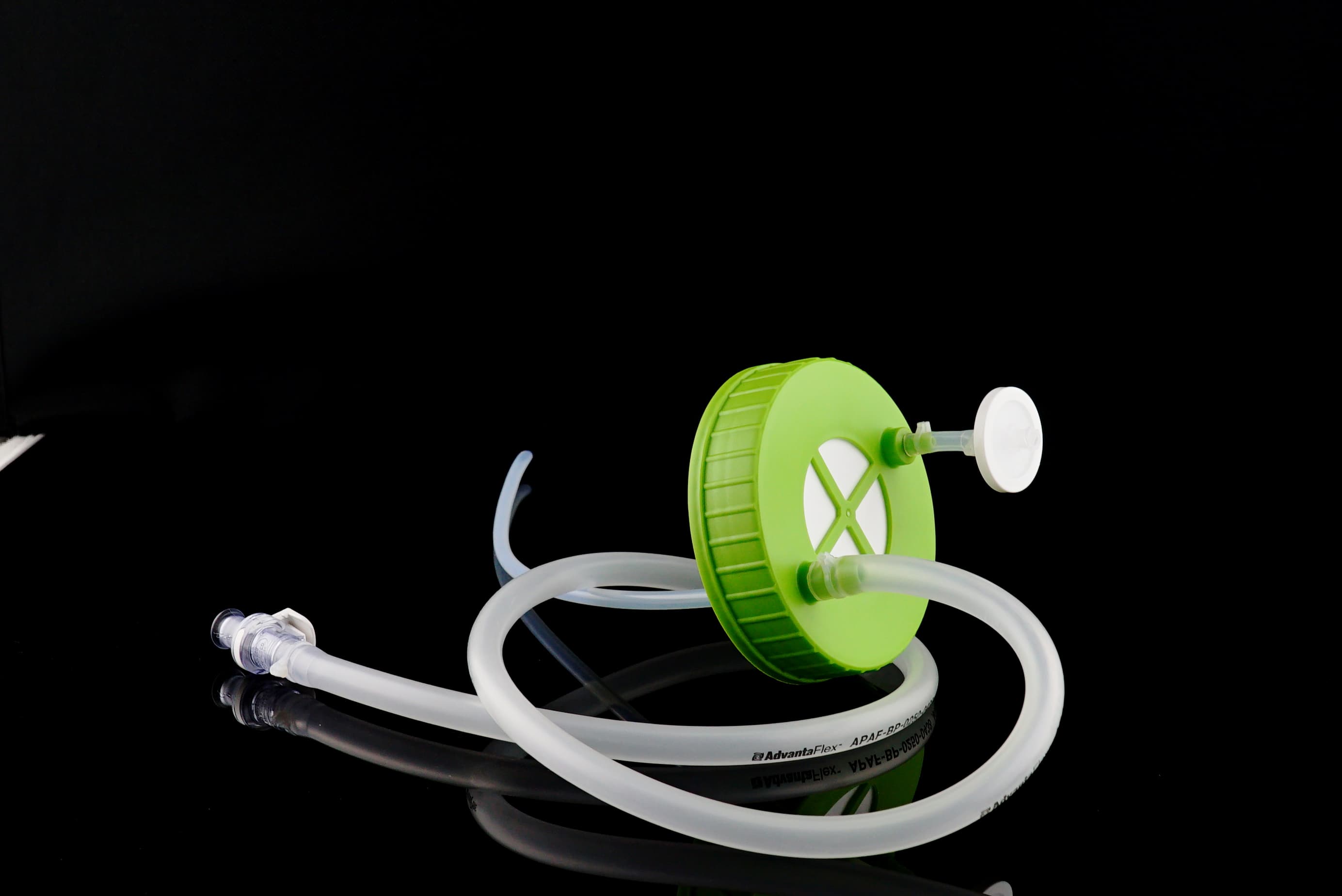
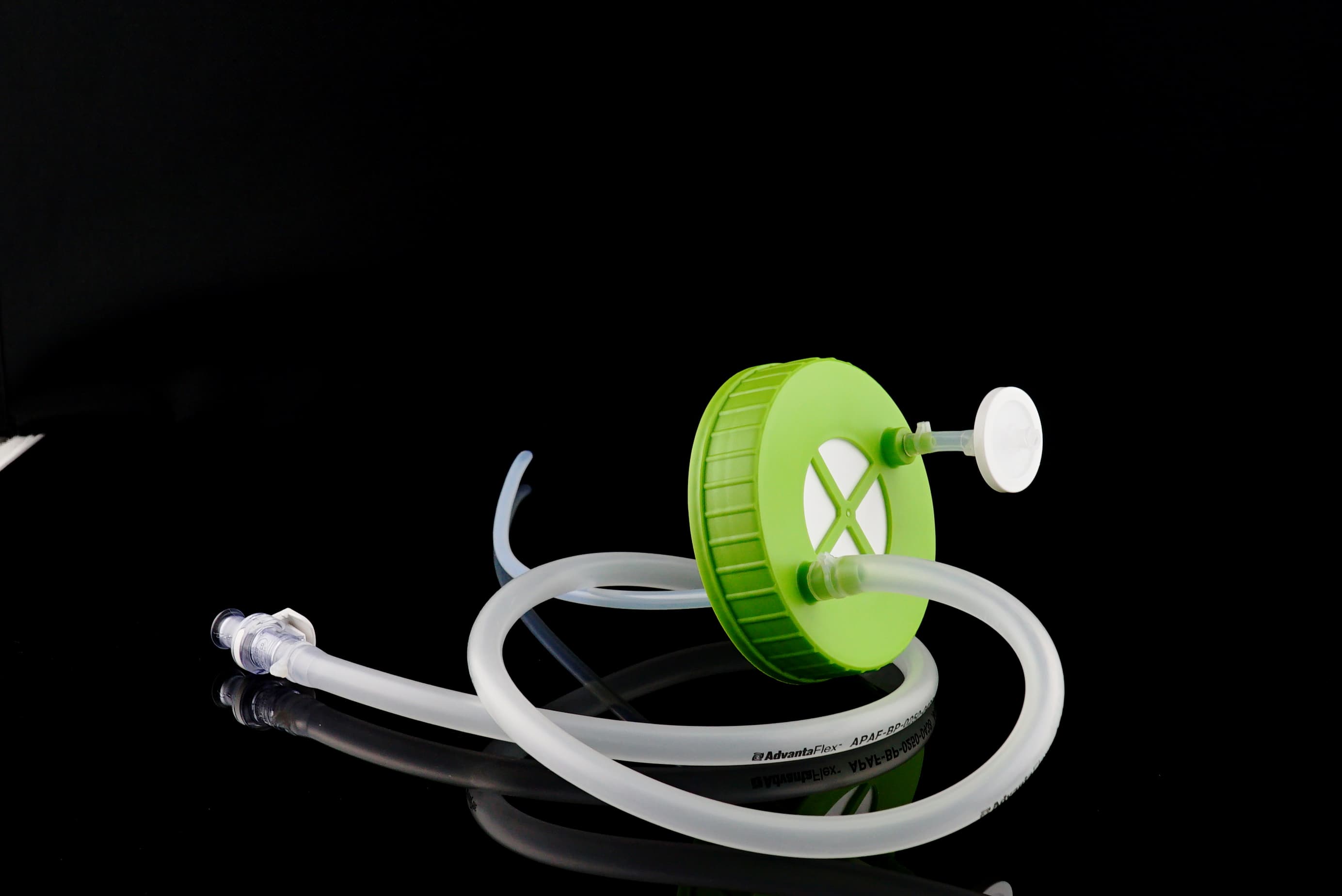
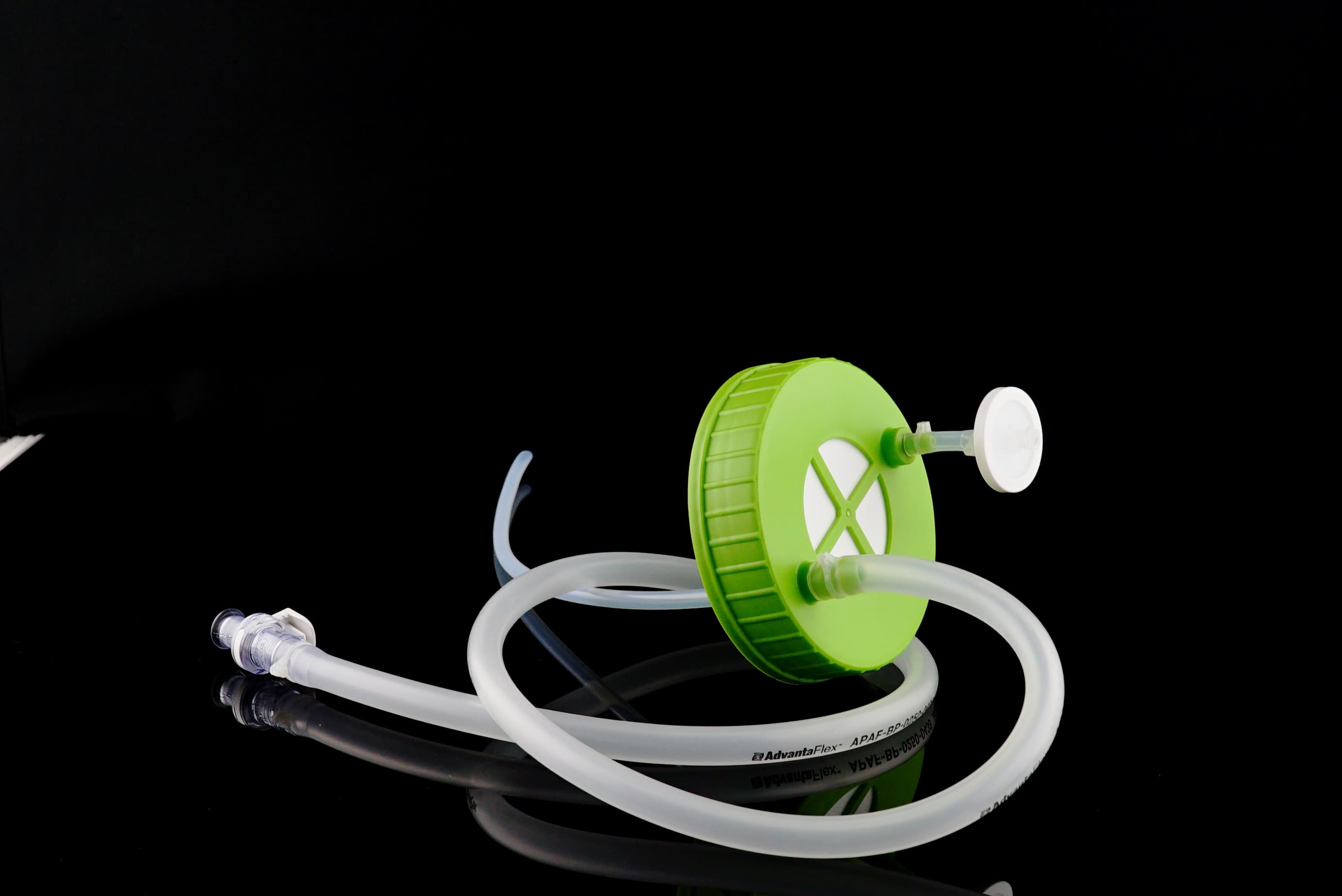
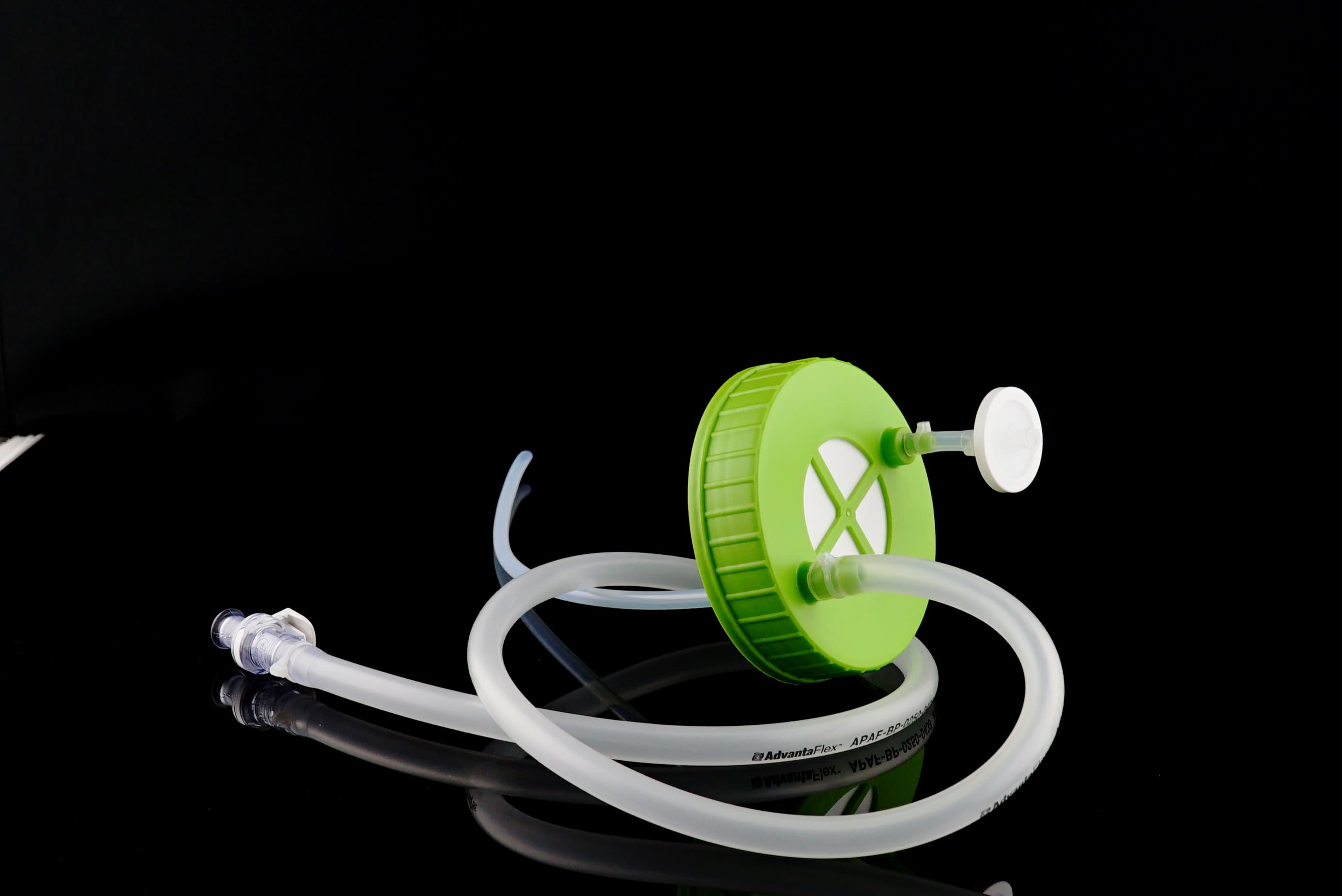
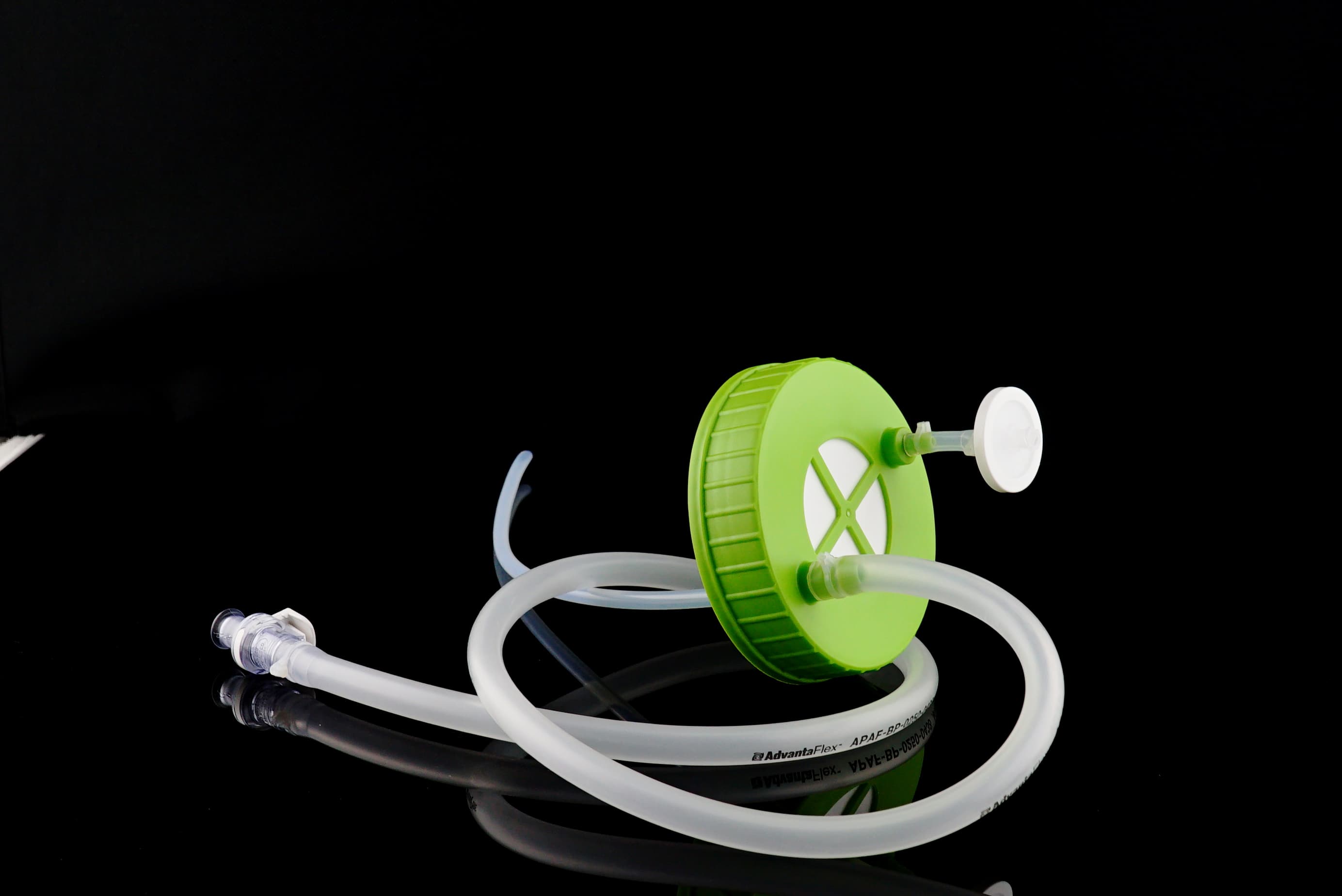
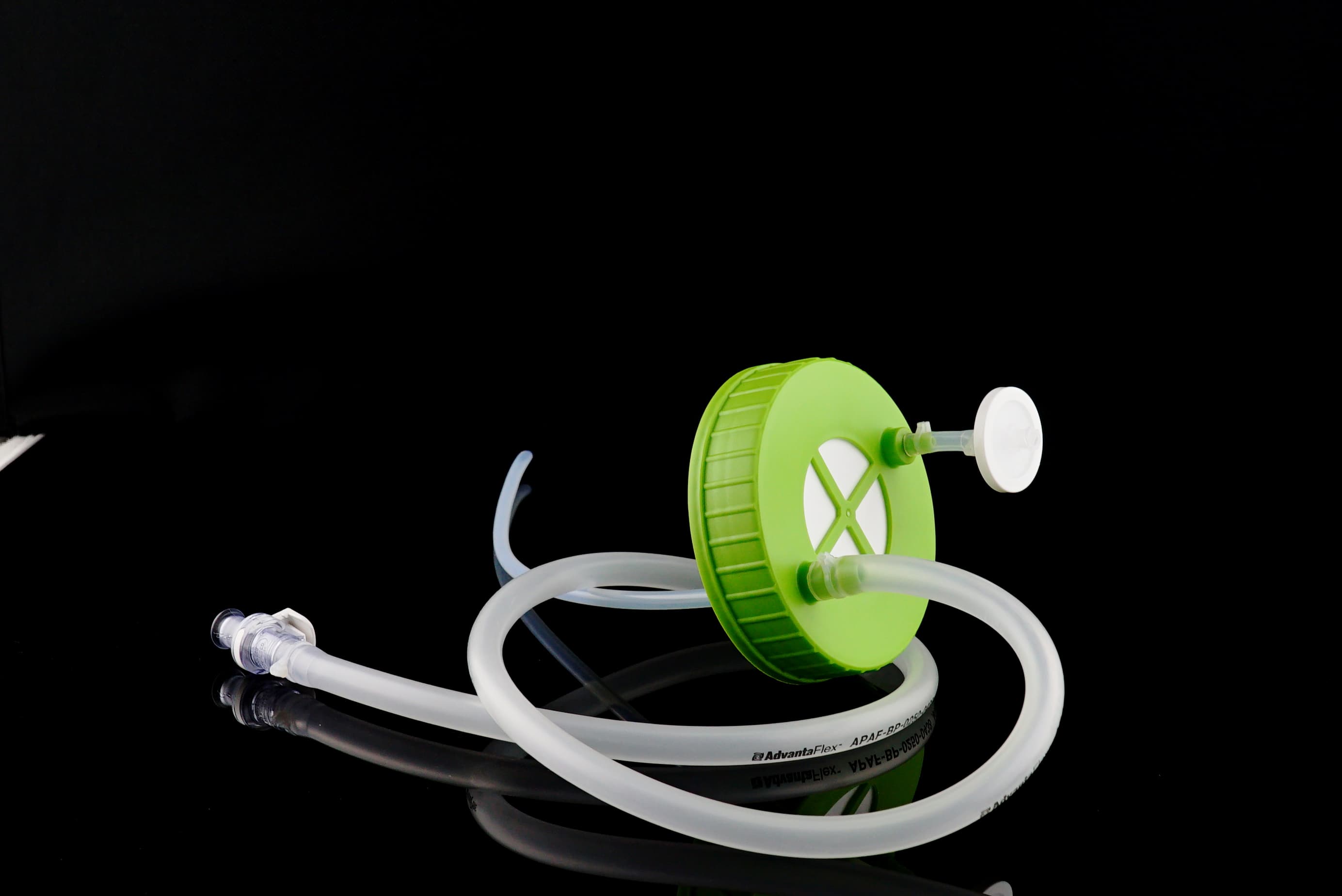
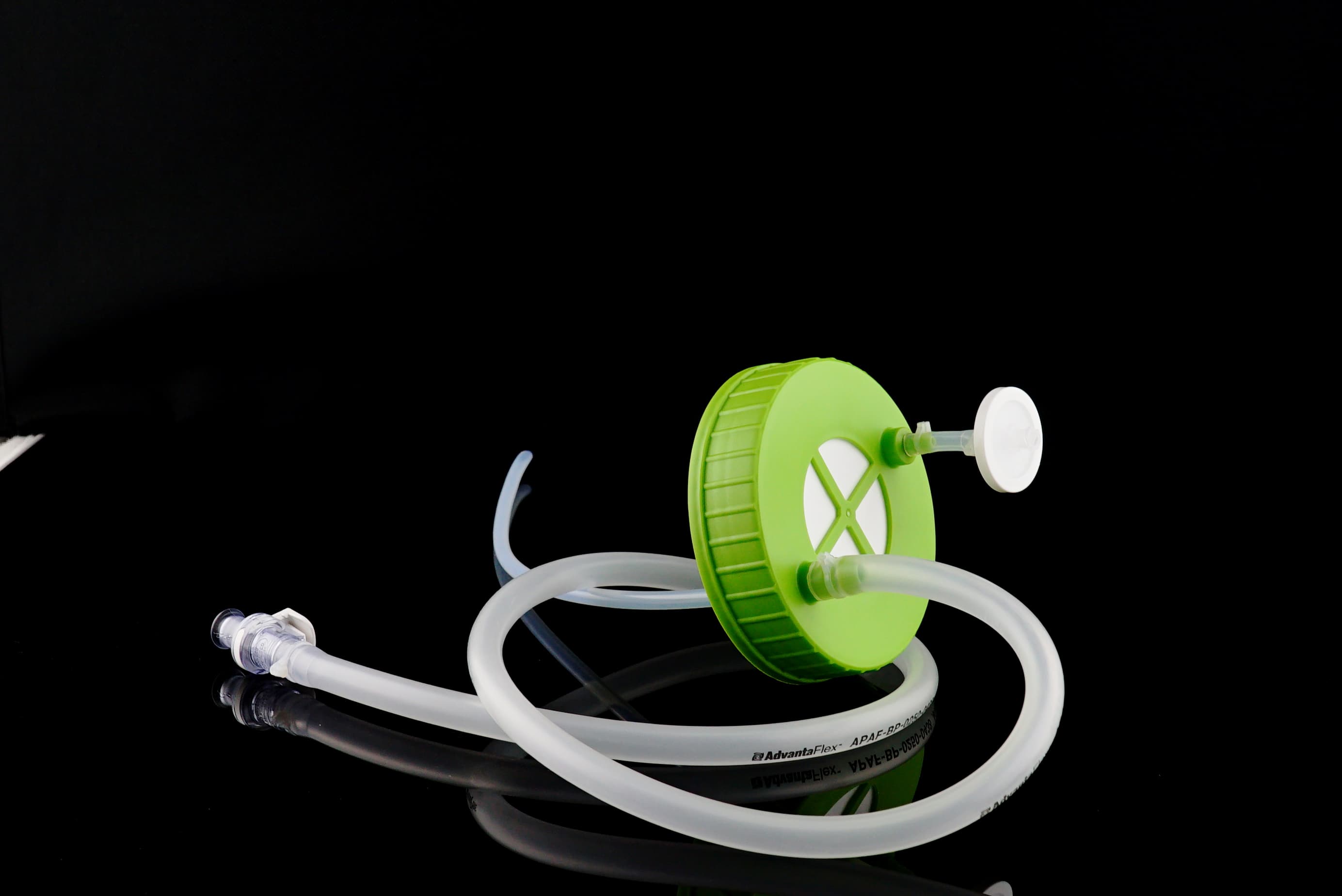
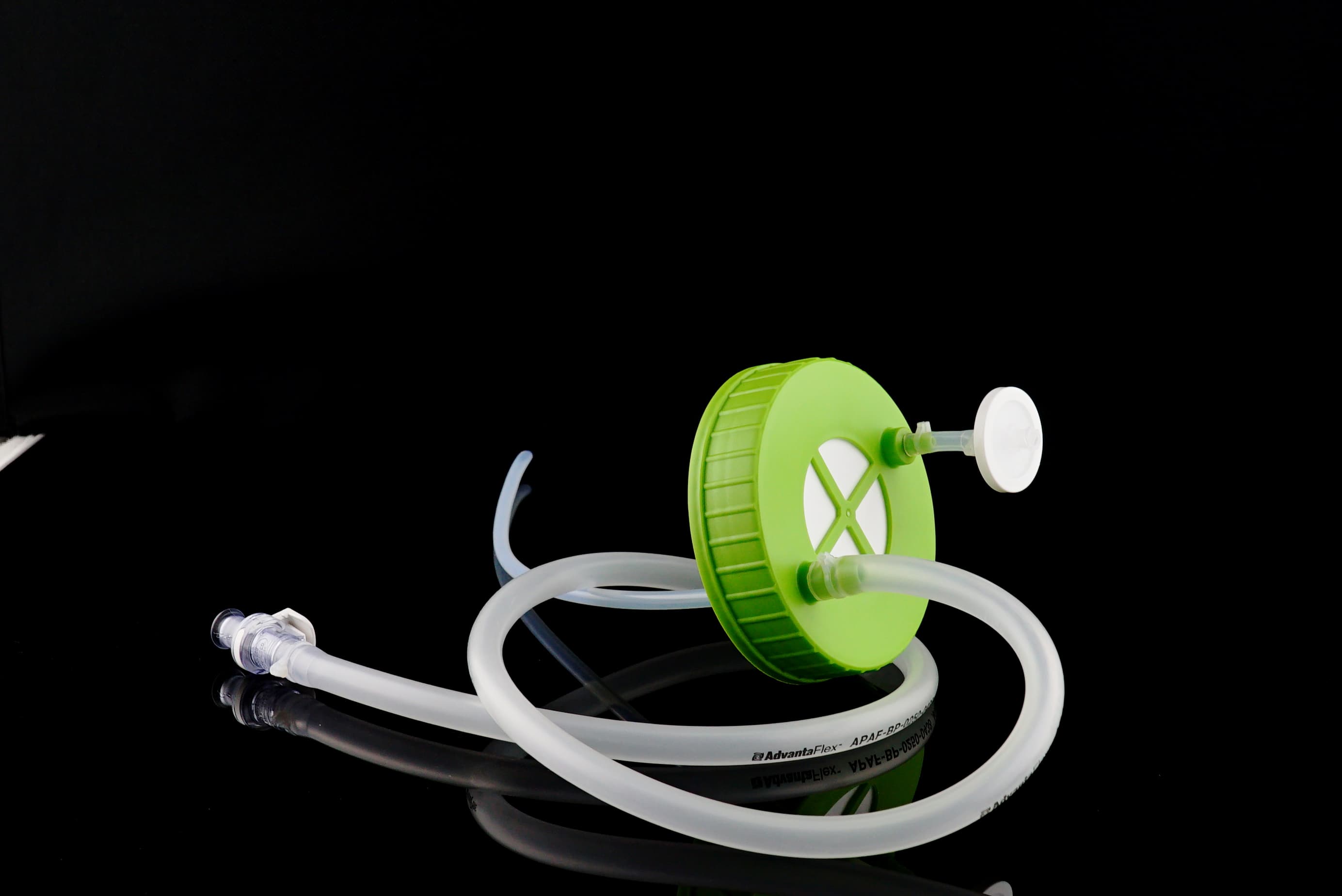
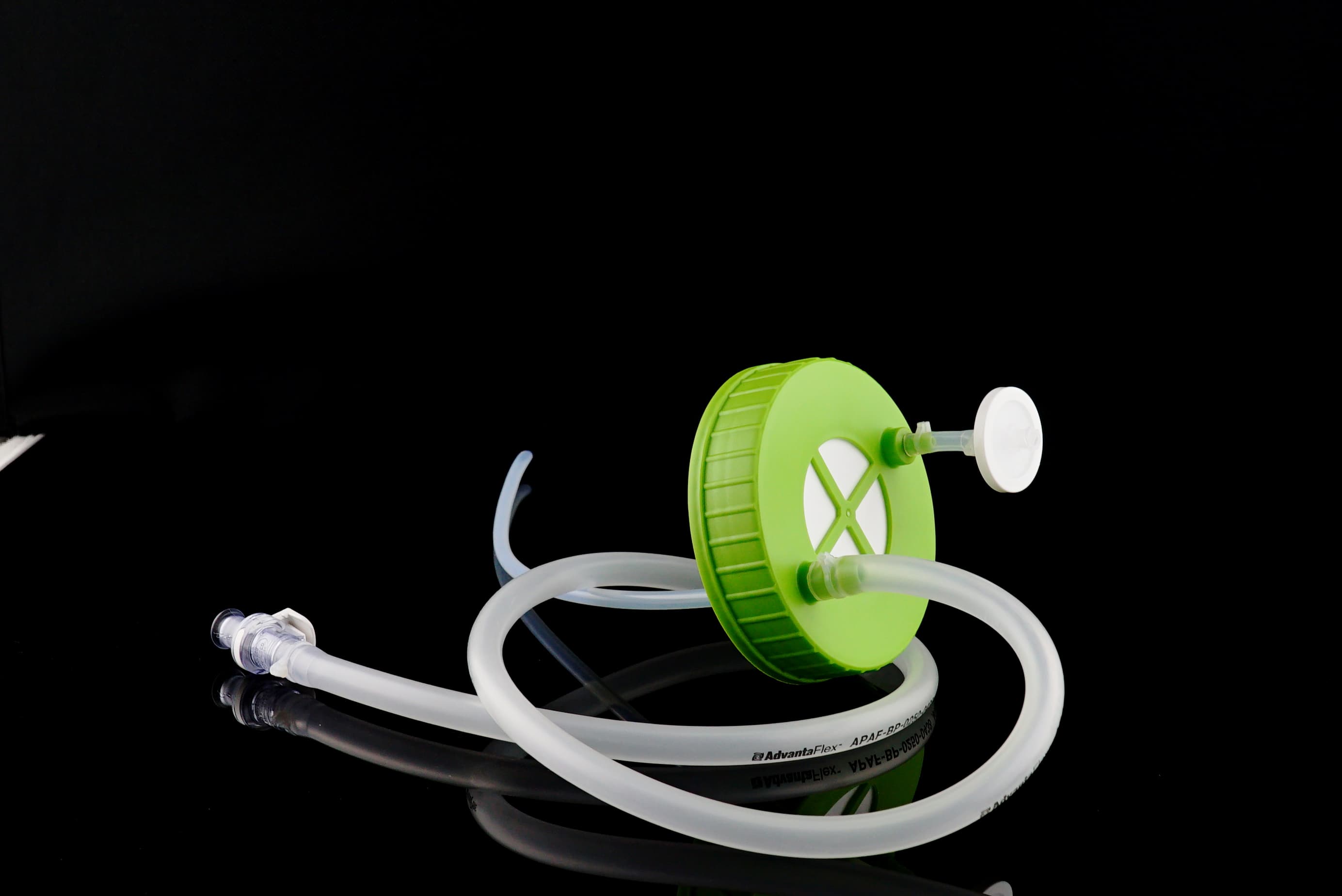
- Erlenmeyer Flask Accessories: Includes bi-directional, inverted, and multifunctional transfer caps, plus silicon tube assemblies for 2 L, 3 L, 3 L wide-mouth, and 5 L high-efficiency flasks, supporting sterile transfer and closed-system workflows.
How to Choose Erlenmeyer Flasks for Cell Culture
PC vs. PETG Material
PC (polycarbonate) Erlenmeyer flasks are autoclavable at 121 °C (typically 5–10 cycles), shatter-proof, crystal-clear, and rated from −135 °C to +135 °C. PC is ideal for labs that sterilize media or wash in-house. PC contains BPA. PETG Erlenmeyer flasks are single-use, BPA-free, rated from −80 °C to +60 °C, and cannot be autoclaved. They provide a contamination-free, cleaning-free alternative to glass and PC for high-throughput suspension culture operations.
Flat Base vs. Baffled Base
Flat-base Erlenmeyer flasks provide gentler swirling for slow-growth cell lines and media mixing. Baffled-base flasks have three or four angled internal baffles that interrupt the swirling flow, increasing turbulence, raising dissolved oxygen (DO) by up to 2× compared to flat-base flasks at the same orbital speed, and reducing cell sedimentation. Baffled flasks are the standard for CHO-S, HEK293-F, Sf9, microbial, and yeast cultures requiring high oxygen transfer rates. NEST Scientific offers baffled and flat-base versions in both PC and PETG across all core volumes.
Vented vs. Plug Seal Cap
Vented caps contain a 0.22 µm hydrophobic PTFE membrane that allows free O₂/CO₂ gas exchange while excluding microbial contamination. The NEST vented cap features an oversized vent area that improves gas exchange beyond standard-size membrane caps, supporting oxygen-demanding suspension cultures at higher cell densities. Plug seal caps create a fully sealed environment for media storage, static incubation, or transport outside the incubator. Always use vented caps for actively growing suspension cultures on an orbital shaker.
Volume and Fill Ratio
Erlenmeyer flasks should be filled to no more than 20–25% of the nominal flask volume for suspension shaker culture to maintain adequate headspace for oxygen transfer. A 500 mL flask running at 20% fill holds 100 mL of culture; a 1,000 mL flask holds 200 mL. Overfilling reduces oxygen transfer efficiency and creates foam that blocks the vented cap membrane. For media storage (no shaking), the fill volume can approach 80% of nominal.
Shaker Compatibility
NEST Scientific Erlenmeyer flasks (125 mL–3,000 mL) are compatible with standard laboratory orbital shakers, including those from Infors HT, New Brunswick Scientific (Innova), and Thermo Scientific MaxQ. Confirm flask neck O.D. and base diameter against your shaker's flask holder clips or clamp system before ordering large quantities.
Specifications Context
NEST Scientific PC Erlenmeyer flasks are manufactured from USP Class VI medical-grade polycarbonate, gamma sterilized per ISO 11137 to SAL 10⁻⁶, and individually wrapped in sterile packaging. PETG Erlenmeyer flasks are E-beam sterilized and certified DNase/RNase-free, pyrogen-free per lot. Vented cap PTFE membranes are 0.22 µm with an oversized vent area that increases gas exchange efficiency vs. standard-diameter membrane caps. NEST Scientific is ISO 9001:2015 and ISO 13485 certified with FDA registration. Flask catalog sizes extend to high-efficiency 2 L and 5 L PC formats (NEST High Efficiency Erlenmeyer Flask line) for production-scale suspension culture. MBP stocks the NEST Scientific Erlenmeyer flask line across all major volumes and configurations.
Support accurate mixing and culturing with premium Erlenmeyer flasks designed for modern laboratories. Contact the MBP team for a formal quote.
FAQ