PC Erlenmeyer Flasks — Autoclavable Polycarbonate Shake Flasks for Suspension Culture
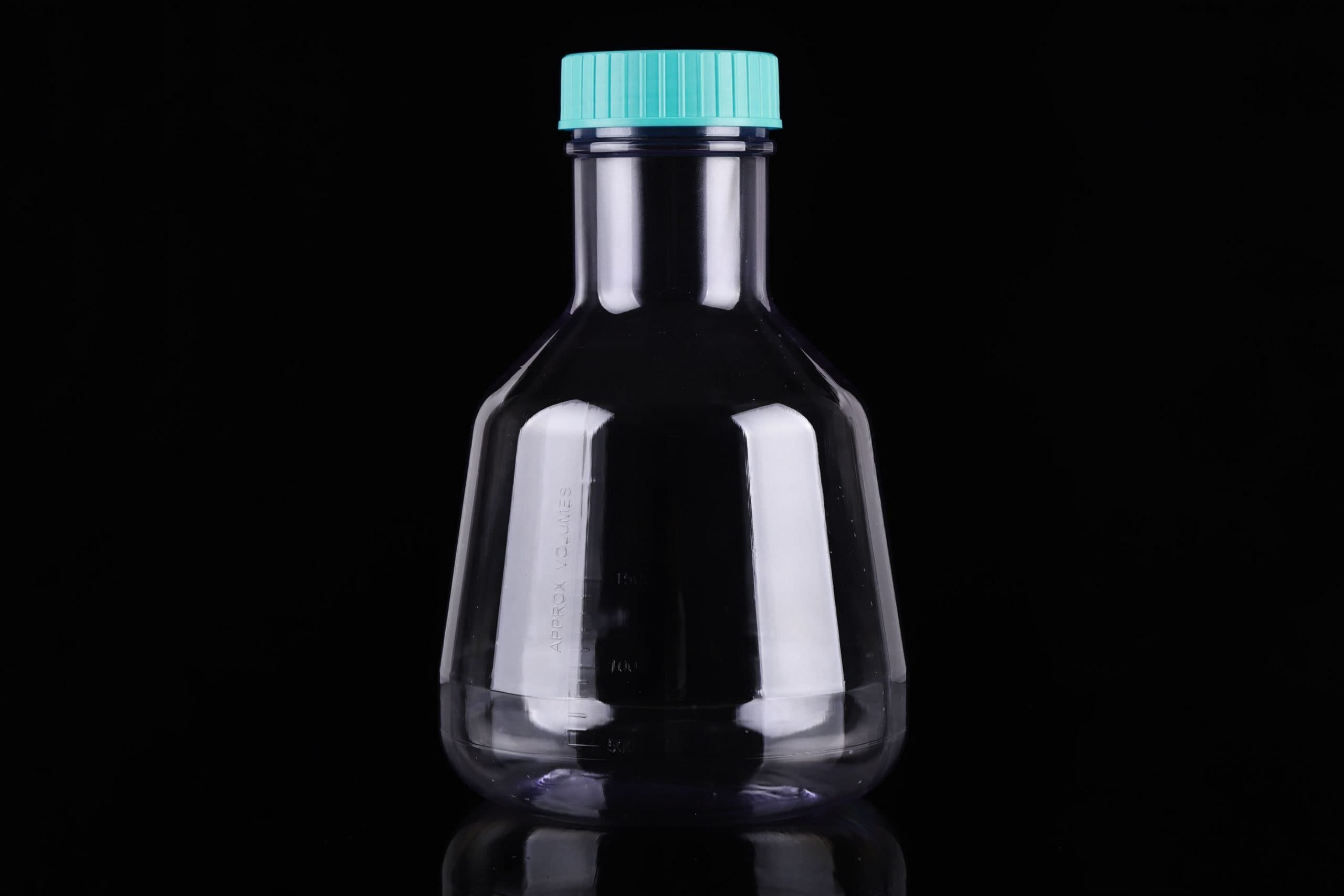
PC (polycarbonate) Erlenmeyer flasks are autoclavable (5–10 cycles at 121 °C), shatter-proof, USP Class VI shake flasks rated from −135 °C to +135 °C for suspension cell culture on orbital shakers, microbial fermentation, and media preparation. NEST Scientific supplies PC Erlenmeyer flasks in 125 mL–5,000 mL with flat-base or baffled-base geometry and 0.22 µm vented or plug seal HDPE caps; gamma sterilized to SAL 10⁻⁶.
MBP carries the full NEST Scientific PC Erlenmeyer line with direct PO ordering for labs across the USA, Canada, and worldwide. Request a quote today by contacting customerservice@mbpinc.net
PC Erlenmeyer Flasks
Showing 1 to 5 of 5 results
What are PC Erlenmeyer Flasks?
PC (polycarbonate) Erlenmeyer flasks are autoclavable, shatter-proof, optically clear shake flasks manufactured from USP Class VI medical-grade polycarbonate for suspension cell culture, microbial fermentation, and media preparation on orbital shakers. Polycarbonate provides a working temperature range of −135 °C to +135 °C and withstands 5–10 autoclave cycles at 121 °C — the defining advantage of PC over PETG for labs that steam-sterilize media or require reusable, re-sterilizable shake flasks. PC Erlenmeyer flasks are the correct choice when autoclavability, reuse, or processing at elevated temperature (>60 °C) is required; for single-use BPA-free workflows, PETG Erlenmeyer flasks are the alternative.
What you will find:
-
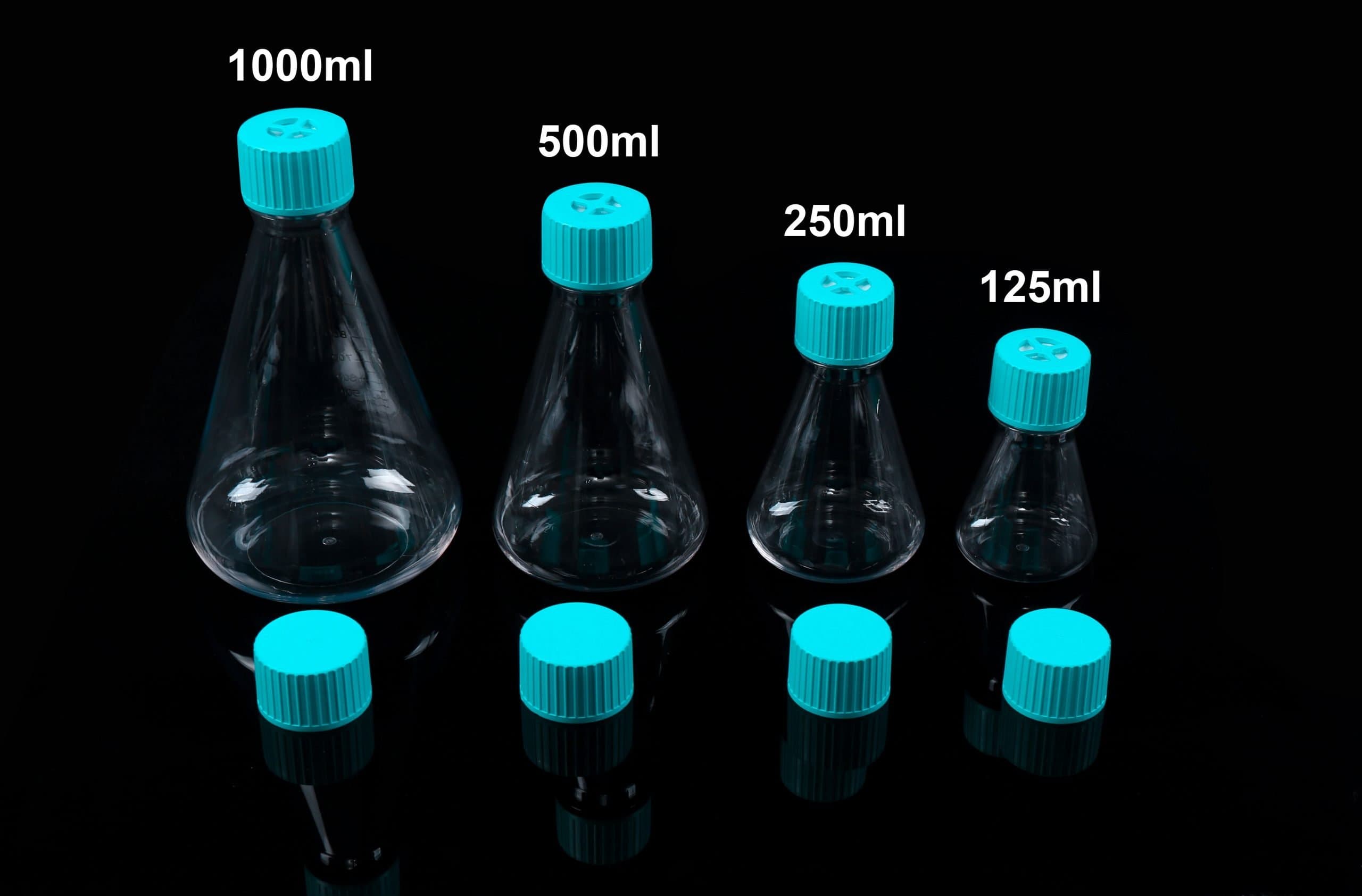
Vent Filter Caps featuring 0.22µm hydrophobic membranes to facilitate continuous, sterile gas exchange while preventing contamination and evaporation.
-
Seal Caps designed for airtight liquid storage, transport, and non-aerated incubation steps.
-
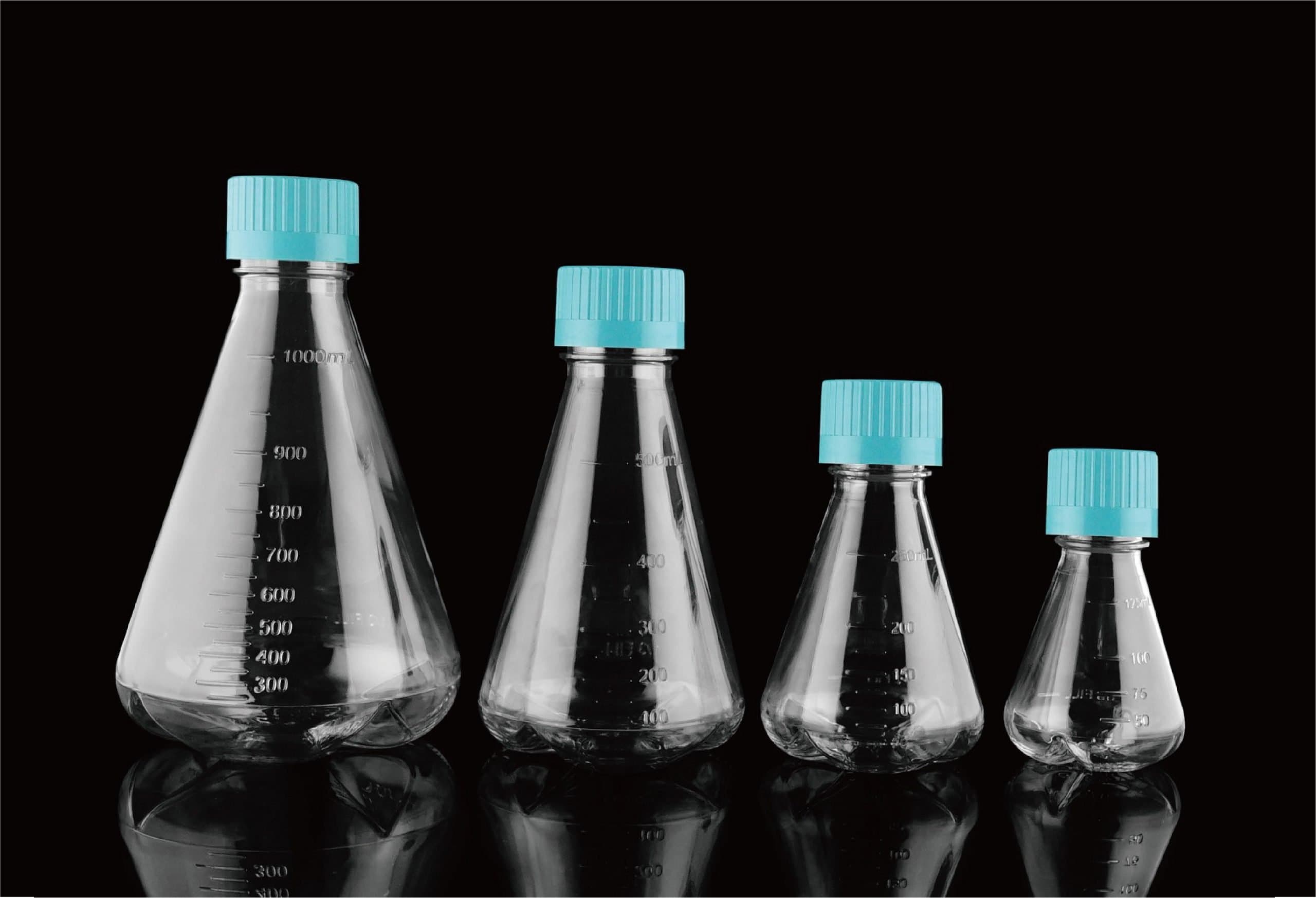
Flat Bottom Flasks optimized for uniform heating and stability on standard orbital shakers.
-
Baffled Bottom Flasks engineered with integrated "flutes" to increase turbulence and oxygen mass transfer, ideal for high-density yeast and bacterial cultures.
-
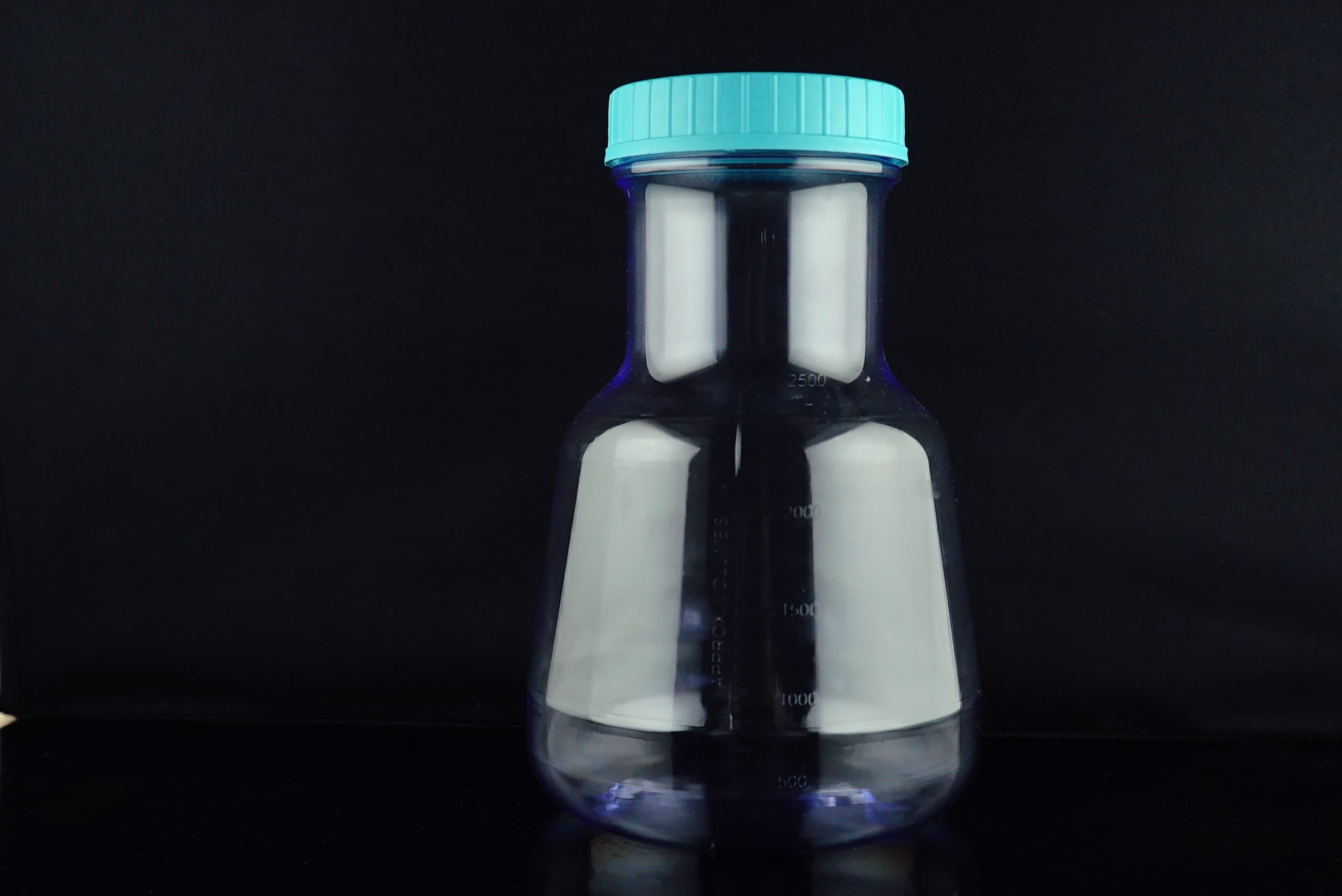
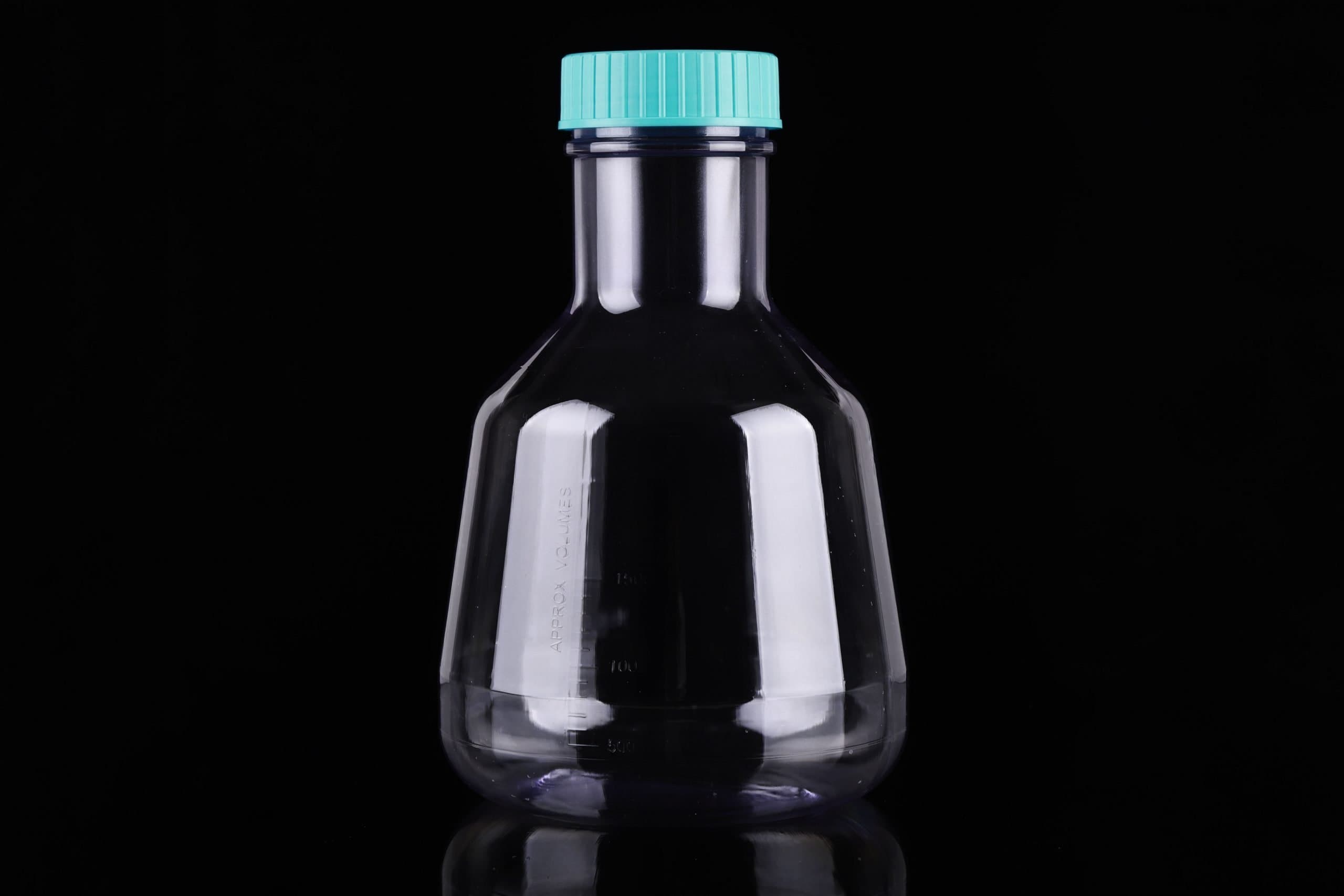
Volume Scalability with a comprehensive range from 125mL pilots to 5L high-efficiency production vessels, allowing for a seamless transition from bench-scale research to bulk bioprocessing.
-
High-Efficiency Wide-Mouth Designs facilitate rapid filling and easy access for large-volume pipetting and automated dispensers.
How to Choose PC Erlenmeyer Flasks
Flat Base vs. Baffled Base for Your Cell Line
Flat-base PC flasks produce laminar rotational flow during orbital shaking, providing low-shear mixing appropriate for shear-sensitive primary cells, some hybridoma lines, and media preparation. Baffled-base PC flasks generate turbulence during shaking that substantially increases dissolved oxygen (DO) transfer — critical for fast-growing CHO-S, HEK293-F, Expi293, bacterial (E. coli, B. subtilis), and yeast cultures where DO depletion limits cell density and productivity. NEST Scientific offers both base geometries across all standard volumes from 125 mL to 3,000 mL, with High Efficiency baffled formats extending to 5,000 mL for production-scale operations.
Vented Cap vs. Plug Seal Cap
Vented caps (0.22 µm hydrophobic PTFE membrane, HDPE housing) allow continuous gas exchange during shaker culture while maintaining a sterile barrier. The NEST oversized vented cap membrane provides greater gas transfer area than standard-dimension vented caps, supporting high-density cultures. Plug seal caps are gas-impermeable HDPE caps used for static media storage in PC flasks, transport between incubators, and autoclave cycles (caps must be loosened 1–1.5 turns before autoclaving to prevent pressure buildup). Never use a sealed plug cap on a flask in an orbital shaker incubator — medium acidification and DO depletion occur within hours.
Volume Selection and Fill Ratio
NEST Scientific PC flasks are available in 125 mL, 250 mL, 500 mL, 1,000 mL, 2,000 mL, 3,000 mL, and 5,000 mL (High Efficiency). Working fill for shaker culture: 20–25% of nominal volume. Working volumes: 25–30 mL in 125 mL; 50–60 mL in 250 mL; 100–125 mL in 500 mL; 200–250 mL in 1,000 mL; 400–500 mL in 2,000 mL. Scale-up from T-flask to Erlenmeyer: transition from T75 (15–25 mL static) to a 125 mL PC baffled flask when moving to suspension-adapted cell lines requiring orbital shaking.
Autoclave Protocol for PC Flasks
PC Erlenmeyer flasks can be autoclaved at 121 °C for 15–20 minutes (standard gravity cycle). Loosen cap 1–1.5 turns before autoclaving; retighten after cooling. Repeated autoclaving causes progressive hydrolytic degradation of carbonate linkages — inspect for crazing, discoloration, or dimensional distortion after each cycle and retire flask at first sign of damage. Do not use autoclaved PC flasks for vacuum applications.
BPA Consideration
Polycarbonate contains bisphenol A (BPA) as an inherent part of its monomer chemistry. For applications involving estrogen receptor–positive cell lines (MCF-7, T47D, ZR-75), primary endocrine cells, or long-term culture runs exceeding 14 days, PETG Erlenmeyer flasks (BPA-free) are the safer choice. For standard bacterial, yeast, CHO, and HEK293 suspension culture, trace BPA from USP Class VI PC does not affect results in published culture protocols.
Specifications Context
NEST Scientific PC Erlenmeyer flasks are manufactured from USP Class VI medical-grade PC resin in ISO 8 cleanrooms, gamma sterilized per ISO 11137 to SAL 10⁻⁶, and individually wrapped in sterile packaging. PC tensile strength: 55–75 MPa; maintains impact resistance >50 J/m at −40 °C. Vented cap 0.22 µm hydrophobic PTFE membrane confirmed non-pyrogenic. Flask base diameter and neck geometry are designed for compatibility with standard orbital shaker clips from Infors HT, New Brunswick Innova, and Thermo Scientific MaxQ platforms — confirm flask O.D. against your specific shaker clamp before bulk ordering. NEST Scientific PC Erlenmeyer flasks up to 5 L (High Efficiency line) are stocked by MBP.
Connect with the MBP team today to secure the exact volumes and cap configurations required for your laboratory’s next breakthrough.
FAQ