Cell Culture Plates — 6-Well to 384-Well in TC-Treated, Non-Treated, and Glass-Bottom
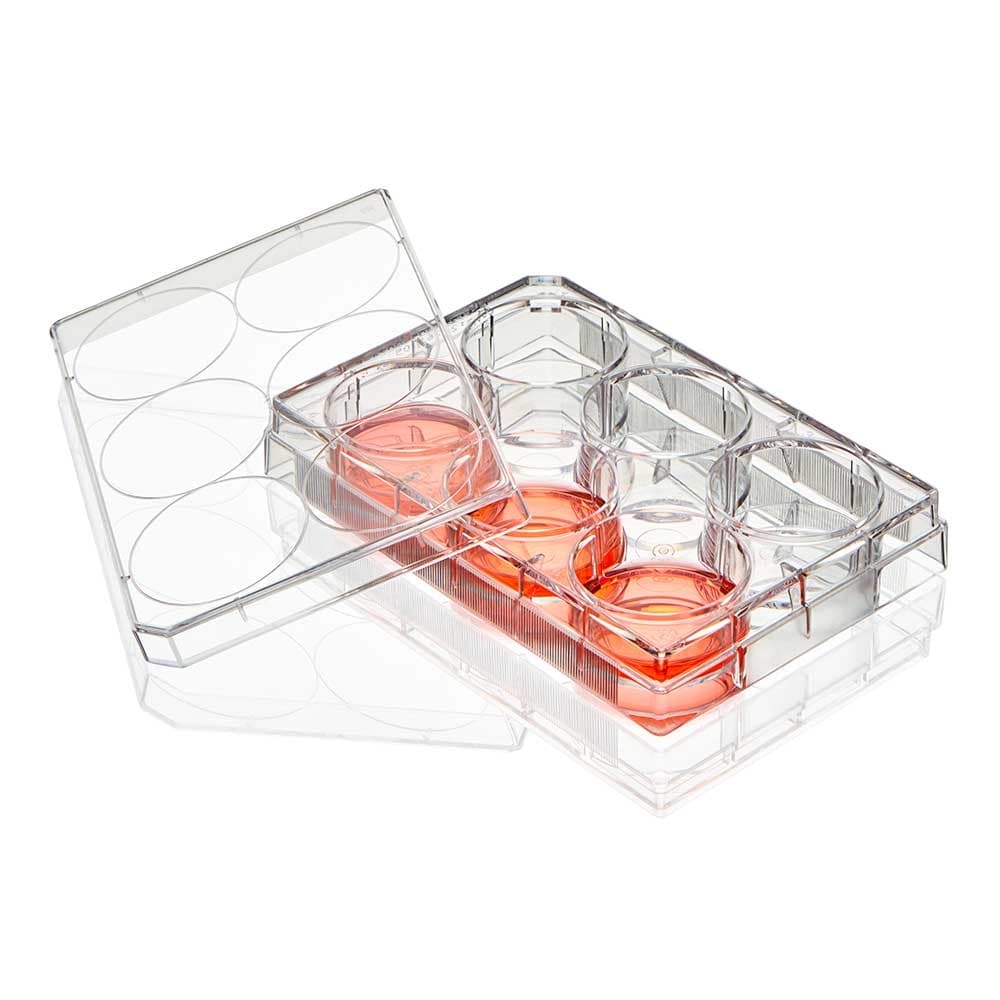
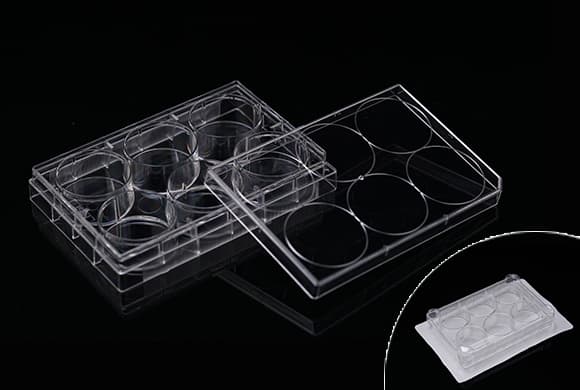
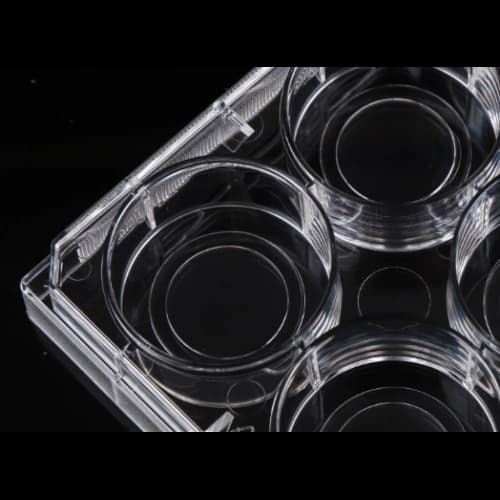
Cell culture plates are sterile, single-use multi-well polystyrene vessels for growing, treating, and analyzing cells in parallel. NEST Scientific supplies 6-, 12-, 24-, 48-, 96-, and 384-well formats in TC-treated (vacuum plasma, contact angle <10°), non-treated (hydrophobic surface for suspension cells), and glass-bottom (0.16–0.19 mm coverglass for confocal imaging) configurations. All conform to SBS/ANSI footprint standards for automated plate handlers and readers; E-beam sterilized to SAL 10⁻⁶; individually wrapped in peelable film.
MBP carries the NEST Scientific and Biologix plate line with direct PO ordering for labs across the USA, Canada, and worldwide. Contact customerservice@mbpinc.net for further details.
Cell Culture Plates
Showing 13 to 16 of 16 results
What are Cell Culture Plates?
Cell culture plates are sterile, single-use polystyrene multi-well vessels used to grow, treat, and analyze cells in parallel across multiple conditions in a single vessel. All formats are E-beam sterilized to SAL 10⁻⁶, certified DNase/RNase-free and non-pyrogenic, and individually wrapped in peelable film. Choose TC-treated flat-bottom plates for adherent mammalian cell culture, assays, and transfection; choose non-treated plates for suspension, hematopoietic, and hybridoma cells; choose glass-bottom plates for live-cell confocal and high-resolution fluorescence imaging.
What you will find:
- Non-Treated Cell Culture Plates: Designed for suspension cultures and non-adherent cell lines where cell attachment is not required.
- Treated Cell Culture Plates: Tissue-culture-treated surface promotes reliable attachment and growth of adherent cells for routine culture and assays.
- Glass Bottom Cell Culture Plates: Glass-bottom wells provide superior optical clarity for high-resolution microscopy and live-cell imaging.
How to Choose Cell Culture Plates
Well Count by Application Scale
6-well plates (9.4 cm²/well) are the standard for transfection, siRNA knockdown, Western blot sample preparation, luciferase reporter assays, and colony counting — any protocol that requires ≥5 × 10⁶ cells per condition. 12-well plates (3.8 cm²/well) support medium-scale culture for ELISA lysate preparation, flow cytometry staining, and viral infection studies. 24-well plates (1.9 cm²/well) are versatile for drug dose-response at medium throughput, primary cell culture, and viral plaque assays. 48-well plates (0.95 cm²/well) bridge 24-well and 96-well scale for intermediate throughput experiments. 96-well plates (0.32 cm²/well) are the workhorse for high-throughput cell viability (MTS, MTT, CCK-8), cytotoxicity, ELISA, reporter gene, and compound screening assays. 384-well plates are used for ultra-high-throughput screening (HTS), where reagent cost per well drives miniaturization.
TC-Treated vs. Non-Treated vs. Glass Bottom
TC-treated (vacuum plasma–treated, contact angle <10°) flat-bottom plates support adherent mammalian cell monolayer formation — required for HeLa, HEK293 (adherent), CHO-K1, Vero, A549, MCF-7, and primary cells. Non-treated plates maintain a hydrophobic surface that prevents attachment — used for suspension cell lines (Jurkat, K562, HL-60), hybridoma culture, and spheroid/organoid formation in U-bottom wells. Glass-bottom plates combine a polystyrene plate body with a borosilicate coverglass floor (0.16–0.19 mm thickness), matching the No. 1.5 coverglass standard required for confocal, TIRF, and super-resolution microscopy.
Flat vs. Round (U) vs. V-Bottom Well Geometry
Flat-bottom wells provide a flat imaging surface for phase-contrast and fluorescence microscopy, uniform cell monolayer coverage, and reliable OD measurements in plate readers. Round (U)-bottom wells concentrate cells and particles to the well centre by gravity — used for rosette assays, hemagglutination inhibition (HAI), and hanging-drop spheroid culture. V-bottom wells have a sharp vertex that pellets cells tightly for wash steps in flow cytometry and immunophenotyping panels.
Plate Lid and Evaporation Management
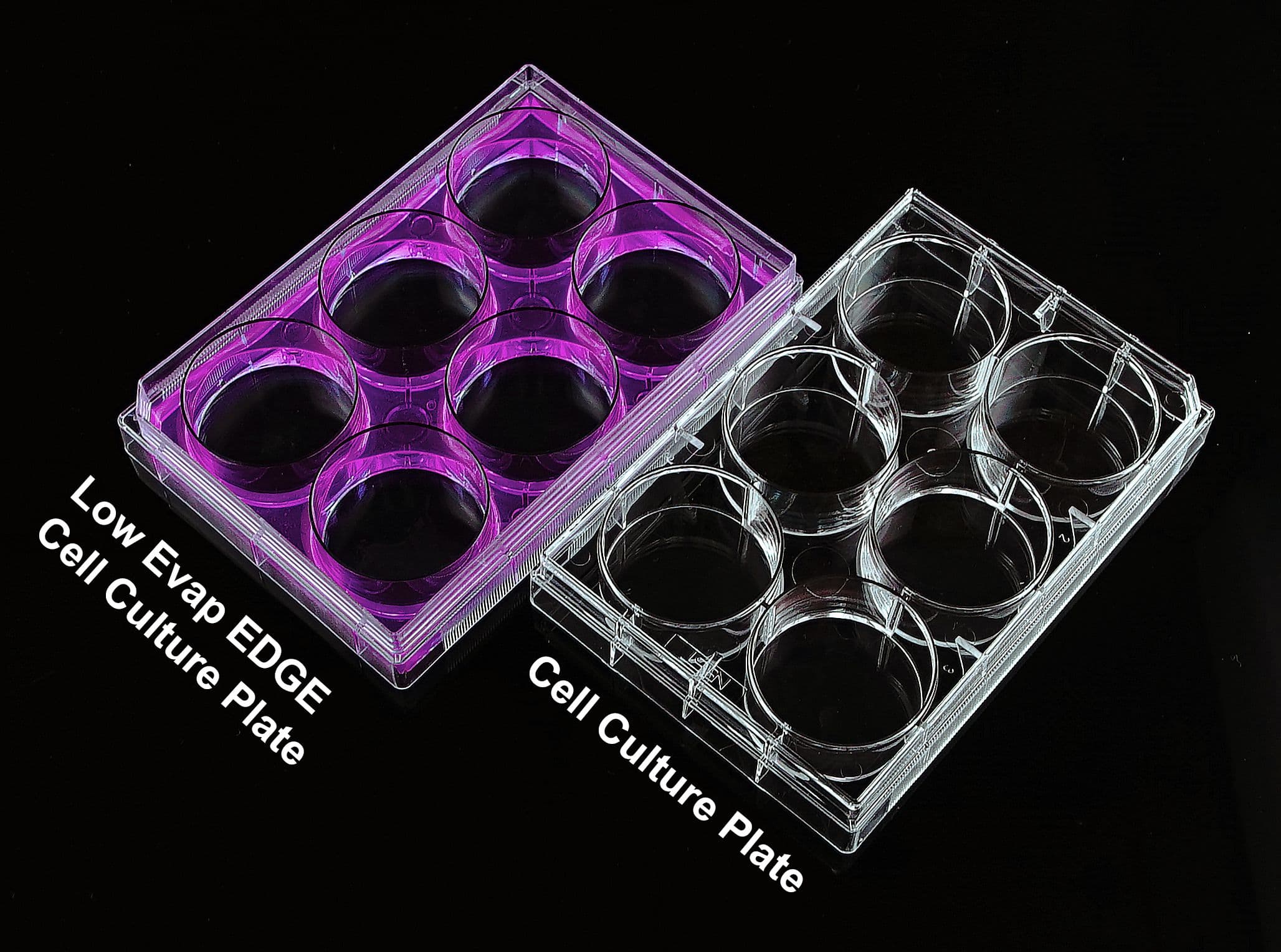
NEST Scientific cell culture plates ship with a clear polystyrene lid. For high-throughput assays running 72–96 hours, edge-well evaporation in 96-well and 384-well formats can introduce artefacts; NEST Low Evaporation EDGE plates have an inter-wall design that reduces edge-well evaporation by maintaining humidity in the peripheral wells during long incubations.
Specifications Context
NEST Scientific cell culture plates are manufactured from 100% virgin polystyrene in ISO 8 (Class 10,000) cleanrooms. TC treatment uses vacuum plasma technology; the lot-release criterion is contact angle <10°. All plates conform to ANSI/SLAS 1-2004 through 4-2004 footprint and well-position standards (SBS format), ensuring compatibility with automated liquid handling platforms, plate readers, and automated incubators. E-beam sterilization to SAL 10⁻⁶. Plates are individually wrapped in peelable Tyvek-equivalent film for GMP cleanroom entry; lids are attached. Alphanumeric well markings (A–H rows, 1–12 columns for 96-well) are standard across all formats. NEST Scientific is ISO 9001:2015 and ISO 13485 certified with FDA registration. As of 2026, MBP is a registered vendor for Howard Hughes Medical Institute, Vanderbilt University, and MD Anderson Cancer Center.
Pick your format, culture your cells, and get consistent results every time. Contact MBP and get a tailored quote today!
FAQ