Glass Bottom Cell Culture Plates for Confocal and High-Resolution Live-Cell Imaging
Glass-bottom cell culture plates combine a standard polystyrene multi-well plate body with a borosilicate coverglass floor (0.16–0.19 mm, No. 1.5 thickness) in each well for high-resolution live-cell microscopy. NEST Scientific glass bottom plates are available in TC-treated formats, bonded with non-cytotoxic medical-grade adhesive, E-beam sterilized to SAL 10⁻⁶, compatible with confocal, TIRF, super-resolution, DIC, and phase contrast microscopy on inverted platforms.
MBP carries NEST Scientific glass bottom plates with direct PO ordering for labs across the USA, Canada, and worldwide. Get a tailored quote by contacting customerservice@mbpinc.net
Glass Bottom Cell Culture Plates
Showing 1 to 1 of 1 results
What are Glass Bottom Cell Culture Plates?
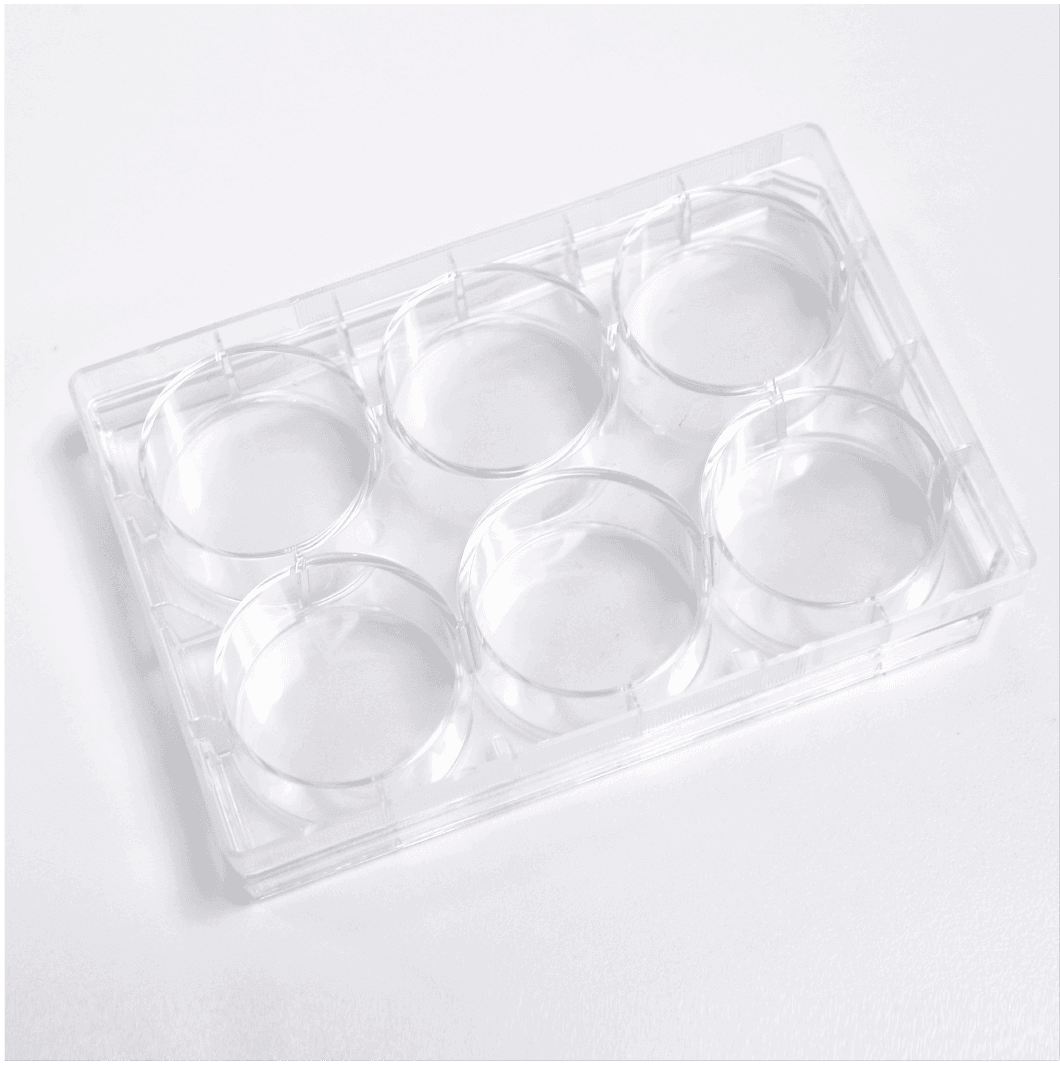
Glass bottom cell culture plates are sterile, single-use multi-well plates combining a polystyrene plate body with a borosilicate coverglass floor in each well, designed for high-resolution live-cell microscopy applications that require the optical clarity and low autofluorescence of glass rather than polystyrene. Glass bottom plates are required for confocal microscopy, TIRF microscopy, spinning disk confocal, super-resolution (STORM, PALM, STED), and any high-magnification live-cell imaging protocol that specifies No. 1.5 coverglass.
What you will find:
• High clarity glass bottoms for crisp, high resolution imaging
• Compatible with fluorescence, confocal, and phase contrast microscopy
• Treated surfaces to support strong cell attachment
• Multi-well formats for parallel experiments and higher throughput
• Sterile, ready-to-use plates to keep your workflow clean
• Durable construction to handle repeated imaging sessions
How to Choose Glass Bottom Cell Culture Plates
Why Glass Bottom vs. Standard Polystyrene Plates
Standard polystyrene cell culture plates have optical properties inadequate for high-resolution microscopy: polystyrene autofluoresces in the 400–600 nm range, interfering with DAPI, GFP, and Cy3 channels; the relatively thick PS well bottom (0.5–2.0 mm vs. 0.16–0.19 mm for No. 1.5 coverglass) places cells outside the working distance of high-NA oil objectives; and PS birefringence creates artefacts in polarized light and DIC microscopy. Borosilicate glass (No. 1.5, 0.16–0.19 mm) is optically isotropic, produces no autofluorescence in the visible range, and matches the focal correction of oil-immersion objectives.
Coverglass Thickness: No. 1.5 Standard
No. 1.5 coverglass (0.16–0.19 mm nominal, ~0.17 mm mean) is the standard for which virtually all high-NA microscope objectives (Nikon Plan Apo, Olympus UPLSAPO, Zeiss Plan-Apochromat) are spherical aberration–corrected. NEST Scientific glass bottom plates use 0.16–0.19 mm borosilicate glass per product specification. For objectives with correction collars, the correction collar should be set to match the actual glass thickness measured per lot.
Medical-Grade Adhesive and Non-Cytotoxicity
The borosilicate glass disk in each well is bonded to the PS plate body using medical-grade adhesive confirmed non-cytotoxic by NEST Scientific lot testing. The adhesive is the most critical quality checkpoint for glass bottom plates: cytotoxic adhesive leaches compounds that affect cell morphology, viability, and signaling within 24–48 hours of seeding. Always confirm non-cytotoxicity certification on the manufacturer's lot data sheet before use with sensitive primary cells.
6-Well vs. 24-Well Format
NEST Scientific 6-well glass bottom plates (glass diameter 20 mm per well) are used for experiments requiring larger cell populations visible in a single field at low magnification (10×–20×) — migration assays, wound-healing scratch assays, live-cell time-lapse at moderate magnification, and spheroid imaging. 24-well glass bottom plates (glass diameter 13.5 mm per well) support medium-throughput confocal imaging with smaller cell populations per well — transfection imaging, localization studies, co-localization panels, and FISH on adherent cells.
TC-Treated Glass Bottom
NEST Scientific glass bottom plates have both the polystyrene well walls and the glass floor TC-treated, ensuring that adherent mammalian cells attach and grow directly on the glass surface. Without TC treatment of the glass floor, adherent cells form uneven, loosely attached monolayers that detach during media changes before imaging.
Immersion Objective Compatibility
For oil-immersion objectives (working distance <0.2 mm at 100×), glass bottom plates require the inverted microscope objective to be positioned below the plate base — the standard configuration for inverted microscopes (Nikon Ti2, Olympus IX83, Zeiss Axio Observer). Confirm that your microscope stage adapter accepts standard multi-well plate footprints and that the plate bottom is accessible to the objective lens.
Specifications Context
NEST Scientific glass-bottom cell culture plates use 100% virgin polystyrene plate bodies and borosilicate glass inserts (0.16–0.19 mm), bonded with medical-grade, non-cytotoxic adhesive. Both the polystyrene well wall and the glass floor are TC-treated by vacuum plasma. E-beam sterilized to SAL 10⁻⁶; certified DNase/RNase-free, non-pyrogenic per lot. Compatible with confocal microscopy, high-resolution microscopy, DIC, polarized light, phase contrast, TIRF, and live-cell fluorescence imaging. Typical applications include: STEM cell research, cell cycle regulation, GFP localization, laser scanning confocal, two-photon confocal, and infrared imaging per NEST Scientific product documentation. NEST Scientific glass-bottom plates in 6-well and 24-well formats are stocked by MBP.
Upgrade your imaging setup with plates built for clarity and consistency. Contact MBP to get your Glass Bottom Cell Culture Plates today!
FAQ