Protein Analysis Reagents for Quantification, Labeling, and Protein Research Workflows
Protein Analysis brings together the reagents and assay tools used across protein research, from quantification and bioluminescence-based assays through crosslinking, labeling, and structural modification chemistry. As a top-level branch parallel to Cell Biology, this category organizes protein-focused workflows separately from the cell-biology-centric immunology and tissue culture catalog. Academic and core laboratories performing protein quantification, interaction studies, structural characterization, or custom labeling can benefit from workflow-specific guidance when selecting reagents and assay formats.
Explore available protein analysis reagents or request a quotation by contacting customerservice@mbpinc.net. Our team can help identify the appropriate assays, labeling chemistries, crosslinking reagents, and analytical tools for your protein research workflow.
Protein Analysis

Showing 1 to 3 of 3 results
What is Protein Analysis as a Reagent Category?
Protein Analysis includes reagents and kits used across the protein research workflow, including protein quantification assays, bioluminescence-based assays for reporter gene and viability studies, crosslinking and labeling chemistries for protein interaction analysis, and tools for protein purification and separation.
What you will find:
-
Protein Assays: Advanced instruments like the Luciferase Assay Kit (G287) are designed for rapid and accurate assessment of reporter gene expression in transfected cell lines.
-
Protein Expression: High-quality reagents and optimization frameworks aimed at enhancing the yield and solubility of specific recombinant proteins within different host cells.
-
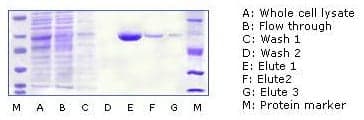
Protein Purification: High-capacity Ni-IDA Agarose Resins (G250) made for the single-step purification of His-tagged recombinant proteins, guaranteeing high selectivity and minimized non-specific binding.
-
Proteins & Peptides: Reliable GFP Purified Protein (000033P) that serves as an effective control for fluorescence microscopy, flow cytometry, and calibration of Western blots.
How to Navigate Protein Analysis Reagents
Start with Quantification Before Downstream Protein Work
Accurate protein concentration measurements are essential for downstream applications such as gel loading, enzymatic assays, and sample normalization.
Use Bioluminescence-Based Assays for Reporter and Viability Studies
Luciferase reporter assays and ATP-based viability assays provide sensitive readouts for gene expression and cell health studies.
Use Crosslinking and Labeling Chemistry for Protein Interaction Studies
Crosslinkers and labeling reagents help investigate protein-protein interactions, create custom conjugates, and modify proteins for specialized applications.
Determine Whether Purification or Separation Tools Are Needed
Protein purification products isolate target proteins from complex mixtures, while electrophoresis and blotting reagents separate and visualize proteins for analysis.
Plan the Workflow by Experimental Stage
Identifying whether your experiment requires quantification, functional analysis, modification, purification, or separation helps streamline reagent selection.
Specifications context
Protein quantification, whether by a colorimetric assay or bioluminescence-based method, typically precedes nearly every other step in a protein research workflow, since downstream comparisons between samples or conditions depend on knowing each sample's actual protein content. As of 2026, bioluminescence-based reporter assays continue to expand into applications beyond classic gene expression reporters, including protein interaction and target engagement studies, reflecting the versatility of luciferase-based detection chemistry.
Improve your protein analysis—contact the MBP team today for a quote on our specialized characterization reagents.
FAQ