dNTPs (Deoxynucleotide Triphosphates) for PCR & Sequencing
dNTPs (deoxynucleotide triphosphates) are the four nucleotide building blocks — dATP, dCTP, dGTP, and dTTP — that DNA polymerase incorporates during amplification, supplied as individual sets or premixed solutions at standard PCR-grade purity. Available in 10 mM and 100 mM stock concentrations for PCR, qPCR, cDNA synthesis, and DNA labelling.
Academic researchers preparing custom reaction mixes benefit from MBP's individual-component flexibility alongside standard premixed formats. Contact customerservice@mbpinc.net to request a quote today!
dNTPs (Deoxynucleotide Triphosphates)
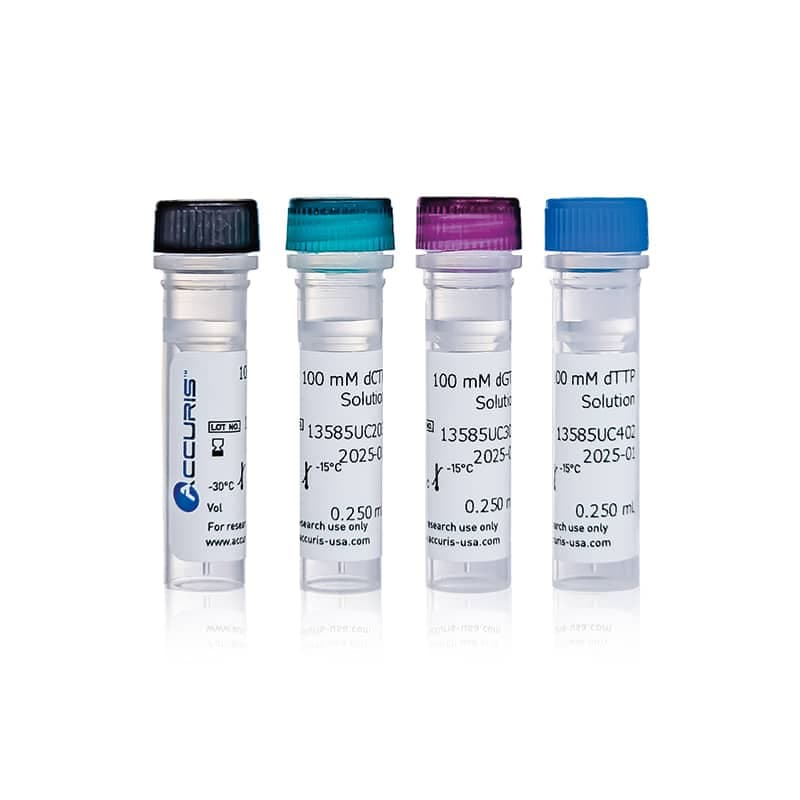
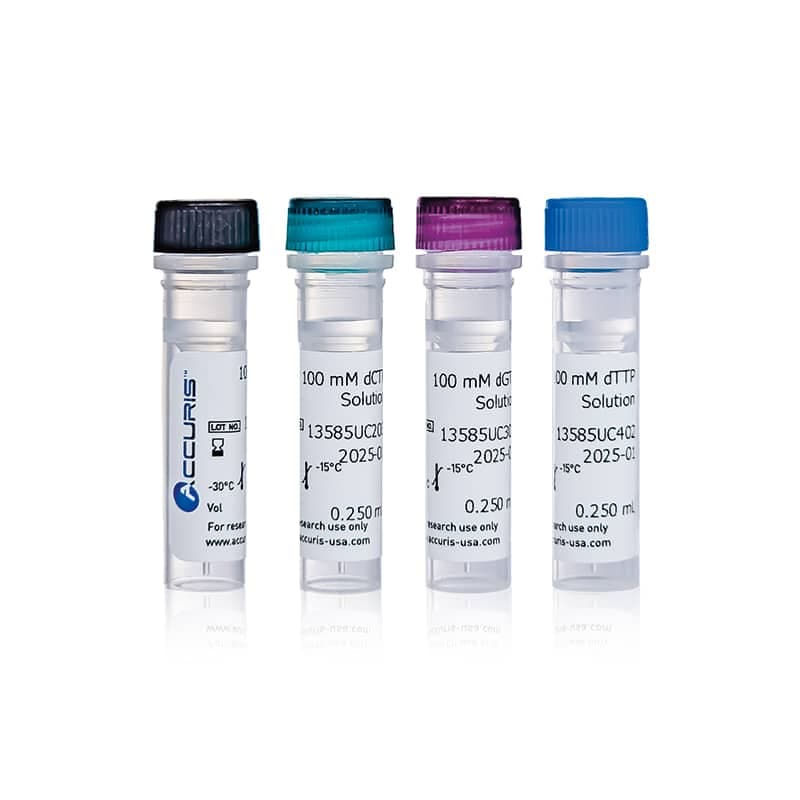
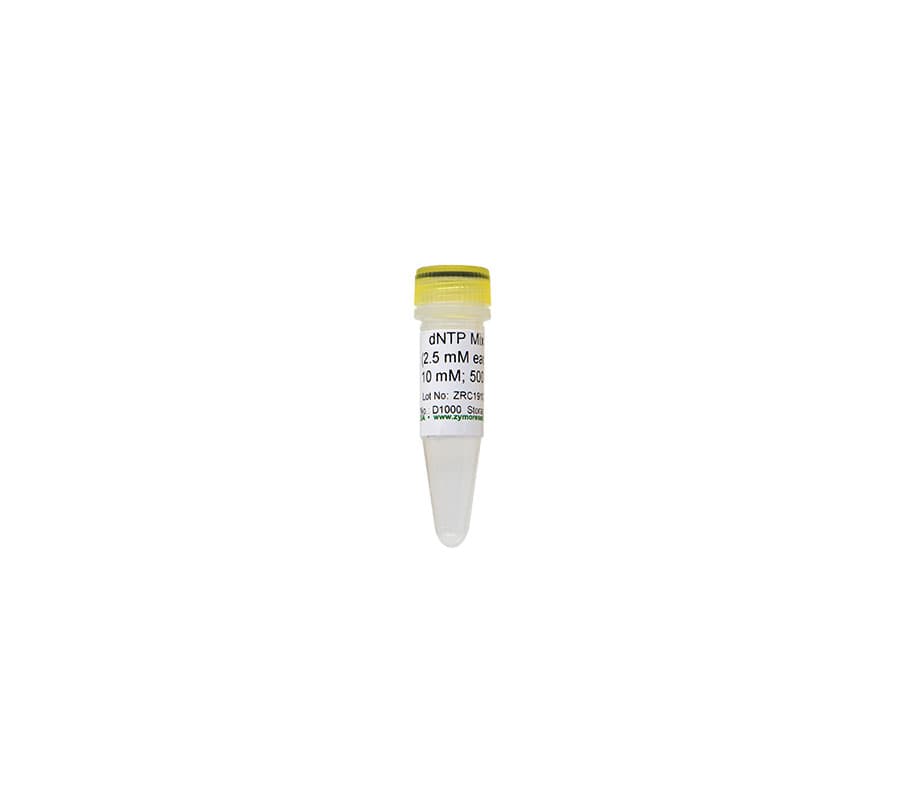

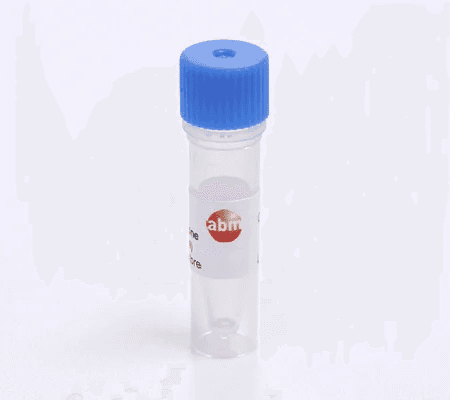


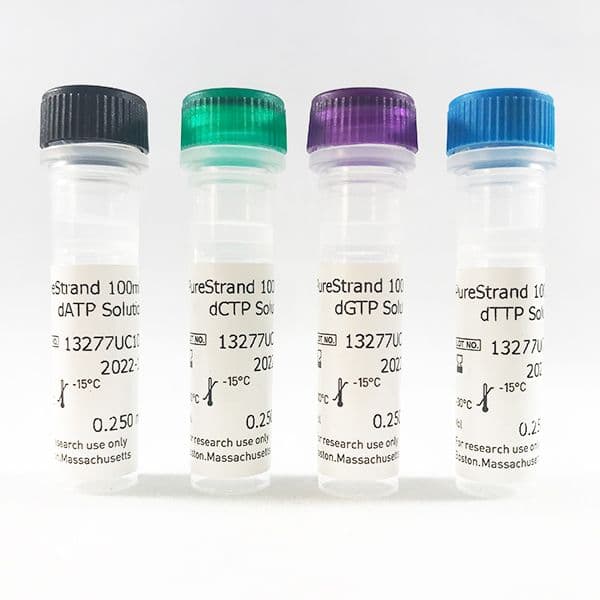
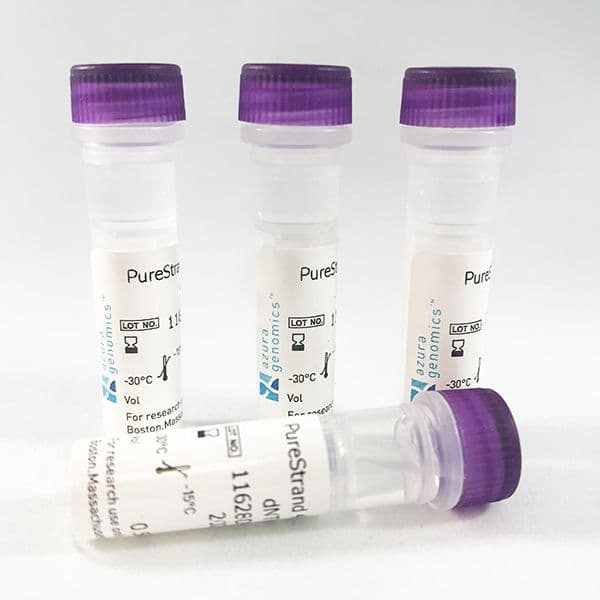
Showing 1 to 10 of 10 results
What Are dNTPs?
dNTPs (deoxynucleotide triphosphates) — dATP, dCTP, dGTP, and dTTP — are the four nucleotide substrates that DNA polymerase incorporates into a growing DNA strand during PCR, qPCR, cDNA synthesis, sequencing, and DNA labelling reactions. They are supplied either as a complete set of four individual 100 mM tubes for custom dilution and mixing, or as a premixed solution at a standard working concentration. Choose the individual dNTP set for custom mix preparation and flexibility; choose the premixed dNTP mix for convenience in routine PCR setup.
What you will find:
-
dNTP Mix: Ready-to-use, pre-mixed formulations of dATP, dCTP, dGTP, and dTTP—like our PureStrand™ and Accuris 40mM selections—created to minimize pipetting mistakes and facilitate smooth polymerization.
-
dNTP Set: Separate vials of highly concentrated deoxynucleotides (up to 100mM) that provide the option to adjust molar ratios for specific amplification, labeling techniques, and in vitro transcription.
How to Choose dNTPs
Individual Set vs. Premixed Mix
A dNTP set supplies each of the four nucleotides separately at 100 mM, allowing dilution and mixing to any desired ratio or concentration — useful for labs preparing custom master mixes or running multiple applications with different dNTP requirements. A premixed dNTP mix combines all four at equimolar concentration (commonly 10 mM each from a 100 mM total stock), ready for direct use.
Working Concentration in PCR
The recommended final concentration for each dNTP in standard PCR is 0.2-0.25 mM, with some applications using up to 0.4 mM to increase yield in long-range PCR. From a 100 mM stock of each nucleotide, 0.1 µL per nucleotide is added to a 50 µL reaction — impractical for routine use, which is why premixed working stocks are common.
Equimolar Balance
Equal concentrations of all four dNTPs are essential — unbalanced ratios increase the frequency of misincorporation during polymerisation. Individual dNTP sets require careful equimolar mixing; premixed solutions are factory-balanced.
Purity Grade
PCR-grade dNTPs are typically supplied at greater than 99% purity, free of detectable RNase and DNase activity. Purity is particularly important for long-range and high-fidelity PCR, where contaminating impurities can reduce amplification sensitivity and yield.
Application Beyond Standard PCR
dNTPs support qPCR, cDNA synthesis (reverse transcription requires dNTPs as substrate for the reverse transcriptase), DNA labelling, and Sanger sequencing reactions — confirm the grade and concentration suit the specific downstream application.
Specifications Context
Mg2+ binds to dNTPs in the reaction mixture, so increasing dNTP concentration typically requires a corresponding increase in MgCl2 to maintain optimal polymerase activity — most protocols use 1.5-4 mM Mg2+ with 0.2 mM of each dNTP. For fidelity-sensitive applications using non-proofreading polymerases, lowering dNTP concentration to 0.01-0.05 mM (with proportionally reduced Mg2+) can improve accuracy at the cost of yield. dNTPs are typically supplied lyophilised or as lithium salt solutions in water (pH 7.5), stable at −20 °C with documented multiple freeze-thaw tolerance; thawing and mixing each solution thoroughly before use is recommended, particularly for high-concentration stocks.
Ensure your polymerization precision—reach out to the MBP team now for a quote on our expert-grade dNTP products.
FAQ