Plant RNA Extraction Kits for Polyphenol-Rich Tissue
Plant RNA extraction kits isolate total RNA, including small RNAs ≥17 nt, from leaves, stems, roots, flowers, fruit, and seeds—overcoming the polyphenols, polysaccharides, and high RNase activity that cause standard mammalian RNA kits to fail on plant tissue. Kits use β-mercaptoethanol- or PVP-containing lysis buffers for oxidation protection and dual-column or inhibitor-removal steps for high-purity RNA.
MBP carries Zymo Research Quick-RNA Plant Miniprep and Direct-zol formats validated for Arabidopsis, rice, maize, and CTAB-compatible high-polyphenol species, available to registered vendors at Howard Hughes Medical Institute, Vanderbilt University, and MD Anderson Cancer Center. Request a quote by contacting customerservice@mbpinc.net.
Plant
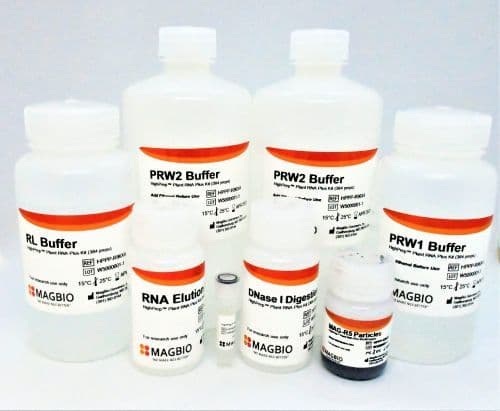
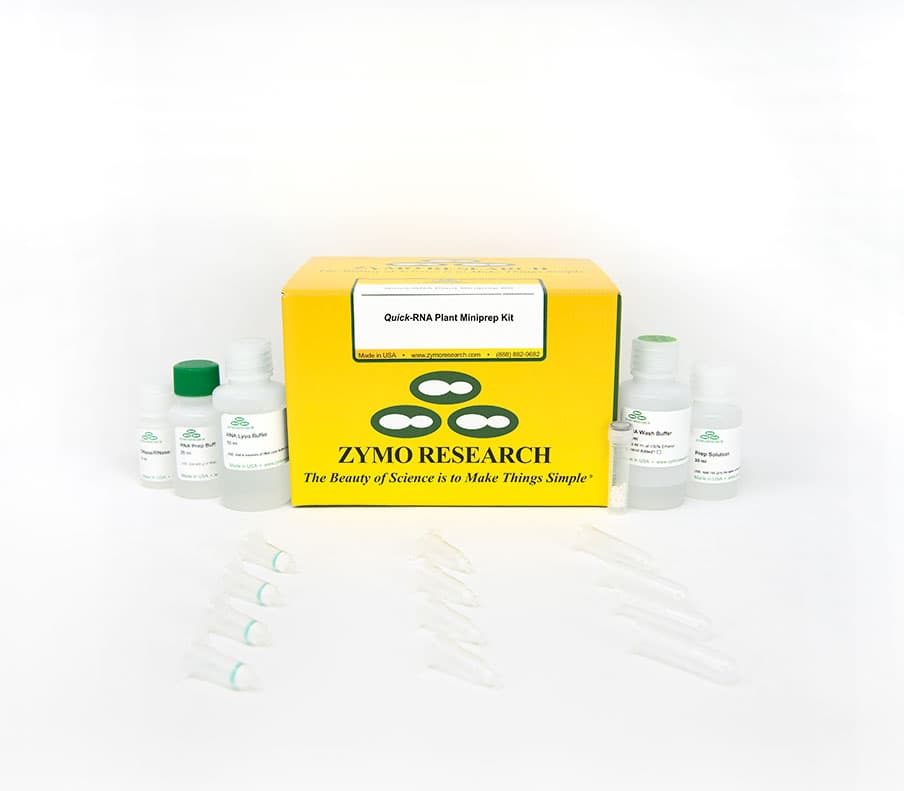
Showing 1 to 2 of 2 results
What are Plant RNA Extraction Kits?
Plant RNA extraction kits isolate total RNA from leaves, stems, roots, flowers, fruit, seeds, and bark by addressing the tissue-specific inhibitors that cause standard mammalian RNA kits to fail on plant material: polyphenols that oxidize and crosslink RNA, polysaccharides that co-precipitate with nucleic acids, and high RNase activity released during disruption. Dedicated plant kits incorporate beta-mercaptoethanol or PVP in lysis buffers to neutralize polyphenol oxidation, chaotropic guanidinium or CTAB-based lysis for robust RNA release, and inhibitor-removal column steps or wash buffers that clear polysaccharide and pigment carryover before RNA elution. Use a plant-specific RNA kit whenever your starting material is plant tissue - standard mammalian tissue RNA kits produce brown viscous lysates, clogged columns, and low-purity RNA from most plant species.
What you will find:
-
Mag Beads: for high-throughput, automation-ready isolation of total RNA from complex plant tissues using magnetic bead–based purification.
-
Spin-column: for rapid isolation of ultra-pure total RNA using silica spin-column technology, without hazardous organic solvents.
How to Choose a Plant RNA Extraction Kit
Low-Polyphenol vs. High-Polyphenol Plant Species
For low-polyphenol species -- Arabidopsis thaliana, tobacco (Nicotiana tabacum), rice, maize, soybean -- guanidinium-based plant RNA kits (Zymo Quick-RNA Plant Miniprep) perform well with standard protocols. For high-polyphenol and high-polysaccharide species -- Pinus, Vitis vinifera, Citrus, Coffea, Theobroma, orchids, and tropical fruits - use CTAB-based lysis (2% CTAB, 2% PVP-40, 0.2% beta-mercaptoethanol) followed by column purification with Zymo Direct-zol RNA Miniprep Plus, which is confirmed compatible with CTAB-extracted plant samples.
Spin-Column vs. Magnetic Bead Format
Spin-column plant RNA kits are the standard for 1-24 samples per run. Magnetic bead plant RNA formats are emerging for high-throughput phenotyping applications where 96+ plant samples are processed per day in plant breeding or stress response screens; they require a magnet plate or automation platform. For routine lab use, the spin-column format provides sufficient throughput.
Small RNA Retention
Confirm the kit retains small RNAs >=17 nt if your study includes plant miRNAs, ta-siRNAs, or siRNAs. The Zymo Quick-RNA Plant Miniprep uses a Zymo-Spin IIC column that captures total RNA, including small RNAs alongside mRNA. Kits using larger-pore silica membranes that exclude small RNAs are not appropriate for plant small RNA profiling.
Inhibitor Removal Filtration
The Zymo Quick-RNA Plant Kit includes optional Zymo-Spin III-HRC Spin Filters for an additional inhibitor removal step on the eluted RNA; run this step when A260/A230 ratios are below 1.5 or when RT-qPCR shows inhibition. This step reduces yield slightly but is essential for reliable quantification from high-inhibitor plant tissues.
Input Mass
Most plant RNA kits process 50-100 mg of fresh tissue per extraction. For seeds, bark, or woody stems, reduce input to 10-30 mg and increase grinding time in liquid nitrogen to ensure complete disruption. Overloading the column with high-polysaccharide tissue causes column clogging and yield reduction.
Specifications Context
Target quality metrics for plant RNA: A260/A280 >= 1.8-2.0, A260/A230 >= 1.5 (>=1.8 preferred; lower values indicate polysaccharide carryover), and RIN >= 7 for RNA-seq. The Zymo Quick-RNA Plant Miniprep Kit is validated for leaves, stems, buds, flowers, fruit, and seeds with yields up to 50 ug total RNA per extraction. Plant RNA-seq is a routine tool in crop improvement, disease resistance, and climate stress research; Arabidopsis thaliana, Oryza sativa (rice), and Zea mays (maize) are the most commonly processed species in published RNA-seq studies from academic plant biology laboratories at institutions including the Howard Hughes Medical Institute and Vanderbilt University. Liquid nitrogen grinding within 60 seconds of tissue harvest is the single most important step for preserving RNA integrity in plant samples.
Contact the MBP team for ordering assistance, bulk pricing, or protocol guidance on selecting the right kit for your sample type.
FAQ