Spin-Column Plant RNA Kits with Dual-Column DNA Removal
Spin-column plant RNA extraction kits purify total RNA, including small RNAs ≥17 nt, from leaves, stems, roots, flowers, fruit, and seeds in 20–30 minutes using a dual-column Zymo-Spin architecture. A IIICG column physically retains genomic DNA while RNA flows through to an IIC column for binding, washing, and elution.
MBP carries Zymo Research Quick-RNA Plant Miniprep and Direct-zol kits validated for Arabidopsis, rice, maize, tobacco, and CTAB-compatible high-polyphenol species, for registered vendors at Howard Hughes Medical Institute, Vanderbilt University, and MD Anderson Cancer Center. Request a quote by contacting customerservice@mbpinc.net.
Spin-column
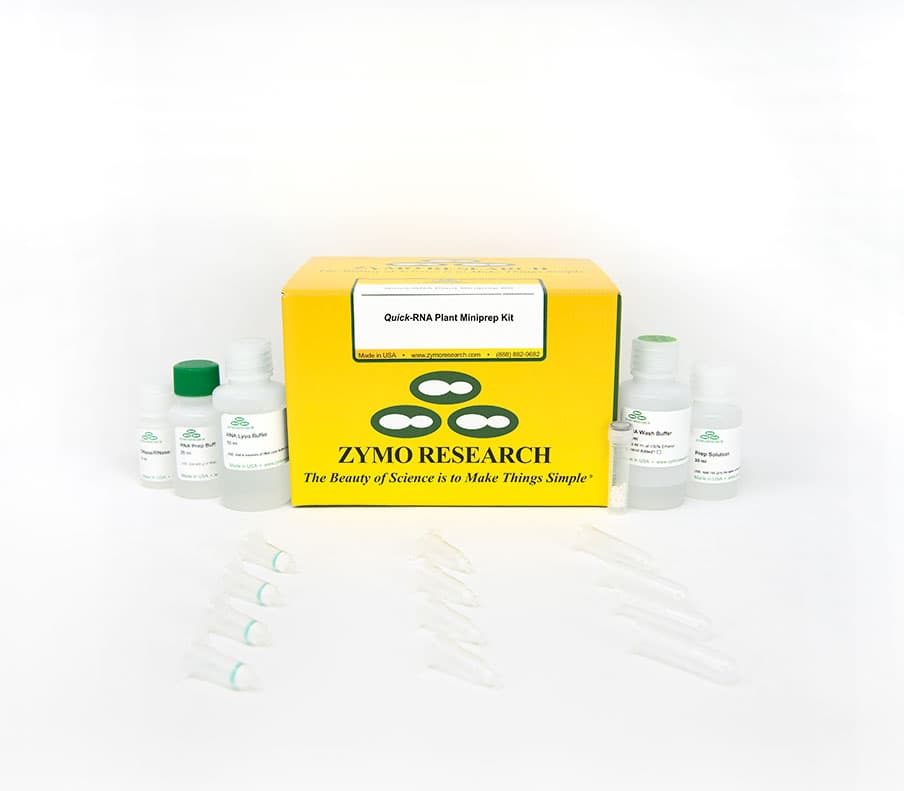
Showing 1 to 1 of 1 results
What are Spin-Column Plant RNA Extraction Kits?
Spin-column plant RNA extraction kits purify total RNA from plant tissue - leaves, stems, roots, buds, flowers, fruit, and seeds - using a liquid nitrogen grinding or bead-beating disruption step followed by a dual-column silica-membrane workflow in a standard microcentrifuge. The Zymo Quick-RNA Plant Miniprep Kit uses a Zymo-Spin IIICG column to physically retain and discard genomic DNA while RNA passes through into the collection tube, then a Zymo-Spin IIC column to bind, wash, and elute total RNA including small RNAs >=17 nt. The full protocol takes 20-30 minutes per batch of 1-12 samples and yields up to 50 ug RNA per extraction. Use the spin-column plant RNA format for routine lab use processing 1-24 plant tissue samples per day without automation infrastructure, or when your samples require a fast, phenol-free extraction workflow validated for standard crop and model plant species.
What you will find:
- Recovery of ultra-pure total RNA from plant tissues.
- Effective processing of tough and difficult-to-lyse plant samples.
- Rapid RNA purification using silica spin-column technology.
- Organic solvent-free RNA isolation workflow.
- High-quality RNA suitable for downstream molecular biology applications.
How to Choose a Spin-Column Plant RNA Kit
Tissue Type and Inhibitor Load
Soft, low-polyphenol tissues (Arabidopsis leaves, tobacco, rice leaves) extract cleanly with guanidinium-based spin-column kits. Fibrous, woody, or high-polyphenol tissues (mature stems, bark, fruit peel, seeds) require either CTAB-based upstream lysis followed by column purification, or additional grinding in liquid nitrogen to achieve complete disruption before adding lysis buffer.
CTAB Compatibility
Confirm the spin-column kit is compatible with CTAB-based pre-lysis if you work with polyphenol-rich species. Zymo Direct-zol RNA Miniprep Plus is confirmed compatible with CTAB-extracted samples from Pinus and Geranium; the lysis protocol for CTAB-compatible extraction is available from Zymo Research as a supplementary protocol.
Two-Column DNA Depletion vs. On-Column DNase
The two-column Zymo-Spin IIICG/IIC architecture provides physical gDNA depletion without a separate DNase incubation, saving 15 minutes per batch. For RNA-seq applications where any gDNA mapping artefacts must be eliminated, add optional on-column DNase I treatment after the IIICG column step. Plant genomes contain repetitive sequences that can map to cDNA targets; gDNA-free RNA is essential for accurate intron-spanning transcript quantification.
Inhibitor Removal Filter
Use Zymo-Spin III-HRC Spin Filters on the eluted RNA when A260/A230 < 1.5, or when you know the tissue type is high in polysaccharides (starch-rich seeds, high-pectin fruit) or polyphenols. Each filter reduces the yield by 10-20% but substantially improves RT-qPCR amplification efficiency.
Elution Strategy
For RNA-seq: elute in 50-100 ul and quantify by Qubit RNA HS Assay for accurate low-concentration measurement. For RT-qPCR only: elute in 25-30 ul to concentrate RNA and reduce the volume needed per reaction well.
Specifications Context
Quality benchmarks for spin-column plant RNA: A260/A280 >= 1.8-2.0 (typical for plant RNA due to low protein content relative to total RNA), A260/A230 >= 1.5 (target >= 1.8 for RNA-seq), and RIN >= 7 from well-processed fresh tissue. The Zymo Quick-RNA Plant Miniprep Kit achieves A260/A280 > 1.8 and A260/A230 > 1.8 for standard model plant species under its standard protocol. As of 2025, Arabidopsis thaliana and rice remain the most intensively studied model plant species; published plant RNA-seq methods from labs at institutions including the Howard Hughes Medical Institute and Vanderbilt University have validated spin-column plant RNA kits for transcriptome-wide expression profiling. For high-polyphenol crop species, including grapevine, citrus, and coffee, contact MBP's technical team for CTAB-compatible protocol guidance.
Contact the expert team at MBP Inc. today and get high-quality spin-column systems for your advanced botanical research.
FAQ