FFPE DNA Extraction Kits for PCR, dPCR, and NGS
FFPE DNA extraction kits purify genomic DNA from formalin-fixed, paraffin-embedded tissue sections using a deparaffinization step, proteinase K digestion, and a silica-membrane spin column, with optional de-crosslinking and artifact-removal steps to recover amplifiable DNA from fragmented, fixed material.
Researchers working with archived pathology specimens for genotyping, dPCR, or NGS can choose a kit based on deparaffinization chemistry and crosslink-removal steps, and MBP's specialist team can help match kit choice to sample age and downstream application. Request a quote today by contacting customerservice@mbpinc.net to identify the right FFPE DNA extraction kit for your downstream workflow.
FFPE
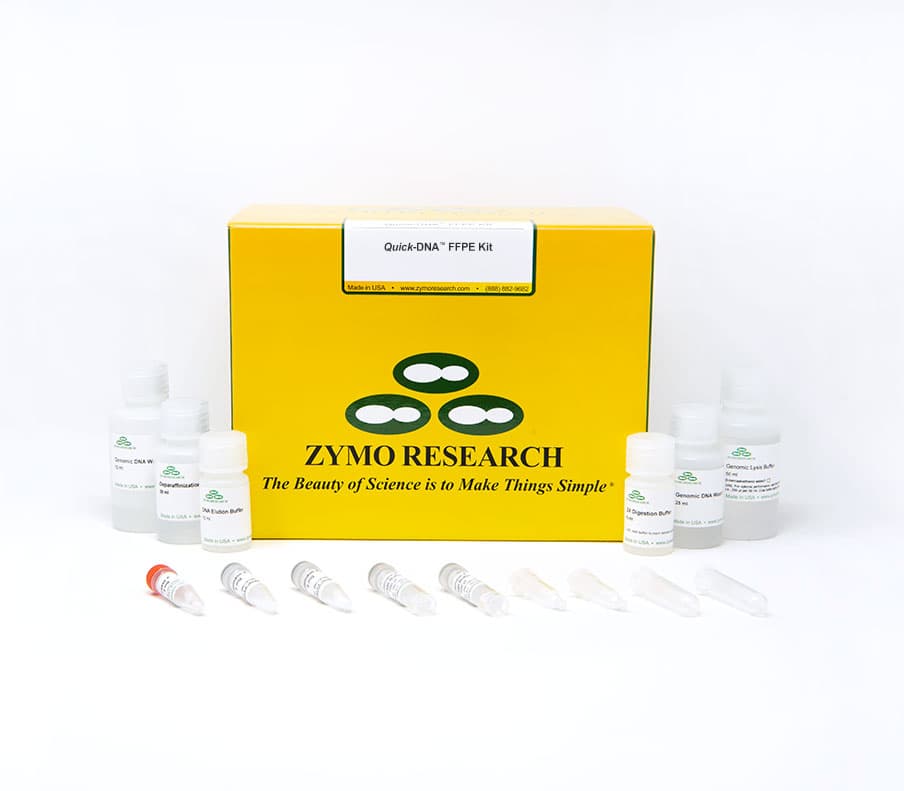
Showing 1 to 1 of 1 results
What are FFPE DNA extraction kits?
An FFPE DNA extraction kit purifies genomic DNA from formalin-fixed, paraffin-embedded tissue sections through a deparaffinization step (xylene-free in most current kits), proteinase K digestion to lyse fixed tissue, heat treatment to reverse formalin-induced crosslinks, and silica-membrane spin column purification, with some kits offering an optional uracil-N-glycosylase (UNG) treatment to remove deaminated-cytosine artifacts before NGS. Choose an FFPE-specific kit rather than a standard tissue kit whenever your sample is formalin-fixed and paraffin-embedded, since standard kits don't include deparaffinization or crosslink-reversal steps.
What you will find:
- Quick-DNA™ FFPE MiniPrep for rapid isolation of high-purity genomic DNA from FFPE tissue samples for high-throughput downstream applications.
- Designed to recover highly fragmented and cross-linked DNA suitable for sensitive downstream molecular workflows.
- Streamlined workflow supports rapid processing of FFPE samples with minimal hands-on time and reduced sample loss.
- Optimized for compatibility with high-throughput applications, including PCR, sequencing, and genotyping assays.
- Ensures consistent DNA yield and purity from challenging archived tissue specimens for reliable experimental results.
How to choose an FFPE DNA extraction kit
Deparaffinization chemistry
Most current FFPE DNA kits use a proprietary, xylene-free Deparaffinization Solution that dissolves paraffin without multiple wash steps, though some published methods use mineral oil as a simple alternative deparaffinization approach. Xylene-free chemistry reduces hands-on time and avoids handling a hazardous solvent, which matters for labs without dedicated solvent fume hoods.
Crosslink reversal and artifact removal
Formalin fixation creates DNA-protein crosslinks that block PCR unless reversed, so FFPE kits include a heat-based de-crosslinking step after lysis; some kits add an optional UNG treatment before a second lysis step to remove deaminated-cytosine artifacts, which is specifically useful for reducing C-to-T and G-to-A transition artifacts in NGS data. If your downstream application is NGS or dPCR on long-archived samples, a kit with UNG treatment is worth the extra step.
Sample input and elution volume
FFPE kits typically recommend 6-8 tissue sections of 5-10 um thickness as input, with some kits offering elution volumes as low as 15-30 ul for concentrated DNA suitable for limited-input downstream assays. If your archived sections are scarce, prioritize kits that minimize sample loss during deparaffinization rather than requiring multiple wash steps.
Expected DNA quality and fragment size
DNA from FFPE samples is inherently fragmented due to formalin fixation, and downstream applications involving fragments under 200 bp are generally achievable with effective deparaffinization and extraction; PCR success rates around 97% across microsatellite markers have been reported with optimized protocols on long-archived specimens. Set expectations for fragment size and PCR success rate based on sample age and fixation duration rather than assuming fresh-tissue-equivalent quality.
Specifications context
The key specs for FFPE DNA extraction are deparaffinization chemistry (xylene-free vs. solvent-based), whether crosslink reversal and optional UNG artifact removal are included, and elution volume relative to your sample's scarcity. A kit recommending 6-8 sections per extraction with elution as low as 15-30 ul concentrates limited archived material for downstream PCR or NGS. Labs working with both fresh and archived samples often keep blood/tissue genomic DNA kits for fresh/frozen tissue alongside a dedicated FFPE kit for archived specimens, since standard tissue kits lack deparaffinization chemistry. The parent genomic DNA extraction kits hub and broader DNA extraction kits hub link to related sample-type categories, including urine DNA extraction kits and insect genomic DNA kits for other specialized sample types.
MBP's specialist team can help match kit chemistry, format, and throughput to your sample type and downstream application. Contact the MBP team for personalized guidance.
FAQ