Retroviral Vectors and Reagents for Stable Gene Delivery
MBP Inc. supplies retroviral vectors and associated reagents for stable gene delivery and gene expression studies in mammalian cells. Available products include ABM's retroviral transfer vectors, packaged retroviral particles, packaging components, and overexpression constructs designed to support molecular biology, cell biology, and functional genomics research. These systems enable stable integration of genetic material into dividing cells and are widely used for gene expression, pathway analysis, and cellular engineering applications.
For product availability, technical guidance, or institutional pricing, request a quote today by contacting customerservice@mbpinc.net
Retrovirus Expression Systems
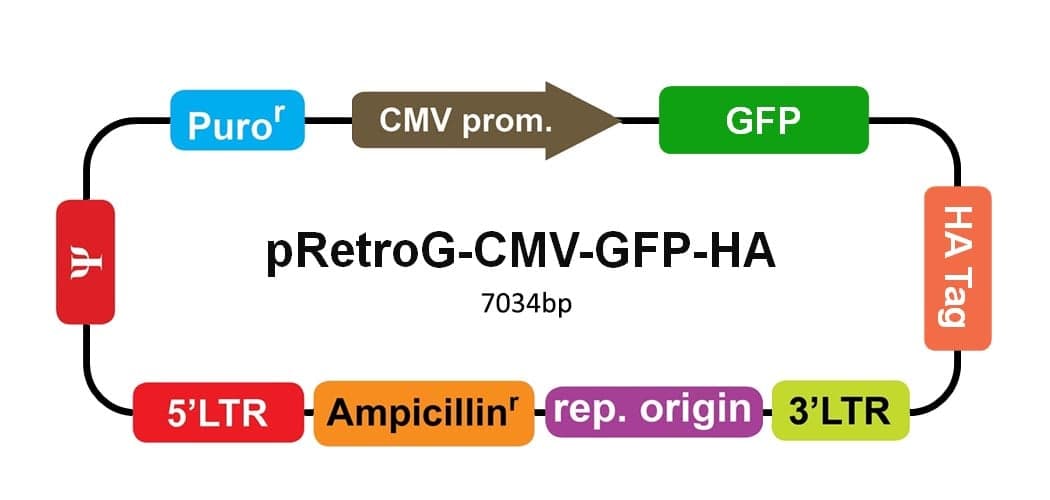
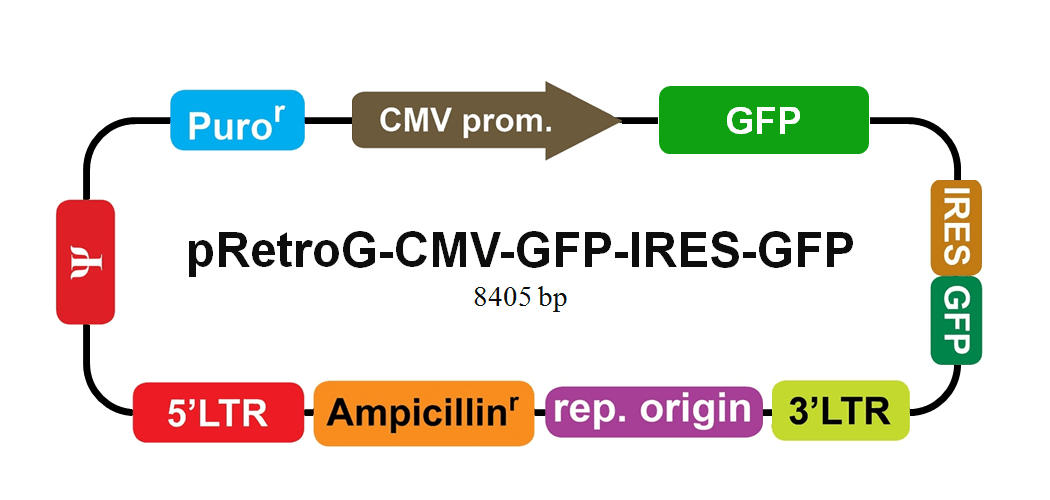
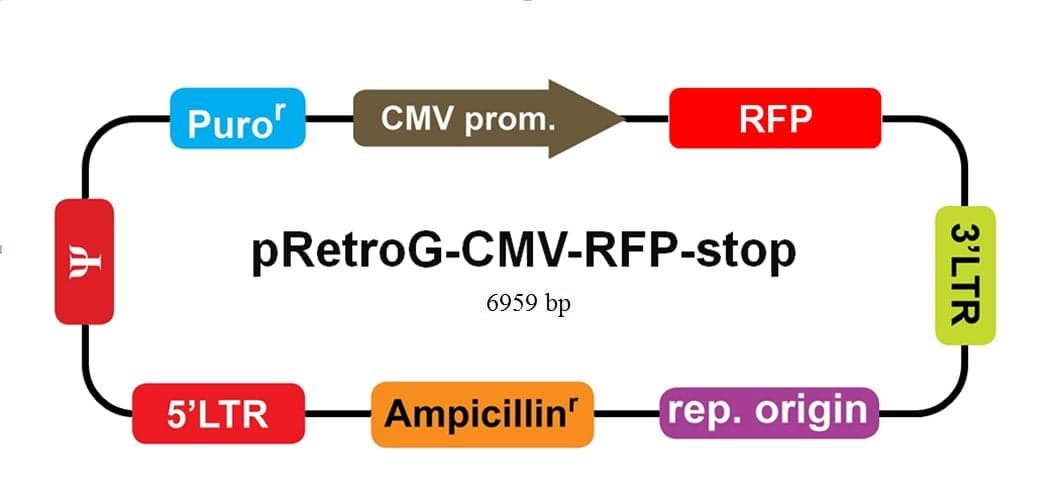


Showing 13 to 20 of 20 results
What Are Retroviral Vectors?
Gamma-retroviruses — principally Moloney Murine Leukemia Virus (MMLV) — have been foundational tools for stable gene delivery in mammalian cells for decades. High transduction efficiency, stable genomic integration, and a well-characterized biology make gamma-retroviral systems useful for generating stable gene expression in actively dividing mammalian cells. Retroviral systems provide stable gene delivery for a range of research applications. Select the vector format that matches your workflow.
What you will find:
-
Over-expression systems: including HA-tagged retrovirus constructs, Retro-CMV-GFP, Retro-CMV-RFP, and IRES-GFP retroviral vectors, and blank retrovirus controls for reporter-based transduction studies and stable gene expression
-
Cloning vectors: including GFP/RFP cloning vectors, HA-tagged retroviral constructs for vector production and gene delivery workflows.
How to Choose a Retroviral Vector
Cell Division Requirement
Gamma-retroviral vectors transduce only actively dividing cells, because the pre-integration complex cannot cross the intact nuclear envelope of non-dividing cells — suitable for established cancer cell lines, primary fibroblasts, activated T cells, and dividing haematopoietic progenitors.
Backbone Family
MMLV-based vectors (pLNCX2, pLXSN, pBABE) are all-purpose backbones with broad mammalian compatibility; pBABE is the most widely used retroviral over-expression vector in cancer cell biology. MSCV-based vectors (pMSCVneo, pMSCVhyg, pMSCVpuro) are specialised for pluripotent and haematopoietic stem cell transduction, where the MSCV LTR avoids transcriptional suppression seen with standard MMLV LTRs.
Packaging Cell Line
Phoenix-E cells produce ecotropic particles (mouse/rat cells only); Phoenix-A cells produce amphotropic particles (broader mammalian tropism); Platinum-E cells offer higher-titer production. VSV-G pseudotyping via co-transfection provides the broadest tropism.
Integration Preference and Safety
MLV-based retroviruses preferentially integrate near transcription start sites, directed by BET family proteins — associated with higher insertional mutagenesis risk than lentiviral vectors, which integrate preferentially into actively transcribed gene bodies.
Specifications Context
Gamma-retroviral vectors retain important advantages for specific applications: their simpler genome, well-understood integration biology, and long track record in hematopoietic research make them commonly used for investigating oncogene function in cycling cancer cells, generating large-scale stable cDNA expression libraries, and conducting gain-of-function screens in dividing cell models. Retroviral particles are produced by transfecting transfer vector plasmids into packaging cell lines or by co-transfecting the transfer vector with packaging and envelope (pVSV-G) plasmids. Browse the MBP product catalogue to confirm current stock and packaging cell line availability.
Contact the expert team at MBP to identify the most suitable retroviral vector system for your research application.
FAQ



