Adenoviral Over-Expression Vectors & Pre-Packaged Particles
MBP Inc. supplies adenoviral over-expression vectors and pre-packaged adenoviral particles — including CMV-driven Ad5 constructs, GFP and β-gal adenoviruses, null control adenoviruses, and CRISPR-compatible adenoviral constructs — for high-efficiency transient gene expression in both dividing and non-dividing mammalian cells.
These systems enable rapid, high-level expression for research applications in molecular biology and functional genomics across laboratories in the USA and Canada. Contact customerservice@mbpinc.net to request a quote today!
Over-Expression Vectors
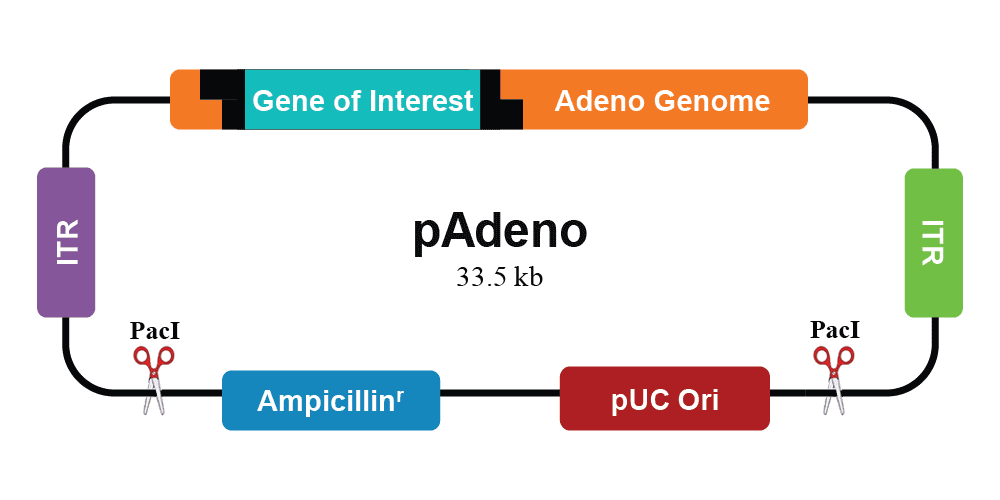
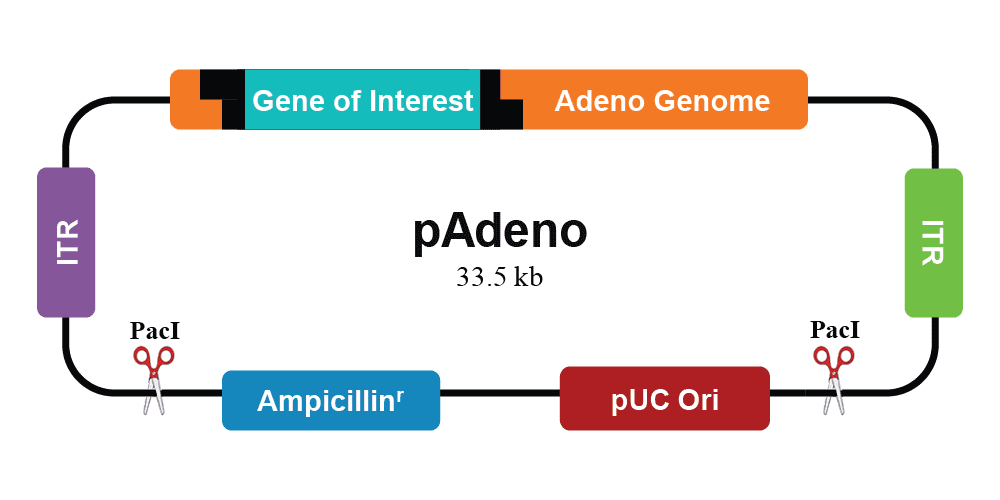
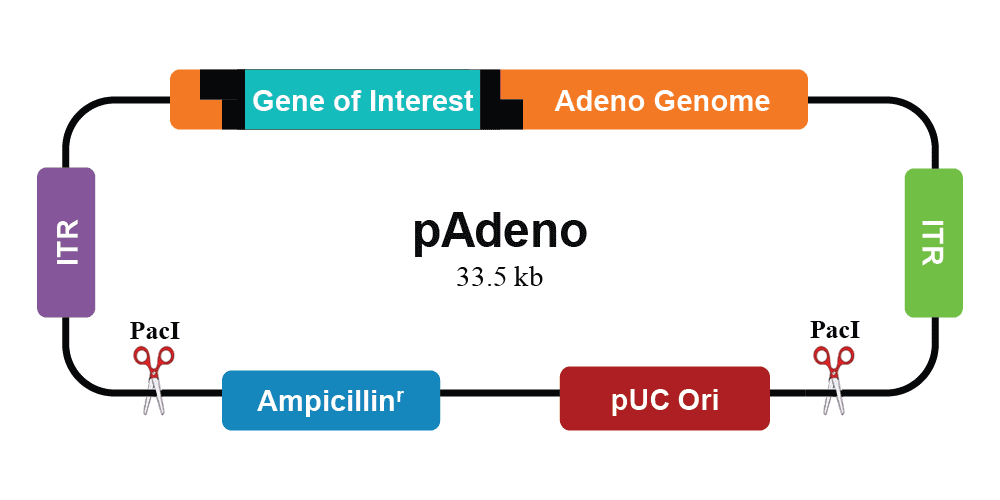
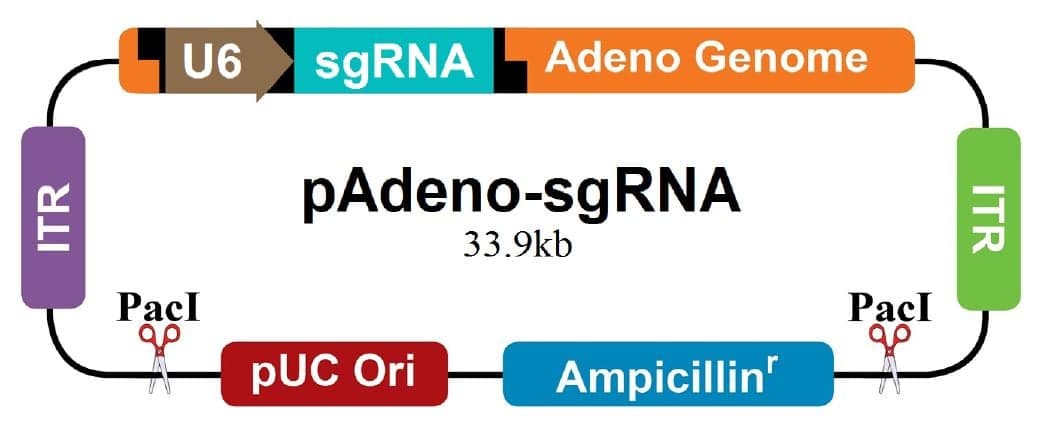
Showing 1 to 6 of 6 results
What Are Adenoviral Over-Expression Vectors?
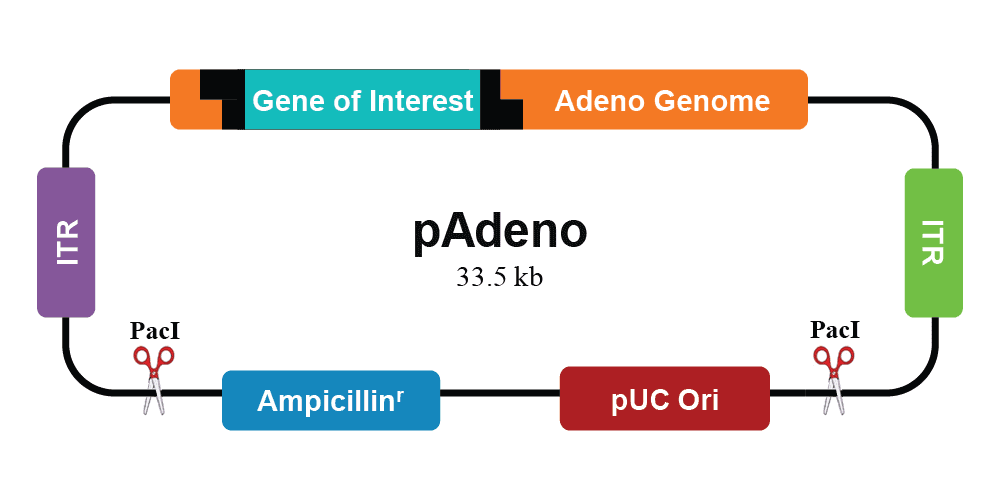
Adenoviral over-expression is a highly efficient method for rapid, high-level protein expression in cell types that are resistant to plasmid transfection, particularly when stable genomic integration is not required, and rapid experimental readout is prioritised. CMV-driven Ad5 constructs typically enable robust transient transgene expression within 24–48 hours of transduction, depending on cell type and multiplicity of infection. Transient high-level expression depends on effective vector design. Select an adenoviral over-expression system suited to your application.
What you will find:
-
Controls/Reporters: for monitoring gene expression and validating assays, including GFP Adenovirus, β-gal Adenovirus, and other diverse constructs.
-
CRISPR/Cas9 Controls: for gene editing workflows and experimental validation, including scrambled sgRNA constructs
How to Choose an Adenoviral Over-Expression Product
Format: Plasmid vs. Pre-Packaged Particles
Pre-packaged ABM adenoviral ORF particles are ready-to-transduce, eliminating the in-house virus production and amplification steps. Plasmid shuttle vector formats are used when custom inserts or specific promoter configurations are not available in pre-packaged formats.
Timeline Requirements
For experiments where stable integration is unnecessary and rapid results are the priority, adenoviral over-expression (24–48 hours to expression) is significantly faster than lentiviral or retroviral stable line generation (1–2 weeks or longer).
Cell Type Compatibility
Adenoviral over-expression is effective in cell types that resist plasmid transfection — including many primary cells — and transduces both dividing and non-dividing populations.
Multiplicity of Infection (MOI)
As with other viral delivery systems, MOI optimisation per cell type affects both transduction efficiency and potential cytotoxicity from innate immune activation at high doses.
Kit-Based vs. Component-Based Approach
Complete adenoviral expression kit systems bundle vector, packaging, and amplification components for labs setting up adenoviral production for the first time; component-based ordering suits labs with established adenoviral workflows needing only specific reagents.
Specifications Context
Choosing adenoviral over lentiviral over-expression is appropriate when rapid, high-level transient protein production is the priority, the experiment does not require stable integration, the target cell type resists plasmid transfection, or repeated dosing in vivo is not planned (given adenovirus's stronger immune activation on repeat exposure). Matched control and reporter constructs — using the same backbone, promoter, and packaging workflow — are essential, since adenoviral delivery activates innate immune sensing independently of the transgene, which could otherwise confound interpretation of over-expression phenotypes. Researchers should also confirm whether their downstream readout (e.g., Western blot, functional assay, imaging) is compatible with the 24-48 hour transient expression window, since some assays require longer expression times that may be better served by a stable lentiviral approach instead. Product availability reflects MBP's catalogue as of mid-2026.
Contact the expert team at MBP today and find reliable adenovirus overexpression systems for your lab.
FAQ



