Adenoviral Control and Reporter Constructs for Research
MBP Inc. supplies control and reporter constructs for adenoviral over-expression workflows — including GFP reporter adenoviruses, null control adenoviruses, and β-galactosidase (LacZ) reporter systems — for establishing transduction baselines and confirming expression in transient adenoviral gene delivery experiments in research laboratories across the USA and Canada.
These tools support consistent experimental benchmarking across different constructs and infection conditions. Contact customerservice@mbpinc.net to request a quote for adenoviral control and reporter constructs tailored to your experimental workflow.
Controls/Reporters
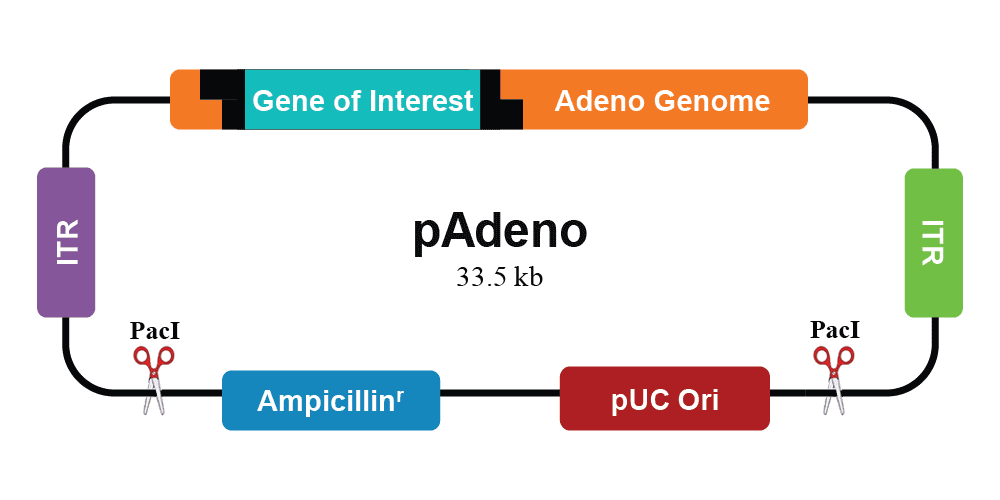
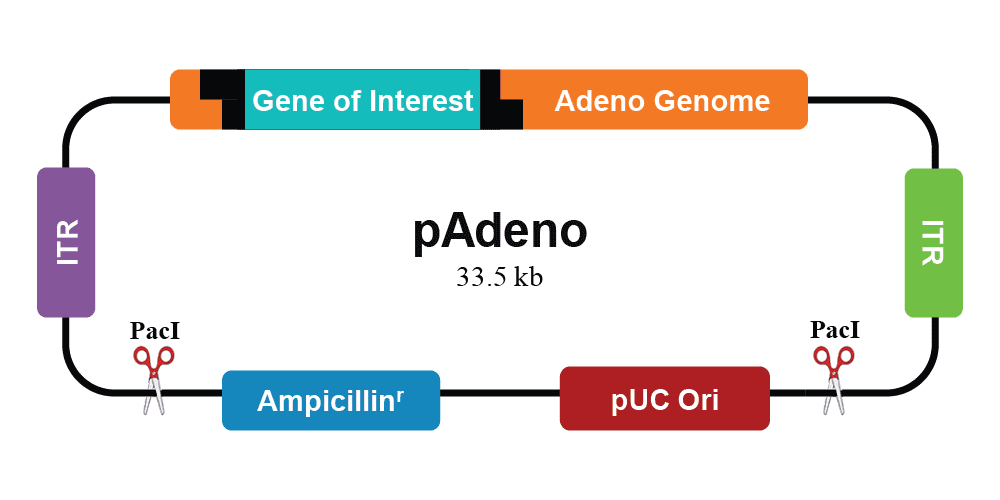
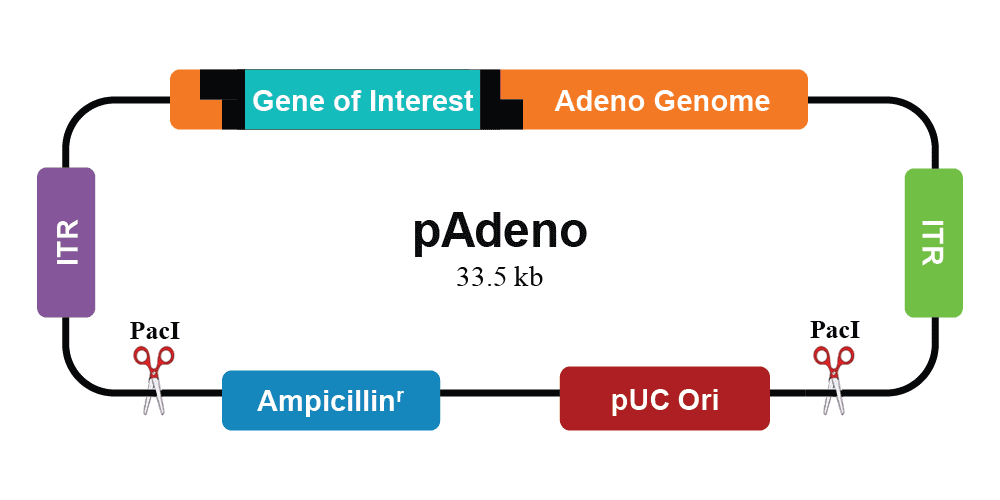
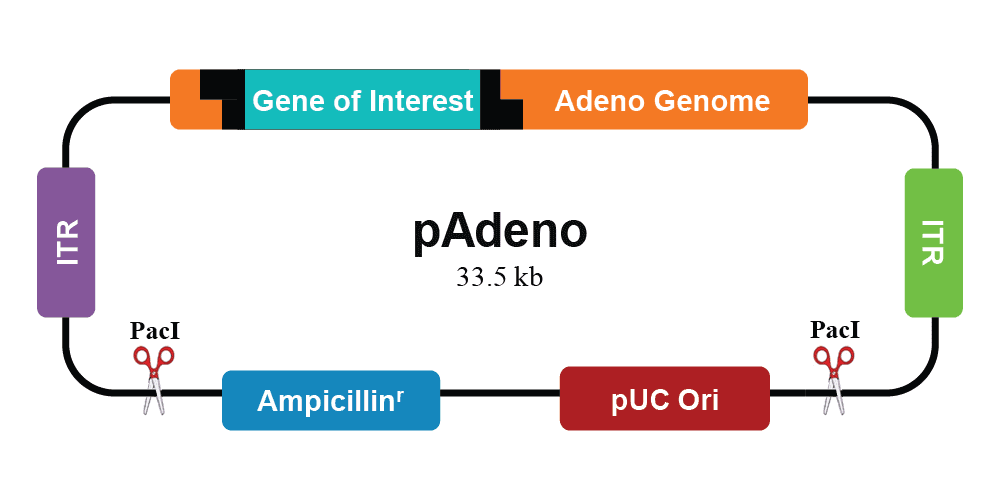
Showing 1 to 5 of 5 results
What Are Adenoviral Control & Reporter Constructs?
Adenoviral over-expression experiments typically include matched control constructs that use the same vector backbone, promoter configuration, and production workflow as the experimental construct, and are packaged and purified under equivalent conditions. This helps account for vector-related and adenovirus-associated innate immune responses that can influence cellular readouts independently of the transgene. Using appropriate null or reporter controls is essential for accurate interpretation of adenoviral transduction and expression data. Choose the tools that support accurate data interpretation.
What you will find:
-
GFP Adenovirus Reporters: confirm transduction visually using high-titer viral particles expressing green fluorescent protein
-
Beta-Galactosidase (LacZ) Adenoviruses: β-gal markers derived from E. coli for standardized colorimetric and histochemical assays.
-
pShuttle-LacZ Control Vectors: produce recombinant adenoviruses expressing LacZ.
-
Null Adenovirus Controls: empty viral particles for assessment of non-specific cellular responses during gene delivery.
-
CMV Null Adenoviruses: used to identify promoter-specific metabolic effects. Contains CMV promoter without a transgene.
How to Choose Adenoviral Control & Reporter Constructs
Empty Vector Matching
An empty vector control — identical backbone, promoter, and packaging as the experimental adenoviral construct, with no transgene insert — establishes the baseline for adenoviral delivery effects independent of the over-expressed gene.
Fluorescent Reporter Selection
GFP and RFP fluorescent reporters allow tracking of transduction efficiency by microscopy or flow cytometry, matching the promoter configuration of experimental constructs.
Luciferase Reporter Format
Firefly luciferase and Renilla luciferase provide quantitative bioluminescent readouts; secreted NanoLuc reporters allow sampling of culture supernatant for repeated, non-destructive measurements over a time course.
Immune Activation Considerations
Because adenoviral delivery activates innate immune sensing in transduced cells independently of any transgene, an identical-backbone control is essential to distinguish transgene-specific effects from generalised adenoviral response.
Production Workflow Matching
Controls should be produced, packaged, and purified using the same protocol and timeline as experimental constructs to avoid batch-to-batch variability confounding comparisons.
Specifications Context
Adenoviral delivery can activate innate immune sensing in transduced cells, altering gene expression independently of the transgene; therefore, matched controls with the same Ad5 backbone and promoter configuration are required for valid interpretation of adenoviral over-expression experiments. MBP adenoviral control and reporter constructs include GFP adenovirus, β-gal (LacZ) adenovirus, and null adenovirus systems, supporting qualitative and quantitative assessment of transduction efficiency. Using control and experimental constructs produced under consistent conditions reduces variability that can confound downstream comparisons across treatment groups. Recording vector identity and batch information supports reproducibility and troubleshooting. Product availability reflects MBP’s catalogue as of mid-2026.
Contact the expert team at MBP today for the selection of matched adenoviral control and reporter constructs for your workflow.
FAQ



