Cell Immortalization Reagents for Establishing Continuous Cell Lines
Cell immortalization reagents are recombinant viruses and other agents that introduce genes such as human telomerase reverse transcriptase (hTERT), SV40 large T antigen, or HPV E6/E7 into primary cells to bypass replicative senescence and establish stable, continuously proliferating cell lines. They are supplied as lentiviral, retroviral, or AAV particles with antibiotic or fluorescent selection markers. Academic researchers establishing custom immortalized lines from primary tissue can use MBP's specialist team to confirm vector and selection marker compatibility with their target cell type.
Explore available cell immortalization reagents or request a quotation by contacting customerservice@mbpinc.net. Our team can help identify the appropriate viral system, gene construct, and selection strategy for your cell line development workflow.
Cell Immortalization


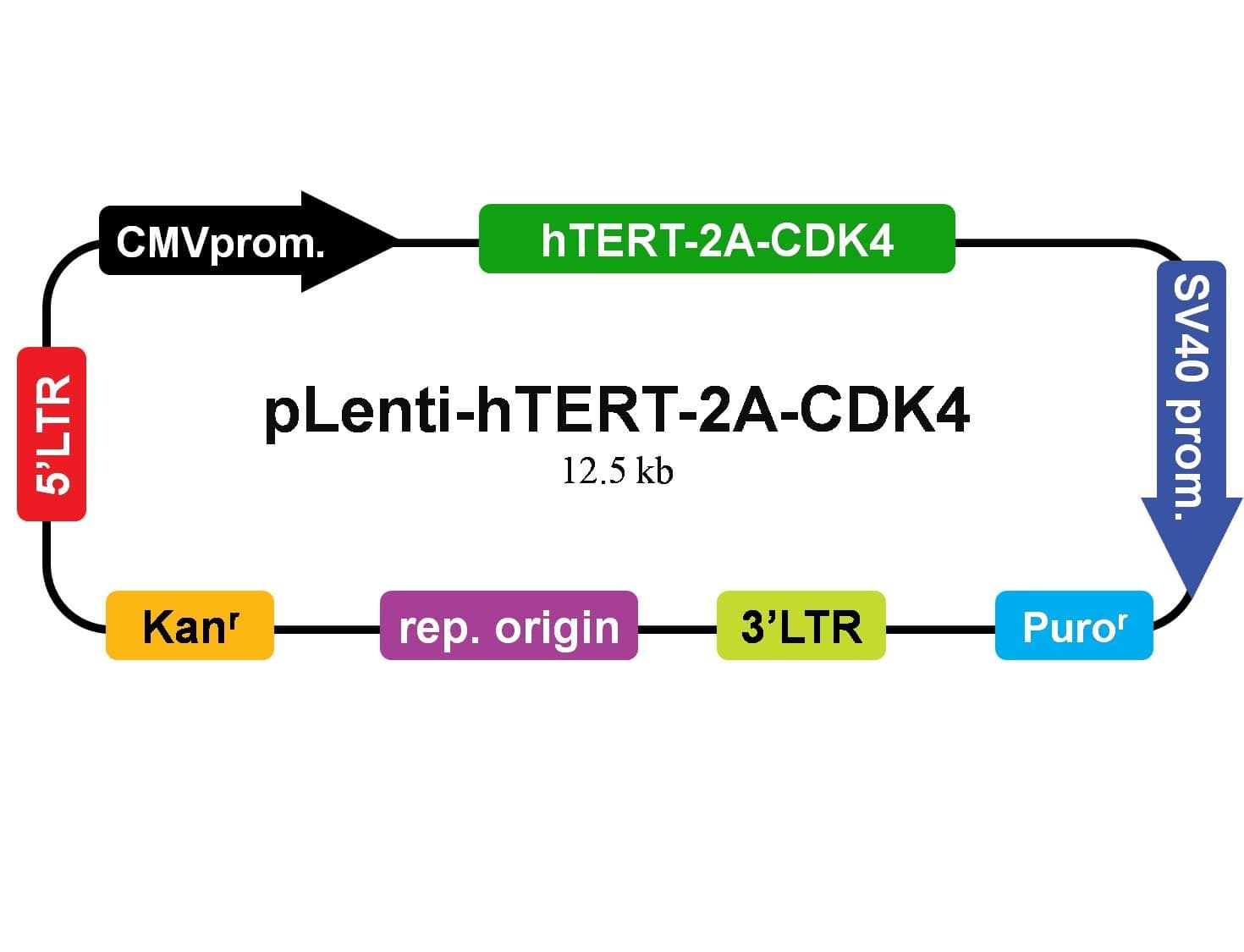


Showing 25 to 31 of 31 results
What are cell immortalization reagents?
Cell immortalization reagents are recombinant viral particles (most commonly lentiviral vectors) or other gene delivery systems used to introduce factors that bypass replicative senescence in primary cells. The most widely used immortalizing genes include human telomerase reverse transcriptase (hTERT), SV40 large T antigen, and HPV-16 E6/E7. These reagents enable primary cells to proliferate indefinitely while maintaining experimental utility.
The hTERT overexpression viruses and SV40T antigen overexpression viruses sub-categories represent the two most common strategies, while additional immortalization agents include HPV E6/E7, Bmi1, and other senescence-bypass factors. Related entities include replicative senescence, telomere maintenance, p16/Rb pathway bypass, antibiotic selection markers (puromycin, hygromycin, blasticidin), and lentiviral transduction.
What you will find:
- TERT overexpression: for telomerase-enabled continuous cell proliferation
- SV40 T antigen overexpression viruses: to bypass cellular senescence and enable continuous cell growth
- Additional immortalization reagents: for cell model development and extended proliferation
How to choose cell immortalization reagents
hTERT vs SV40 large T antigen vs combination approaches
hTERT extends telomeres, directly addressing replicative senescence while generally preserving a more physiological karyotype and phenotype. It is often preferred when maintaining native cell behavior is important.
SV40 large T antigen bypasses key tumor suppressor checkpoints (notably p53 and Rb pathways), enabling rapid immortalization across a wide range of cell types, but with a higher risk of genomic instability and phenotypic drift over time.
Combination approaches (hTERT + SV40T) are sometimes used for primary cells that are resistant to single-factor immortalization or require more robust proliferative capacity.
Selection marker compatibility
Immortalization constructs typically include antibiotic resistance or fluorescent selection markers such as puromycin, hygromycin, blasticidin, neomycin (G418), or zeocin. It is essential to confirm that the marker does not conflict with any pre-existing genetic modifications in the target cell line, as overlapping selection systems can prevent proper stable line generation.
Promoter choice
Common promoters include CMV, EF1-alpha, and synthetic constitutive promoters. EF1-alpha is often preferred for primary cells because CMV promoters can become silenced during long-term culture. Promoter choice directly affects long-term expression stability of the immortalizing gene.
Species compatibility
hTERT is species-specific and generally requires matching to the organism of origin (e.g., human TERT for human cells). In contrast, SV40 large T antigen and HPV E6/E7 systems are more broadly species-agnostic and are often used when cross-species applicability is needed.
Specifications context
Immortalization lentiviral particles are typically provided at titers around 10^8 transducing units per mL (TU/mL), supplied in small aliquots and stored at −80°C. Freeze–thaw cycles are minimized to preserve viral infectivity. Academic lab formats often include single-use or low-volume aliquots sufficient for multiple transduction attempts, with constructs validated by sequencing and tested free from microbial contamination.
This category includes hTERT overexpression viruses, SV40T antigen overexpression viruses, and additional immortalization agents. Labs constructing custom vectors may also use cloning reagents for vector assembly and plasmid preparation workflows. MBP’s specialist team can help confirm vector design, promoter choice, and selection marker compatibility for specific primary cell systems before implementation.
The hunt for downstream-ready cell immortalization reagents is over. Contact the expert team at MBP to find the perfect match for your lab.
FAQ