SV40T Antigen Overexpression Viruses for Cell Immortalization
SV40T antigen overexpression viruses are recombinant lentiviral particles that deliver the simian virus 40 (SV40) large T antigen gene, which inactivates the p53 and Rb tumor suppressor pathways to bypass senescence checkpoints and immortalize primary cells across human, mouse, rat, and other mammalian species. They are supplied under CMV or EF1-alpha promoters with antibiotic or fluorescent-antibiotic fusion selection markers. Academic researchers immortalizing cells from non-human or difficult-to-immortalize primary tissue can use MBP's specialist team to confirm vector format before ordering.
Explore available SV40T antigen viral reagents or request a quotation by contacting customerservice@mbpinc.net. Our team can help confirm vector design, promoter selection, and suitability for your specific immortalization system.
SV40T Antigen Overexpression Viruses




.png&w=3840&q=75)


Showing 1 to 10 of 10 results
What are SV40T antigen overexpression viruses?
SV40T antigen overexpression viruses are recombinant lentiviral particles carrying the simian virus 40 (SV40) large T antigen gene, a hexamer protein that inactivates the p53 and retinoblastoma (Rb) tumor suppressor pathways, bypassing the senescence checkpoints that normally limit primary cell proliferation. Some constructs deliver the large T antigen alone, while others include both large and small T antigens. Related entities include p53/Rb pathway inactivation, broad cross-species immortalization (human, mouse, rat, bovine, porcine, canine), karyotype/tumorigenicity characterization (soft agar assay), and antibiotic/fluorescent selection markers.
What you will find:
- Lenti-SV40 (tsA58 Mutant) for cell proliferation with inducible control and temperature-sensitive expression
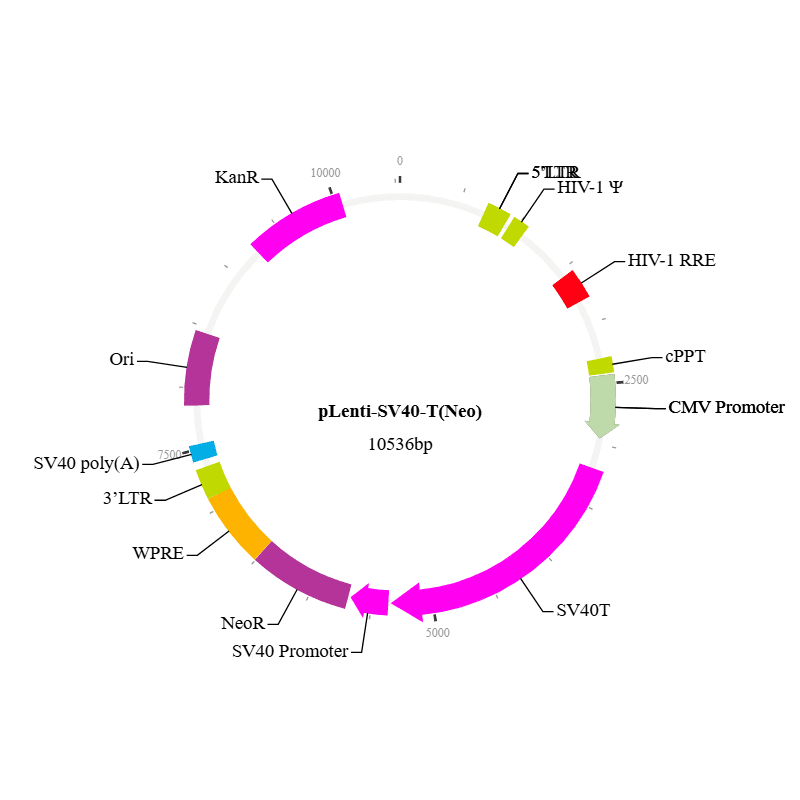
- Lenti-SV40T (Puro/Neo/No Marker) provides stable integration with versatile selection markers of highly concentrated lentiviral stocks
- Adeno-SV40 Adenovirus for transient T-antigen expression with high-efficiency adenoviral vectors
- Retro-SV40 & Retro-SV40LT for special integration in proliferating cells.
- Lenti-SV40Tt Lentivirus: Small T and Large T antigens for improved transformation.
How to choose SV40T antigen overexpression virus products
Large T antigen alone vs. large and small T antigen
Constructs delivering large T antigen alone target p53/Rb pathway inactivation specifically, while large-and-small-T constructs include additional SV40 small T antigen activity affecting protein phosphatase 2A (PP2A) signaling; confirm which form a published protocol specifies, since the two can produce different immortalization efficiencies and phenotypes.
Species applicability
SV40 large T antigen has documented immortalization success across human, mouse, rat, bovine, porcine, and canine primary cells, making it a broadly applicable option when hTERT (human-specific) is not suitable for the target species.
Selection marker and promoter
As with TERT lentivirus, SV40T constructs are available under CMV or EF1-alpha promoters with antibiotic resistance (puromycin, hygromycin, blasticidin, neomycin/G418, zeocin) or fluorescent-antibiotic fusion markers (GFP-Bsd, RFP-Puro); select based on the target cell line's existing markers and expected culture duration.
Post-immortalization characterization
Because SV40 large T antigen inactivates tumor suppressor pathways, immortalized lines should be characterized for karyotype changes and tested by assays such as soft agar colony formation and tumorigenicity testing if downstream applications require confirmation that the line has not undergone malignant transformation.
Specifications context
SV40T antigen lentivirus is typically supplied at titers around 1x10^8 TU/mL, shipped on dry ice and stored at -80°C, with constructs validated by full-length sequencing and confirmed free of common contaminants. Immortalized lines derived from SV40T transduction are commonly characterized by Western blot or immunofluorescence confirming SV40-LT protein expression, alongside marker expression comparison to the original primary cells. As of 2026, SV40 large T antigen remains the most broadly cross-species-applicable immortalization approach, often selected when hTERT (human-specific) is not an option for the target species or when faster immortalization is prioritized over preserving the original phenotype.
This sub-category sits within MBP's cell immortalization catalog alongside TERT overexpression viruses and additional immortalization agents. Labs constructing custom SV40T expression vectors can also review MBP's cloning reagents. MBP's specialist team can help confirm species applicability and vector format for a specific primary cell type before order placement.
Contact the expert team at MBP today to get high-quality SV40T antigen overexpression viruses.
FAQ