Product Filters

Overhead Stirrers for Viscous and Large-Volume Lab Mixing


Overhead stirrers are motor-driven laboratory instruments that suspend a rotating shaft and impeller directly into the sample from above, providing the torque needed to mix high-viscosity liquids, suspensions, gels, slurries, and emulsions that exceed the capability of magnetic stirrers. 

MBP provides quote-based procurement and purchase order support for overhead stirrers for research institutions across the USA and Canada. Request a quote for overhead stirrers for viscous materials, large-volume mixing, and laboratory process applications by contacting customerservice@mbpinc.net.

Overhead Stirrers
Per Page:
Sort By:
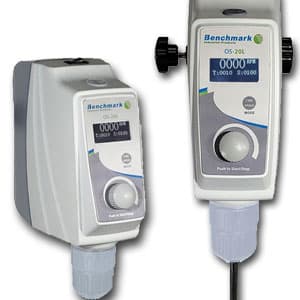
Benchmark Scientific Overhead Stirrers
List Price:
USD1,438.33 - USD2,259.79
Online Price:
USD1,027.38 - USD1,614.14
Your Price:
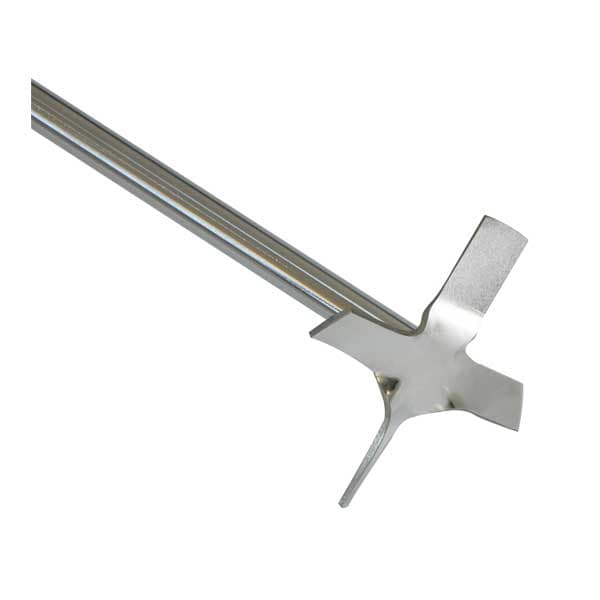
Included propeller, stainless steel 4 arm
List Price:
USD153.82
Online Price:
USD109.87
Your Price:
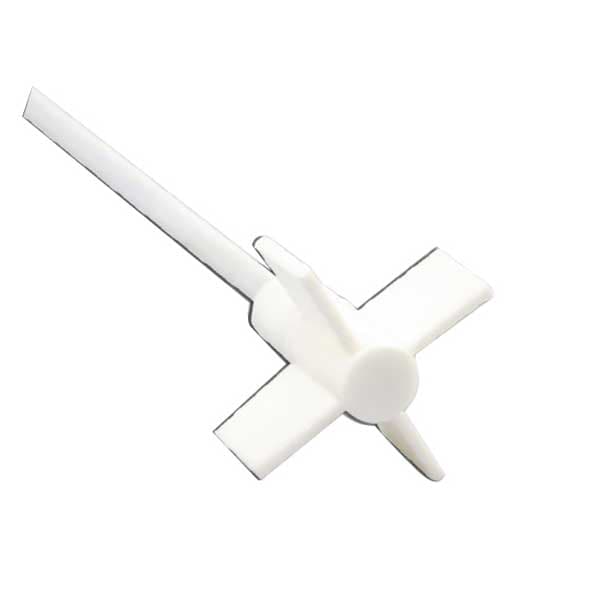
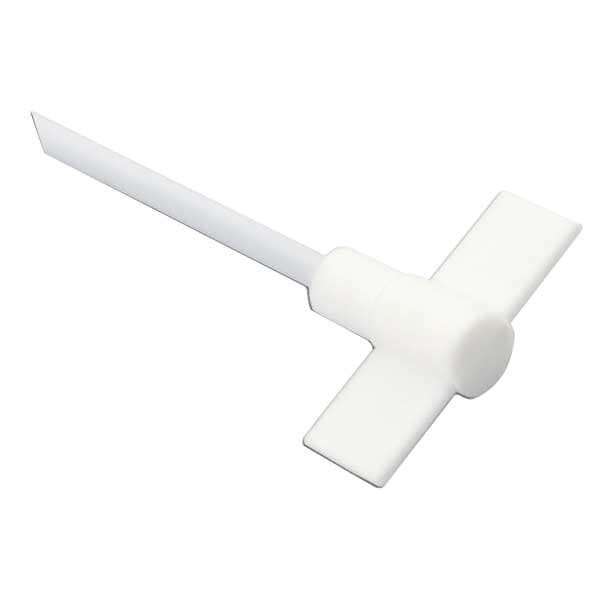
Optional propeller, Teflon 4 arm
List Price:
USD228.96
Online Price:
USD163.55
Your Price:
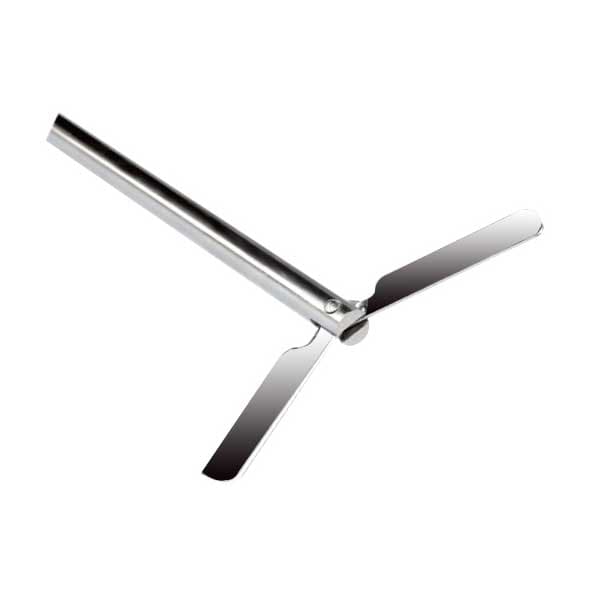
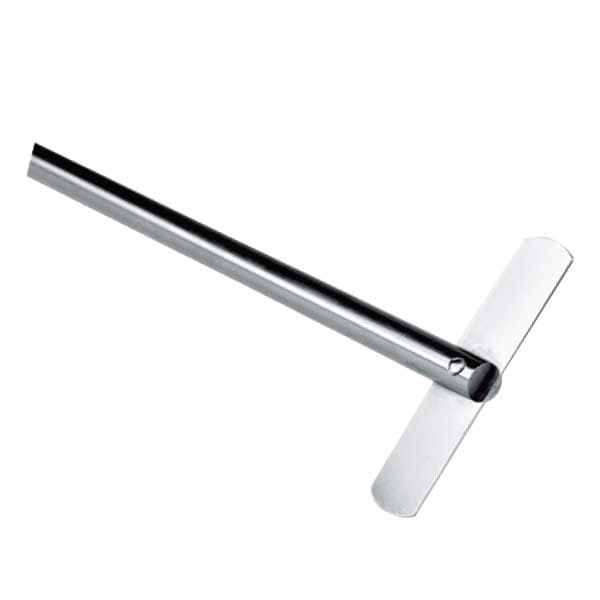
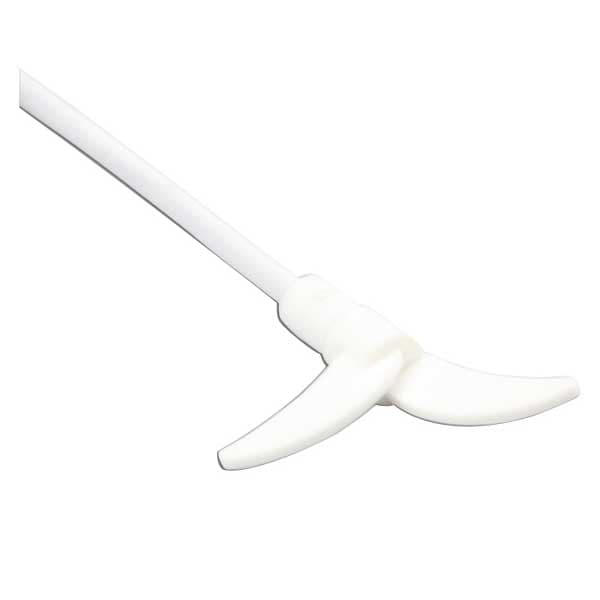
Optional propeller, Teflon one line
List Price:
USD228.96
Online Price:
USD163.55
Your Price:
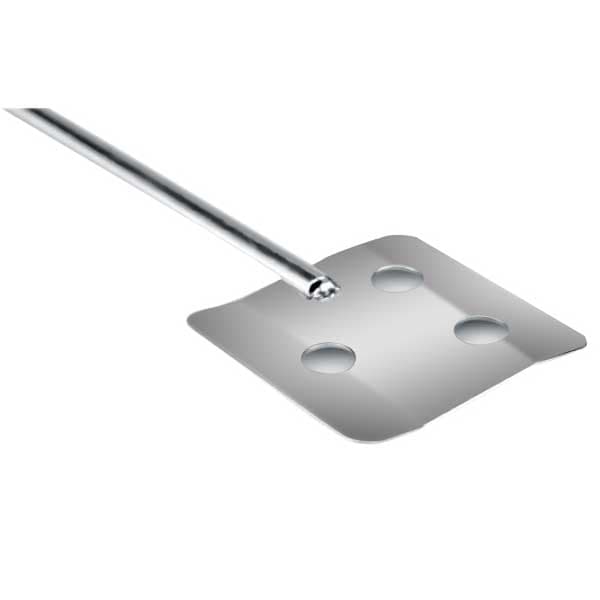
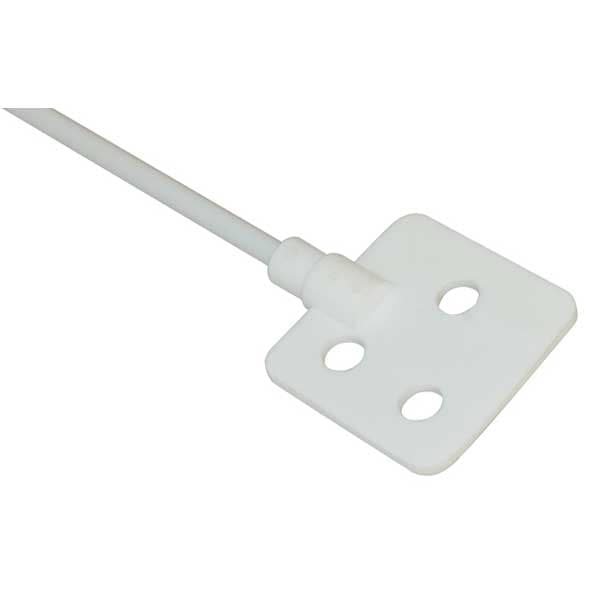
Optional propeller, Teflon paddle with flat holes
List Price:
USD228.96
Online Price:
USD163.55
Your Price:
Optional propeller, stainless steel centrifugal impeller
List Price:
USD153.82
Online Price:
USD109.87
Your Price:
Optional propeller, stainless steel one line
List Price:
USD153.82
Online Price:
USD109.87
Your Price:
Optional propeller, stainless steel paddle with flat holes
List Price:
USD153.82
Online Price:
USD109.87
Your Price:
Optional propeller, Teflon centrifugal impeller
List Price:
USD228.96
Online Price:
USD163.55
Your Price:

Showing 1 to 9 of 9 results

What Are Overhead Stirrers?


An overhead stirrer is a laboratory mixing instrument that mounts a motor unit above the sample vessel on a stand or clamp, driving a rotating shaft and impeller that is immersed directly into the liquid. Unlike magnetic stirrers, which rely on a rotating magnetic field to spin a small bar inside the vessel, overhead stirrers use direct mechanical drive: the motor connects to the impeller shaft through a chuck or collet, allowing the motor to deliver consistent torque to the sample regardless of viscosity changes during mixing. This makes overhead stirrers the correct choice for applications where a magnetic stir bar would stall or decouple: polymerization reactions, emulsion preparation, gel dispersion, cell suspension in bioreactors, slurry processing, and large-volume buffer and media preparation. Digital overhead stirrers with brushless DC motors, torque display, programmable speed ramps, reversible rotation, and overload protection are standard research-grade configurations covering volumes to 200 L. Switch from a magnetic stirrer to an overhead stirrer when the sample volume exceeds 2 L, viscosity exceeds roughly 2,000 mPas (similar to glycerol), or the stir bar stalls during the mixing process.


What You Will Find:

 
  • Digital overhead stirrers for laboratory mixing and sample preparation applications.
  • Stainless steel propellers available in one-line, four-arm, paddle with flat holes, and centrifugal impeller designs.
  • PTFE (Teflon) propellers offered in one-line, four-arm, paddle with flat holes, and centrifugal impeller configurations.
  • Optional interchangeable propellers allow optimization of mixing performance for different sample types and viscosities.
  • Overhead stirrer accessories support routine laboratory stirring, blending, and homogenization tasks.


How to Choose an Overhead Stirrer


Torque capacity

Torque (measured in N · cm) is the most important selection criterion for overhead stirrers. The motor must maintain its setpoint rpm against the resistance of the sample throughout the mixing process, including at points of highest viscosity (e.g., during emulsion formation or cooling of a polymer melt). Common torque classes are 20 Ncm, 40 Ncm, and 75 Ncm for lab-scale models. High-viscosity applications (pastes, gels above 10,000 mPas) require 40 Ncm or more. Models with a real-time torque display let the operator monitor process state during mixing; torque reaching a setpoint can signal batch completion.

Speed range

Low-speed overhead stirrers (12 to 300 rpm) are used for gentle laminar flow mixing and tangential agitation of high-viscosity materials to prevent air entrainment. Mid-range models (60 to 2,000 rpm) handle general stirring through turbulent flow. High-speed models (up to 6,000 rpm) are used for homogenization, emulsification, and dispersion at small to medium scales. Match the speed range to the flow regime required by the application.

Volume capacity

Overhead stirrers specify maximum volume based on water viscosity at the stated rpm. Actual volume limits for viscous samples are lower. Benchtop models cover 2 L to 15 L; mid-range floor-stand models reach 80 L; large-scale process-development stirrers handle up to 200 L. Confirm that the impeller diameter is appropriate for the vessel diameter in use.

Impeller type

Impeller geometry determines the mixing regime: propeller-type impellers generate axial flow for general liquid blending; paddle and anchor impellers provide tangential flow for high-viscosity materials; dispersing disc impellers create radial high-shear flow for emulsification and dispersion; and ribbon impellers handle very high-viscosity pastes and thickening batches. Impeller shafts and heads are commonly made from stainless steel or PTFE for chemical resistance.

Digital vs. analog control

Digital overhead stirrers display speed in rpm, maintain setpoint through closed-loop motor control, and include overload protection, reversible rotation, and data logging capability. Analog models use a dial for speed setting and provide no readout. For regulated or reproducible workflows, digital control is strongly recommended.


Specifications Context


Motor type affects long-term reliability: brushless DC (BLDC) motors require no brush replacement, operate quietly, and maintain consistent torque at low speed, which is important for laminar flow applications. Overload protection (automatic speed reduction or shutdown when torque exceeds a setpoint) protects both the motor and the sample from damage during unexpected viscosity increases. Shaft and impeller material should be confirmed for chemical compatibility: stainless steel (grades 304 or 316) suits aqueous and mild organic media; PTFE shafts are required for corrosive acids, bases, and halogenated solvents. Support stands should be rigid enough to prevent shaft wobble at speed; confirm the stand's load rating and reach for the vessel configuration in use. 


Ready to power through your toughest mixing projects? Take a look at our overhead stirrer range and reach out to the MBP team for a friendly quote today.

FAQ

An overhead stirrer uses a motor-driven shaft and impeller immersed from above to mix samples, delivering consistent torque regardless of sample viscosity. Use an overhead stirrer instead of a magnetic stirrer when sample volume exceeds 2 L, when viscosity is high enough that a magnetic stir bar stalls or decouples (roughly above 2,000 mPas), or when the application requires defined impeller geometry such as axial flow, radial dispersion, or tangential mixing of dense suspensions.
Required torque depends on sample viscosity and volume. For aqueous solutions and low-viscosity liquids up to 15 L, 20 N · cm is adequate. For moderately viscous samples (emulsions, polymer solutions, gels in the 1,000 to 10,000 mPas range), specify 40 Ncm. For high-viscosity pastes, creams, or batches above 10,000 mPas, 75 Ncm or higher is needed. Overhead stirrers with real-time torque display allow operators to monitor sample viscosity changes during the mixing process without stopping the run.
Overhead stirrer viscosity capability depends on motor torque and impeller design. Compact 20 Ncm models handle samples up to approximately 5,000 mPas. Maximum viscosity ratings assume proper impeller selection; using an inappropriate impeller geometry with a high-torque motor does not fully compensate for viscosity.
An overhead stirrer uses a shaft and impeller rotating at up to 2,000 rpm (or up to 6,000 rpm for disperser models) to blend, suspend, or emulsify samples in a vessel. A homogenizer (rotor-stator type) operates at 10,000 to 30,000 rpm, generating much higher shear forces to break down particle size and create fine emulsions. Use an overhead stirrer for bulk blending, dissolution, and suspension; use a homogenizer when fine particle reduction or nanoscale emulsification is required.
Propeller impellers generate axial flow and suit low-viscosity liquid blending and cell suspension. Paddle and anchor impellers create tangential flow for high-viscosity materials, ensuring the entire vessel volume is swept during mixing. Dispersing disc impellers create high-shear radial flow for emulsification and pigment dispersion. Ribbon impellers are used for very high-viscosity pastes and thickening batches where conventional impellers stall. Stainless steel impellers suit most aqueous and mild organic applications; PTFE impellers are specified for corrosive solvents and acids.
Yes. Low-speed overhead stirrers with marine propeller or pitch-blade impellers are used for suspension cell culture in spinner flasks and bioreactor vessels from 0.5 L to 20 L, where gentle axial flow distributes oxygen and nutrients without damaging shear-sensitive cells. Speed is typically set to 30 to 100 rpm for mammalian cell culture; microbial cultures tolerate higher speeds. Impeller and shaft material should be autoclavable stainless steel or PTFE for bioreactor applications.
Stainless steel (grades 304 or 316) is the standard material for overhead stirrer shafts and impellers, providing durability and compatibility with aqueous buffers, culture media, and mild organic solvents. PTFE-coated or solid PTFE shafts and impellers are specified for corrosive applications involving strong acids (HCl, HNO3, H2SO4), bases (NaOH), halogenated solvents, or sample purity requirements where metal ion contamination must be avoided. Confirm material compatibility with the specific reagents and cleaning agents used in your protocol.
Yes. MBP supports purchase order procurement for overhead stirrers for research institutions across the USA and Canada. MBP is a registered vendor for Howard Hughes Medical Institute, Vanderbilt University, and MD Anderson Cancer Center. Contact MBP via the contact page or Quick Order portal with your specifications -- torque rating, speed range, volume, and impeller requirements -- for a prompt quote and lead time.
We provide the highest quality of products and anytime customer service.
Featured Categories
    online payment
    online payment
    fast delivery
    fast delivery
    technical support
    technical support
    24/7 support
    24/7 support
    copy right
    2026 All Right Reserved