Overhead Stirrer Accessories: Impellers, Shafts, and Stands
Overhead stirrer accessories are interchangeable components - impellers, drive shafts, chuck adapters, support stands, clamps, and vessel holders that configure a single overhead stirrer motor unit for different vessel sizes, sample volumes, viscosities, and chemical environments. Impellers are available in propeller, paddle, anchor, dispersing disc, and ribbon geometries in stainless steel or PTFE; shafts are specified by length and diameter to match vessel depth, and motor chuck bore.
MBP provides direct procurement support and purchase order ordering for overhead stirrer accessories for US and Canadian research laboratories. Request a quote by contacting customerservice@mbpinc.net.
Overhead Stirrer Accessories
Showing 1 to 8 of 8 results
What Are Overhead Stirrer Accessories?
Overhead stirrer accessories are modular components that attach to an overhead stirrer motor unit to adapt it for specific applications, vessel formats, and chemical conditions. The core accessories are impellers (the mixing head), drive shafts (which connect the motor to the impeller), chuck or collet adapters (which secure the shaft in the motor's output), and support stands with clamps or crossbar assemblies that position the motor above the vessel at the correct height. Additional accessories include vessel holders and clamp stands for securing round-bottom or Erlenmeyer flasks during mixing, PTFE sleeves for shaft sealing in closed-vessel applications, and digital speed display controllers that retrofit onto analog motor units. Because overhead stirrer motor chucks accept shafts within a defined diameter range (commonly 6 mm, 8 mm, 10 mm, or 12 mm), confirm shaft diameter compatibility with the motor before ordering any impeller-and-shaft combination. Before ordering any accessory, confirm three things: motor chuck bore diameter, required shaft length for your vessel depth, and whether the impeller geometry matches the flow regime your application needs.
What You Will Find:
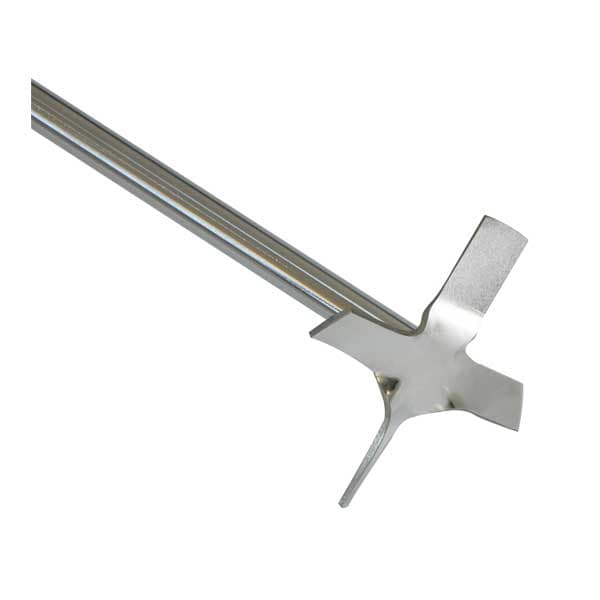
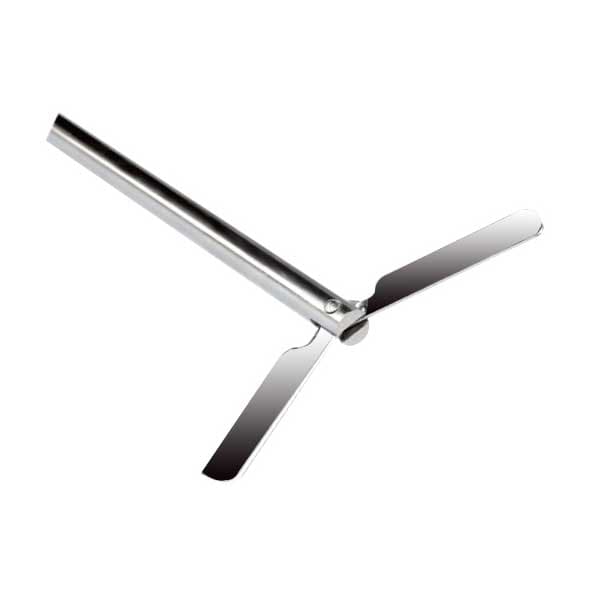
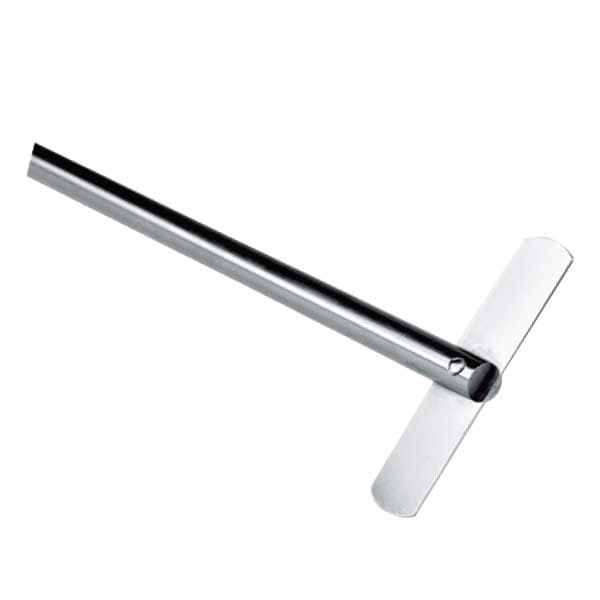
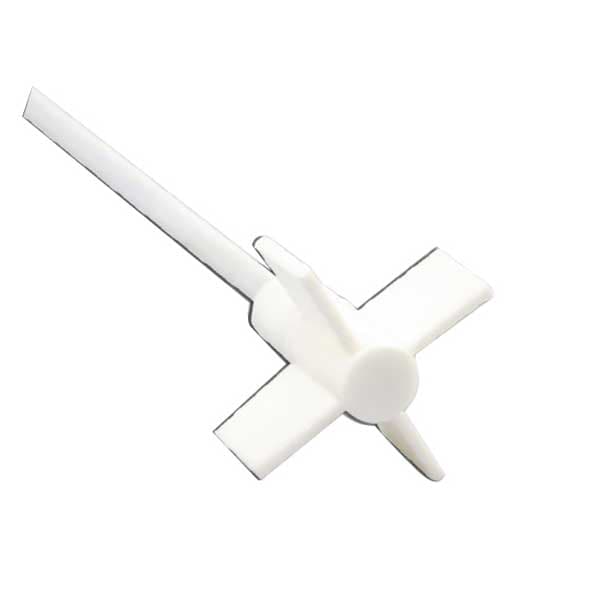
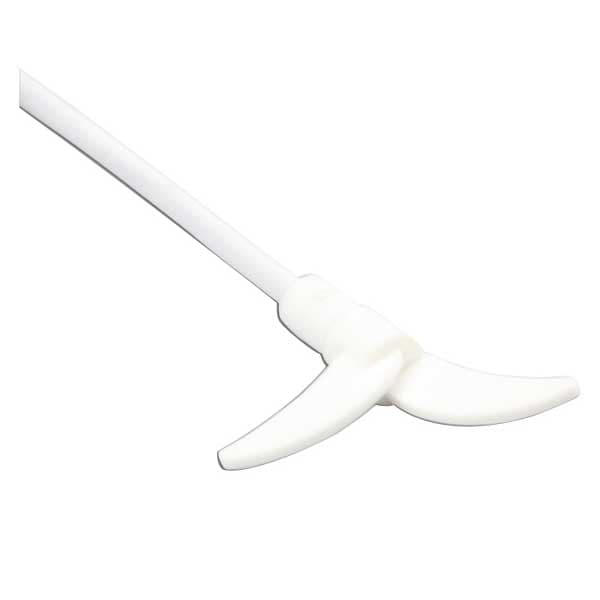
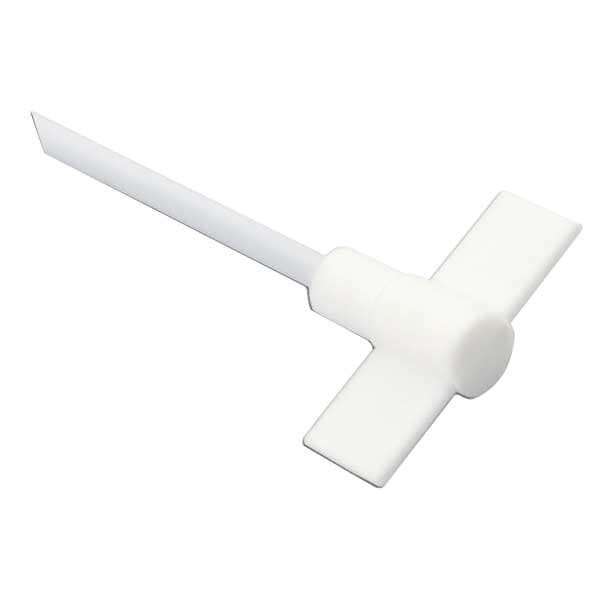
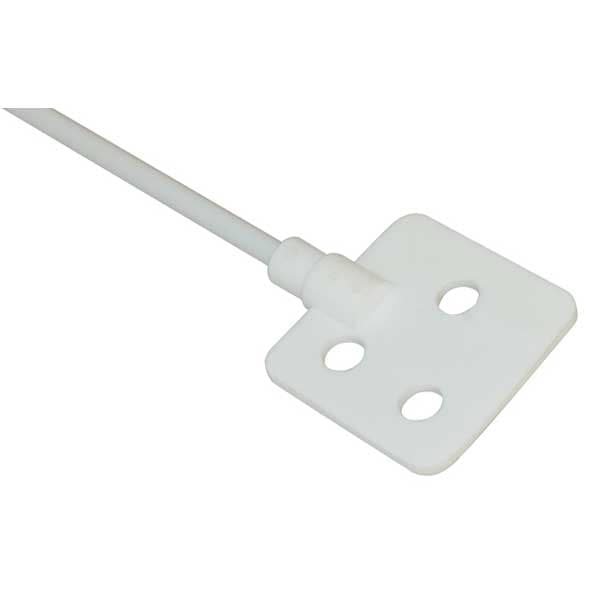
- Stainless steel and PTFE (Teflon®) propellers compatible with overhead stirrers for a variety of mixing applications.
- One-line propellers designed for efficient agitation in low- to medium-viscosity liquids.
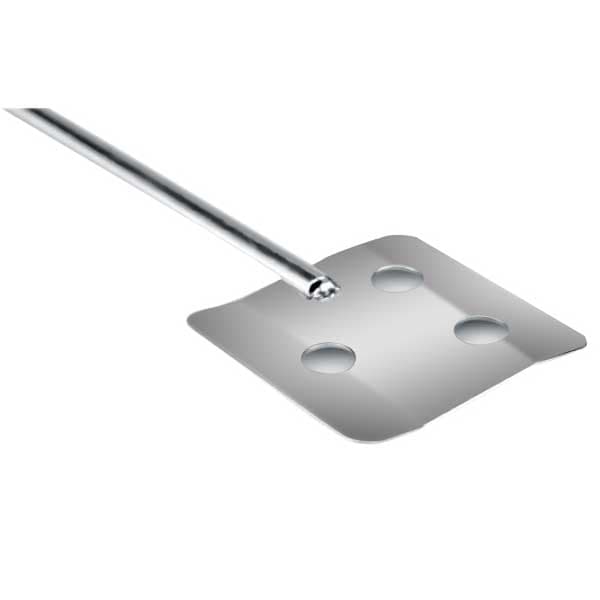
- Paddle propellers with flat holes for enhanced fluid circulation and blending performance.
- Centrifugal impellers that promote radial flow and effective mixing of liquid samples.
- Four-arm propellers available in stainless steel or PTFE for versatile stirring across diverse laboratory workflows.
How to Choose Overhead Stirrer Accessories
Impeller geometry
Impeller type determines mixing regime and is the primary accessory selection decision. Propeller impellers (two- or three-blade marine propeller) generate axial flow, drawing fluid from above and directing it downward, suited for general liquid blending, cell suspension, and low-viscosity mixing. Paddle and anchor impellers sweep tangentially near the vessel wall, appropriate for high-viscosity materials that resist axial flow. Dispersing disc impellers (flat disc with serrated edge or teeth) generate radial high-shear flow for emulsification, pigment dispersion, and fine particle suspension. Ribbon impellers are used for highly viscous, thickening batches where conventional impellers fail to move material from the vessel walls.
Shaft length and diameter
The shaft length must extend from the motor chuck to the correct immersion depth in the vessel. Standard lengths range from 200 mm to 600 mm; longer shafts are available for deep vessels or pilot-scale bioreactors. Shaft diameter must fit within the motor's chuck bore (confirm before ordering). Thicker shafts (10 mm to 12 mm) are more rigid and reduce wobble at high speed; thin shafts (6 mm) suit small-volume vessels and lower-torque motors.
Material: stainless steel vs. PTFE
Stainless steel (316L is preferred for chemical resistance over 304) is the standard for shafts and impellers in aqueous buffers, culture media, alcohols, and mild organic solvents. PTFE shafts and impellers are required for corrosive acids, bases (concentrated NaOH, HCl, HF), halogenated solvents, and any application where metal ion contamination of the sample must be avoided. Stainless steel and PTFE impellers are not interchangeable from a torque-transfer standpoint; PTFE is softer and suitable for lower-torque applications.
Support stands and clamps.
Support stands must be rigid enough to prevent shaft wobble at maximum operating speed. Confirm that the stand's vertical travel range accommodates the vessel height plus the motor unit. Crossbar clamp assemblies allow the motor unit to be raised and lowered without removing the shaft from the vessel. Heavy-duty stands with a wide base footprint are recommended for motors above 40 Ncm and for operation above 500 rpm.
Chuck and collet adapters
Motors accept shafts with a specific bore range. Collet adapters reduce or increase the effective chuck bore to fit a different shaft diameter. Confirm the motor's chuck diameter (manufacturer-specific) and the shaft outer diameter before ordering a collet or chuck adapter; a mismatched fit can cause shaft slippage during mixing.
Specifications Context
Impeller diameter should be 30 to 50% of the vessel inner diameter for most mixing regimes. A blade diameter that is too small leaves dead zones at the vessel wall; too large generates excessive shear and can damage shear-sensitive samples. For autoclave-compatible setups, confirm that the shaft, impeller, and any sealing sleeve are rated for 121 degrees C steam sterilization. Shaft straightness should be verified at the stated operating speed; a bent or unbalanced shaft generates vibration that compounds with any sample viscosity increase to stress the motor bearings.
Looking for the right propeller for your process? Explore our overhead stirrer accessories and reach out to the MBP team for a quote today.
FAQ