Product Filters

Laboratory Pumps for Fluid Transfer, Vacuum Generation, and Precise Dosing


Pumps covers the range of laboratory pump types used for moving liquids, generating vacuum, and dosing fluids in research applications: diaphragm pumps for oil-free vacuum and chemical-resistant fluid transfer, peristaltic pumps for continuous and pulsatile liquid flow in chromatography and media exchange, syringe pumps for precise low-volume dispensing in microfluidics and analytical chemistry, and other pump types for specific laboratory fluid handling needs. Academic and core laboratories sourcing laboratory pumps can benefit from guidance when selecting the appropriate pump technology based on flow rate, chemical compatibility, pressure requirements, and application demands.

Not sure which pump type fits your workflow? Contact customerservice@mbpinc.net with your application requirements, and our team can recommend suitable pump technologies, flow ranges, and configurations for your laboratory.

Pumps
Per Page:
Sort By:
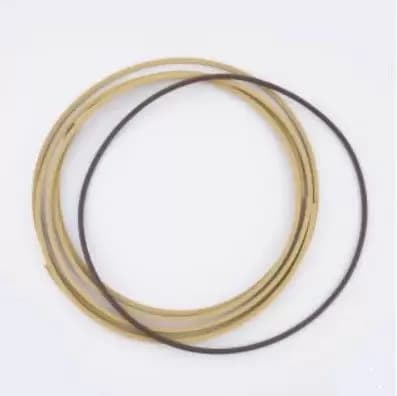
Tip Seal Kit for Agilent IDP3
List Price:
USD468.80
Online Price:
USD334.85
Your Price:
ULVAC DTC-41 1.6 cfm 2-Stage Chemical-Duty Diaphragm Pump
List Price:
USD2,945.95 - USD2,945.95
Online Price:
USD2,104.25 - USD2,104.25
Your Price:
ULVAC Oil-Free Diaphragm Pump
List Price:
USD1,582.70 - USD4,641.70
Online Price:
USD1,130.50 - USD3,315.50
Your Price:
ULVAC UDP-6 6 cfm Full Chemical-Resistant 2-Head Diaphragm Pump
List Price:
USD5,552.75
Online Price:
USD3,966.25
Your Price:
Vacuubrand MD 1C 0.9 CFM Oil-Free Chemistry Diaphragm Pump 110V
List Price:
USD6,044.85
Online Price:
USD4,317.75
Your Price:
Vacuubrand MD 4C NT 2.2 CFM Chemistry Diaphragm Pump 110V
List Price:
USD7,448.00
Online Price:
USD5,320.00
Your Price:
Vacuubrand VARIO PC 3001 SELECT 1.2 CFM Self-Adjust Pump 110V
List Price:
USD14,284.20
Online Price:
USD10,203.00
Your Price:
Welch 1400 DuoSeal 0.9 cfm 0.1 Micron Belt Drive Dual-Stage Pump
List Price:
USD3,968.72
Online Price:
USD2,834.80
Your Price:
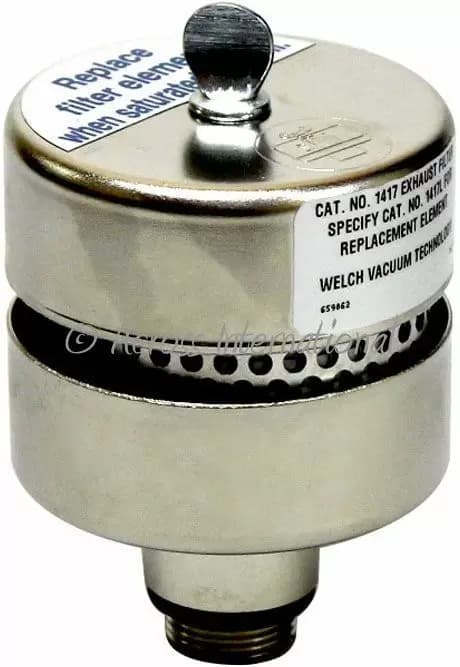
Welch 1417 Oil Mist Exhaust Filter for 1400 DuoSeal Vacuum Pumps
List Price:
USD365.67
Online Price:
USD261.20
Your Price:
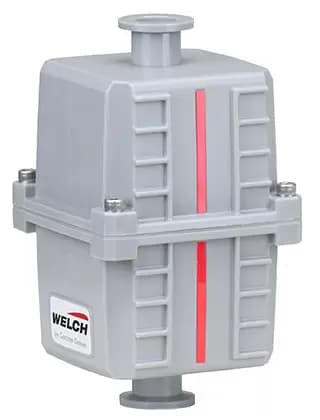
Welch 1417F KF25 Exhaust Oil Mist Filter with Drainback Feature
List Price:
USD851.02
Online Price:
USD607.87
Your Price:
Welch 2052 Diaphragm Vacuum Pump Service Kit
List Price:
USD800.53
Online Price:
USD571.81
Your Price:
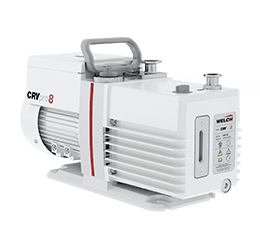
Welch CRVPro Direct Drive Rotary Vane Vacuum Pump Series
List Price:
USD5,657.82 - USD19,971.28
Online Price:
USD4,041.30 - USD14,265.20
Your Price:

Showing 25 to 36 of 46 results

What are laboratory pumps?


Laboratory pumps move fluids by applying mechanical energy to transfer liquids between vessels, circulate liquids through systems, generate vacuum for filtration or evaporation, or deliver precise volumes at controlled flow rates. Different types use different mechanisms: diaphragm pumps use an oscillating flexible membrane, peristaltic pumps use rotating rollers on flexible tubing, syringe pumps use a motorized piston, and oil-sealed rotary vane pumps use a rotating vane in oil for deep vacuum.


What you will find:


Vacuum Pump: Create powerful vacuum for filtration, rotary evaporation, and drying using highly durable and silent pumps.
Peristaltic Pump: Prevent contamination of the medium through precise dosing with pumps that transport media via tubing only.
Diaphragm Pump: Get oilless and chemically resistant pumps for aggressive vapors.


How to choose a laboratory pump


Choose a diaphragm pump for oil-free vacuum and chemical resistance

Diaphragm pumps use a flexible membrane without oil lubrication, making them chemical-resistant, oil-free, and lower maintenance than oil-sealed pumps. They are the standard choice for rotary evaporator vacuum, Büchner filtration, vacuum concentration, and other applications where oil contamination must be avoided.

Choose a peristaltic pump for continuous fluid transfer with easy maintenance

Peristaltic pumps move fluid by compressing flexible tubing with rotating rollers, so only the tubing contacts the fluid. Changing fluids requires only replacing the tubing, making them ideal for chromatography buffer flow, media exchange, and any application with multiple different liquids.

Choose a syringe pump for precise, programmable low-volume delivery

Syringe pumps use a stepper motor to push a syringe plunger at a precisely controlled rate, delivering volumes from microliters to tens of milliliters with high accuracy. They are used in microfluidics, infusion experiments, gradient delivery, and any application requiring precise programmed flow rates.

Consider chemical compatibility of wetted materials

All pump types have wetted materials that contact the pumped fluid and must be compatible with your specific solvents, acids, bases, or biological liquids. PTFE-wetted diaphragm pumps offer broad chemical resistance; peristaltic pumps require appropriate tubing material selection per fluid.

Match flow rate range and pressure to your application

Diaphragm vacuum pumps are characterized by ultimate vacuum level and pumping speed; peristaltic pumps by flow rate range and tubing diameter; syringe pumps by minimum and maximum flow rates and syringe volume.


Specifications context


Diaphragm vacuum pumps are evaluated on ultimate vacuum (lowest achievable absolute pressure) and pumping speed (volume of gas removed per unit time), with PTFE-diaphragm models achieving ultimate vacuum levels of 1–10 mbar suitable for rotary evaporation and concentration. As of 2026, two-stage diaphragm pumps continue to expand as oil-free alternatives to oil-sealed rotary vane pumps, since they require less maintenance and eliminate contamination risk while achieving adequate vacuum for most laboratory applications.

Get in touch with the experts at MBP today to request your custom quote.

FAQ

A PTFE-wetted diaphragm vacuum pump is the recommended choice for rotary evaporator vacuum, providing oil-free vacuum at 1–10 mbar for evaporation of common organic solvents without oil contamination risk. A two-stage diaphragm pump provides deeper ultimate vacuum for higher-boiling solvents that require lower pressure for efficient evaporation.
Peristaltic pumps contact fluid only through tubing, keeping the pump mechanism fluid-free, so changing between fluids requires replacing tubing rather than cleaning pump internals. This makes them the standard choice for chromatography buffer flow, media exchange, and any application involving multiple fluids or fluids difficult to clean from pump components.
Syringe pumps deliver fluid at extremely precise, programmable flow rates from nanoliters per minute upward, with accuracy not achievable with peristaltic pumps whose flow varies with tubing wear and back pressure. They are used in microfluidics for stable laminar flow, pharmacokinetic infusion studies, stopped-flow kinetics, and any application where exact flow rate must be precisely controlled programmatically.
A diaphragm pump uses a flexible membrane without oil, making it oil-free and chemically resistant but limited to moderate vacuum levels of 1–10 mbar, while an oil-sealed rotary vane pump uses oil for lubrication and can reach deeper vacuum but requires oil changes, risks oil contamination, and cannot tolerate solvent vapors without oil degradation. Diaphragm pumps are preferred for most lab applications except where very deep vacuum below 1 mbar is required.
Chemical resistance refers to the compatibility of wetted materials — the pump components contacting the fluid being pumped — with specific solvents, acids, or biological liquids. Incompatible materials may swell, corrode, or leach contaminants, degrading pump performance and potentially contaminating samples. PTFE-wetted diaphragm pumps are resistant to most organic solvents and concentrated acids.
PTFE-wetted diaphragm pumps are generally compatible with both aqueous buffers and most organic solvents, making them versatile. Peristaltic pumps require tubing material appropriate for each fluid: silicone tubing suits aqueous buffers, but Tygon or PTFE tubing is needed for organic solvents that can swell or degrade standard silicone.
For vacuum applications like rotary evaporation and Büchner filtration, ultimate vacuum rather than flow rate is the key specification. For fluid transfer, flow rate is matched to required volume throughput; chromatography columns have specific recommended linear flow rates that translate to volumetric rates based on column cross-section area, and exceeding them reduces separation resolution.
Yes, MBP offers competitive pricing for diaphragm, peristaltic, and syringe laboratory pumps, with specialist support for matching pump type and specifications to your specific application requirements. Contact MBP's US office in Houston, Texas, for pricing in both USD and CAD.
We provide the highest quality of products and anytime customer service.
Featured Categories
    online payment
    online payment
    fast delivery
    fast delivery
    technical support
    technical support
    24/7 support
    24/7 support
    copy right
    2026 All Right Reserved