Peristaltic Pumps for Contamination-Free Fluid Transfer and Process Control
Peristaltic Pump covers the laboratory peristaltic pump — a positive-displacement pump that moves fluid by sequentially compressing flexible tubing with rotating rollers, so only the tubing contacts the fluid and the pump mechanism remains completely fluid-free. This allows fluid changing by tubing swap alone, with no pump disassembly or cleaning, making peristaltic pumps the standard choice for chromatography buffer flow, cell culture media exchange, bioreactor perfusion, and any application involving multiple different fluids. Academic and core laboratories sourcing peristaltic pumps can benefit from guidance when selecting flow rate ranges, tubing materials, and pump configurations for their specific applications.
Need a peristaltic pump for fluid handling or process applications? Contact customerservice@mbpinc.net to compare flow ranges, tubing options, and control features and find the right system for your laboratory workflow.
Peristaltic Pump
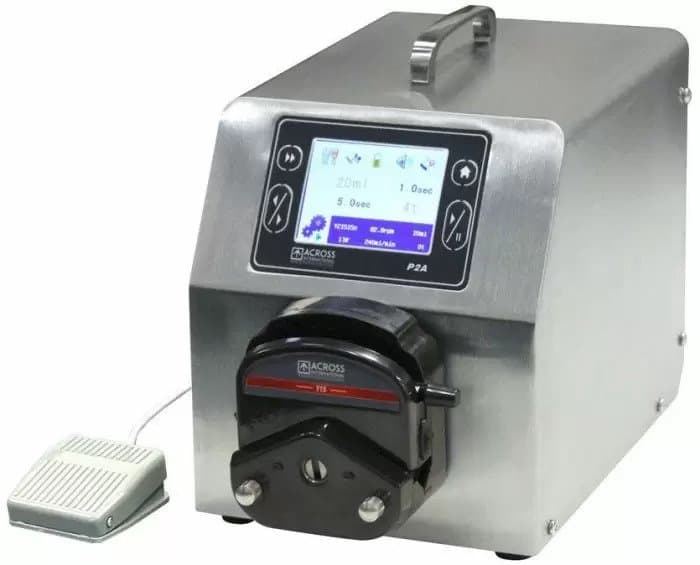
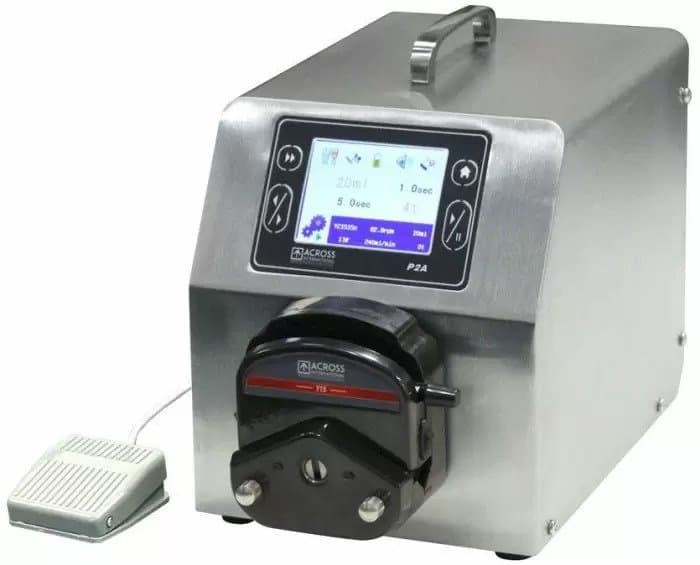
Showing 1 to 2 of 2 results
What is a peristaltic pump?
A peristaltic pump moves fluid by squeezing a flexible tube between a rotating rotor with rollers or shoes and a curved backing surface, creating a progressing zone of compression that pushes fluid along the tube in the direction of roller travel. Because the fluid contacts only the inside of the tubing and never the pump mechanism itself, the pump mechanism remains completely uncontaminated between runs, and changing fluids requires only replacing or flushing the tubing without disassembling or cleaning the pump head. Flow rate is controlled by adjusting rotor speed, and the pump can run forward or in reverse for dispensing or withdrawal.
What you will find:
Ai SST Digital Peristaltic Pump Series – Digital control pump for precise and programmable fluid flow
Ai Analog Peristaltic Pump Series (PM) – Simple control pump for stable and adjustable flow operation
How to choose a peristaltic pump
Select flow rate range based on your application's volume and timing requirements
Peristaltic pumps are available from micro-flow models running at nanoliters to microliters per minute for precision analytical or microfluidic applications, through standard laboratory models covering 0.001 mL/min to several liters per minute for chromatography and media exchange, to large-diameter industrial models for high-volume transfer. Match the pump's flow rate range to your typical and maximum required flow rates.
Choose the tubing material compatible with your specific fluid
Peristaltic pump tubing contacts the fluid directly and must be chemically compatible: silicone suits most aqueous buffers and media; Tygon and norprene resist many organic solvents; Viton resists strong solvents and concentrated acids; PTFE provides the broadest resistance. Confirming tubing compatibility before use prevents fluid contamination and tubing degradation.
Confirm the tubing inside diameter determines flow rate at a given RPM
For a given pump head and RPM, the volume delivered per revolution is determined by the tubing inside diameter — larger ID tubing delivers more volume per revolution. When replacing tubing, using the same ID as originally specified maintains the same flow rate calibration; changing to a different ID requires recalibration of flow rate against RPM.
Consider multi-channel pump heads for parallel fluid streams
Multi-channel peristaltic pump heads hold multiple tubes simultaneously, each driven by the same rotor, enabling equal-flow parallel delivery of multiple fluids without requiring multiple pumps.
Verify whether the pump speed control is manual or digital for your precision needs
Simple peristaltic pumps have manual speed control via a dial, while more advanced models offer digital speed control with LCD display, RS232 or USB communication for computer control, and programmable flow rate profiles for automated processes. The required precision and automation level of the application determines which control type is appropriate.
Specifications context
Peristaltic pumps produce pulsatile flow due to sequential roller compression rather than truly continuous flow, with pulsation degree depending on roller number, rotor speed, and tubing compliance. Multi-roller heads reduce pulsation at the cost of higher tubing wear, and pulse dampeners can be added downstream for sensitive detectors. As of 2026, four-or-more-roller pump heads are standard for chromatography applications where pulsation affects detector baseline stability.
Get advice from professionals in our lab supply company regarding the choice of peristaltic pumps for your laboratory needs.
FAQ