Agitation Equipment for Laboratory Mixing, Culture Growth, and Sample Handling
Agitation Equipment brings together laboratory instruments for applying agitation to samples, cultures, and vessels: orbital shakers for flask and microplate agitation in cell culture and microorganism growth, tube rollers and rotators for gentle end-over-end or axial tube mixing, rockers for blot membrane incubations, and vortex mixers for rapid agitation. As a Main Category alongside Sample Processing, this section covers the full range of mixing instruments. Academic and core laboratories can benefit from guidance when selecting agitation equipment based on vessel type, mixing intensity, sample volume, and application requirements.
Need help choosing the right mixing platform? Contact customerservice@mbpinc.net to discuss your workflow and receive recommendations on shakers, rotators, rockers, and vortex mixers best suited to your laboratory needs.
Agitation Equipment
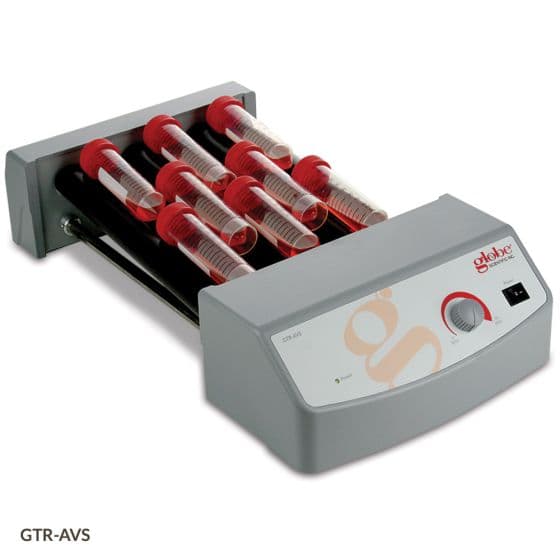
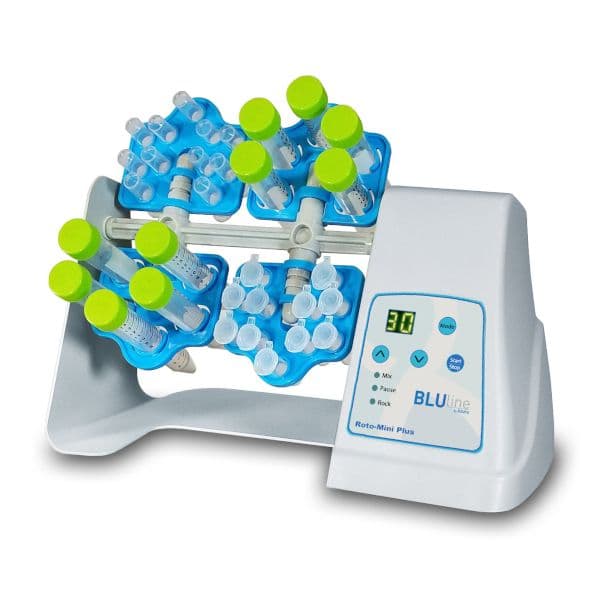
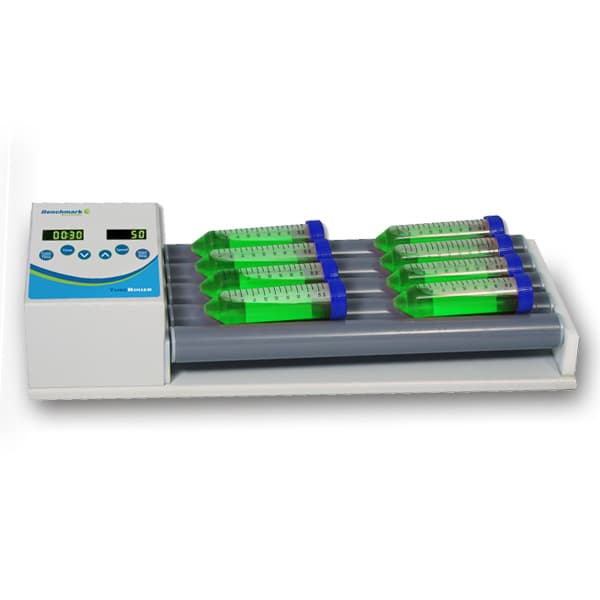

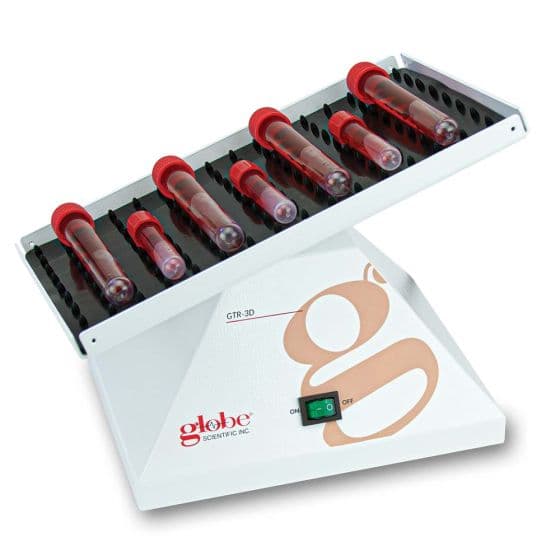
Showing 133 to 137 of 137 results
What is Agitation Equipment?
Agitation equipment covers all laboratory instruments that apply mechanical motion to samples, cultures, and reagents to promote mixing, maintain suspension, facilitate gas exchange, or ensure even exposure of samples to a solution. The major categories include orbital shakers for circular-motion flask and plate agitation in bacterial and cell culture; tube rollers and rotators for end-over-end or axial rotation of blood tubes, incubation tubes, and bottles; rocking platforms for gentle, rhythmic agitation during blot membrane washing and antibody incubation; and vortex mixers for rapid, high-intensity tube agitation. Each type applies a different motion pattern suited to different applications and vessel types.
What You Will Discover:
-
Vortex Mixers: Fast and effective instruments for swift tube blending, featuring convenient touch-to-start or continuous modes for your routine lab tasks.
-
Orbital Shakers: Dependable devices that offer consistent circular movement, ideal for maintaining aeration in flasks or multi-well plates.
-
Rollers & Rotators: The ideal option for gentle, 360-degree mixing that maintains blood samples or thick liquids in a consistent, uniform motion.
-
Rockers: Created for the particular "see-saw" action required for delicate blotting, staining, or any agitation where you wish to prevent foam
How to navigate Agitation Equipment
Go to Orbital Shakers for flask and microplate culture agitation
Orbital Shakers covers circular-orbit shaking platforms for Erlenmeyer flasks, microplates, and bottles used in bacterial culture, yeast culture, mammalian cell suspension culture, protein expression, and hybridization incubations, available in benchtop, refrigerated, and incubated formats.
Go to Rollers & Rotators for tube and bottle end-over-end mixing
Rollers & Rotators covers tube roller mixers for gentle axial rolling of tubes and bottles, and rotator mixers for end-over-end inversion of tubes, used for blood sample homogenization, antibody-bead incubations, and other applications where tubes must be continuously mixed without foaming.
Consider incubated or refrigerated shakers when temperature control is required
Many orbital shaker applications, including protein expression in bacteria and yeast and temperature-sensitive hybridization incubations, require control of the agitation temperature. Incubated shakers maintain above-ambient temperatures; refrigerated shakers hold below-ambient temperatures for cold-room alternatives.
Match agitation speed and orbit diameter to your application
Orbital shaker speed and orbit diameter determine the mixing intensity and the Reynolds number in a shaking flask; bacterial and yeast culture typically uses 200–300 rpm with 2–5 cm orbit diameter, while gentler mixing for hybridization uses 50–100 rpm. Roller and rotator speeds are lower, typically 5–40 rpm for end-over-end tube mixing.
Choose vessel-specific accessories to secure your containers during agitation
Different vessel types—Erlenmeyer flasks, microplates, conical tubes, and bottles—require appropriate platform clamps and holders matched to the specific container size and the agitation speed to prevent containers from sliding or becoming unsecured during shaking.
Specifications context
Orbital shaker orbit diameter (the diameter of the circular path the platform follows) directly affects the mixing characteristics in shaking flasks: a 2 cm orbit is common for small flasks up to 125 mL, while larger 5 cm orbits are used for larger flasks where more liquid momentum is needed for adequate aeration and mixing. As of 2026, stackable orbital shakers with identical footprint and interchangeable platforms have become standard for labs running multiple parallel culture conditions that need to share incubator space efficiently.
Looking for the right mixing speed or capacity for your setup? The MBP team is here to help—get in touch today for a custom quote.
FAQ