Product Filters

Vortex Mixers for Rapid Sample Resuspension and Tube Mixing


Vortex Mixers covers standard laboratory vortex mixing instruments that apply high-speed circular vibration to a tube or vessel pressed onto the cup head, producing rapid mixing of tube contents by inertial vortex formation. Used throughout molecular biology, biochemistry, and clinical labs for resuspending cell pellets, mixing reaction components, dissolving solutes, and re-homogenizing samples after centrifugation. Available in single-tube touch models, continuous-run models, and multi-tube formats with foam inserts and adapter sets. Academic and core labs get model and specification guidance plus competitive pricing.

Contact customerservice@mbpinc.net to compare vortex mixer models and select the right configuration for your sample volumes and workflow.

Vortex Mixers

Per Page:
Sort By:
BLUline Vortex Mixer with Flip-Head
List Price:
USD498.75
Online Price:
USD356.25
Your Price:
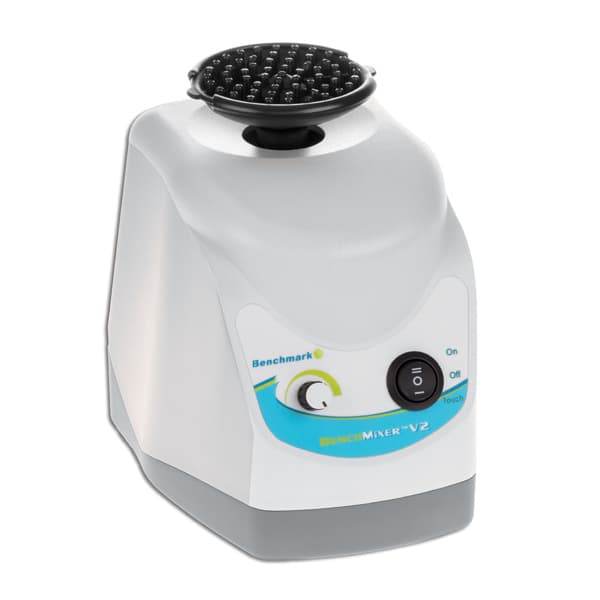
BenchMixer V2™ Vortex Mixers
List Price:
USD454.97 - USD454.97
Online Price:
USD324.98 - USD324.98
Your Price:
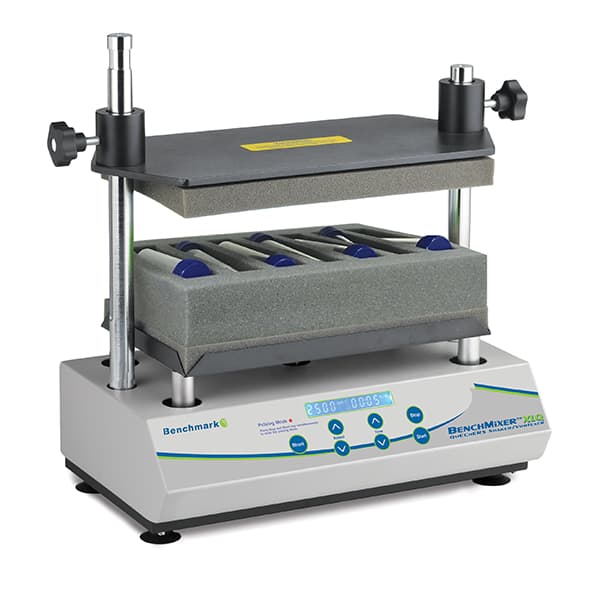
BenchMixer XLQ, QuEChERS Shaker/Vortexer
List Price:
USD4,893.59 - USD4,893.59
Online Price:
USD3,495.42 - USD3,495.42
Your Price:
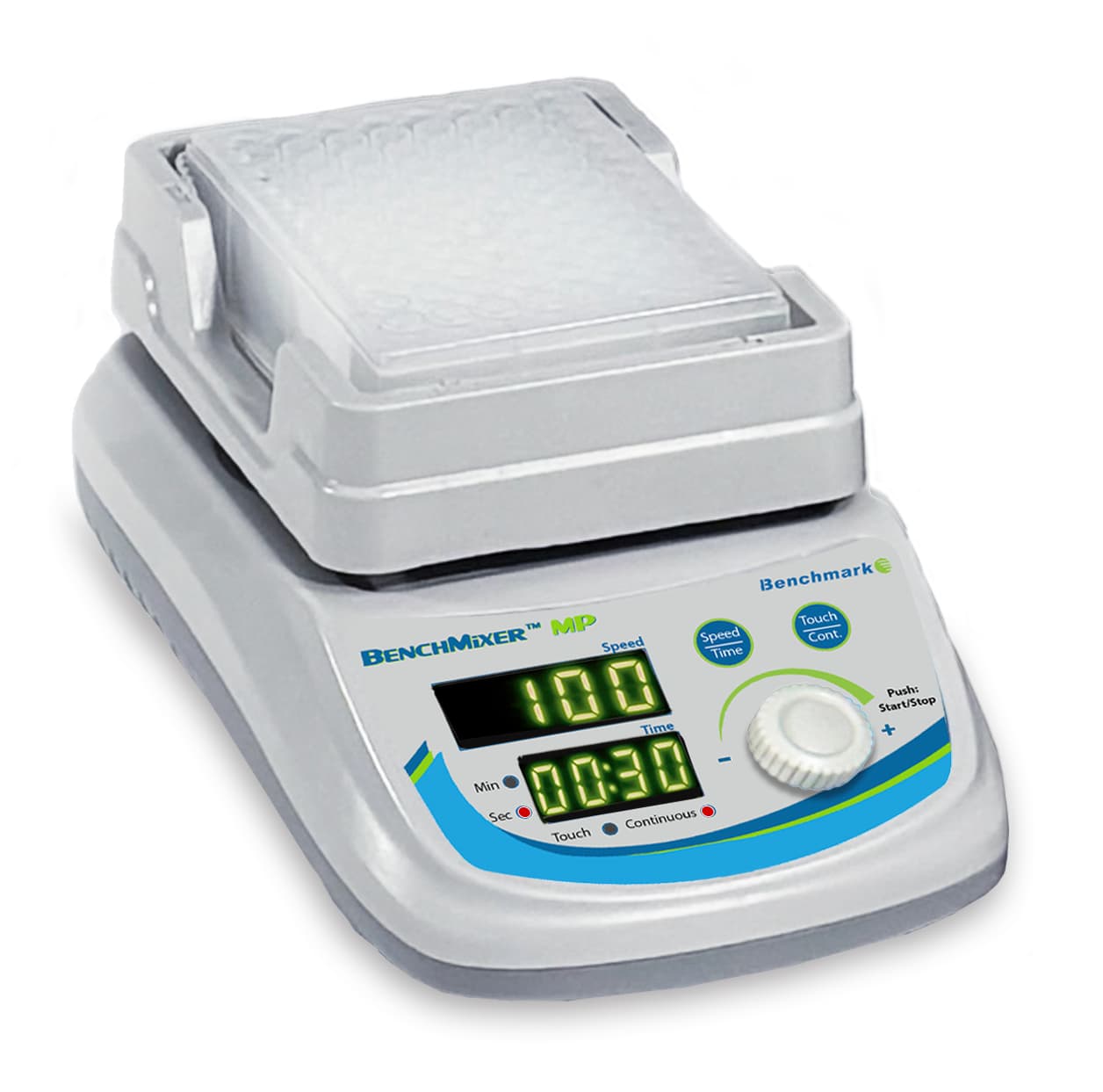
BenchMixer™ MP Vortex Mixers
List Price:
USD766.80 - USD766.80
Online Price:
USD547.72 - USD547.72
Your Price:
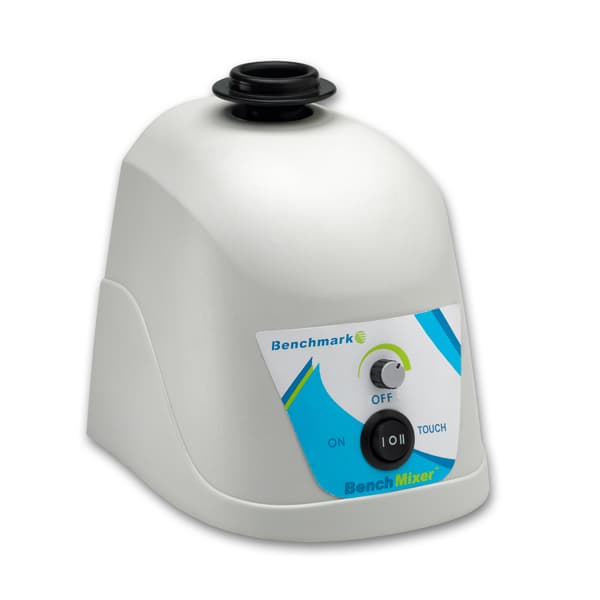
BenchMixer™ Vortex Mixers
List Price:
USD402.39 - USD402.39
Online Price:
USD287.42 - USD287.42
Your Price:
COMBO™ head for one microplate and microtubes (38 x 1.5ml and 28 x 0.5ml tubes)
List Price:
USD124.99
Online Price:
USD89.28
Your Price:
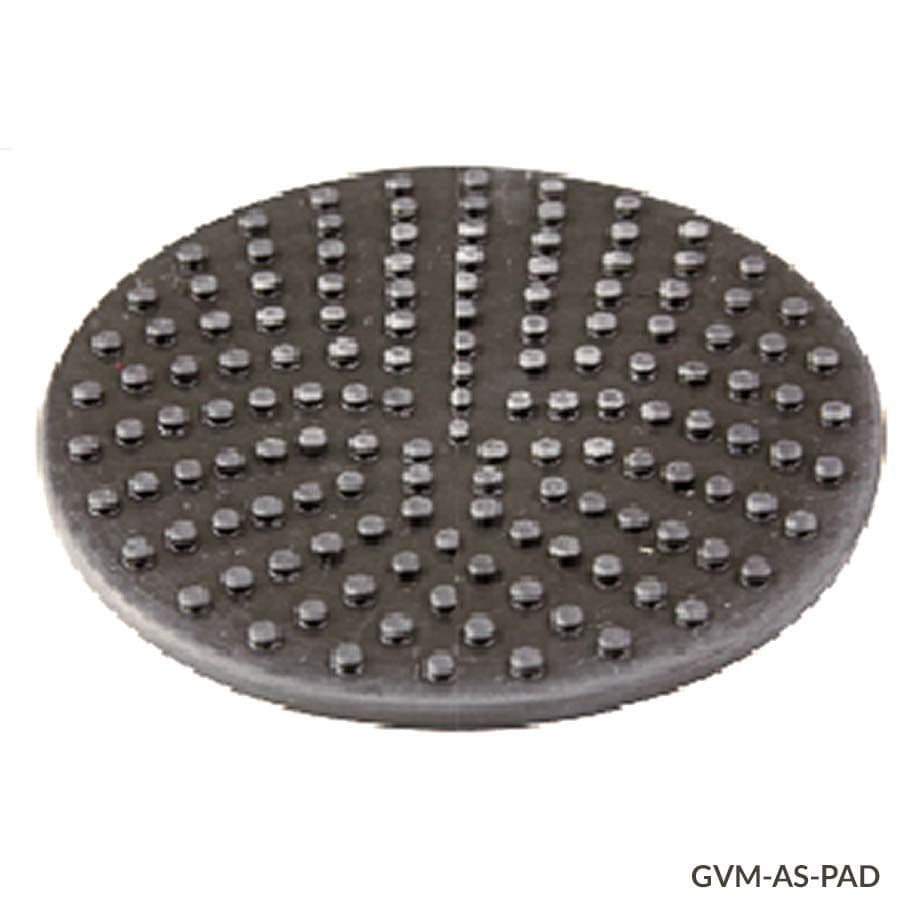
Dimpled Pad for use with GVM Series Vortex Mixers, 99mm Diameter (Must use with Top Plate VM-AS-PLATE)
List Price:
USD60.23
Online Price:
USD43.02
Your Price:
Foam Sheet, no holes (1 each)
List Price:
USD88.25
Online Price:
USD63.03
Your Price:
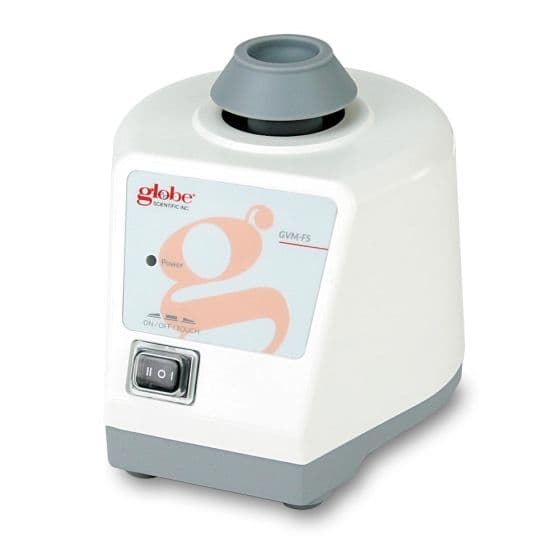
Globe Scientific - Fixed Speed Vortex Mixer
List Price:
USD357.64 - USD357.64
Online Price:
USD255.46 - USD255.46
Your Price:
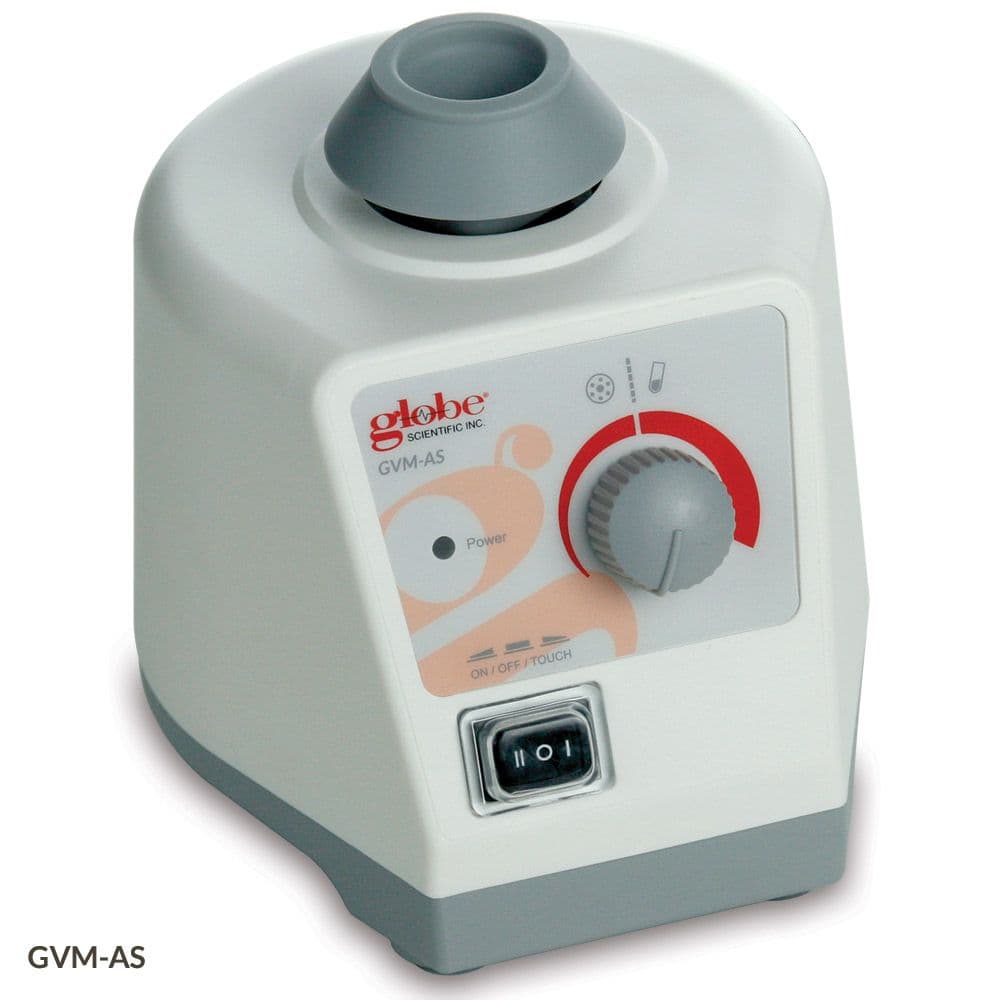
Globe Scientific - Variable Speed Vortex Mixer
List Price:
USD425.07 - USD425.07
Online Price:
USD303.62 - USD303.62
Your Price:
Horizontal head, for 12 x 1.5ml
List Price:
USD162.80
Online Price:
USD116.28
Your Price:
Horizontal head, for 2 x 50ml
List Price:
USD162.80
Online Price:
USD116.28
Your Price:

Showing 1 to 12 of 41 results

What are laboratory vortex mixers?


A laboratory vortex mixer is a small benchtop instrument with an eccentrically rotating motor that drives a cup-shaped rubber head in a rapid circular path, creating a vortex in liquid-filled tubes or vessels pressed onto the cup. The vibration transfers through the closed tube wall to the liquid, generating a powerful swirling vortex that thoroughly mixes tube contents within seconds. Vortex mixers are used throughout the laboratory for resuspending pellets after centrifugation, mixing enzyme reaction components, homogenizing samples, dissolving compounds, and briefly but thoroughly mixing any small tube or vessel.


What you will find:


  • BLUline vortex mixer: with a flip-head for faster, touch-based mixing

  • BenchMixer™ vortex mixers: for everyday, reliable lab vortexing

  • BenchMixer™ XL multi-tube vortexer: for high-performance output sample processing

  • Labnet Orbit 300 multipurpose digital vortexer: for programmable and controlled mixing

  • Vortex mixer accessories: including horizontal heads, tube racks, and foam holders for different tube sizes and applications


How to choose a vortex mixer


Choose touch-mode for ad hoc brief mixing and continuous-mode for timed runs

Touch-mode vortex mixers run only when a tube or vessel is pressed against the cup head, stopping immediately on release — the natural format for brief, on-demand mixing during pipetting workflows. Continuous-mode switches the mixer to run at a set speed without tube contact, suitable for timed mixing steps or when using a multi-tube adapter for batch runs.

Match vortex speed range to your application

Standard vortex mixers operate between approximately 600 and 3200 rpm, with lower speeds appropriate for gentle mixing of delicate samples or larger vessels, and full speed appropriate for vigorous resuspension of tightly packed pellets. Variable-speed models with a dial allow speed to be dialed down for sensitive applications.

Confirm tube compatibility with the cup head or adapter

The standard cup head on most vortex mixers accommodates 1.5 mL and 2 mL microcentrifuge tubes directly, and most standard tube formats up to approximately 50 mL can be mixed by holding the tube against the cup at the appropriate angle. For 15 mL and 50 mL conical tubes, holding at a slight angle rather than vertical provides more efficient mixing.

Consider a multi-tube foam insert for batch processing

Foam inserts and multi-tube adapters allow 6, 8, or more tubes to be mixed simultaneously during a timed continuous-mode run, suited for batch mixing of many samples between processing steps.

Check that footprint and noise level suit your bench placement

Vortex mixers vary considerably in physical footprint and operating noise; models with a suction-cup base or weighted housing reduce walking on the benchtop at high speed. For open-plan labs or shared spaces, noise level at full speed is worth checking in product specifications.


Specifications context


The classic vortex mixing action produces a liquid vortex through eccentrically driven cup oscillation at typically 2000–3200 rpm for full-speed operation, a mechanism that has remained essentially unchanged since the Vortex-Genie design introduced by Scientific Industries in 1962. As of 2026, variable-speed vortex mixers with touch-mode and continuous-mode operation and a removable cup head for accessory attachment remain the most widely used format in molecular biology and biochemistry labs.

Contact the MBP team today to request a quote and find the right vortex mixer for your application.

FAQ

A vortex mixer uses an eccentrically rotating motor drive to move a rubber cup head in a rapid circular path, and when a tube is pressed against this moving cup, the circular oscillation transfers through the tube wall to the liquid inside, creating a swirling vortex that mixes the contents. The vortex pulls material from the bottom and sides of the tube into the main liquid body, resuspending pellets and thoroughly mixing reagents within a few seconds of contact.
In touch mode, the vortex runs only while a tube or finger contacts the cup head and stops when released — the natural mode during pipetting workflows where brief on-demand mixing is needed. In continuous mode, the vortex runs at set speed without tube contact, used for timed mixing steps, batch mixing with foam insert adapters, and applications where the mixer runs unattended for a defined period.
Resuspending loosely packed cell pellets from low-speed centrifugation typically requires only a few seconds at moderate speed of 1500–2500 rpm to break up the pellet and homogenize the suspension. For very tightly packed pellets from high-speed centrifugation or lyophilized materials, full speed of 2500–3200 rpm for 10–30 seconds is typically effective, though care should be taken with shear-sensitive cell types that may be damaged by excessive vortexing.
Standard conical tubes can be mixed on most vortex mixers by holding the tube at a slight angle against the cup head rather than pressing it vertically, which creates a sufficient vortex in larger volumes without the tube being awkwardly positioned. For systematic batch mixing of many 15 mL or 50 mL tubes, a vortex mixer with a specific conical tube foam insert adapter processes multiple tubes simultaneously at consistent mixing conditions.
Vortex mixer walking is caused by the eccentric motor drive transmitting vibration into the bench surface, and lighter mixer models without rubber feet, suction cups, or weighted housings can move significantly at high speed. Models with suction cup feet or weighted housings reduce bench walking; alternatively, pressing the mixer firmly onto the bench manually while using it, or using the suction cup base feature if present, controls walking during brief high-speed mixing.
Most routine mixing tasks — resuspending pellets, mixing two reagents, dissolving solutes — require only 5–30 seconds of vortexing, and excessive vortexing beyond what is needed to achieve mixing provides no benefit and can cause foaming, sample heating, or shear damage to delicate analytes. The endpoint of mixing is visual: a fully suspended, homogeneous sample with no visible settled material is the indicator that sufficient vortexing has occurred.
Tubes with snap-cap or screw-cap closures that are not firmly closed can open during vigorous vortexing, particularly at high speeds where the inertial forces on the cap are significant. Always confirm that tube caps are firmly closed before vortexing, and use locking or screw-capped tubes for samples where opening during mixing would cause loss or contamination.
Yes, MBP offers competitive pricing for standard touch-mode, variable-speed, and multi-tube vortex mixers across a range of speed specifications and footprint sizes, with specialist support for instrument and accessory selection. Contact MBP's US office in Houston, Texas, for pricing in both USD and CAD.
We provide the highest quality of products and anytime customer service.
Featured Categories
    online payment
    online payment
    fast delivery
    fast delivery
    technical support
    technical support
    24/7 support
    24/7 support
    copy right
    2026 All Right Reserved