Product Filters

PCR & qPCR Sealing Films, Optical Clear Heat-Seal 


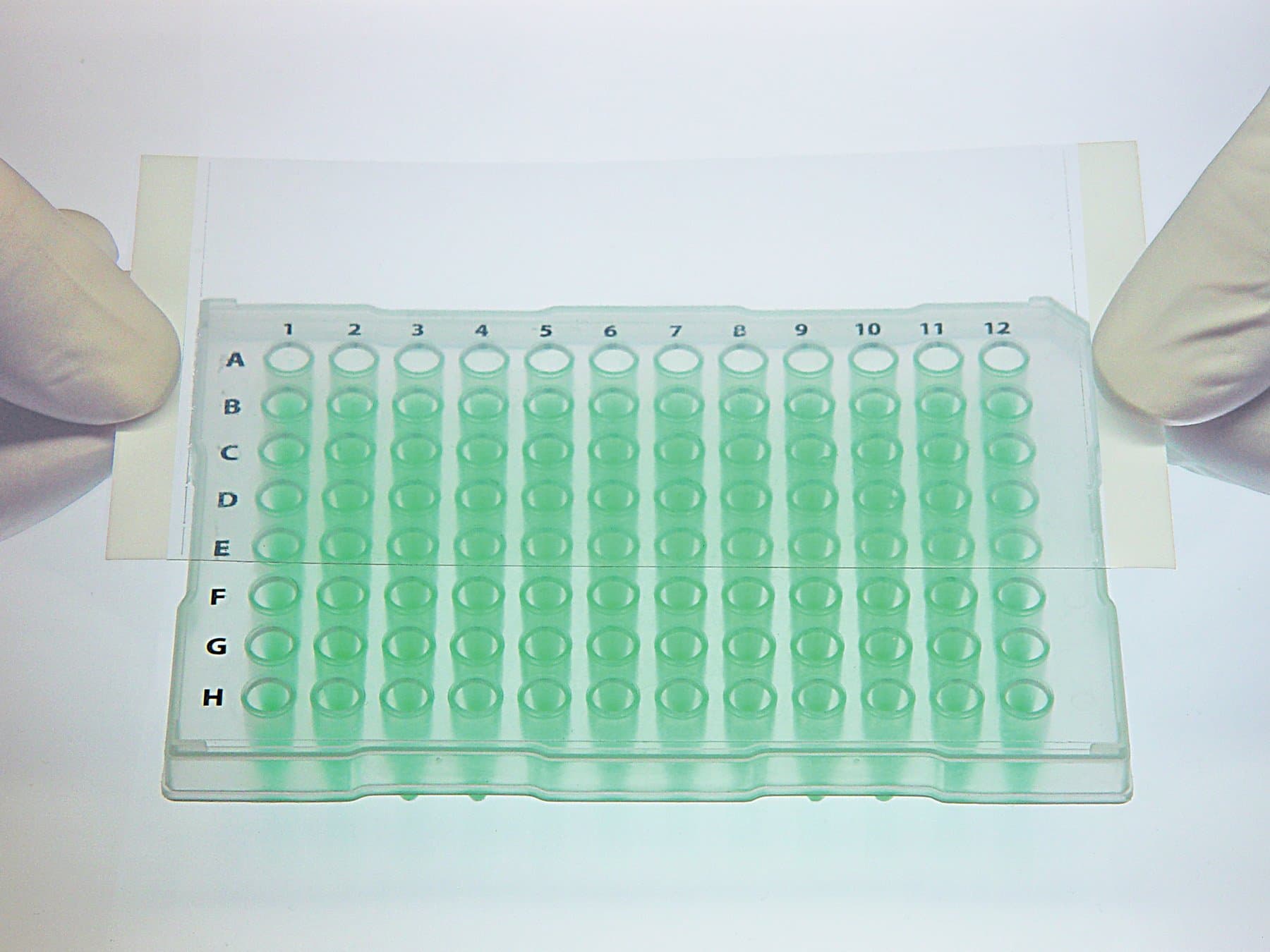
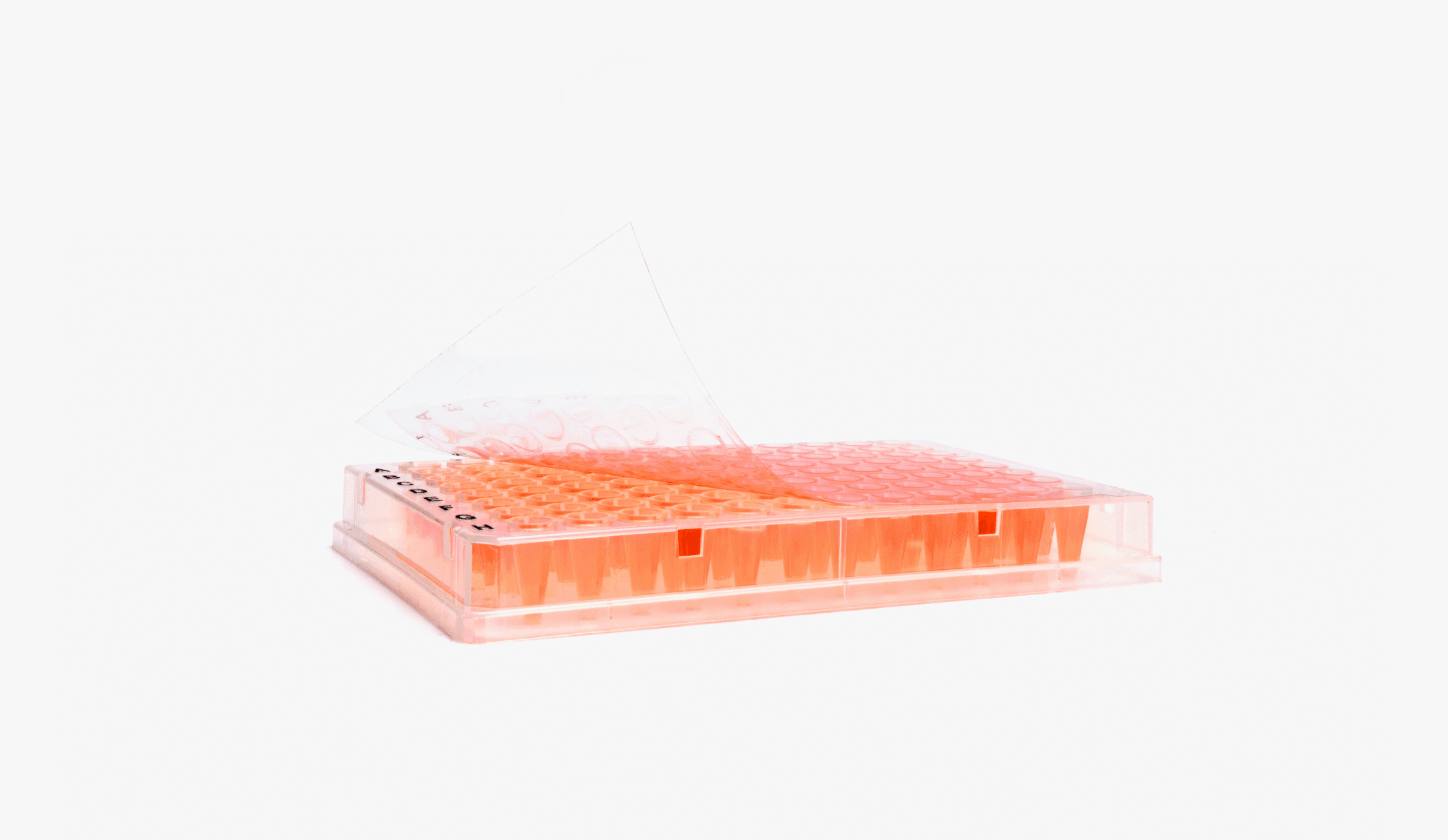
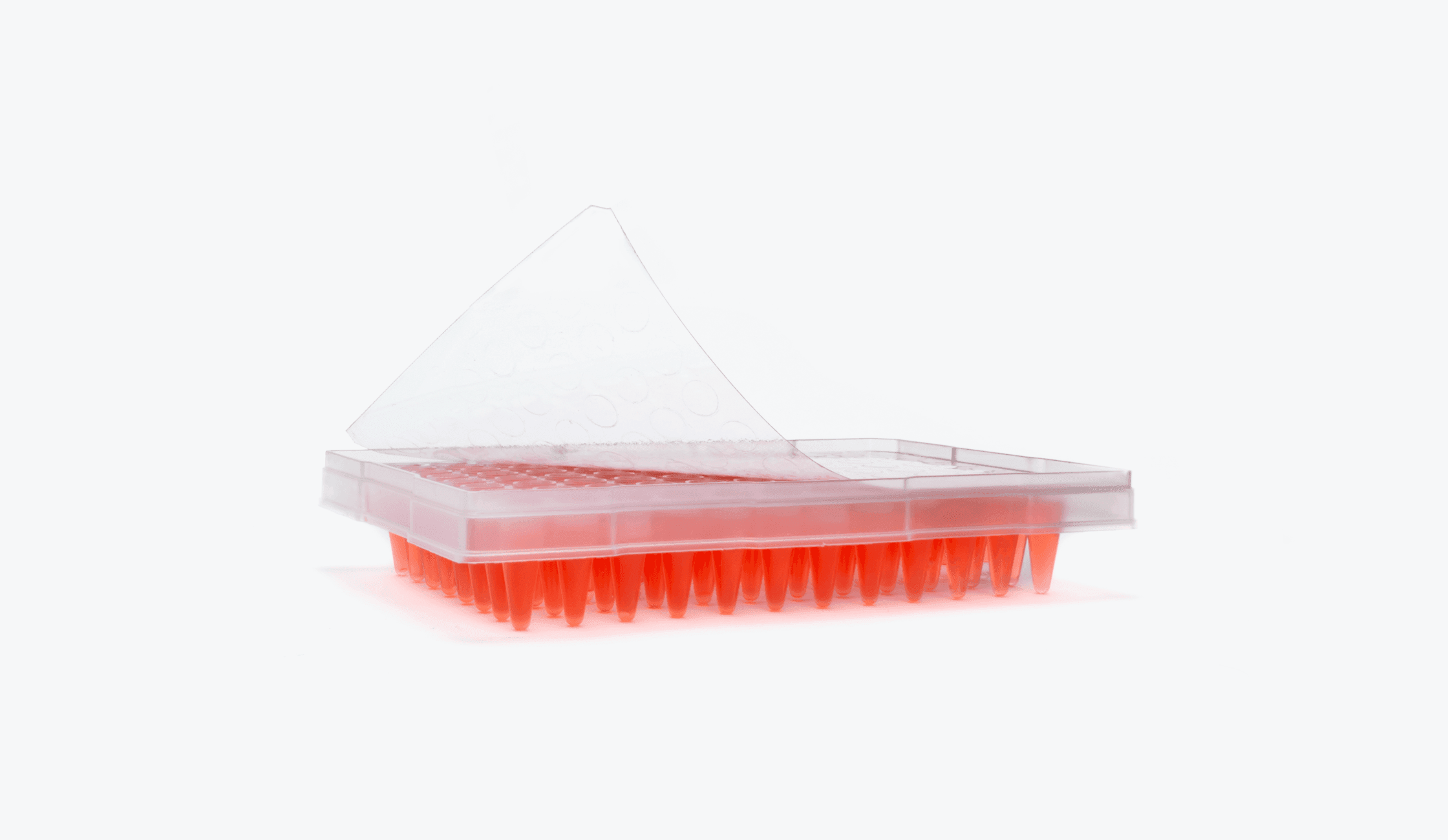
PCR and qPCR sealing films are optically clear microplate seals engineered for thermal cycling — they hold an airtight barrier over 96- and 384-well plates against evaporation, condensation, and cross-well contamination while letting fluorescence pass through for real-time reads. They combine high light transmittance (typically ≥ 90 %), low autofluorescence, evaporation rates around 3 % or less, and a choice of pressure-sensitive adhesive or heat-seal formats to suit standard thermal cyclers and qPCR instruments.

Molecular biologists get application-matched films and direct specialist support from MBP. Request a quote by contacting customerservice@mbpinc.net

PCR & qPCR Film

Per Page:
Sort By:

What are PCR and qPCR sealing films?


PCR and qPCR sealing films are optically clear microplate seals applied to 96- and 384-well PCR plates to create an airtight barrier through every thermal cycle, preventing evaporation, condensation, and cross-well contamination while still letting fluorescence pass through to the qPCR detector. Most are pressure-sensitive adhesive (PSA) or heat-activated films built on polypropylene or polyester (PET) with low-autofluorescence chemistry. Standard formats fit SBS sheets of approximately 137 × 80 mm. Buy from this category whenever the seal sits on a plate that will be thermally cycled or read in real time, not stored or incubated under simple lids.

What you will find:


  • Optical-grade qPCR sealing films for fluorescence-based detection
  • Standard adhesive PCR films for routine thermal cycling
  • 96-well microplate sealing films for standard PCR workflows
  • 384-well compatible sealing films for high-throughput assays
  • High-temperature resistant films for -40°C to 120°C cycling
  • Low-evaporation sealing films for reaction stability
  • DNase/RNase-free films for contamination-sensitive assays


How to choose PCR or qPCR sealing film


Confirm true optical clarity if you read fluorescence
Not every "clear" sealing film has enough optical clarity and low enough autofluorescence for real-time PCR; choose a film specifically rated for qPCR with high light transmittance and no autofluorescence so excitation and emission pass cleanly. Standard storage films can suppress the signal.
Decide between adhesive (PSA) and heat-seal
Pressure-sensitive adhesive films are applied with a roller or paddle at the bench and peel off; heat-seal films bond under a plate sealer at controlled temperature and pressure for the strongest barrier in high-throughput and automated qPCR. PSA suits flexible workflows; heat-seal suits volume.
Match the plate, thermal cycler, and skirt
Confirm the film fits 96- or 384-well plates from your supplier and seats properly under the heated lid of your thermal cycler — full-skirt, semi-skirt, and non-skirt plates have different sealing surfaces. Sheet size near 137 × 80 mm is the SBS norm.
Check chemical and temperature resistance
PCR plate sealers and thermal cyclers reach 105 °C routinely, and some films are rated to 150 °C; check that the film and adhesive withstand the cycler protocol and the master mix without softening, lifting at corners, or leaving residue after peeling.


Specifications context


Quality qPCR films are defined by light transmittance (typically ≥ 90 %), absence of autofluorescence, evaporation rate (commonly ≤ 3 %), thermal tolerance to about 105 °C with high-temperature variants to 150 °C, and a DNase/RNase- and human-DNA-free certification appropriate for amplification. Most are supplied as flat SBS-format sheets around 137 × 80 mm, packed 100 per box; some have perforated end tabs for one-handed peeling. As of 2026, they sit in a low-to-mid price tier, with heat-seal films at the higher end. 


Connect with the MBP team today to find the perfect optical or standard seal for your amplification workflow. Browse the wider sealing films range for post-PCR archiving and reorder today via Quick Order.

FAQ

A PCR sealing film is a thin polymer or polyester sheet with adhesive that bonds to a microplate to create an airtight barrier through the heating and cooling cycles of polymerase chain reaction. It prevents evaporation of the small reaction volumes, stops condensation in the plate lid, and blocks cross-contamination between wells. Optically clear versions allow real-time fluorescence detection through the film without removing the seal.
Standard storage and ELISA sealing films are not validated for qPCR because they often have measurable autofluorescence and lower light transmittance, which can mute or distort the fluorescence signal during real-time detection. Choose a film labeled specifically for qPCR with high transmittance — typically at least 90 % — and zero autofluorescence to ensure accurate Ct values across wells.
Pressure-sensitive adhesive (PSA) films apply by hand with a paddle or roller and are quicker for benchtop runs; heat-seal films are bonded by an automated plate sealer at controlled temperature and pressure and give the tightest, most uniform seal under demanding thermal cycling. Heat-seal is the preferred format for high-throughput qPCR labs and automated liquid handling; PSA suits flexible, lower-throughput workflows.
Standard qPCR sealing films are rated to roughly 105 °C, which covers conventional thermal cycling protocols and the heated lids of most cyclers; high-temperature variants are rated to 150 °C for extended or specialty protocols. Within these ranges films stay bonded, optically stable, and free of residue when peeled. Always check the specific datasheet against the cycler's heated-lid setpoint and the full protocol duration.
PCR sealing films from established lab brands are produced under conditions that certify them DNase-, RNase-, and human-DNA-free, which is essential when amplifying minute amounts of template. Certification appears on the certificate of analysis for each lot. This is the same baseline guarantee as plates and tips used in the same workflow, ensuring the film does not introduce nuclease activity or contaminating template into the reaction.
Reuse of a PCR sealing film is not recommended; once peeled, the adhesive layer no longer reseats uniformly across all wells, which lets evaporation in and allows cross-well contamination through the partially lifted seal. For qPCR in particular the risk of carryover amplicon contamination from a reused film is unacceptable. Apply a fresh film whenever the plate is opened during the workflow.
A PCR sealing film is applied by laying the film flat over a clean, dry plate with the adhesive side down, then pressing firmly with a hand roller or sealing paddle around the rim of every well to remove air gaps and form the bond. Heat-seal films are placed and then run through a plate sealer at the temperature and dwell time on the datasheet. Avoid stretching the film, which lifts corners.
Most modern qPCR sealing films are sized for SBS-format plates — about 137 × 80 mm — and bond cleanly to both 96- and 384-well configurations. The narrower well spacing on 384-well plates places more demand on uniform adhesion, so apply the film with a roller and confirm that the seal is fully seated around every well before the run. Optical clarity matters more on 384-well plates because each well has a smaller read area.
PCR sealing films are ordered through MBP's Quick Order tool or by purchase order, with case and bulk pricing available in USD and CAD on request. MBP ships worldwide from its Houston, Texas office, and a specialist responds directly to confirm optical clarity, sealer compatibility, and thermal rating for the cycler model in use rather than routing the request through a multi-day queue.
We provide the highest quality of products and anytime customer service.
LinkedIn
Featured Categories
online payment
online payment
fast delivery
fast delivery
technical support
technical support
24/7 support
24/7 support
copy right
2026 All Right Reserved