Skirted PCR Plates for Automated and Manual PCR Workflows
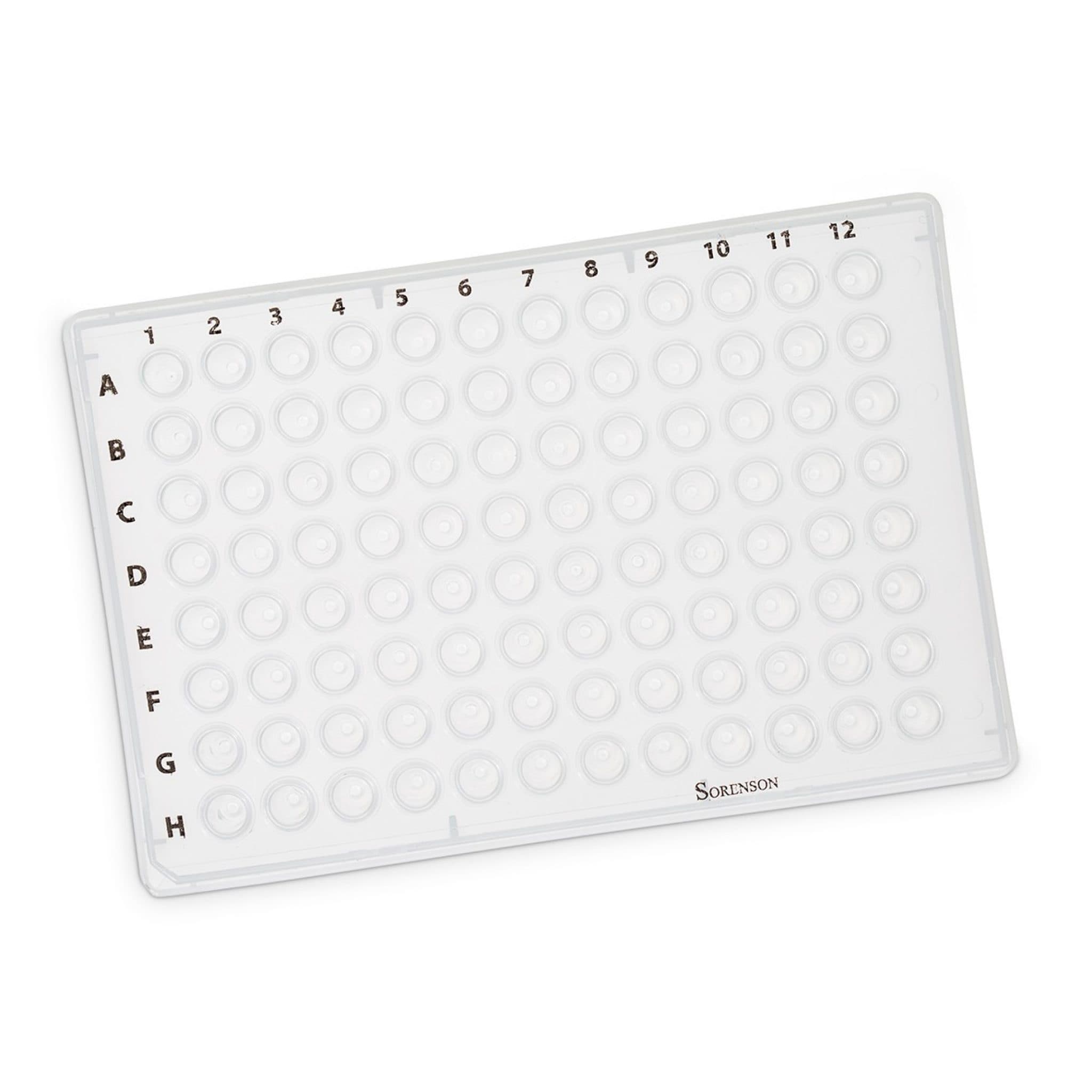
Skirted PCR plates are 96-well thin-wall polypropylene plates with a full-height border conforming to the ANSI/SBS footprint standard (127.76 × 85.47 mm), designed for automated liquid handlers, plate stackers, and high-throughput qPCR and genotyping workflows. Available in standard-profile (0.2 mL) and low-profile (0.1 mL) well geometries; clear, white, and barcoded options support diverse detection and tracking needs.
MBP Inc. supplies skirted PCR plates with PO and Quick Order access for procurement teams at research institutions across the USA and Canada, including registered vendor status at MD Anderson Cancer Center. Request a quote today by contacting customerservice@mbpinc.net
Skirted PCR Plates
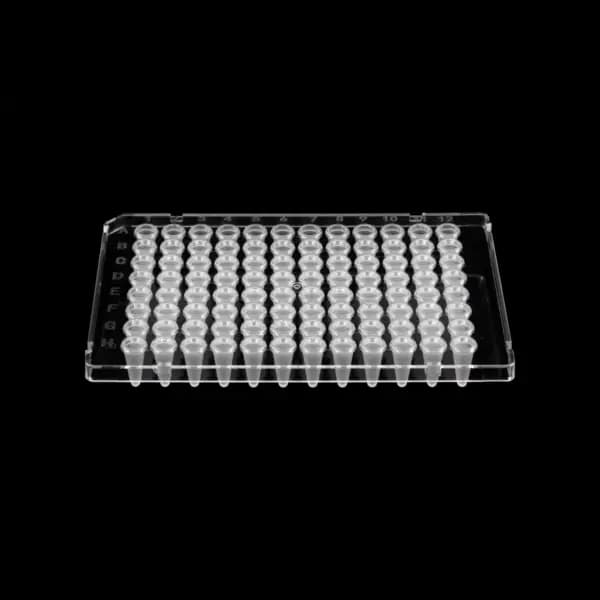
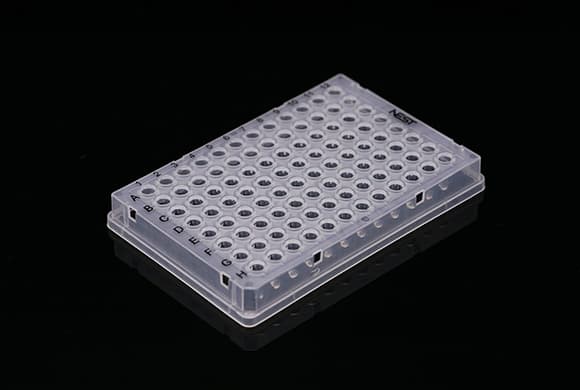
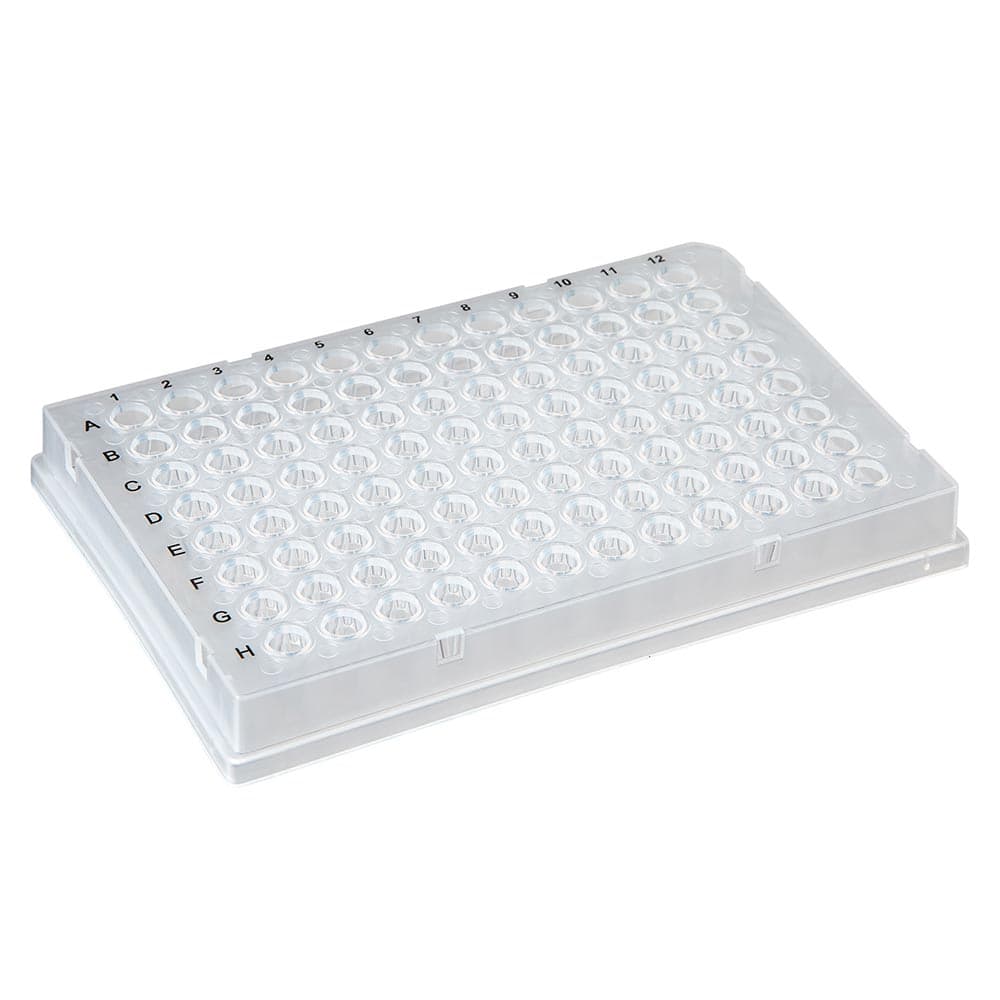
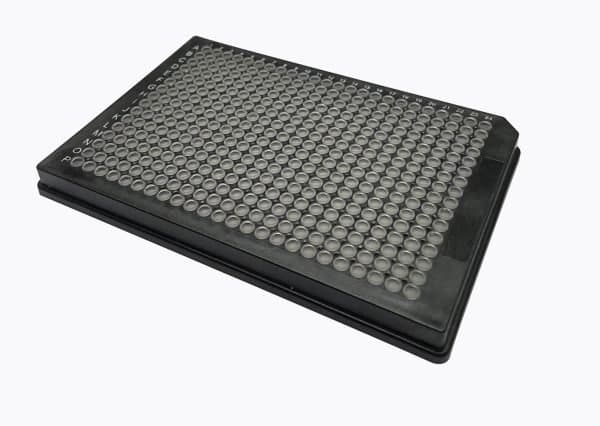
Showing 1 to 5 of 5 results
What Are Skirted PCR Plates?
Skirted PCR plates are 96-well polypropylene thermal cycling plates with a full-height plastic border — the skirt — surrounding the well array. The skirt raises the overall plate height to match the ANSI/SBS microplate footprint standard (127.76 × 85.47 mm external dimensions), creating a uniform grip surface that robotic arms, plate grippers, and automated stackers can handle reliably. They are the required format for liquid-handling automation platforms and high-throughput PCR workflows where consistent plate positioning is critical. Choose fully skirted plates when your workflow involves robotic liquid handling, automated stackers, or plate readers requiring SBS-compliant positioning.
What You Will Find:
-
Hard Shell 384-well PCR Plates – The industry standard for high-throughput screening and automated liquid handling.
-
Hard Shell 96-well PCR Plates – Combining rigidity with a 96-well format for routine yet high-precision workflows.
-
Globe Scientific Full Skirt PCR Plates – Reliable, automation-friendly plates designed for consistent thermal cycling.
-
Full Skirt PCR Plates – Features a full perimeter skirt for superior stability and easy gripping during automated handling.
-
96-well Duo Material PCR Plate– Engineered with dual-material technology to eliminate plate warping and bowing.
-
Skirted 96 Plate, Non-Sterile, Clear Polypropylene – A durable and cost-effective solution for high-volume lab processing.
How to Choose Skirted PCR Plates
Well Profile: Low-Profile vs Standard
Low-profile 0.1 mL wells are the current default for skirted qPCR plates; the reduced well depth minimises dead volume and supports faster thermal ramp rates on fast-block instruments, including Bio-Rad CFX96 Fast, Applied Biosystems QuantStudio, and Roche LightCycler 480. Standard-profile 0.2 mL wells are used with conventional tall-block cyclers and maximise reaction volume capacity.
Colour: Clear, White, or Black
Clear skirted plates are the standard for visual inspection and top-read fluorescence systems. White plates increase qPCR sensitivity by up to 2-fold on bottom-read optical configurations by reflecting fluorescence emission back through the detector. Black plates reduce inter-well optical crosstalk in probe-based assays where background fluorescence must be minimised.
Two-Component vs One-Component Construction
One-component (single polypropylene) skirted plates are cost-effective for general use. Two-component designs combine a polypropylene well array with a polycarbonate skirt to eliminate plate warping at high cycling temperatures, enabling precise robotic positioning even after repeated thermal stress.
Barcoding
Barcoded skirted plates support LIMS integration and automated sample tracking across multi-step workflows. Barcodes are typically laser-etched (permanent) or adhesive-applied; confirm barcode type before integrating with your lab information management system.
Cut Corner Orientation
A cut corner at the H1 position (standard) or A12 position aids correct plate orientation in cyclers and liquid handlers. Confirm the required cut corner with your instrument's loading specification.
Specifications Context
Skirted PCR plates conform to ANSI/SBS (also called ANSI/SLAS 1-2004) footprint standards: 127.76 × 85.47 mm with 9 mm well spacing. Well walls are uniformly thin (0.25–0.35 mm) virgin polypropylene; maximum well volume with adhesive film seal is 0.2 mL for standard and 0.1 mL for low-profile formats. Certified DNase-free, RNase-free, human DNA-free, and PCR inhibitor-free per independent lot testing. Thermo Scientific SuperPlate are the leading references for demanding automation applications. Last updated: June 2026.
If you need help picking the right plate for your system, the MBP team can guide you based on your setup and workflow.
FAQ