Hard Shell PCR Plates for Increased Structural Rigidity
Hard shell PCR plates are two-component 96-well thermal cycling vessels combining a rigid polycarbonate (PC) outer frame with thin-wall polypropylene (PP) wells, engineered to remain warp-free across repeated high-temperature cycling cycles and to support precise robotic positioning. Available in low-profile 0.1 mL and standard 0.2 mL well volumes; clear and white options serve top-read and bottom-read qPCR configurations.
MBP Inc. supplies hard-shell PCR plates to research and clinical labs across the USA and Canada, with PO and Quick Order purchasing available for institutional procurement teams. Contact customerservice@mbpinc.net for further details.
Hard Shell PCR Plates
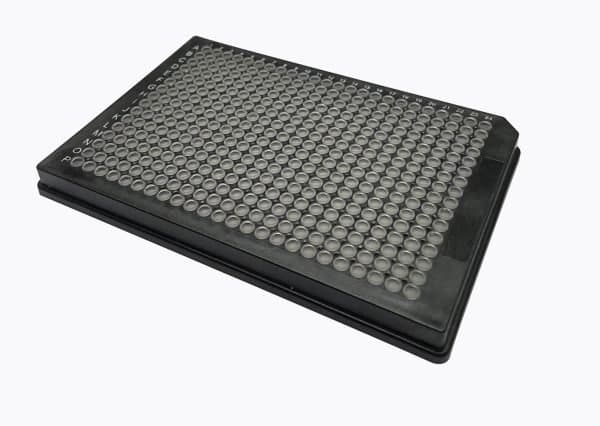
Showing 1 to 1 of 1 results
What Are Hard Shell PCR Plates?
Hard shell PCR plates use a two-component construction: a rigid, high-strength polycarbonate (PC) frame forms the outer shell and skirt, while individual thin-wall polypropylene (PP) wells are insert-moulded or press-fitted into the frame. The polycarbonate shell provides the dimensional rigidity required for automated robotic handling and eliminates the plate warping that occurs in single-component polypropylene plates subjected to repeated 95°C denaturation cycles. The PP wells retain the thermal conductivity and PCR-compatible chemistry of standard polypropylene reaction vessels. Choose hard shell plates when warp prevention and robotic precision positioning are non-negotiable, particularly for high-cycle qPCR and automated NGS library prep.
What you will find:
- 384-well hard-shell PCR plates designed for high-throughput PCR and qPCR workflows.
- Rigid plate construction to help minimize warping during thermal cycling and robotic handling.
- Standard SBS-format plates compatible with many automated liquid handling systems and thermal cyclers.
- Plate options suitable for low-volume reaction setups common in high-density assay formats.
- Configurations designed to support consistent sample processing across large numbers of reactions.
How to Choose Hard-Shell PCR Plates
Well Volume and Profile
Low-profile 0.1 mL (100 µL working volume) hard shell plates are the standard for fast-block qPCR instruments, including Bio-Rad CFX96 Fast, Applied Biosystems QuantStudio, and Roche LightCycler 480, where reduced well depth shortens the thermal path and enables faster ramp rates. Standard-profile 0.2 mL hard shell plates are used with conventional tall-block cyclers for larger reaction volumes.
Colour: Clear, White, or Black
Clear hard shell plates are standard for top-read fluorescence and end-point PCR. White PP wells increase qPCR fluorescence sensitivity on bottom-read optical configurations by reflecting emission signal back through the detector — a meaningful advantage for low-abundance targets. Black plates minimise inter-well optical crosstalk in multiplexed probe-based assays.
Raised Rim Design
Hard shell plates typically feature a raised rim around each well that creates a compression seal with adhesive films, heat seals, and cap strips, reducing edge-well evaporation — a primary cause of uneven Ct values across the plate.
Barcoding and Alphanumeric Labelling
Hard shell plates are the preferred format for barcode integration due to the flat, rigid skirt surface. Laser-etched and adhesive barcodes are available for LIMS integration; black alphanumeric well lettering aids orientation during manual plate setup.
Sealing Compatibility
Hard shell plates are compatible with heat sealers, pressure sealers, adhesive optical films, and aluminium foil seals; the PC frame provides rigid support for even heat sealer platen contact.
Specifications Context
The two-component PC/PP construction delivers a plate that is significantly more dimensionally stable than single-component PP plates after repeated 95°C cycling. ANSI/SBS footprint (127.76 × 85.47 mm) with 9 mm well spacing. PP wells are certified DNase-free, RNase-free, human DNA-free, and PCR inhibitor-free per independent lot testing. Bio-Rad Hard-Shell Low-Profile Skirted (HSP9655 series) and Thermo Scientific SuperPlate are the leading reference formats for demanding automation. Equivalent hard-shell plates from Globe Scientific and Nest Scientific lines provide research-grade performance at a lower cost.
Share your current workflow with the MBP team, and we’ll help you find the right solution so you can focus on results, not problems.
FAQ