Product Filters

Crosslinking, Labeling, and Protein Modification Reagents for Protein Interaction and Conjugation Studies


Crosslinking, Labeling and Protein Modification covers the chemical reagents used to covalently bond protein interaction partners together, attach a label to a purified protein, or otherwise modify a protein’s structure for a specific study. Homobifunctional crosslinkers such as DSS and BS3 link identical functional groups, typically amine-to-amine, while heterobifunctional crosslinkers link two different functional groups for more controlled, sequential conjugation. Academic and core laboratories studying protein–protein interactions or developing custom protein conjugates can benefit from chemistry-specific guidance when selecting crosslinker length, reactivity, and labeling strategy.

Explore available crosslinking and protein modification reagents or request a quotation by contacting customerservice@mbpinc.net. Our team can help identify the appropriate crosslinker chemistry and labeling approach for your protein interaction or conjugation workflow.

Crosslinking, Labeling and Protein Modification
Per Page:
Sort By:
Ni-IDA Agarose Resins
List Price:
USD105.55 - USD1,766.55
Online Price:
USD75.39 - USD1,261.82
Your Price:

Showing 1 to 1 of 1 results

What are Protein Crosslinking, Labeling, and Modification Reagents?


These reagents covalently bond proteins together or attach functional labels to proteins for downstream analysis. They are broadly divided into homobifunctional and heterobifunctional crosslinkers based on the type of reactive groups they contain.


What you will find:


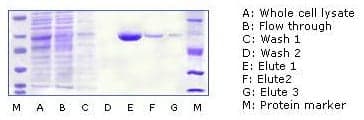
  • Ni-IDA Agarose Resins: High-capacity purification systems (G250) utilizing immobilized Ni2+ cations and iminodiacetic acid groups for the rapid, one-step isolation of His-tagged proteins under both native and denaturing conditions.

  • Versatile Purification Formats: Ready-to-use resins suitable for batch or gravity-flow chromatography, offering an economical and reusable solution for antibody purification and the study of protein-DNA interactions at any scale.


How to Choose Crosslinking and Labeling Reagents


Decide Between Homobifunctional and Heterobifunctional Chemistry

Homobifunctional crosslinkers contain identical reactive groups at both ends and are used to stabilize or capture existing protein interactions. Heterobifunctional crosslinkers contain two different reactive groups, allowing controlled stepwise conjugation between specific molecules.

Choose Water-Soluble Crosslinkers for Aqueous or Cellular Work

BS3 is the water-soluble form of DSS and is preferred for reactions in aqueous buffers or intact cell systems while maintaining the same chemistry and spacer length.

Match Spacer Arm Length to Molecular Distance

The spacer arm determines the maximum distance between two reactive groups that can be linked. Incorrect spacing can reduce efficiency or increase non-specific crosslinking.

Use Heterobifunctional Chemistry for Defined Conjugates

Sulfo-SMCC enables sequential coupling of amine-containing molecules with sulfhydryl-containing partners, commonly used for antibody-enzyme or antibody-carrier conjugation workflows.

Consider Cleavable Crosslinkers for Reversible Studies

Cleavable crosslinkers such as DTSSP contain disulfide bonds that can be reduced later, enabling separation of linked proteins for downstream analysis such as mass spectrometry.


Specifications Context


DSS has an 11.4 Å spacer arm that defines the maximum distance between linked amine groups, while BS3 provides the same chemistry with improved water solubility for aqueous applications. Cleavable crosslinkers are increasingly used in mass spectrometry workflows for mapping protein-protein interactions.

Streamline your protein modification workflows—contact the MBP team today for a quote on our professional Ni-IDA resin solutions.

FAQ

A homobifunctional crosslinker has identical reactive groups at both ends, typically two amine-reactive NHS esters, and is primarily used to capture proteins already closely associated in a binding relationship since it can't control which two molecules link together. A heterobifunctional crosslinker has two different reactive groups, commonly an NHS ester and a maleimide, allowing controlled, sequential conjugation of two specific, predetermined molecules rather than relying on existing proximity.
BS3 is the sulfo-NHS version of DSS, sharing the same reactive chemistry and spacer arm length but offering substantially higher water solubility, which makes it preferable for crosslinking reactions performed directly in aqueous buffer or with intact cells. DSS is not directly water-soluble, though once dissolved it can permeate cell membranes to crosslink inside cells, which can be an advantage for some specific intracellular crosslinking applications.
A crosslinker's spacer arm length defines the maximum molecular distance it can bridge between the two reactive groups it attaches to, so it sets an upper limit on how far apart two binding partners can be while still being captured by that specific crosslinker. Choosing a crosslinker with an appropriate spacer arm length for your specific interaction of interest is part of optimizing a crosslinking experiment's sensitivity.
Sulfo-SMCC has an NHS ester group that reacts with primary amines on one protein and a maleimide group that reacts with a sulfhydryl group on a second protein, allowing a sequential, two-step conjugation, such as linking a purified antibody to an enzyme like HRP, without unwanted antibody-to-antibody or enzyme-to-enzyme crosslinking. The NHS ester, being less stable in aqueous solution, is typically reacted to the first protein before excess reagent is removed and the sulfhydryl coupling step proceeds.
A cleavable crosslinker, such as DTSSP, includes a disulfide bond within its structure that can be broken under reducing conditions, allowing the crosslinked partners to be separated again after the crosslinking reaction has captured an interaction of interest. This is particularly useful in crosslinking mass spectrometry workflows, where separating and identifying the originally crosslinked partners after the fact is part of the analysis.
Because a homobifunctional crosslinker's two reactive groups are identical, it can react with any available amine on any nearby protein molecule, including multiple copies of the same protein, leading to unwanted self-conjugation or polymerization rather than a clean, defined product. This is why homobifunctional crosslinkers are generally reserved for capturing proteins already in a genuine binding relationship rather than for building a defined, single-pair conjugate.
Photoreactive crosslinkers contain a diazirine group that remains inert until activated by long-wave UV light, generating a reactive carbene intermediate that can crosslink to nearby molecules at the moment of activation, which allows for precisely timed, in vivo crosslinking inside living cells. This timing control is valuable for capturing transient or condition-specific protein interactions that a non-photoactivatable crosslinker might miss or capture too broadly.
Yes, MBP offers academic and bulk pricing for homobifunctional and heterobifunctional crosslinkers, cleavable crosslinkers, and photoreactive labeling reagents. Orders ship from MBP's US office in Houston, Texas, with stock available in both USD and CAD, and specialist support is available for chemistry selection.
We provide the highest quality of products and anytime customer service.
Featured Categories
    online payment
    online payment
    fast delivery
    fast delivery
    technical support
    technical support
    24/7 support
    24/7 support
    copy right
    2026 All Right Reserved