Reverse Transcriptase Enzymes for cDNA Synthesis and RT-PCR
Reverse transcriptase enzymes catalyse the synthesis of complementary DNA (cDNA) from an RNA template, the foundational step for RT-PCR, RT-qPCR, and cDNA library construction. Available as M-MLV-derived (including RNase H-minus point mutants) and AMV-derived formats, these enzymes differ in thermostability, RNase H activity, and tolerance of structured RNA templates.
Academic researchers selecting an enzyme for a specific downstream application benefit from MBP's range spanning standard and enhanced-performance reverse transcriptase formats. Contact customerservice@mbpinc.net to request a quote today!
Reverse Transcriptase
Showing 1 to 5 of 5 results
What Is Reverse Transcriptase?
Reverse transcriptase is an RNA-dependent DNA polymerase that synthesizes a complementary DNA (cDNA) strand using an RNA template, providing the essential first step for RT-PCR, RT-qPCR, cDNA library construction, and gene expression analysis. Reverse transcriptases differ in thermostability, processivity, RNase H activity, and compatibility with challenging RNA templates. Selecting the appropriate enzyme depends on your RNA quality, transcript length, and downstream application.
What you will find:
- Reverse transcriptase-based systems designed to support cDNA synthesis across a range of RNA templates, including workflows involving structured or challenging RNA.
- One-step RT-PCR and RT-qPCR kits featuring enzyme systems designed to reduce non-specific amplification through optimized reaction setup and enzyme activation strategies.
- High-efficiency reverse transcription and RT-PCR chemistries suitable for low-abundance RNA inputs and sensitive gene expression analysis.
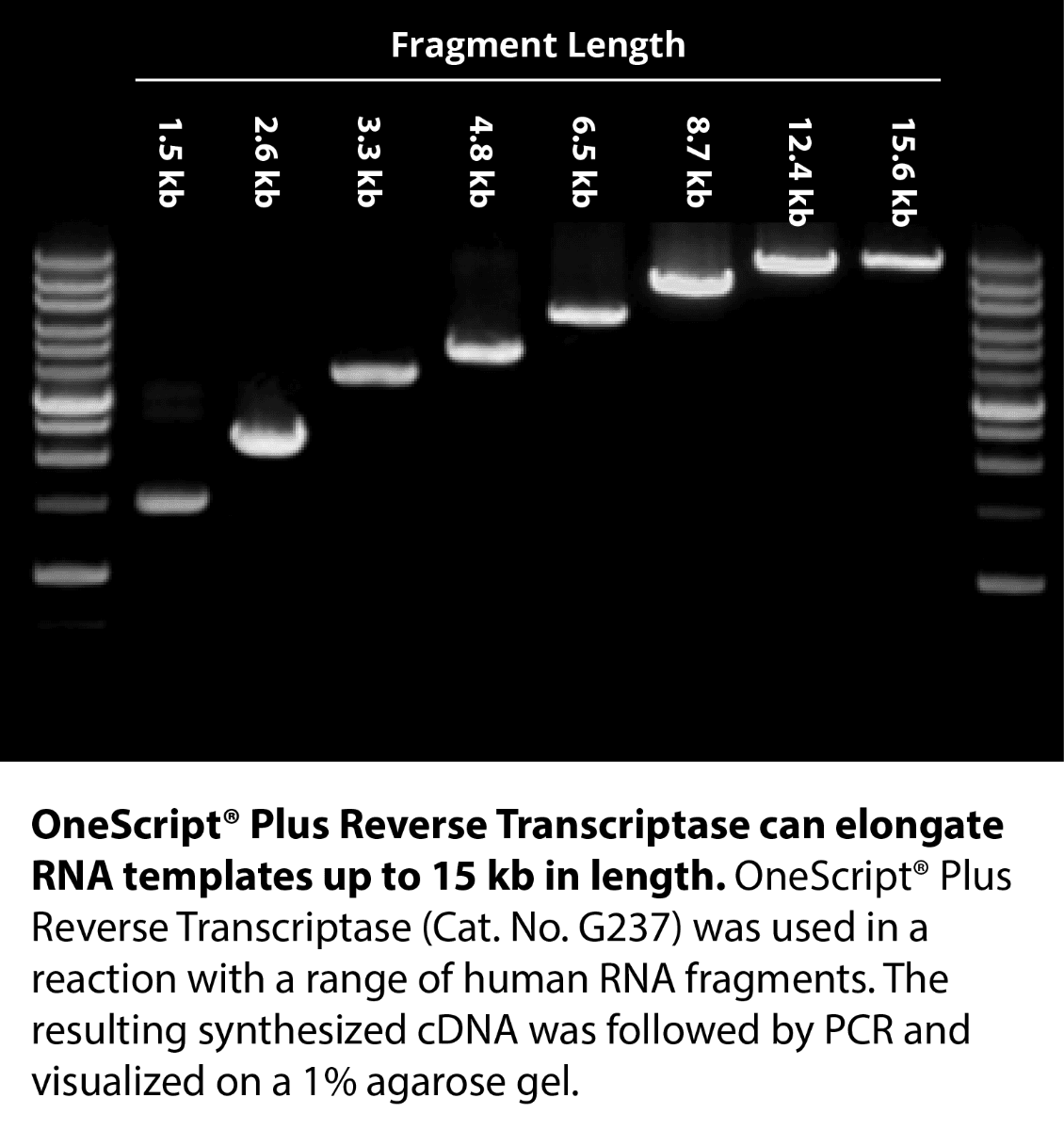
- cDNA synthesis and RT-PCR systems supporting a range of transcript lengths depending on enzyme selection and reaction conditions.
- Thermostable and high-performance reverse transcription systems designed to improve cDNA yield and workflow reliability across RNA applications.
How to Choose a Reverse Transcriptase
Enzyme Selection
Reverse transcriptases differ in thermostability, RNase H activity, processivity, and compatibility with different RNA templates. Select an enzyme that matches your RNA quality, transcript length, and downstream application requirements.
RNase H Activity
Reverse transcriptases with reduced RNase H activity minimize RNA template degradation during cDNA synthesis, helping improve the yield of longer cDNA products for applications such as full-length transcript analysis and cDNA library preparation.
Thermostability
Thermostable reverse transcriptases can operate at higher reaction temperatures, helping reduce RNA secondary structure and improving cDNA synthesis from GC-rich or highly structured RNA templates.
Template Length and Application
Choose an enzyme validated for your intended transcript length and downstream workflow, whether performing routine RT-PCR, quantitative RT-qPCR, full-length cDNA synthesis, or library preparation.
Workflow Compatibility
Consider whether a stand-alone reverse transcriptase or an integrated one-step RT-PCR system best fits your workflow, throughput requirements, and downstream amplification strategy.
Specifications Context
Reverse transcriptase enzymes catalyze the synthesis of complementary DNA (cDNA) from RNA templates, enabling downstream PCR- and qPCR-based analysis of gene expression. Modern reverse transcriptases are available with varying levels of thermostability, processivity, and RNase H activity to support applications ranging from routine first-strand cDNA synthesis to amplification of structured or low-abundance RNA targets. Most enzymes are supplied for storage at −20 °C, and RNase-free handling practices are recommended throughout RNA workflows to preserve sample integrity and maximize cDNA yield.
Contact the expert team at MBP today and get research-grade reverse transcription enzymes for your lab.
FAQ