Insect RNA Extraction Kits for Arthropod and Vector Biology
Insect RNA extraction kits isolate total RNA, including small RNAs ≥17 nt from mosquitoes, ticks, bees, lice, Drosophila melanogaster, and other arthropods using ultra-high-density Zymo-Spin silica-membrane columns.
MBP carries Zymo Research Quick-RNA Tissue/Insect kits used in vector surveillance and arbovirus research at registered vendor institutions, including Howard Hughes Medical Institute, Vanderbilt University, and MD Anderson Cancer Center. Request a quote today by contacting customerservice@mbpinc.net.
Insect RNA
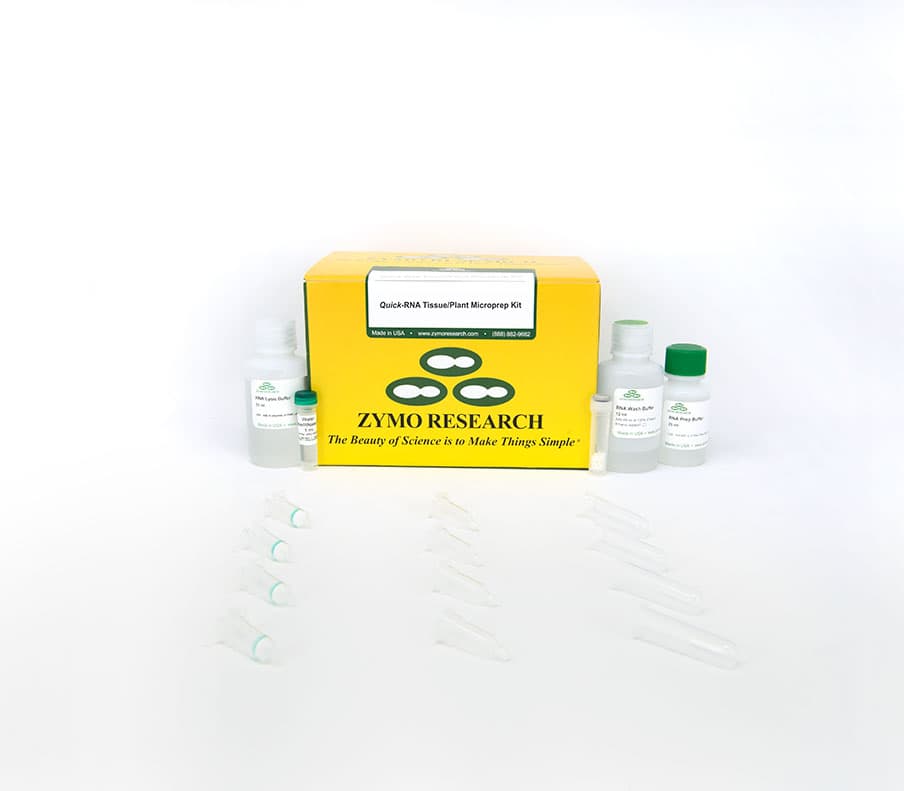
Showing 1 to 1 of 1 results
What are Insect RNA Extraction Kits?
Insect RNA extraction kits isolate total RNA from arthropod and insect specimens - mosquitoes, ticks, bees, lice, Drosophila melanogaster, and other chitin-cuticle invertebrates - using ultra-high-density BashingBead mechanical homogenization in a chaotropic lysis buffer, followed by silica-membrane spin-column purification. The cuticle of insects and arthropods is a cross-linked chitinous matrix that completely resists enzymatic lysis buffers designed for mammalian cells; BashingBead lysis at high speed is the only reliable method for complete disruption of whole insect specimens and yields total RNA including small RNAs >=17 nt. Choose an insect-specific RNA kit whenever your sample is a whole insect specimen, dissected arthropod tissue, or pooled insects from vector surveillance programs - standard tissue RNA kits produce unacceptable yields from chitin-walled specimens.
What you will find:
- Spin-column RNA purification systems designed for the recovery of high-quality total RNA from difficult tissue samples.
- Ultra-clean Zymo-Spin™ column technology that minimizes contaminant carryover and supports reliable downstream analysis.
- Tissue RNA extraction solutions optimized for efficient lysis and purification from challenging biological specimens.
- High-purity RNA isolation workflows suitable for RT-PCR, qPCR, RNA sequencing, and gene expression studies.
- Research-grade total RNA preparation products that deliver consistent performance across a wide range of tissue types.
How to Choose an Insect RNA Extraction Kit
Bead Tube Format and Input Size
The Zymo Quick-RNA Tissue/Insect Microprep Kit includes ZR BashingBead Lysis Tubes pre-loaded with 0.5 mm beads optimized for insect cuticle disruption, accepting specimens from a single insect up to 10 mg of tissue. For pooled mosquito surveillance (10-50 insects per tube), use a larger lysis tube format with scaled bead and buffer volumes; contact MBP's technical team for pooling protocol guidance.
Small RNA Retention
The two-column architecture of the Zymo Tissue/Insect kit uses a Zymo-Spin IIIC column to remove DNA and a Zymo-Spin IC column to capture total RNA, including miRNA and siRNA >=17 nt. This is essential for Drosophila immunity studies (siRNA pathway), piRNA biology in mosquito germ cells, and arbovirus-vector RNA interference research, where small RNAs are primary effectors.
Elution Volume
Elute in 6-25 ul for concentrated RNA from single small insects (single mosquito, single Drosophila adult). For larger specimens (5-10 mg tick tissue), elute in 25-50 ul to maximize yield. The minimum elution volume of 6 ul provides highly concentrated RNA for sensitive RT-qPCR assays requiring as little as 1-2 ul input.
Sample Stabilization Format
For field work, Zymo DNA/RNA Shield preserves insect specimens at ambient temperature for up to 30 days, enabling room-temperature transport from field collection sites before laboratory extraction. This eliminates the cold-chain dependency that complicates mosquito surveillance in resource-limited or remote settings.
Arbovirus Co-Detection
For vector surveillance applications detecting dengue, Zika, chikungunya, or West Nile virus by RT-qPCR in pooled mosquitoes, confirm that the kit's lysis buffer simultaneously inactivates the target arboviruses. Kits with chaotropic guanidinium buffers achieve pathogen inactivation at the point of lysis, enabling safe processing of potentially infectious field-collected specimens.
Specifications Context
Quality targets for insect RNA extractions: A260/A280 >= 1.8, A260/A230 >= 1.8, and RIN >= 7 from fresh or properly stored specimens. The Zymo Quick-RNA Tissue/Insect Microprep Kit yields up to 10 ug total RNA from a single extraction and produces RNA ready for NGS, RT-PCR, microarray, and hybridization. This kit is widely used in vector biology laboratories studying Aedes aegypti antiviral immunity and Anopheles gambiae midgut transcriptomics, with applications published by groups at institutions including Howard Hughes Medical Institute and Vanderbilt University. For field-collected specimens, DNA/RNA Shield stabilization is cited in published surveillance protocols as the preferred alternative to cold-chain transport of live or frozen mosquitoes.
MBP's specialist team can help match kit chemistry, format, and throughput to your sample type and downstream application. Contact the MBP team for personalized guidance.
FAQ