Spin-Column Environmental RNA Kits for Metatranscriptomics
Spin-column environmental RNA extraction kits purify total RNA from soil, fecal material, biofilm, water concentrates, and plant tissue in approximately 2 hours using bead-beating lysis and silica-membrane columns with specialized inhibitor-removal wash steps for humic acids and polyphenols. Kits process 0.1–0.5 g per extraction and elute RNA ready for RT-qPCR and RNA-seq.
MBP carries Zymo Research Quick-RNA Fecal/Soil Microbe Microprep and ZymoBIOMICS DNA/RNA Miniprep kits, available to registered vendors including Howard Hughes Medical Institute, Vanderbilt University, and MD Anderson Cancer Center. Request a quote today by contacting customerservice@mbpinc.net.
Spin-Column
Showing 1 to 3 of 3 results
What are Spin-Column Environmental RNA Extraction Kits?
Spin-column environmental RNA extraction kits purify total RNA from soil, fecal material, water concentrates, biofilm, and plant tissue using bead-beating mechanical disruption in a chaotropic lysis buffer, followed by silica-membrane column purification incorporating inhibitor-removal wash steps to eliminate humic acids, polyphenols, and other PCR inhibitors co-extracted from environmental matrices. Kits process 0.1-0.5 g of sample per extraction and elute RNA in 30-100 ul of RNase-free water in approximately 2 hours, producing RNA suitable for RT-qPCR, microarray, and RNA-seq metatranscriptomic workflows. Choose the spin-column format for environmental RNA when processing 1-24 samples per day, when the sample type is soil, feces, or biofilm, or when standard bacterial/fungal RNA kits produce inhibited RT-qPCR results from environmental matrices.
What you will find:
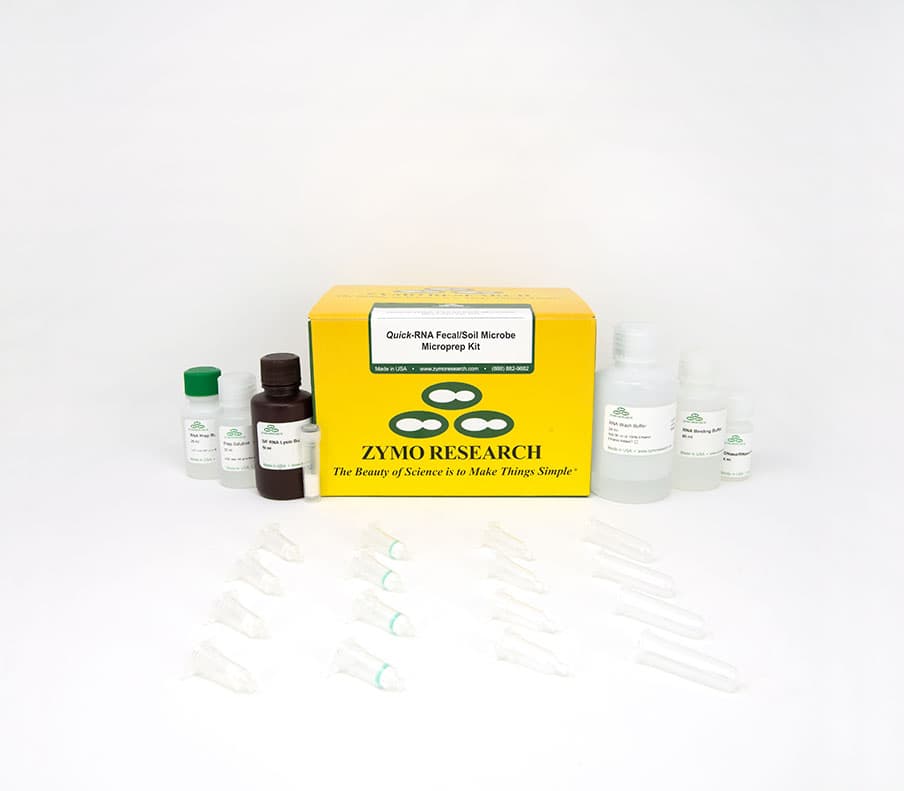
- ZR Soil/Fecal RNA MicroPrep Kit for efficient recovery of inhibitor-free cellular RNA from challenging soil and fecal samples.
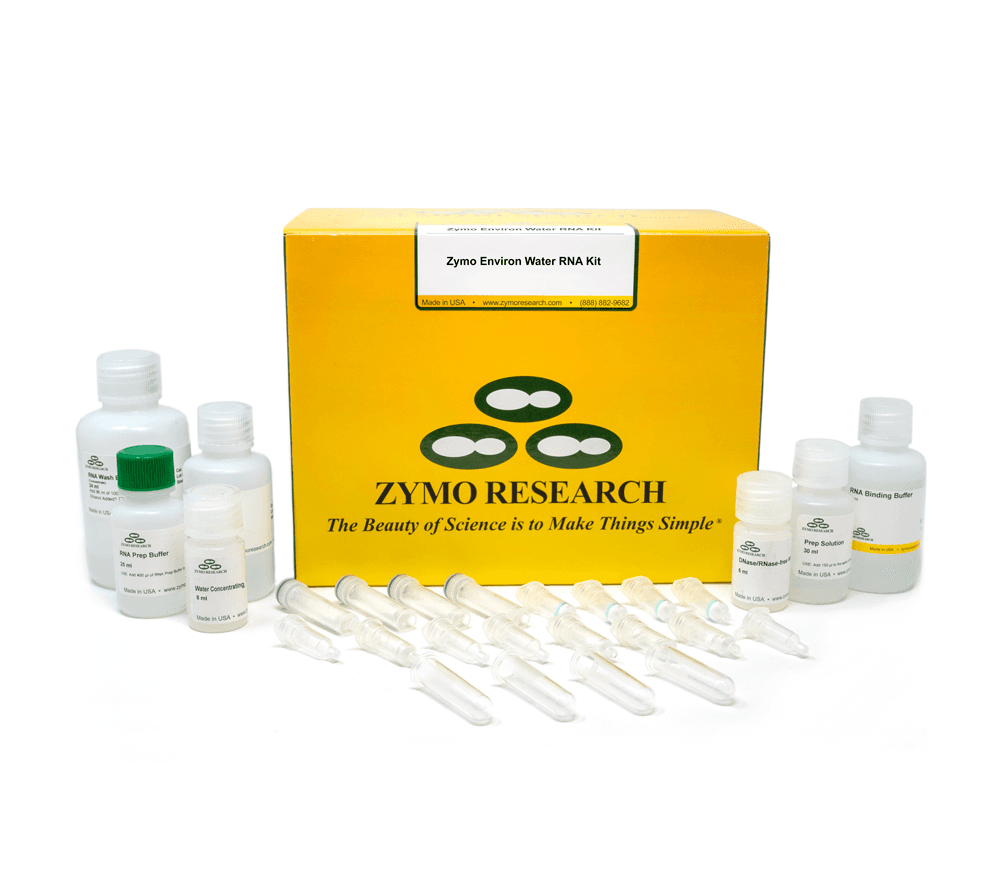
- Zymo Environ Water RNA Kit for purification of microbial RNA from turbid water samples used in environmental monitoring and microbiome research.
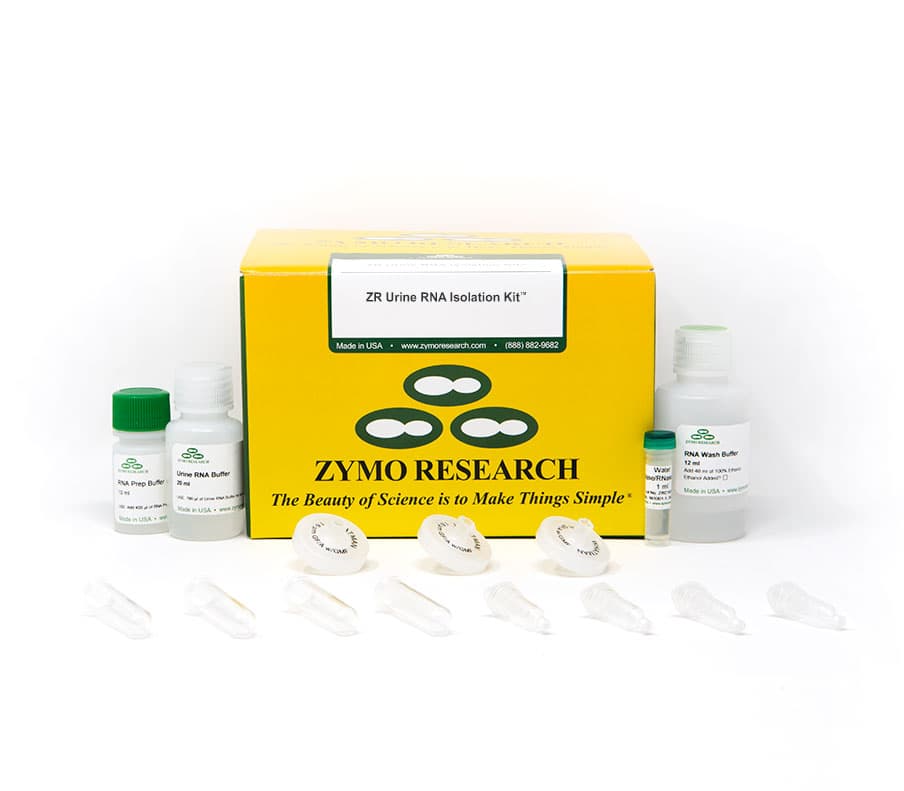
- ZR Urine RNA Isolation Kit™ for rapid extraction of high-quality total RNA from urine using silica spin-column technology.
- RNA purification solutions tailored to environmental and liquid biopsy sample types with distinct processing requirements.
- Specialized extraction workflows designed to remove contaminants that can interfere with downstream molecular analyses.
- High-quality RNA isolation products suitable for RT-PCR, qPCR, sequencing, and gene expression studies.
How to Choose a Spin-Column Environmental RNA Kit
Inhibitor Load of Your Sample Type
High-humic soils (peat, forest soils, dark topsoil) require kits with dedicated IRT or inhibitor-precipitating wash steps, such as the QIAGEN RNeasy PowerSoil Total RNA Kit. For fecal and biofilm samples with lower humic content, the faster Zymo Quick-RNA Fecal/Soil Microbe Microprep Kit is sufficient. An A260/A230 ratio < 1.5 in the eluate is a direct signal that the kit's inhibitor removal is insufficient for your matrix.
Protocol Time and Throughput
The Zymo Fecal/Soil Microprep Kit extracts in approximately 2 hours using mini-spin columns. The QIAGEN PowerSoil Total RNA Kit takes 5-7 hours but delivers higher RIN values for long-read sequencing applications. For batches of more than 12 samples per day, PowerBead Pro or Zymo's mini-column format with a vortex adapter is faster per sample than protocols requiring individual mechanical homogenization steps.
Downstream Application: Short-read vs. Long-read Sequencing
For short-read RNA-seq (Illumina), RIN >= 5 is generally sufficient because library preparation using random hexamer priming tolerates fragmented RNA. For Oxford Nanopore direct RNA sequencing, which reads intact RNA molecules, RIN >= 7 is required; only the QIAGEN PowerSoil kit consistently achieves this benchmark across diverse soil types in published comparisons.
Bead Type and Cell Disruption
Soil and fecal kits use ceramic or glass beads at 0.1-0.5 mm diameter. Confirm the kit includes both 0.1 mm and 0.5 mm beads to ensure unbiased lysis of Gram-negative bacteria (disrupted efficiently by 0.1 mm beads) and Gram-positive bacteria and fungi (requiring 0.5 mm beads) in the same sample. Single-bead-size kits can produce a bias toward Gram-negative recovery in mixed environmental communities.
Compatibility with rRNA Depletion
Residual inhibitors from soil RNA extract can impair enzymatic rRNA depletion reactions. If initial rRNA depletion efficiency is low (<90%), re-clean the extract with a Zymo RNA Clean & Concentrator-5 kit before repeating the depletion reaction. Check kit-specific guidance from your rRNA depletion kit supplier.
Specifications Context
Key benchmarks for spin-column environmental RNA: A260/A280 >= 1.8, A260/A230 >= 1.5 (target >= 1.8 for long-read sequencing), and concentration >= 10 ng/ul in the eluate for RT-qPCR assays. A 2024 peer-reviewed comparison in Microbiology Society Journals specifically evaluated five commercial soil RNA extraction kits for Oxford Nanopore metatranscriptomics and identified the QIAGEN PowerSoil kit as the highest performer across RNA yield, integrity, and purity metrics. Soil metatranscriptomics is increasingly used in climate change research - linking active microbial community function to carbon and nitrogen cycling - and environmental RNA extraction quality is cited in published methods as the rate-limiting step for generating sequencing-ready RNA from soil.
Contact the expert team at MBP Inc. today and get high-yield spin-column systems for your lab.
FAQ