Cell-Free RNA Extraction Kits for cfRNA and Liquid Biopsy
Cell-free RNA extraction kits isolate circulating microRNAs, long non-coding RNAs, exosomal RNA, and mRNA fragments from blood plasma, serum, urine, and cerebrospinal fluid—matrices where total RNA concentrations are 1–100 ng/ml, approximately 1,000-fold lower than in cell lysates. Kits use carrier RNA to prevent adsorption loss and process 200 µl to 4 ml of cell-free input per extraction.
MBP supplies cfRNA kits for liquid biopsy and biomarker research to registered vendors including Howard Hughes Medical Institute, Vanderbilt University, and MD Anderson Cancer Center. Request a quote by contacting customerservice@mbpinc.net.
Cell-free RNA
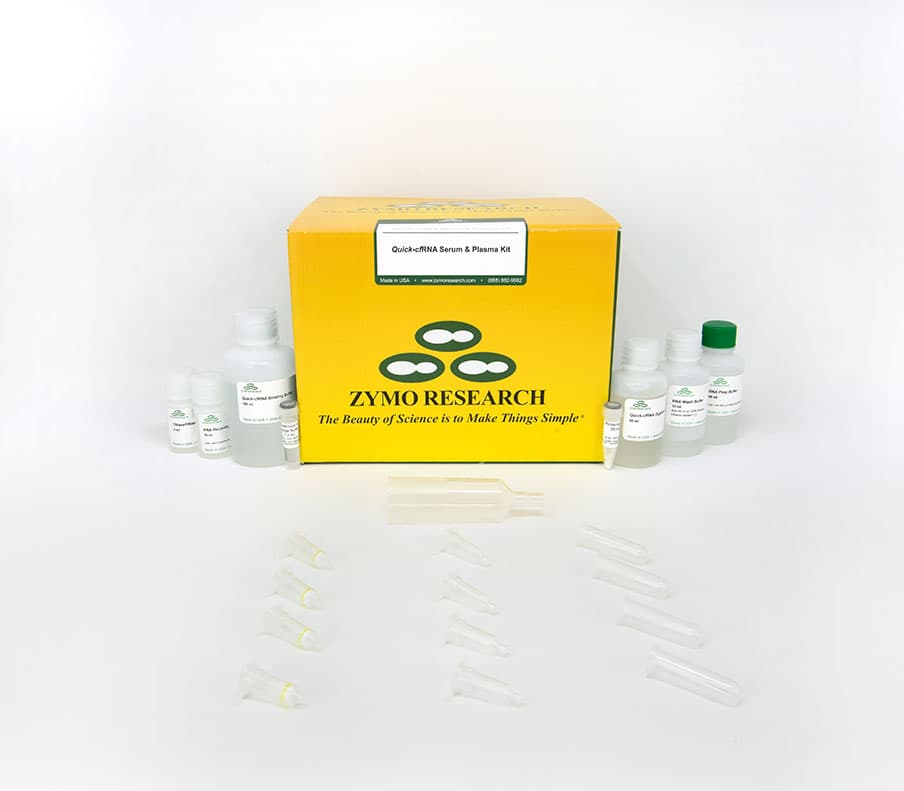
Showing 1 to 1 of 1 results
What are Cell-Free RNA Extraction Kits?
Cell-free RNA (cfRNA) extraction kits isolate circulating RNA molecules - microRNAs, long non-coding RNAs, exosomal RNA, and mRNA fragments - from blood plasma, serum, urine, cerebrospinal fluid, and saliva, where endogenous RNA concentrations range from 1-100 ng/ml. Unlike standard total RNA kits designed for cell lysates containing micrograms of intracellular RNA per sample, cell-free RNA kits are built for the low-abundance, fragmented, and often vesicle-packaged RNA species present in acellular body fluids. They incorporate carrier RNA to prevent adsorption loss, handle input volumes of 200 ul to 5 mL, and use binding chemistries optimized for small RNAs <200 nt. Use a cell-free RNA kit - not a standard total RNA or viral RNA kit - whenever your input is plasma, serum, urine, or another cell-depleted biofluid and your target is circulating miRNA, cfRNA, or exosomal RNA.
What you will find:
- Rapid purification of circulating cell-free RNA (cfRNA) from plasma and serum.
- Efficient recovery of low-abundance cell-free RNA from biological fluids.
- Zymo-Spin™ spin-column technology for reliable RNA isolation.
- Streamlined workflow for fast sample processing.
- Purified cfRNA suitable for downstream molecular biology applications.
How to Choose a Cell-Free RNA Extraction Kit
Input Volume and Throughput
Standard cell-free RNA kits accept 200 μL-1 mL of plasma or serum per extraction; this input volume is appropriate for RT-qPCR quantification of abundant miRNA species and exosomal RNA panels. For discovery-phase cfRNA-seq, where rare transcripts are targets, use high-volume extraction formats to increase RNA mass from low-abundance circulating species.
Small RNA Enrichment
Circulating miRNAs are the most studied cfRNA analytes; kits that enrich for RNA <200 nt deliver higher sensitivity for miRNA panels than kits recovering large and small RNAs together.
Carrier RNA and Spike-In Controls
Every cell-free RNA extraction should include both a carrier RNA (added to the lysis buffer to improve recovery) and an exogenous spike-in control RNA - typically Caenorhabditis elegans miR-39 (cel-miR-39) at 1.6 × 10^8 copies per extraction - added at the lysis step. Spike-ins normalize inter-sample variation in extraction efficiency and enable detection of failed extractions. Confirm whether carrier RNA is supplied in the kit or purchased separately.
Magnetic Bead vs. Spin-Column Format
Spin-column cfRNA kits (Zymo Quick-RNA Serum & Plasma) are the standard for 1-24 samples per session and require only a microcentrifuge. Magnetic bead formats are preferred for higher-volume inputs and automation, and demonstrate superior recovery of fragmented low-abundance RNA from dilute matrices in published comparative studies.
Phenol-Free vs. Phenol-Containing Lysis
Most current cell-free RNA kits use guanidinium-based, phenol-free lysis buffers, avoiding the hazardous handling requirements of phenol-containing reagents. Phenol-chloroform-based extraction of cfRNA is used in research settings for the highest yield but introduces extraction bias for certain miRNA species and requires additional purification steps; column-based phenol-free kits are preferred for clinical and high-throughput biomarker applications.
Specifications Context
Performance benchmarks for cell-free RNA extraction: recovery of cel-miR-39 spike-in within 2 Ct of the expected value, A260/A280 >= 1.7 (lower values are acceptable for extremely dilute cfRNA samples), and consistent inter-sample Ct variation <1.5 Ct for reference miRNAs across a batch. Circulating miRNA biomarkers -- including miR-21, miR-155, miR-210, miR-126, and miR-200 family members - are under clinical evaluation as non-invasive cancer, cardiovascular, and neurological disease biomarkers, with studies published by groups at institutions including MD Anderson Cancer Center and Vanderbilt University. Pre-analytical variables -- plasma preparation method, freeze-thaw cycles, hemolysis - are major sources of inter-study variability in cfRNA data; standardized two-spin plasma preparation protocols are recommended before extraction.
For ordering assistance, bulk pricing, or protocol guidance on selecting the right kit for your sample type, contact the MBP team.
FAQ