Insect Spin-Column Genomic DNA Extraction Kits
Insect spin-column genomic DNA kits use proteinase K-based lysis with a single silica-membrane spin column to purify genomic DNA from one insect sample at a time on a standard microcentrifuge, with optional mechanical disruption for chitin-rich exoskeletons before the lysis step. Output is suitable for PCR, COI barcoding for species identification, and NGS library preparation, with some kits producing high molecular weight DNA at peak sizes around 50 kb or higher.
Academic researchers processing individual specimens for identification or population genetics can use a standard microcentrifuge workflow, and MBP's specialist team can help confirm mechanical disruption requirements for chitin-rich species. Request a quote today by contacting customerservice@mbpinc.net to find the right insect spin-column DNA extraction kit for your specimen type and downstream applications.
Spin-Column

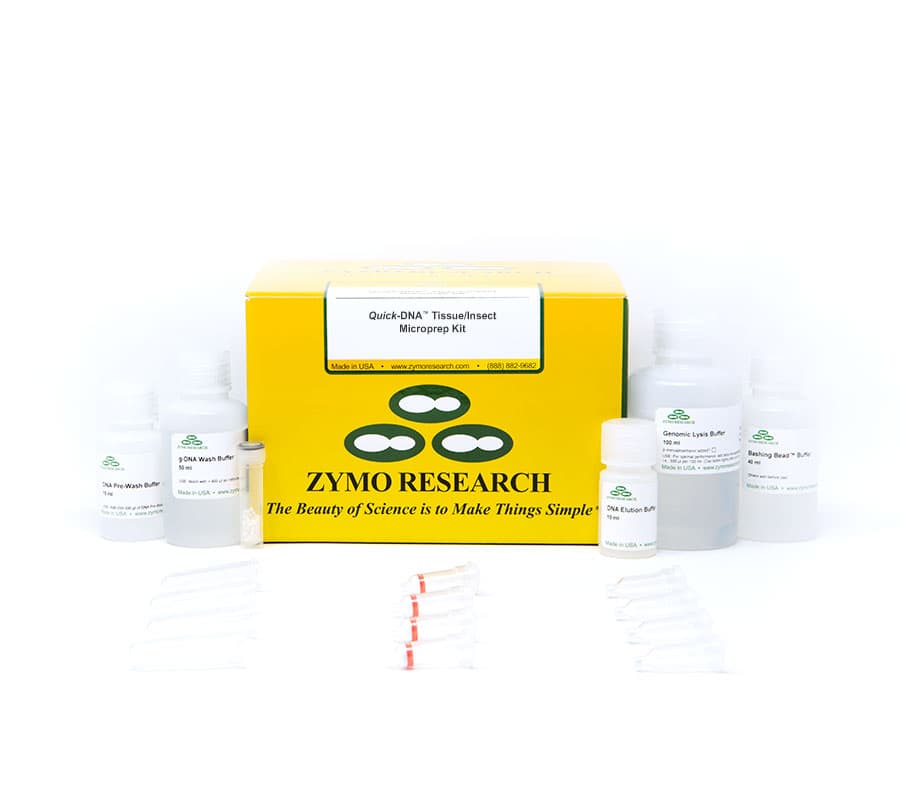

Showing 1 to 3 of 3 results
What are insect spin-column genomic DNA kits?
An insect spin-column genomic DNA kit pairs proteinase K-based lysis with a single silica-membrane spin column to purify genomic, mitochondrial, or microbial DNA from one whole insect or dissected insect tissue sample at a time, processed on a standard microcentrifuge, with optional mechanical disruption (bead beating, grinding) for chitin-rich specimens before the lysis step. Related entities include COI barcode gene amplification, high molecular weight DNA output for long-read sequencing, and multi-organism kits validated for insects alongside blood, tissue, bacteria, and yeast. Choose the spin-column format for individual insect specimens - whether for one-off identification or method development before scaling to batch processing.
What you will find:
- Rapid benchtop processing using silica-membrane spin-column insect DNA kits
- Flexible invertebrate matrix handling using advanced insect extraction spin-columns
- High-purity downstream templates using inhibitor-free insect genomic DNA purification units
How to choose an insect spin-column genomic DNA kit
Matching the lysis approach to the specimen type
Soft-bodied insects, larvae, or dissected internal tissue generally lyse adequately with proteinase K digestion alone, similar to standard animal tissue protocols, while hard-bodied or larger whole insects with significant chitin content often need mechanical disruption (bead beating, grinding, or homogenization) before or alongside lysis. Identify your specimen's exoskeleton characteristics before assuming the base proteinase K protocol applies without pretreatment.
Whole specimen vs. tissue dissection
Processing a whole small insect (e.g., Drosophila) in a spin-column kit is convenient and commonly documented, while larger insects may benefit from dissecting leg or thoracic muscle tissue to reduce the chitin-to-soft-tissue ratio in the lysate, improving DNA purity per unit input. Choose based on specimen size and whether dissection time is acceptable for your throughput needs.
Single-organism vs. multi-organism kit chemistry
Some spin-column kits are validated across multiple organism types - blood, tissue, bacteria, yeast, and insects - within one kit chemistry, useful for labs handling diverse sample types without switching kits. Confirm the kit's documentation explicitly addresses insects (and ideally your specific taxon) rather than relying on a general "tissue" claim.
DNA quality for downstream barcoding vs. sequencing
For COI barcoding and standard PCR, moderate-integrity DNA from a standard proteinase K protocol is generally sufficient, while population genetics or genome assembly projects benefit from kits documented to produce high molecular weight DNA (peak sizes around 50 kb or higher). Match your kit choice to the downstream application's DNA integrity requirements rather than defaulting to the highest-spec kit for routine barcoding.
Specifications context
The specs that most affect an insect spin-column kit choice are whether mechanical disruption is documented for your specimen's exoskeleton type, whether the kit chemistry is validated for insects specifically or only generically for "tissue," and the expected DNA fragment size relative to your downstream application. A kit suitable for both COI barcoding and population genetics, with peak fragment sizes around 50 kb or higher, covers a broad range of insect molecular work from a single specimen. The parent insect genomic DNA extraction kits category and broader genomic DNA extraction kits hub link to related formats, and for plant-sample work in pest-related research, plant spin-column kits use comparable column chemistry with different lysis buffers.
MBP's specialist team can help match kit chemistry, format, and throughput to your sample type and downstream application. Contact the MBP team for personalized guidance.
FAQ