PCR Cleanup Kits for Primer, dNTP, and Enzyme Removal
PCR cleanup kits remove primers (<100 bp), primer dimers, unincorporated dNTPs, DNA polymerase, and buffer salts from PCR amplification products using silica-membrane spin columns in 5–10 minutes. Purified amplicons are ready for Sanger sequencing, restriction digestion, ligation, NGS library preparation, and in vitro transcription.
MBP carries a broad range of PCR purification kits from leading molecular biology suppliers, available to registered vendors including Howard Hughes Medical Institute, Vanderbilt University, and MD Anderson Cancer Center. Request a quote for PCR cleanup kits optimized for primer removal, amplicon purification, Sanger sequencing, cloning workflows, and next-generation sequencing library preparation by contacting customerservice@mbpinc.net.
PCR Cleanup Kits
Showing 1 to 5 of 5 results
What are PCR Cleanup Kits?
PCR cleanup kits remove residual PCR reaction components -- primers (<100 bp), primer dimers, unincorporated dNTPs, DNA polymerase, buffer salts, and mineral oil - from PCR amplification products using silica-membrane spin columns and a bind-wash-elute protocol. The purified PCR amplicon (>=100 bp) is recovered in 20-50 ul of water or elution buffer, free of inhibitors that would interfere with downstream steps, including Sanger sequencing, restriction enzyme digestion, ligation, NGS library preparation, and in vitro transcription. The procedure takes 5-10 minutes using a standard microcentrifuge with no organic solvents, precipitation, or centrifugation spins beyond the bind/wash/elute steps. Use a PCR cleanup kit immediately after PCR whenever the downstream application requires an inhibitor-free amplicon - primers and excess dNTPs left in the reaction will reduce sequencing quality, compete in ligation reactions, and inflate NGS background noise.
What you will find:
-
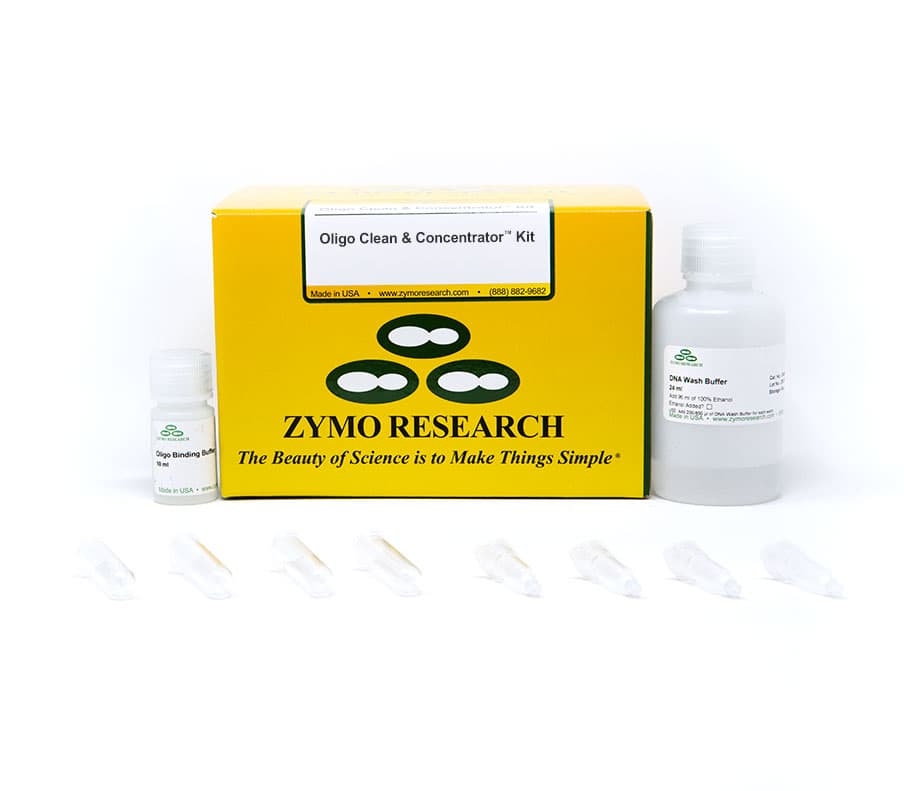
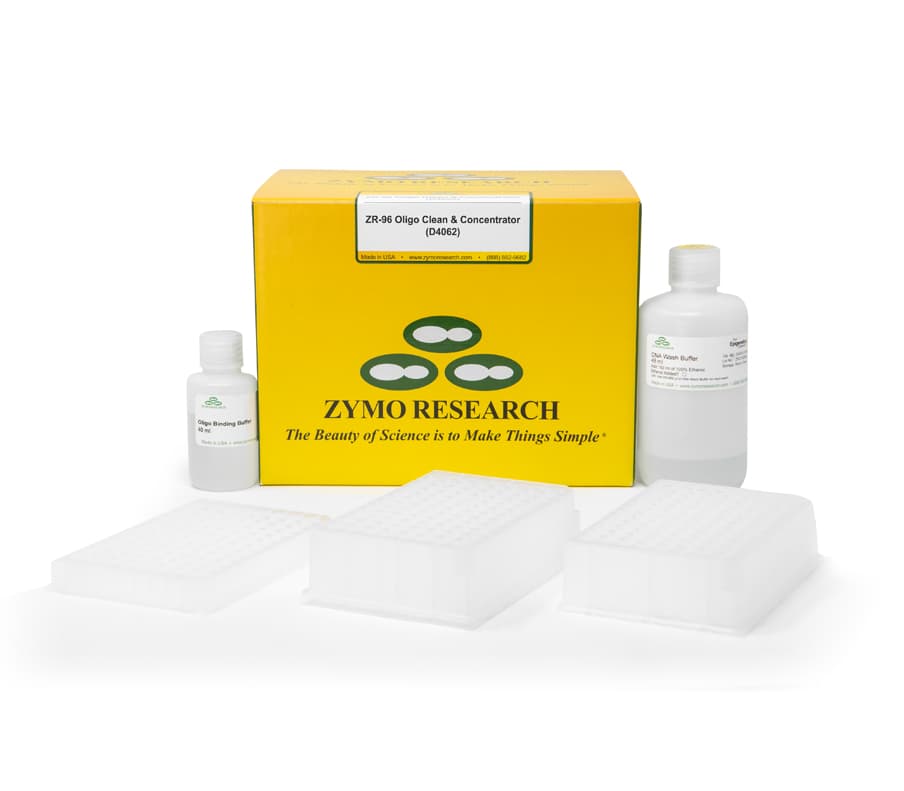
Oligo Clean & Concentrator: Precisely designed systems for the quick retrieval of single-stranded DNA, RNA, and oligonucleotides from enzymatic processes.
-
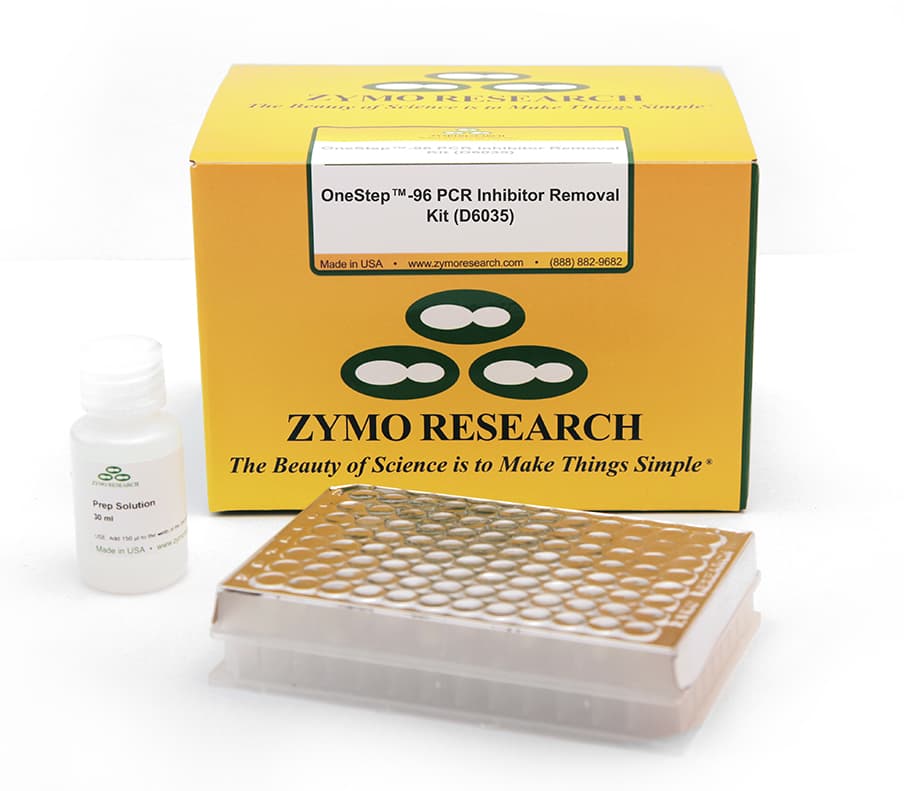
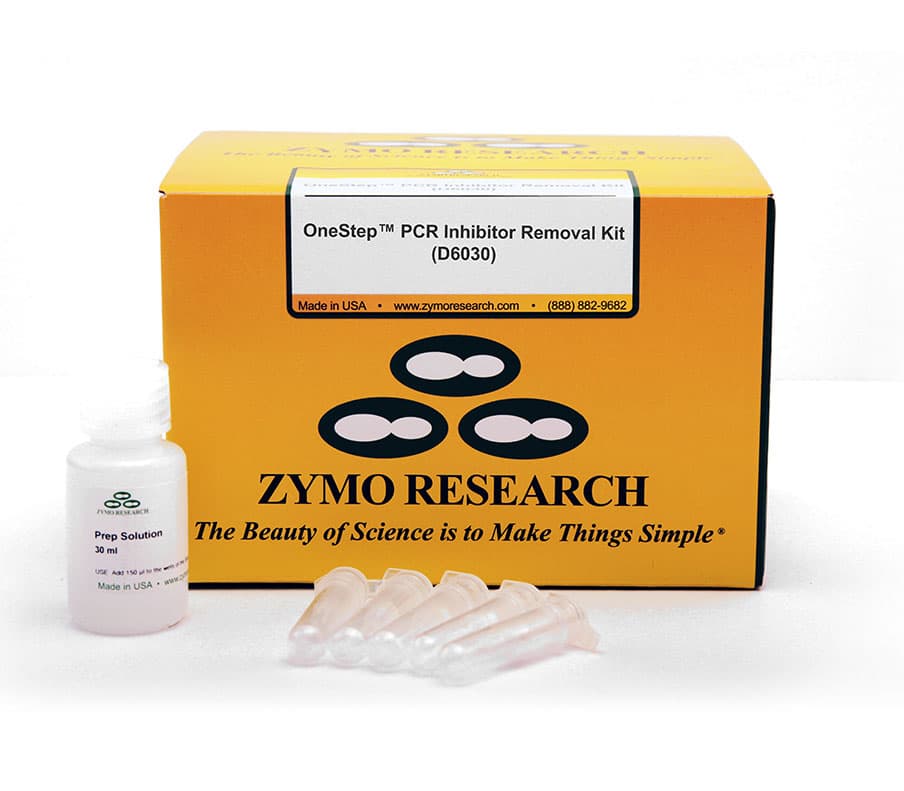
OneStep™ PCR Inhibitor Removal: Tailored columns and 96-well formats engineered to eliminate polyphenols, humic acids, and lipids that hinder PCR kinetics.
-
ssDNA/RNA Clean & Concentrator™: An adaptable method for purifying and concentrating small nucleic acid segments, ensuring isoform specificity.
-
ZR-96 High-Throughput Systems: Scalable formats of 96-well plates designed for automated lab processes, guaranteeing reproducibility-validated outcomes across extensive sample groups.
How to Choose a PCR Cleanup Kit
Binding Capacity
Standard PCR cleanup columns bind up to 5-25 ug of DNA, depending on the kit; 25 ug capacity (Thermo Fisher GeneJET) accommodates typical preparative PCR reactions. For high-yield PCR reactions producing >25 ug of amplicon, split the reaction across two columns and pool the eluates, or use a higher-capacity kit format.
Fragment Size Range
Standard PCR cleanup kits retain fragments >=100 bp and discard everything shorter. For amplicons between 70 and 100 bp (e.g., short RT-qPCR products or miRNA amplicons), use a kit with an extended lower size limit -- the Thermo Fisher GeneJET kit retains fragments from 25 bp to 20 kb, covering this range. For amplicons shorter than 25 bp, conventional silica-column cleanup will not work; use gel purification or size-selective bead cleanup (e.g., AMPure XP at adjusted bead ratios).
Minimum Elution Volume
If the downstream application requires a high DNA concentration (Sanger sequencing needs >20 ng/ul input), select a kit that elutes in as little as 20-25 ul without significant yield loss.
pH Indicator
Kits include a pH indicator dye in the binding buffer that turns yellow when the pH is correct for DNA binding and remains orange/red if the pH is too high (causing DNA loss). This is useful when purifying PCR products amplified in high-pH buffers. Kits without pH indicators require careful attention to binding buffer volume ratios to ensure efficient DNA adsorption.
96-Well Throughput
For screening workflows producing multiple amplicons per sample, use 96-well PCR purification plates with vacuum manifolds for simultaneous processing of all 96 wells. 96-well formats are essential for high-throughput genotyping and sequencing library preparation pipelines.
Specifications Context
Key benchmarks for PCR cleanup kits: >=70% DNA recovery for fragments 100 bp-10 kb, A260/A280 >= 1.7 in eluate, complete removal of primers and dNTPs (confirmed by capillary electrophoresis with no peaks below 100 bp), and elution in <=50 ul of water or TE. The Thermo Scientific GeneJET PCR Purification Kit specifies recovery rates up to 100% with a binding capacity of 25 ug per column in a 5-minute protocol. AAT Bioquest study comparing commercial PCR cleanup kit performance confirmed that silica-column kits consistently achieve primer and dimer removal equivalent to ethanol precipitation with significantly reduced protocol time. PCR cleanup is a mandatory step before NGS library preparation in nearly all sequencing-based workflows at institutions, including Howard Hughes Medical Institute, Vanderbilt University, and MD Anderson Cancer Center, where primer and dimer contamination in libraries produces low-complexity sequencing reads that reduce effective coverage.
Purify your amplicons and remove reaction noise—reach out to MBP Inc. now to obtain a quote for your PCR cleanup process.
FAQ