Product Filters

Restriction Enzymes for Cloning and DNA Analysis


Restriction enzymes (restriction endonucleases) are bacterial proteins that recognize specific short DNA sequences of 4-8 bp and cleave double-stranded DNA at or near those sites, generating defined sticky or blunt ends for use in restriction cloning, diagnostic digestion, restriction fragment length polymorphism (RFLP) analysis, Golden Gate assembly, and DNA mapping. 

MBP supplies restriction enzymes for research labs across the United States, Canada, and internationally, with US order processing in Houston, Texas, and same-day dispatch on in-stock items. Request a quote by contacting customerservice@mbpinc.net.

Restriction Enzymes
Per Page:
Sort By:
DpnI
E026
DpnI
List Price:
USD77.34
Online Price:
USD55.24
Your Price:
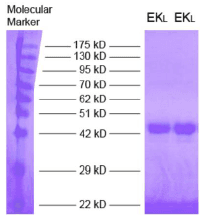
Enterokinase Cleavage Enzyme (Mammalian Produced)
List Price:
USD112.67
Online Price:
USD80.48
Your Price:
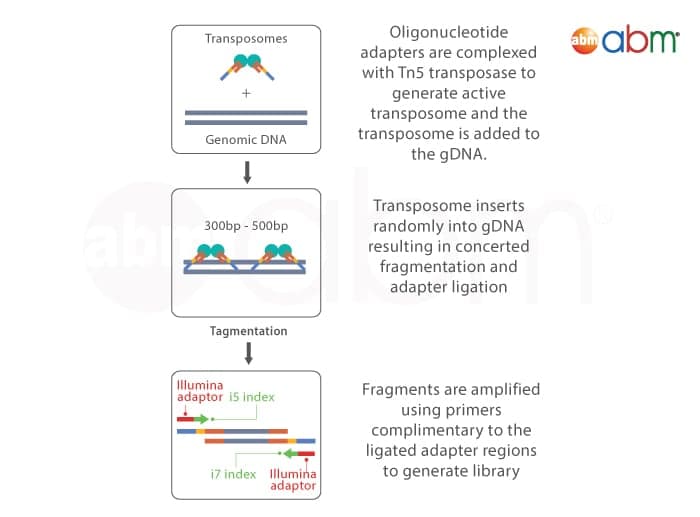
Tn5 Transposase for Tagmentation
List Price:
USD1,475.17
Online Price:
USD1,053.69
Your Price:

Showing 1 to 3 of 3 results

What Are Restriction Enzymes?


Restriction enzymes are endonucleases originally isolated from bacteria, where they function as a primitive immune defense against foreign DNA (such as bacteriophages) by cleaving at specific recognition sequences. Over 3,500 Type II restriction enzymes have been characterized, recognizing palindromic or asymmetric sequences of 4-8 base pairs and generating either 5' overhangs (sticky ends), 3' overhangs, or blunt ends. The systematic naming convention reflects enzyme origin: EcoRI comes from Escherichia coli strain R; HindIII from Haemophilus influenzae strain Rd. Restriction enzymes are grouped into Types I, II, III, and IV based on cofactor requirements, cleavage site position, and structural complexity; Type II enzymes are almost exclusively used in research applications due to their defined cleavage positions. Choose restriction enzymes based on the recognition sequence present in your target, the end type required (sticky vs. blunt), and whether Golden Gate Assembly or conventional cloning is planned.


What you will find:


  • Enterokinase Cleavage Enzyme: A specific mammalian-produced protease for precise affinity tag removal from recombinant fusion proteins.

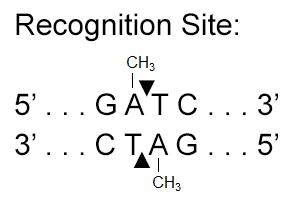
  • DpnI: A specialized enzyme targeting methylated GATC sequences, ideal for template digestion in site-directed mutagenesis.

  • Tn5 Transposase for Tagmentation: A high-efficiency enzyme for simultaneous DNA fragmentation and adapter ligation in NGS library construction.


How to Choose Restriction Enzymes


Type IIP vs. Type IIS

Type IIP enzymes (EcoRI, HindIII, BamHI, NcoI, NheI) recognize palindromic sequences and cut within or immediately adjacent to the site, making them the standard choice for conventional restriction cloning using compatible cohesive ends. Type IIS enzymes (BsaI, BsmBI/Esp3I, SapI) cut at a fixed distance outside their recognition sequence, generating custom 4-nt overhangs that can be designed to create any desired sequence at the assembly junction -- the basis of Golden Gate Assembly, which allows ordered multi-fragment cloning in a single tube.

Recognition sequence frequency

4-cutter enzymes (MboI, AluI, TaqI) cut on average every 256 bp and are used for genome-wide restriction mapping or chromatin fragmentation. 6-cutters (EcoRI, HindIII) cut every ~4,000 bp on average and are standard for plasmid cloning. 8-cutters (NotI, PacI, AscI) cut rarely (every ~65,000 bp) and are used for mapping of large genomic regions or release of large inserts from BAC or YAC vectors.

Star activity sensitivity

Restriction enzymes can exhibit relaxed sequence specificity (star activity) at suboptimal conditions: excess glycerol (>5%), non-standard buffers, extended digestion times, or non-standard divalent cations. High-fidelity (HF) enzyme variants reduce star activity by more than 1000-fold and are recommended for long digestion times or when high specificity is critical for downstream cloning.

Isoschizomers and compatible ends

Isoschizomers recognize the same sequence as a reference enzyme; neoschizomers recognize the same sequence but cut at a different position. BamHI (GGATCC, 5' overhang G) is compatible with BglII (AGATCT) overhangs and with MboI and Sau3AI overhangs -- useful for directional cloning strategies without re-engineering sites. Check isoschizomer tables before designing multi-enzyme cloning strategies.

Buffer compatibility

Most suppliers have rationalized their enzyme buffers into 2-4 universal buffer systems (e.g., CutSmart, Buffer 3.1, FastDigest buffers) that support the majority of enzymes, enabling double digestion without buffer exchange. Verify buffer compatibility before combining two restriction enzymes in a single tube.


Specifications Context


Restriction enzyme activity is defined as the amount of enzyme required to digest 1 microgram of lambda phage DNA (or substrate specified by the manufacturer) to completion in 1 hour at 37 degrees C in 50 microliters total volume. FastDigest enzyme formats complete digestion in 5-15 minutes at 37 degrees C, using a universal buffer. Heat inactivation is possible for most enzymes at 65-80 degrees C for 20 minutes, though some enzymes (NheI, SpeI, BstEII) are not heat-inactivatable and require column cleanup before downstream ligation. Over 3,500 Type II restriction enzymes are characterized in the REBASE database; commercially available catalogues cover approximately 200-300 common enzymes. For ligating restriction-digested fragments, see DNA-modifying enzymes for T4 DNA Ligase and alkaline phosphatase.


Refine your genomic editing—contact the MBP team today to request a quote for our high-fidelity enzymes.

FAQ

Restriction enzymes (restriction endonucleases) are used to cleave double-stranded DNA at defined sequence-specific sites, enabling researchers to isolate gene fragments for cloning into expression vectors, create restriction maps of DNA sequences, perform RFLP analysis for genotyping, and conduct Golden Gate Assembly for multi-fragment DNA construction. Over 3,500 Type II restriction enzymes have been characterized, making restriction enzymes the most diverse set of commercially available sequence-specific DNA-cutting tools in molecular biology.
Type IIP enzymes recognize palindromic sequences of 4-8 bp and cleave within or immediately adjacent to the recognition sequence, generating sticky (cohesive) or blunt ends whose sequence is determined by the enzyme. Type IIS enzymes recognize asymmetric sequences and cleave at a defined distance outside the recognition site, generating custom 4-nucleotide overhangs whose sequence is controlled by the experimenter. Type IIS enzymes are used in Golden Gate Assembly to create ordered, scarless multi-fragment assemblies in a single tube reaction.
Star activity is relaxed sequence specificity occurring when a restriction enzyme cleaves at sequences different from its canonical recognition site. It is triggered by high glycerol concentration (above 5%), non-standard ionic conditions, extended digestion times (over 4 hours for sensitive enzymes), or alternative divalent cations. Prevent star activity by using manufacturer-supplied optimized buffers, limiting digestion time, using high-fidelity (HF) enzyme variants engineered to reduce star activity by more than 1000-fold, and avoiding excess enzyme in reactions.
Two restriction enzymes produce compatible ends when their digestion generates the same single-stranded 5' or 3' overhang sequence, allowing efficient ligation of fragments cut by each enzyme. BamHI (GGATCC, generating G^GATCC) and BglII (AGATCT, generating A^GATCT) produce compatible 4-nt 5'-GATC overhangs and can be ligated together, though the resulting hybrid site is no longer recognized by either enzyme. Checking isoschizomer tables and overhang compatibility is essential when designing directional multi-enzyme cloning strategies.
Golden Gate Assembly uses Type IIS enzymes (typically BsaI or BsmBI) whose recognition sites can be positioned to place the cut site inside the DNA fragment being assembled rather than in the final product. Each fragment is flanked by a Type IIS site oriented to cut outward, generating unique 4-nucleotide overhangs that define the order of assembly. Because the recognition site is removed upon cleavage, multiple insert and vector fragments can be assembled in sequence-specific order in a single-tube restriction-ligation reaction, enabling scarless, ordered assembly of 10 or more DNA parts simultaneously.
Yes -- many restriction enzyme pairs are compatible in double digestion if they share a suitable buffer. Modern rationalized buffer systems (CutSmart, Buffer 3.1, FastDigest buffer) support the majority of common enzymes, allowing simultaneous digestion without sequential steps or buffer exchange. Verify buffer compatibility for both enzymes using the manufacturer's double-digest compatibility table before combining. If buffers are incompatible, perform sequential digestion with column cleanup between steps.
DpnI is a Type IV restriction enzyme that cleaves dam-methylated DNA (GATC sequences containing N6-methyladenine) while leaving unmethylated or hemimethylated DNA intact. It is used after site-directed mutagenesis PCR reactions to selectively digest the template plasmid (isolated from dam+ E. coli and therefore methylated), enriching for newly synthesized, mutation-containing PCR product. DpnI is active in most PCR buffers and can be added directly to the PCR reaction after amplification, incubating at 37 degrees C for 1-2 hours.
4-bp recognition enzymes (MboI, AluI, TaqI) cut on average every 256 bp in random sequence, producing many small fragments suitable for genome-wide restriction mapping, chromatin immunoprecipitation followed by sequencing, or methylation mapping. 6-bp recognition enzymes (EcoRI, HindIII, BamHI) cut every ~4,000 bp on average and are the standard for plasmid and gene-fragment cloning. 8-bp enzymes (NotI, PacI) cut very rarely (every ~65,000 bp) and are used for large genomic fragment isolation or release of large inserts from BAC/YAC vectors.
MBP restriction enzymes are available for institutional purchase order procurement. MBP is a registered vendor for Howard Hughes Medical Institute, Vanderbilt University, and MD Anderson Cancer Center, and supports NET-30 institutional accounts. Procurement teams can contact MBP directly to establish vendor status, request a catalog quote, or set up repeat-order purchasing for high-volume restriction enzyme use. Contact MBP through the Quick Order portal at mbpinc.net or via the institutional inquiry form.
We provide the highest quality of products and anytime customer service.
Featured Categories
    online payment
    online payment
    fast delivery
    fast delivery
    technical support
    technical support
    24/7 support
    24/7 support
    copy right
    2026 All Right Reserved