Product Filters

DNA-Modifying Enzymes for Cloning and Library Prep


DNA-modifying enzymes are a set of reagents that alter the ends, bases, or backbone of DNA molecules without amplifying them - including ligases, phosphatases, kinases, polymerases used for end-polishing, and methyltransferases - and are essential tools in restriction cloning, next-generation sequencing library preparation, site-directed mutagenesis, and DNA repair assays.

MBP carries DNA-modifying enzymes from ABM (Applied Biological Materials), supporting researchers in the United States, Canada, and internationally from a US office in Houston, Texas. Request a quote for DNA-modifying enzymes for cloning, library preparation, and DNA engineering workflows by contacting customerservice@mbpinc.net.

DNA-modifying enzymes
Per Page:
Sort By:
T4 DNA Ligase
List Price:
USD149.90
Online Price:
USD107.07
Your Price:
T4 Gene 32 Protein
List Price:
USD51.56
Online Price:
USD36.83
Your Price:
Thermolabile UDG
List Price:
USD84.02
Online Price:
USD60.02
Your Price:

Showing 1 to 3 of 3 results

What Are DNA-Modifying Enzymes?


DNA-modifying enzymes catalyze defined chemical changes to DNA molecules: T4 DNA Ligase seals nicks and joins fragments; T4 Polynucleotide Kinase (PNK) transfers a phosphate from ATP to 5'-OH termini; alkaline phosphatase removes 5'-phosphate groups to block self-ligation; Klenow fragment fills in 5' overhangs and removes 3' overhangs to generate blunt ends; DNA methyltransferases add methyl groups to adenine or cytosine residues for epigenetic studies or protection from restriction digestion. These enzymes are distinct from PCR polymerases (which amplify DNA) and restriction enzymes (which cleave at specific sequences). Use DNA-modifying enzymes any time you need to alter DNA end chemistry, join fragments, or protect sequences from downstream enzymatic cleavage.


What you will find:


  • Thermolabile UDG: An essential "cleanup" enzyme that removes carryover contamination in PCR by breaking down uracil-containing DNA, thus guaranteeing your results stay clear of artifact-induced sequence bias.

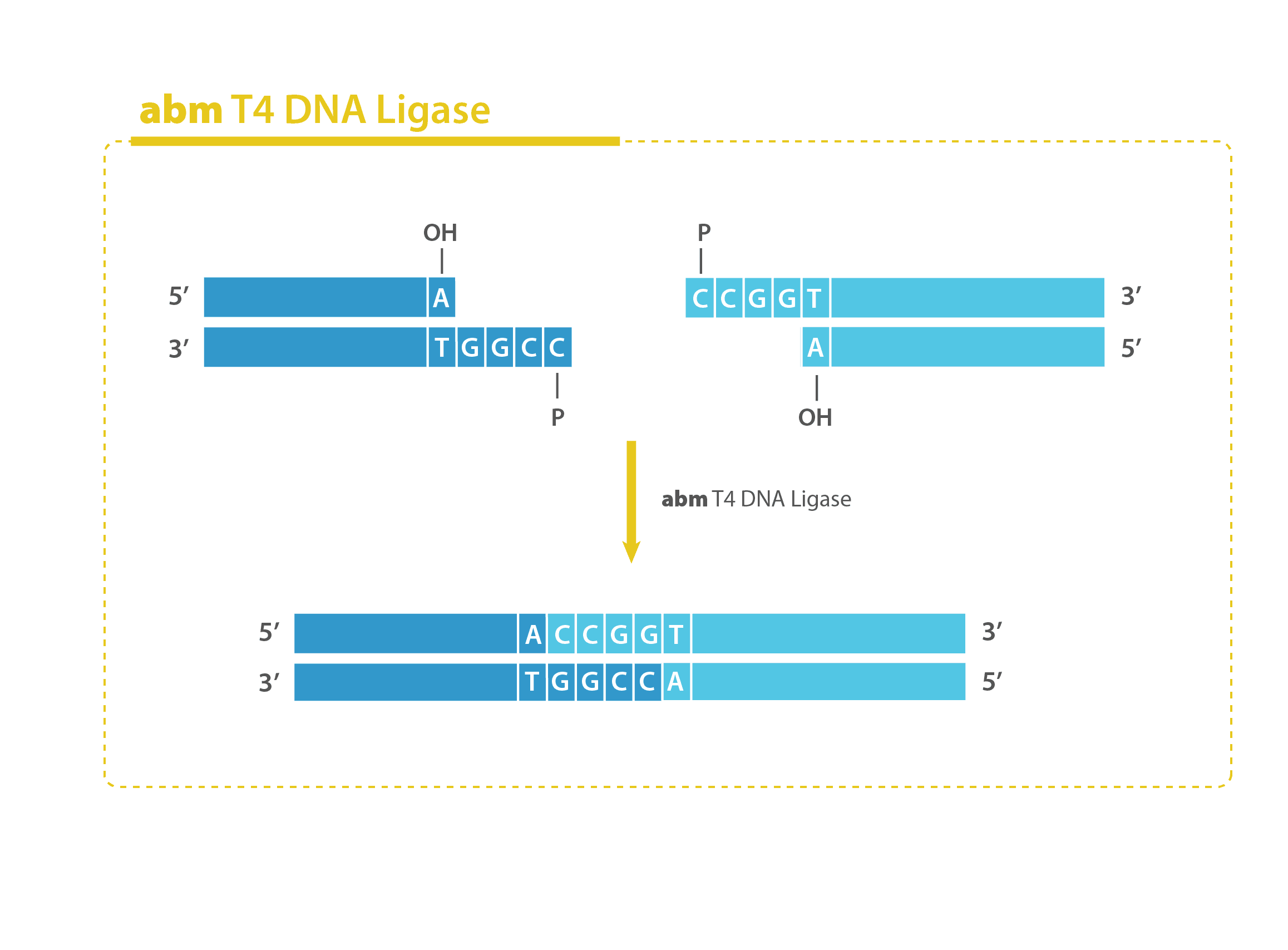
  • T4 DNA Ligase: The crucial molecular adhesive, designed for the swift and efficient connection of blunt or cohesive-end DNA pieces in cloning and NGS adapter ligation.

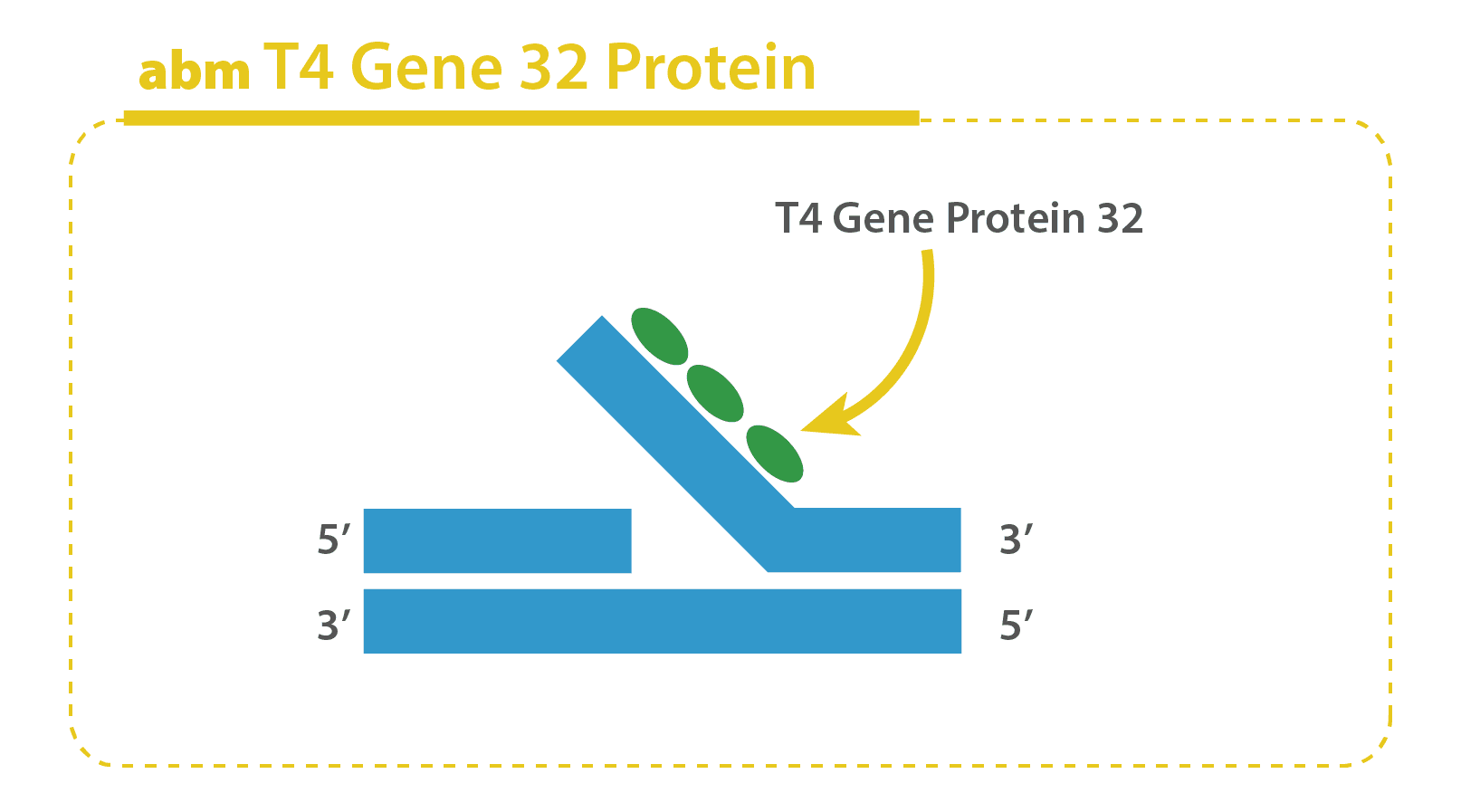
  • T4 Gene 32 Protein: A unique single-stranded DNA binding protein that maintains open templates, greatly enhancing the efficiency of enzymes in challenging amplification and recombination tests.


How to Choose DNA-Modifying Enzymes


Ligation format

T4 DNA Ligase is the standard choice for cohesive-end and blunt-end ligation in cloning. For high-throughput library prep, choose ligase formulations optimized for 25 degrees C or room-temperature reaction to reduce protocol time. E. coli DNA Ligase uses NAD+ (not ATP) and is preferred for nick sealing in nick-translation reactions.

End repair requirements

Klenow fragment (3' to 5' exo-) fills 5' overhangs and removes 3' extensions to generate blunt ends required for blunt-end cloning or adaptor ligation; its 3'->5' exonuclease-minus version is used in NGS A-tailing steps to add a single 3'-dA overhang. T4 DNA Polymerase has stronger 3'->5' exonuclease activity than Klenow and is preferred for end polishing of PCR products with heterogeneous ends.

Phosphorylation/dephosphorylation

Use T4 PNK to add 5'-phosphates to PCR products or synthetic oligonucleotides before blunt-end ligation. Use alkaline phosphatase (CIP or SAP) on linearized vectors to prevent self-ligation; SAP is preferred when heat-inactivation at 65 degrees C is needed before downstream steps. Combine dephosphorylation and ligation in the same tube only after inactivating the phosphatase.

Methylation and protection

CpG methyltransferases and dam/dcm methylases protect recognition sequences from restriction cleavage or enable methylation-sensitive mapping. Dam methylase (methylates GATC sequences) and Dcm methylase (methylates CCWGG) are used to prepare templates resistant to DpnI digestion in cloning workflows where DpnI is used to remove template plasmid.

Purity certification

For RNA co-purification or RNA-sensitive workflows, confirm all DNA-modifying enzymes carry RNase-free certification. ABM lot-release QC includes RNase and DNase contamination tests; certificates of analysis are available on request through MBP.


Specifications Context


T4 DNA Ligase activity is defined as the amount of enzyme catalyzing 50% ligation of HindIII-cut lambda DNA fragments in 30 minutes at 16 degrees C in a 20 microliter reaction; 1 Weiss unit equals approximately 60 cohesive-end units. Optimal blunt-end ligation uses PEG 4000 at 15% (w/v) as a molecular crowding agent and runs at 25 degrees C to increase effective enzyme concentration. Streamlined NGS library prep workflows combine end repair, A-tailing, and adaptor ligation into a single-tube step, reducing total hands-on time to under 1 hour. 


Seize control of your DNA processes—reach out to the MBP team now for a quote on our premium DNA-altering enzymes.

FAQ

T4 DNA Ligase catalyzes the ATP-dependent formation of a phosphodiester bond between a 5'-phosphate and a 3'-hydroxyl group at adjacent ends of duplex DNA. It efficiently joins cohesive (sticky) ends and can join blunt ends in the presence of PEG 4000 as a crowding agent. The enzyme is inactivated by heating to 65 degrees C for 10 minutes. T4 DNA Ligase is the most widely used ligase in molecular cloning and NGS adaptor ligation workflows.
T4 DNA Ligase uses ATP as a cofactor and efficiently joins both blunt and cohesive ends; it is the standard for cloning and library preparation. E. coli DNA Ligase uses NAD+ as a cofactor and preferentially seals nicks in duplex DNA rather than joining free ends. E. coli DNA Ligase is used in nick-translation reactions and in vitro DNA repair assays where NAD+-dependent activity is needed. For general cloning, T4 DNA Ligase is the correct choice.
Use alkaline phosphatase on linearized vector DNA after restriction digestion and before ligation to remove 5'-phosphate groups, preventing the vector from re-circularizing without an insert. This significantly reduces the background of empty-vector colonies. SAP (shrimp alkaline phosphatase) is preferred when subsequent heat-inactivation at 65 degrees C for 20 minutes is needed to prevent interference with downstream ligation. CIP (calf intestinal phosphatase) requires proteinase K treatment or column cleanup for inactivation.
Klenow fragment is the large proteolytic fragment of E. coli DNA Polymerase I, retaining 5'->3' polymerase and 3'->5' exonuclease activities but lacking 5'->3' exonuclease activity. The exonuclease-minus version (Klenow exo-) is used for 5' overhang fill-in, A-tailing of blunt-ended PCR products (adding a single 3'-dA for TA cloning or NGS adaptor ligation), and second-strand cDNA synthesis. Reactions are run at 37 degrees C in the supplied buffer with dNTPs.
T4 Polynucleotide Kinase (T4 PNK) uses ATP to phosphorylate 5'-OH termini of DNA or RNA, and can also use ADP as a phosphate acceptor in its 3'-phosphatase mode to remove 3'-phosphate groups from RNA. The forward (5'-phosphorylation) reaction runs at 37 degrees C in the presence of 1 mM ATP and is inhibited by concentrations above 5 mM ATP. T4 PNK is used before blunt-end ligation of PCR products lacking 5'-phosphates and in radiolabeling of oligonucleotides with [gamma-32P]ATP.
DNA methyltransferases add methyl groups to specific bases within recognition sequences, blocking restriction enzyme cleavage at those sites. Dam methylase methylates GATC sequences (adenine at position N6), protecting DNA from DpnII cleavage. Dcm methylase methylates CCWGG sequences (cytosine at position C5). This protection is used when preparing vector or insert DNA from strains that require methylation-insensitive restriction mapping, or when using DpnI to selectively digest unmethylated PCR products during site-directed mutagenesis.
Cohesive-end (sticky-end) ligation with T4 DNA Ligase is most efficient at 16 degrees C for 4-16 hours, a temperature that balances enzyme activity with annealing stability of short complementary overhangs. Blunt-end ligation is run at 25 degrees C or room temperature for 1-4 hours using PEG 4000 as a crowding agent. Rapid ligation protocols at room temperature (10-30 minutes) use specially formulated quick-ligation buffers with higher PEG concentrations. The enzyme is fully inactivated at 65 degrees C for 10 minutes.
RNase-free certification is required for DNA-modifying enzymes used in workflows where RNA integrity must be preserved, such as co-isolation of RNA and DNA, simultaneous nucleic acid analysis, or sequential DNA and RNA workflows from the same sample. For purely DNA-focused applications such as plasmid cloning and gel verification, RNase-free grade is good practice but less critical. ABM DNA-modifying enzymes include lot-specific QC for RNase and DNase contamination; contact MBP to request certificates of analysis.
MBP supports bulk orders for DNA-modifying enzymes including T4 DNA Ligase, T4 PNK, and alkaline phosphatase for laboratories running high-throughput library preparation or multi-sample cloning workflows. Bulk pricing is available through MBP's Quick Order portal or via direct inquiry. MBP is a registered vendor for Howard Hughes Medical Institute, Vanderbilt University, and MD Anderson Cancer Center, and can be onboarded to institutional purchasing systems across the USA and Canada.
We provide the highest quality of products and anytime customer service.
Featured Categories
    online payment
    online payment
    fast delivery
    fast delivery
    technical support
    technical support
    24/7 support
    24/7 support
    copy right
    2026 All Right Reserved