ChIP Kits for Chromatin Immunoprecipitation and Protein–DNA Interaction Mapping
ChIP Kits covers complete chromatin immunoprecipitation kit systems that bundle the reagents needed for every step of a ChIP workflow: formaldehyde crosslinking of proteins to DNA, cell lysis, chromatin shearing by sonication or enzymatic digestion, antibody-bead capture of the protein–DNA complex of interest, stringent washing, elution, and de-crosslinking. ChIP is the foundational tool for studying histone modification distribution and DNA-binding protein localization across the genome. Academic and core laboratories establishing or streamlining a ChIP workflow can benefit from guidance when selecting kit formats and ensuring antibody compatibility for reliable chromatin profiling.
Explore available ChIP kits or request a quotation by contacting customerservice@mbpinc.net. Our team can help identify the appropriate chromatin immunoprecipitation system and workflow configuration for your epigenetics research needs.
ChIP Kits
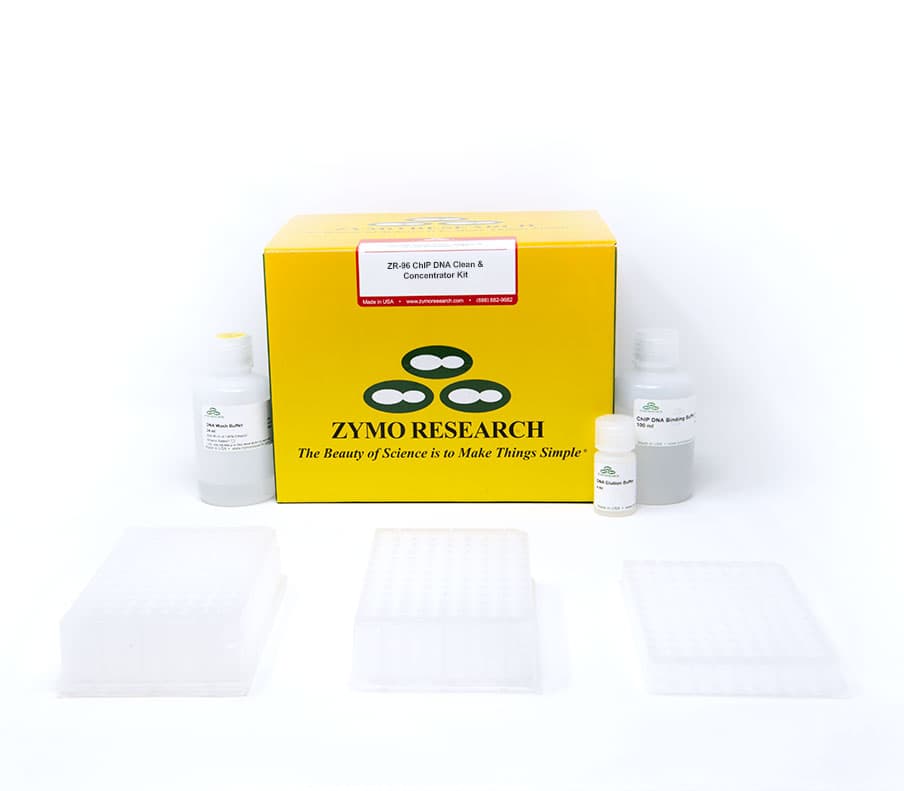
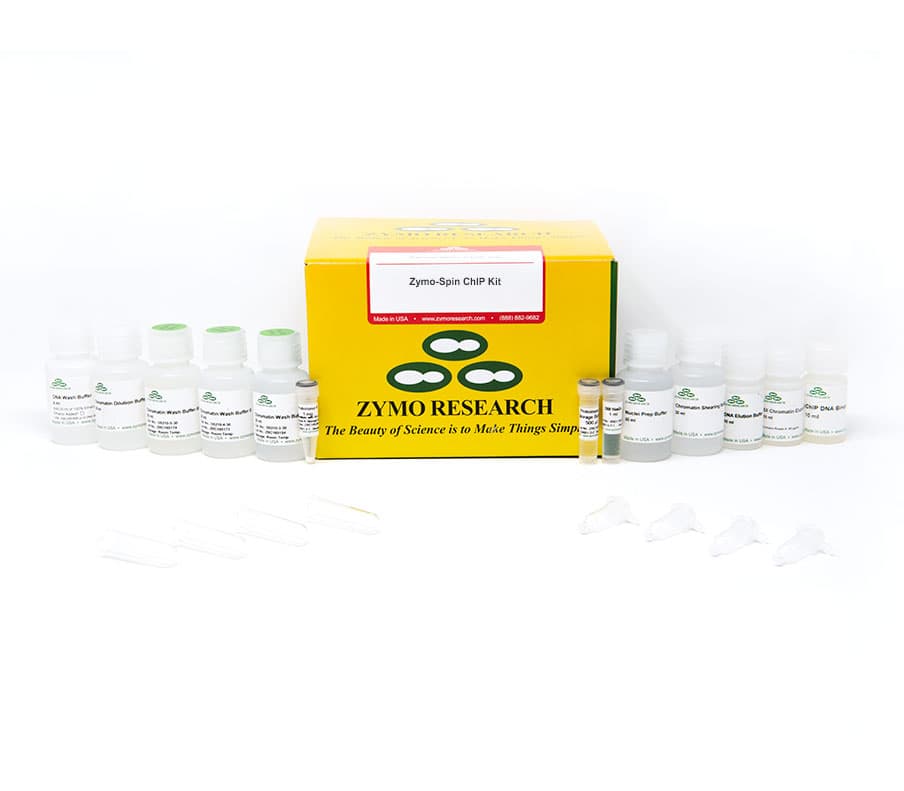
Showing 13 to 15 of 15 results
What are ChIP kits?
ChIP (chromatin immunoprecipitation) kits provide all the components needed to enrich a specific protein-DNA complex from fixed, sheared chromatin using an antibody against the protein of interest, whether a histone modification like H3K4me3 or a DNA-binding protein like a transcription factor. A complete ChIP kit covers: formaldehyde crosslinking of proteins to DNA in intact cells or tissue, cell lysis and nuclear extraction, chromatin shearing to appropriate fragment sizes, immunoprecipitation using an antibody pre-bound to protein A/G beads, sequential washing to remove non-specific binding, elution of the antibody-protein-DNA complex, de-crosslinking to release the DNA, and purification of the enriched DNA for downstream analysis.
What you will find:
-
Buffers: for immunoprecipitation, chromatin preparation, elution, and washing workflows. Includes Chromatin Shearing Buffer, MN Digestion Buffer, and Chromatin Wash Buffers, designed to support efficient chromatin cleanup, fragmentation, and recovery in ChIP assays
How to choose and use ChIP kits
Decide between sonication-based and enzymatic chromatin shearing
Sonication shears chromatin mechanically into fragments typically 200–1000 bp through several optimized burst-and-cool cycles, while enzymatic kits use micrococcal nuclease (MNase) or similar enzymes to cleave chromatin at accessible linker regions. Each approach has different resolution characteristics and cell-type-specific optimization requirements.
Confirm your ChIP kit is compatible with your antibody and magnetic bead format
Most modern ChIP kits use magnetic protein A or protein G Dynabeads to capture the antibody-antigen complex during immunoprecipitation, and matching the bead type to the antibody species and isotype is important for efficient capture and low background.
Plan sonication optimization as a required step before your ChIP experiment
Fragment size after sonication, ideally 200–750 bp for most ChIP-seq applications, must be confirmed by gel electrophoresis or Bioanalyzer before proceeding, since fragment size directly affects both immunoprecipitation efficiency and the resolution of the resulting ChIP-seq data.
Include an input chromatin control and an isotype control antibody
Running an aliquot of the pre-immunoprecipitation chromatin as an input control normalizes for differences in chromatin accessibility across the genome, while an isotype-matched antibody control establishes background enrichment levels above which true binding sites can be distinguished.
Keep all steps after cell lysis cold to prevent protein degradation
Chromatin prepared for ChIP is sensitive to protease activity and non-specific interactions after formaldehyde fixation, and including protease inhibitors in all lysis and wash buffers, as well as keeping samples cold throughout, reduces background and preserves specificity of the immunoprecipitation.
Specifications context
Sonication requires careful optimization for each cell type and instrument, typically involving pilot experiments at varying pulse widths, total times, and rest intervals, with fragment size evaluated by gel electrophoresis after de-crosslinking to confirm the target range of 200–750 bp before a full ChIP experiment is run. As of 2026, low-input and ultra-low-input ChIP kits continue to expand access to ChIP experiments from limited cell numbers such as primary cell populations and rare clinical samples, while nano-ChIP and CUT&RUN approaches provide complementary alternatives for very low cell inputs where classical ChIP requires too many cells.
Contact the expert team at Molecular Biology Products Inc. (MBP) to get premium-quality ChIP reagents and buffers for your lab.
FAQ