Product Filters

Electrophoresis Reagents for DNA, RNA, and Protein Separation


Electrophoresis brings together the reagents used to separate nucleic acids and proteins by size or charge through a gel matrix, covering agarose for gel casting, DNA and RNA size markers, gel running buffers, loading dyes, and fluorescent staining reagents. As a top-level branch parallel to Epigenetics, Cell Biology, and other main categories, this section organizes gel electrophoresis supplies into a single navigable hub. Academic and core laboratories setting up or restocking electrophoresis workflows can benefit from guidance when selecting gel formats, staining methods, and supporting reagents for nucleic acid and protein analysis.

Explore available electrophoresis reagents or request a quotation by contacting customerservice@mbpinc.net. Our team can help identify the appropriate agarose, markers, buffers, dyes, and staining solutions for your electrophoresis applications.

Electrophoresis
Per Page:
Sort By:
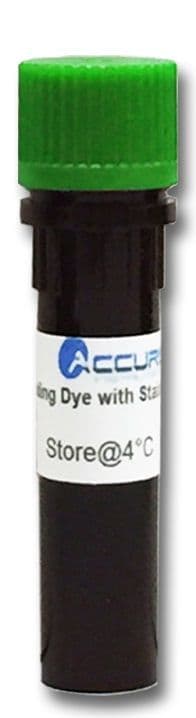
SmartGlow™ Safe Green Pre Stain, 1.0ml
List Price:
USD172.04
Online Price:
USD122.89
Your Price:
Special High EEO Agarose (Highly Pure)
List Price:
USD2,653.00
Online Price:
USD1,895.00
Your Price:
Streptavidin Agarose
List Price:
USD1,113.00
Online Price:
USD795.00
Your Price:
TAE Buffer 10X (Tris-acetate-EDTA) (Biotechnology Grade)
List Price:
USD350.00
Online Price:
USD250.00
Your Price:
TBE Buffer 10X (Tris Borate EDTA) (Biotechnology Grade)
List Price:
USD350.00
Online Price:
USD250.00
Your Price:
TBE Buffer Solution (5x)
List Price:
USD553.00
Online Price:
USD395.00
Your Price:
TBE-Urea Sample Buffer
List Price:
USD833.00
Online Price:
USD595.00
Your Price:
Tris Acetate-EDTA Buffer
List Price:
USD973.00
Online Price:
USD695.00
Your Price:
Tris Acetate-EDTA Buffer
MD-TRIS-ACETATE-EDTA-BUFFER-F2
Tris Acetate-EDTA Buffer
List Price:
USD833.00 - USD973.00
Online Price:
USD595.00 - USD695.00
Your Price:
Tris-Acetate EDTA Stock Solution (50X, pH 8.0)
List Price:
USD833.00
Online Price:
USD595.00
Your Price:
Tris-Borate-EDTA Buffer 10X
List Price:
USD1,113.00
Online Price:
USD795.00
Your Price:
Tris-Glycine Native Buffer (10X Transfer Buffer)
List Price:
USD413.00
Online Price:
USD295.00
Your Price:

Showing 109 to 120 of 128 results

What is Electrophoresis as a reagent category?


Electrophoresis is the separation of charged molecules, most commonly DNA, RNA, or proteins, through a porous gel matrix under an applied electric field, with smaller fragments migrating faster through the matrix and larger ones more slowly, producing size-based band patterns that can be visualized, sized, and quantified. Agarose gel electrophoresis handles the broadest analytical range for nucleic acids (roughly 0.1 to 25 kb for standard agarose), while polyacrylamide gel electrophoresis (PAGE) resolves smaller fragments or proteins with higher resolution.


What you will find:


  • Gel Electrophoresis Reagents: Developed for efficient separation of nucleic acids and proteins with clear band resolution and consistent migration patterns during gel electrophoresis.


How to navigate electrophoresis reagents


Start with agarose concentration matched to your expected fragment sizes

Standard agarose concentrations from 0.7% to 2.0% cover most gel electrophoresis applications: lower percentages (0.7–1%) separate larger DNA fragments (2–25 kb), while higher percentages (1.5–2%) resolve smaller fragments (0.2–1 kb) more clearly.

Choose your running buffer based on fragment size and run duration

TAE (Tris-acetate-EDTA) is commonly used for DNA electrophoresis and offers good resolution for fragments larger than 1 kb, while TBE (Tris-borate-EDTA) provides sharper resolution for fragments below 1 kb and has higher buffering capacity for longer runs.

Always include a DNA or RNA ladder in a dedicated gel lane

A size marker or ladder run alongside samples allows approximate fragment sizing by comparing migration distances with defined reference fragments, and some ladder formats also include quantitative mass information for individual bands.

Choose a nucleic acid stain matched to your safety and detection requirements

Ethidium bromide remains widely used for DNA staining, while alternatives such as GelRed, GelGreen, and SYBR Safe provide improved safety profiles with similar sensitivity for routine applications.

Consider polyacrylamide for very high resolution or protein separation

PAGE offers substantially higher resolution than agarose for fragments below 100–200 bp or for protein separation and western blotting applications, making it the preferred format when agarose resolution is insufficient.


Specifications context


Agarose gel electrophoresis is the most commonly used method for analyzing DNA fragments between 0.1 and 25 kb, while pulse-field gel electrophoresis extends this range to DNA fragments up to several thousand kilobases by periodically alternating the orientation of the applied electric field to allow very large molecules to migrate through the gel.

Contact the expert team at MBP and request a quote for laboratory-validated electrophoresis for your research workflows.

FAQ

Standard agarose gel electrophoresis reliably separates DNA fragments from roughly 0.1 to 25 kb, with the resolution within this range depending on the agarose concentration chosen, lower concentrations for larger fragments and higher concentrations for smaller ones. Pulse-field gel electrophoresis extends this analytical range to fragments of many thousands of kilobases, and polyacrylamide gels offer higher resolution below 100 bp where agarose resolution becomes limiting.
TAE (Tris-acetate-EDTA) is more commonly used for routine DNA electrophoresis and provides better resolution of fragments larger than approximately 1 kb, while TBE (Tris-borate-EDTA) offers better resolution and sharper bands for smaller fragments below 1 kb and has higher buffering capacity that makes it more suitable for longer electrophoresis runs before the buffer is exhausted. TBE's borate ions can complicate DNA extraction from gel slices, making TAE the preferred choice when gel extraction of bands is planned.
A DNA ladder provides a set of defined reference fragments in an adjacent lane, allowing you to read off the approximate size of each sample band by comparing how far it has migrated relative to the ladder's known fragment sizes. Without a ladder run in the same gel under the same conditions, there is no way to reliably estimate fragment sizes from migration distance alone.
Agarose gel electrophoresis covers most routine DNA and RNA fragment analysis in the 0.1 to 25 kb range and is simpler to prepare and use, while polyacrylamide gels offer substantially higher resolution below 100-200 bp for nucleic acids and are the standard format for protein separation and western blotting. The choice depends primarily on whether agarose can resolve the size differences in your samples at the resolution your analysis requires.
GelRed, GelGreen, and SYBR Safe are fluorescent DNA stains developed as alternatives to ethidium bromide, a mutagenic intercalating dye requiring special disposal, with safer handling and disposal profiles while offering broadly similar sensitivity for visualizing DNA bands on standard UV transilluminators. Many labs have transitioned to these alternatives for routine work, though ethidium bromide remains in use where established protocols are validated around it.
High-resolution agarose formulations, used at 2–4% concentrations, can resolve small DNA fragments in the 50 bp to 2 kb range more clearly than standard agarose at the same concentration, making them useful for analyzing PCR products from microsatellite or SSR markers, small restriction digests, or other applications where fragment size differences are small and standard agarose resolution is insufficient.
Standard agarose and TAE or TBE buffers can be used for denaturing or non-denaturing RNA gel electrophoresis, though RNA work requires RNase-free conditions, and denaturing conditions using formaldehyde or glyoxal are often applied to ensure RNA molecules are fully denatured and migrate according to size rather than secondary structure. RNA ladders and dedicated RNA-optimized stains are the appropriate size markers for RNA electrophoresis rather than standard DNA ladders.
Yes, MBP offers academic and bulk pricing across agarose, DNA and RNA ladders, running buffers, loading dyes, and staining reagents for gel electrophoresis. Orders ship from MBP's US office in Houston, Texas, with stock available in both USD and CAD.
We provide the highest quality of products and anytime customer service.
Featured Categories
    online payment
    online payment
    fast delivery
    fast delivery
    technical support
    technical support
    24/7 support
    24/7 support
    copy right
    2026 All Right Reserved