Product Filters

Plant Tissue Culture Media for Micropropagation and Regeneration


Tissue culture media in this category provide the nutrient and hormonal foundation for plant in vitro propagation, organized into basal media (classical salt formulations such as Murashige and Skoog medium supplying core nutrients) and multiplication media (stage-specific formulations supplemented with cytokinin-rich hormone ratios to drive shoot proliferation). Academic researchers and propagation labs designing or troubleshooting a micropropagation protocol can use MBP's specialist team to confirm the right media formulation for their species and stage.

Explore available plant tissue culture media or request a quotation by contacting customerservice@mbpinc.net. Our team can help identify the appropriate basal salts and stage-specific multiplication formulations for your plant tissue culture workflow.

Tissue Culture Media
Per Page:
Sort By:
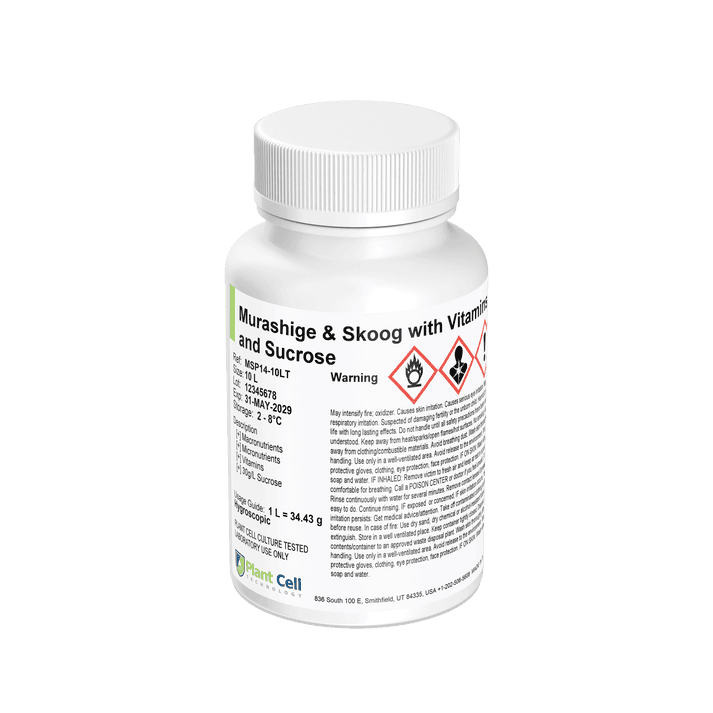
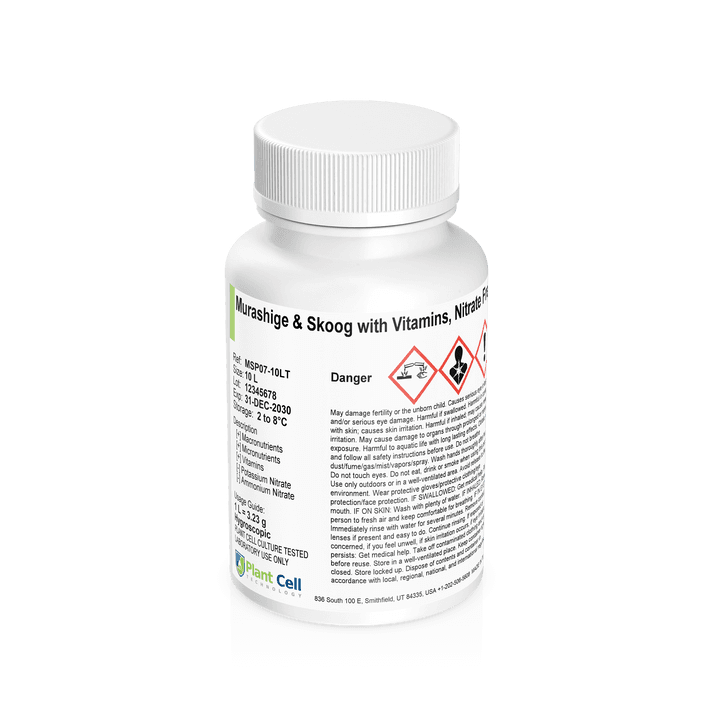
Murashige & Skoog Basal Salts with Vitamins, without Ammonium Nitrate and Potassium Nitrate
List Price:
USD27.99 - USD54.94
Online Price:
USD19.99 - USD39.24
Your Price:
Murashige & Skoog Basal Salts with Vitamins, without Glycine
List Price:
USD20.99 - USD134.39
Online Price:
USD14.99 - USD95.99
Your Price:
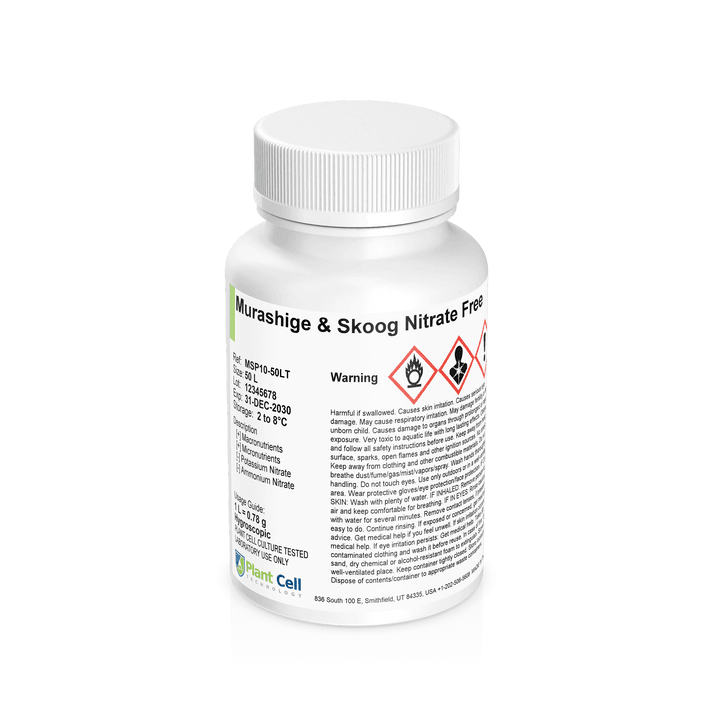
Murashige & Skoog Basal Salts without Ammonium Nitrate and Potassium Nitrate
List Price:
USD19.59 - USD60.19
Online Price:
USD13.99 - USD42.99
Your Price:
Murashige & Skoog Basal Salts without Iron
List Price:
USD27.99 - USD111.99
Online Price:
USD19.99 - USD79.99
Your Price:
Murashige & Skoog Basal Salts without Phosphate
List Price:
USD34.99 - USD69.99
Online Price:
USD24.99 - USD49.99
Your Price:
Murashige & Skoog Basal Salts without Potassium
List Price:
USD74.19 - USD125.99
Online Price:
USD52.99 - USD89.99
Your Price:
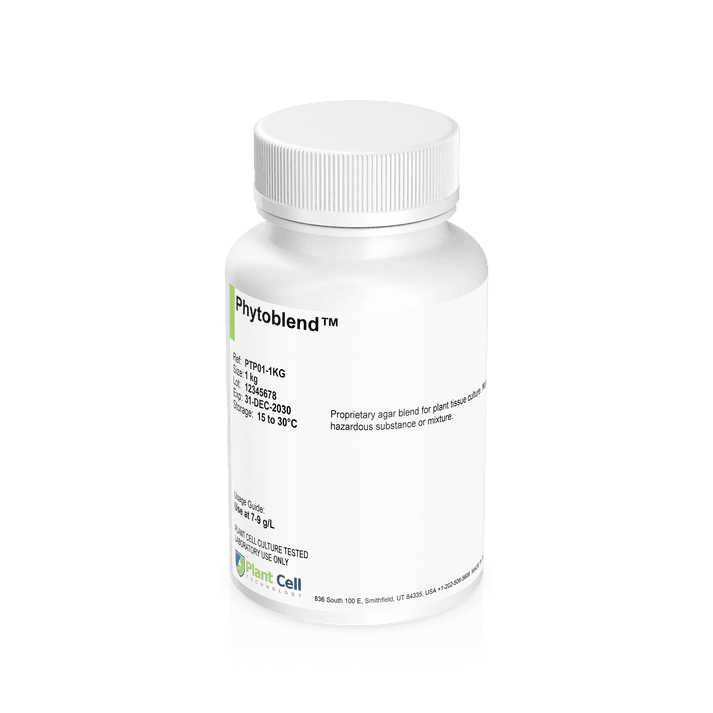
Phytoblend
PCT-PHYTOBLEND
Phytoblend
List Price:
USD34.99 - USD3,499.99
Online Price:
USD24.99 - USD2,499.99
Your Price:
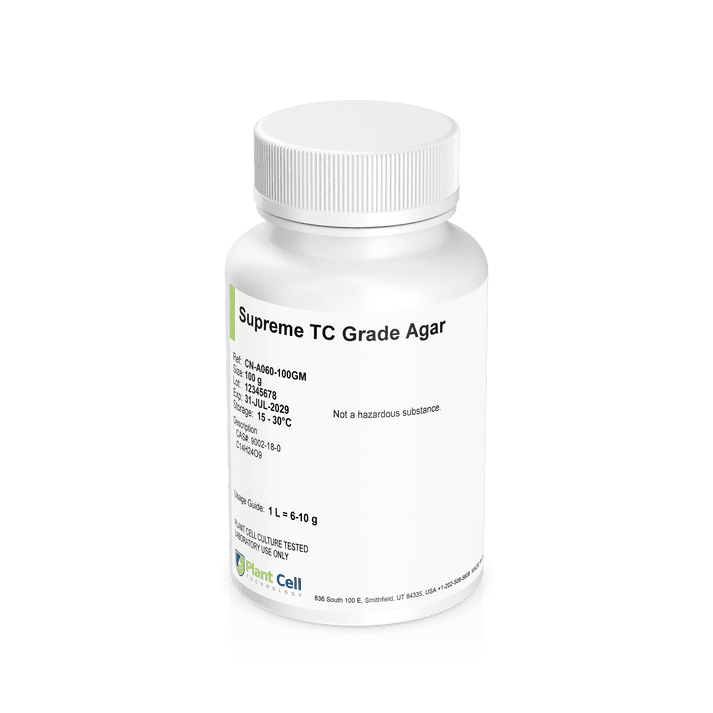
Supreme TC Grade Agar
List Price:
USD27.99 - USD650.99
Online Price:
USD19.99 - USD464.99
Your Price:
TC Gel Proprietary Blend
List Price:
USD88.19 - USD6,999.99
Online Price:
USD62.99 - USD4,999.99
Your Price:

Showing 25 to 33 of 33 results

What types of tissue culture media are available?


Tissue culture media for plant propagation fall into stage-specific categories built on a common nutrient foundation. Basal media, most commonly Murashige and Skoog (MS) formulation, supply the core macronutrients, micronutrients, and vitamins needed for general plant cell metabolism and serve as the starting point for nearly every protocol stage. Multiplication media build on a basal formulation with added cytokinin-dominant hormone ratios specifically formulated to drive the shoot proliferation stage of micropropagation. Related entities include macro/micronutrient salt composition, organic supplements (vitamins, sucrose, agar), the auxin-to-cytokinin developmental ratio, and subculture cycle timing.


What you will find:


  • Basal Media: Globally trusted core nutrient formulations that provide the foundational salt mixtures and essential vitamins needed to sustain general plant cell viability and establish clean initial cultures.

  • Multiplication Media: Specialized chemical blends optimized with specific hormone balances to stimulate axillary branching, drive rapid shoot proliferation, and maximize high-volume micropropagation yields.

  • Specialty Media: Tailored, species-specific nutrient environments engineered to satisfy the unique, demanding physiological requirements of rare, recalcitrant, or woody plant varieties.

  • Rooting Media: Nutrient-lean, auxin-supplemented media configurations designed to trigger robust adventitious root development and prepare delicate plantlets for successful soil acclimatization.


How to choose tissue culture media


Starting from basal medium vs. a pre-formulated stage-specific medium

Basal medium alone (such as plain MS salts) gives researchers full control to add their own growth regulators and supplements for any protocol stage, while pre-formulated multiplication media already include the appropriate cytokinin-rich hormone supplementation, reducing setup time and pipetting steps for routine, established protocols.

Powder vs. liquid concentrate vs. ready-to-use formats

Basal and multiplication media are available as powders requiring reconstitution and pH adjustment, liquid concentrates for dilution, or ready-to-use liquid media. Powders offer the lowest shipping cost and longest shelf life, while ready-to-use formats save preparation time for labs prioritizing throughput over cost.

Vitamin and organic supplement inclusion

Some basal medium formulations include only the inorganic salt mixture, requiring separate addition of vitamins and other organics, while complete formulations bundle salts, vitamins, and sometimes sucrose together; confirm which components are included before assuming a specific published protocol's full formulation is covered by a single product.

Matching hormone concentration to the multiplication stage's published protocol

Pre-formulated multiplication media are designed around documented cytokinin-to-auxin ratios optimized for shoot proliferation, but the exact concentration can be species- and genotype-dependent; confirm a chosen multiplication medium's hormone concentration against published precedent for the specific target plant before scaling up.


Specifications context


Basal media are reconstituted at defined concentrations, commonly around 4.3–4.4 g/L for standard MS formulations, with final pH typically adjusted to approximately 5.7–5.8 before autoclaving. Multiplication media specify cytokinin concentration (commonly BAP or kinetin in the low micromolar to mg/L range) alongside low or no auxin, reflecting the high cytokinin-to-auxin ratio that defines the shoot proliferation stage. 

This sub-category sits within MBP's plant tissue culture catalog and contains basal media and multiplication media. MBP's specialist team can help confirm media format and hormone concentration for a specific species and micropropagation stage before order placement.

Inquire with the MBP support team today to order the ideal basal or specialized media blend for your facility.

FAQ

Basal media supply the core macronutrients, micronutrients, and vitamins needed for general plant cell metabolism and serve as the nutritional foundation for any tissue culture protocol stage, while multiplication media build on a basal formulation with added cytokinin-dominant hormone ratios specifically formulated to drive the shoot proliferation stage of micropropagation. Multiplication media are essentially basal media plus stage-specific hormone supplementation.
Plain basal medium gives full control to add custom growth regulators and supplements for any protocol stage, useful for research requiring precise hormone ratio optimization, while pre-formulated multiplication media already include appropriate cytokinin-rich hormone supplementation, reducing setup time for routine, established multiplication protocols. The choice depends on whether protocol flexibility or preparation time savings is the priority.
Tissue culture media are typically adjusted to a final pH of approximately 5.7-5.8 before autoclaving, since pH outside this general range can affect nutrient availability and gelling agent (agar) solidification. The specific target pH should be confirmed against the published protocol for the species being cultured.
Powder-based basal media offer the lowest shipping cost and longest shelf life, requiring reconstitution and pH adjustment before use, while liquid concentrates and ready-to-use formats save preparation time at a higher cost per liter of finished medium. Academic labs more often use powder media for cost efficiency, while commercial operations may favor ready-to-use formats to reduce labor.
Some basal medium formulations include only the inorganic salt mixture, requiring separate addition of vitamins and other organic supplements, while complete formulations bundle salts, vitamins, and sometimes sucrose together into a single product. Confirming which components are included in a specific basal medium product before assuming full protocol coverage is recommended.
Multiplication media typically specify a cytokinin, commonly BAP (6-benzylaminopurine) or kinetin, in the low micromolar to mg/L range, combined with low or no auxin, reflecting the high cytokinin-to-auxin ratio that promotes shoot proliferation. The exact optimal concentration can vary by species and even genotype, so confirming against published precedent for the target plant is recommended.
Multiplication media is used repeatedly across subculture cycles during the shoot proliferation stage, with cycles commonly repeated every 4-8 weeks depending on the species and growth rate. Each cycle involves dividing the shoot cluster and transferring portions onto fresh multiplication medium to continue exponential shoot increase.
The same basal salt formulation, such as MS medium, is often used as the foundation across establishment, multiplication, and rooting stages, with the key differences between stages coming from the added hormone supplementation rather than the basal salts themselves. Some protocols do switch basal formulations between stages for specific species, so published precedent should be checked.
Commercial tissue culture media products, including basal and multiplication formulations, are manufactured to defined formulation specifications with lot-specific quality control intended to maintain consistency. Labs running long-term, high-volume micropropagation programs may still benefit from confirming consistent performance across new lots before fully transitioning a critical protocol.
We provide the highest quality of products and anytime customer service.
Featured Categories
    online payment
    online payment
    fast delivery
    fast delivery
    technical support
    technical support
    24/7 support
    24/7 support
    copy right
    2026 All Right Reserved